Secrets of Historical Bookbinding: The Preservation of Ancient Folios
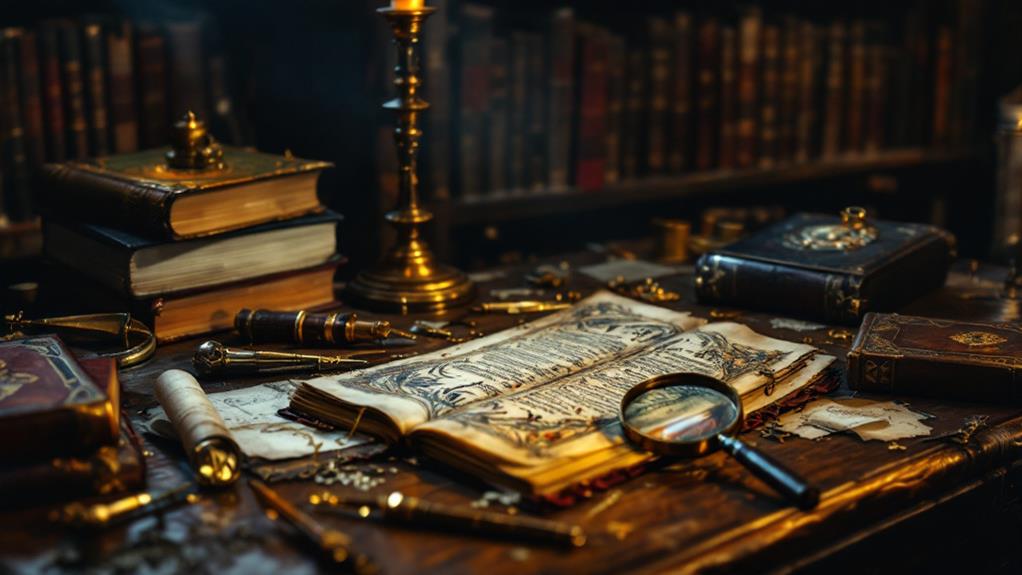
Uncover the secrets of historical bookbinding by exploring ancient techniques that have safeguarded ancient folios for centuries. You'll appreciate how the Roman invention of the codex transformed text accessibility, while the medieval monks' artistic hand-binding infused books with both beauty and spiritual significance. The choice of materials, like calfskin and animal glue, was vital for creating durable and aesthetically pleasing works. Stitching methods guaranteed structural integrity, with Coptic and Chain stitches offering both strength and flexibility. Preservation techniques, blending traditional and digital strategies, maintain these valuables today. As you continue, you'll see how these timeless skills impact modern design.
Evolution of Bookbinding Techniques
Bookbinding has transformed remarkably over centuries, reflecting technological advancements and cultural shifts. You're about to explore an intriguing expedition through time, where historical influences and cultural significance shaped the art and craft of bookbinding. In ancient times, scribes used simple materials like papyrus rolls, but as societies evolved, so did the desire for more durable and aesthetically pleasing books. The invention of the codex by the Romans marked a significant leap, allowing for easier access to text compared to scrolls.
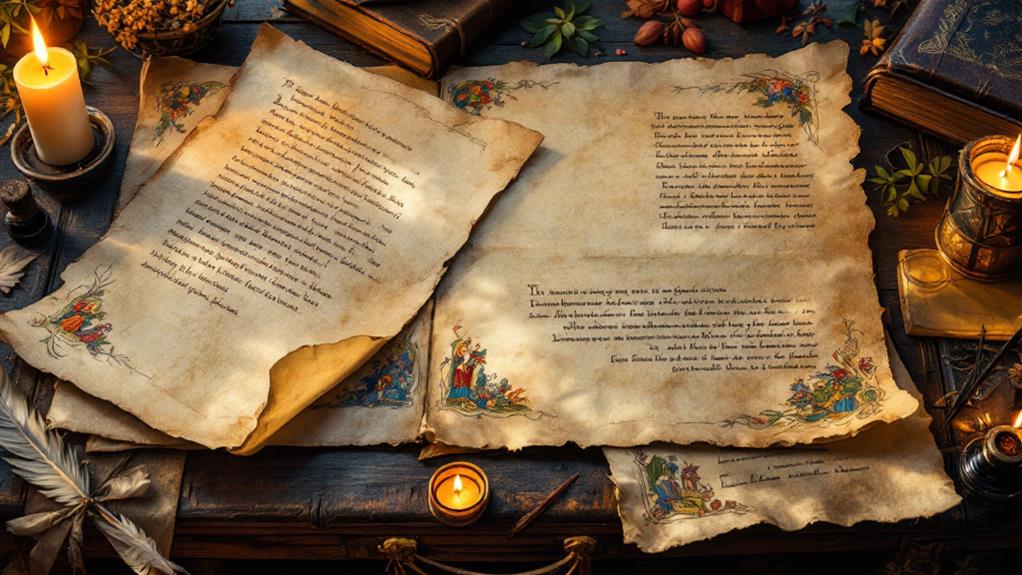
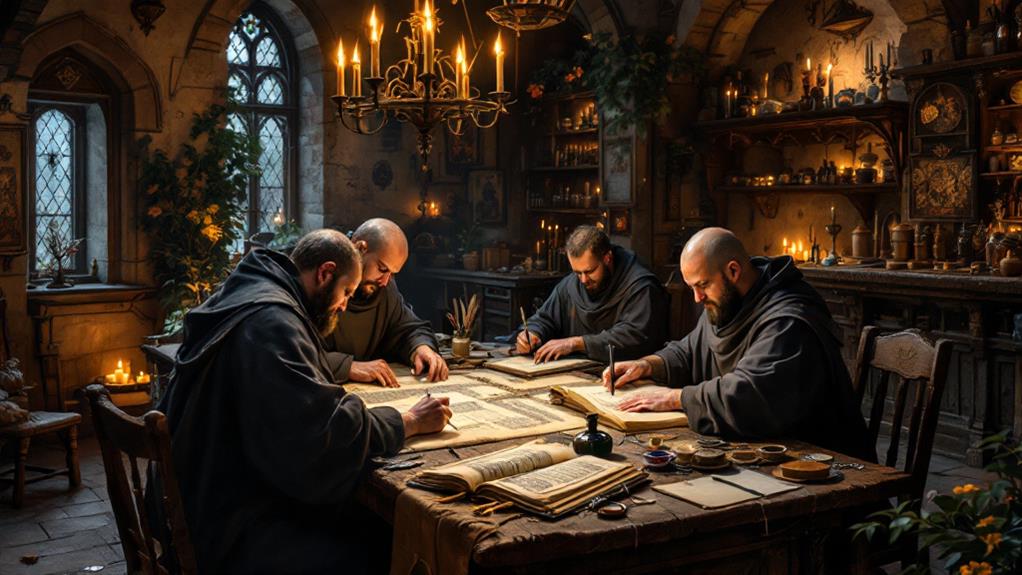
During the medieval period, monks carefully hand-bound manuscripts, infusing religious and artistic motifs reflective of their cultural significance. Gothic architecture and illuminated manuscripts inspired intricate designs that turned books into prized artifacts. Fast forward to the Renaissance, and you'd see bookbinding techniques becoming more refined with the introduction of leather covers and gold tooling, reflecting the period's emphasis on knowledge and beauty.
The Industrial Revolution brought about mechanization, scaling up book production and making literature accessible to the masses. This time's technological advancements also led to cultural shifts in how society valued books, transforming them from rare luxuries to widely available sources of knowledge and entertainment.
Materials of the Trade
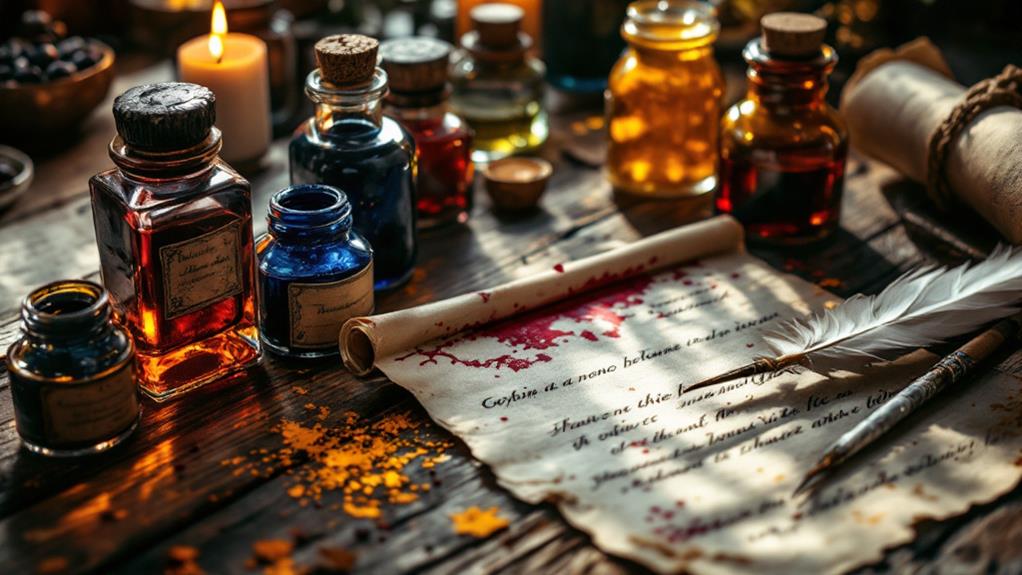
In the world of bookbinding, materials play a vital role in shaping the durability and aesthetics of a book. When you're exploring historical bookbinding, you'll realize that the choice of materials is fundamental. Parchment types, for instance, vary depending on the specific needs of the book. Parchment can be made from calf, sheep, or goat skins, each offering unique textures and strengths. Calfskin, known as vellum, is prized for its smoothness and durability, making it a popular choice for high-quality manuscripts.
You mustn't overlook the importance of binding adhesives. These adhesives are the unsung heroes, holding the folios together and providing strength to the binding. Traditional adhesives, such as animal glue, have been used for centuries due to their strong bonding properties. Today, you might encounter both natural and synthetic options, but each has its own set of characteristics that affect the binding process.
Crafting the Perfect Spine
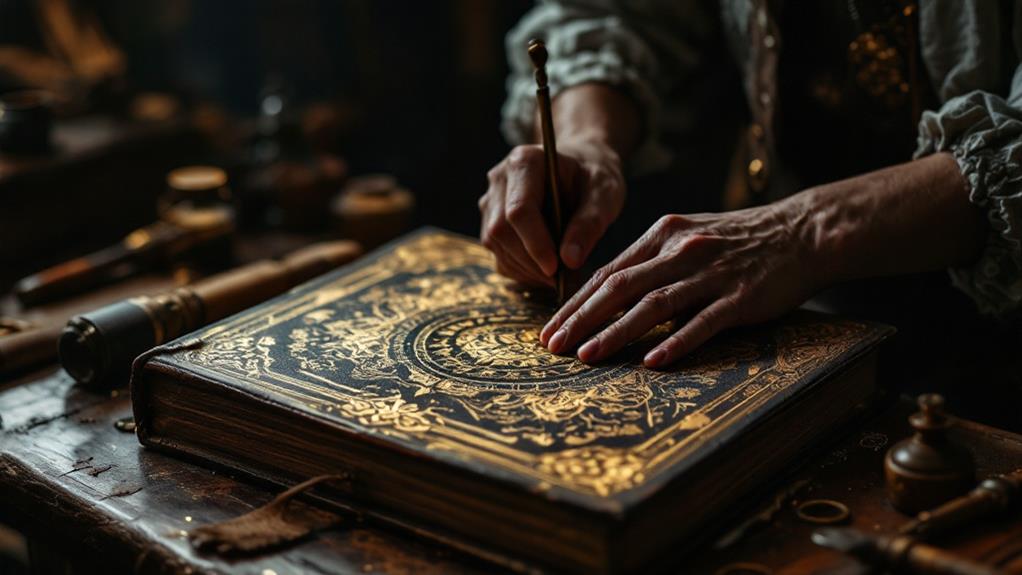
At the heart of historical bookbinding lies the art of crafting the perfect spine, a vital component not only for the book's structural integrity but also for its visual appeal. You need to understand that the spine is more than just a hinge; it's the backbone holding everything together. A well-crafted spine structure guarantees that pages remain secure and the book opens smoothly. It's imperative to select materials that offer both strength and flexibility. Leather, known for its durability, was often chosen for historical bindings, providing a robust yet elegant covering.
When you focus on spine aesthetics, keep in mind that the spine also serves as the book's face on a shelf. The placement and style of raised bands, gold tooling, and lettering can transform a book from ordinary to extraordinary. These elements, carefully crafted, not only improve the beauty but also reflect the book's time period and origin. Pay attention to details like symmetry and proportion; they're vital for achieving a visually pleasing result. By combining functionality with artistry, you breathe life into a book's spine, guaranteeing it stands the test of time both structurally and aesthetically.
Stitching Methods Explained
As you admire the intricacies of a perfectly crafted spine, your attention naturally shifts to the stitching methods that hold the pages together. You realize that these techniques are the unsung heroes of bookbinding, providing durability and flexibility to ancient folios. Stitching isn't just about aesthetics; it's a crucial part of the book's structure. Let's explore a couple of traditional methods that have stood the test of time.
- Saddle Stitch: Ideal for smaller projects, this method involves folding sheets and stitching them through the fold. It's simple and effective for pamphlets and booklets.
- Long Stitch: Known for its decorative potential, the long stitch involves attaching sections directly to the cover. This results in exposed spine stitches that are as beautiful as they are functional.
- Coptic Stitch: Used by early Christians in Egypt, it allows the book to lie flat when open, enhancing readability.
- Chain Stitch: Offers a strong, flexible binding, often used in conjunction with other methods for added durability.
Each method has its own charm and specific application, ensuring that historical manuscripts remain accessible and intact for future generations. By understanding these techniques, you appreciate the craftsmanship behind every bound page.
Protecting Manuscripts Over Time

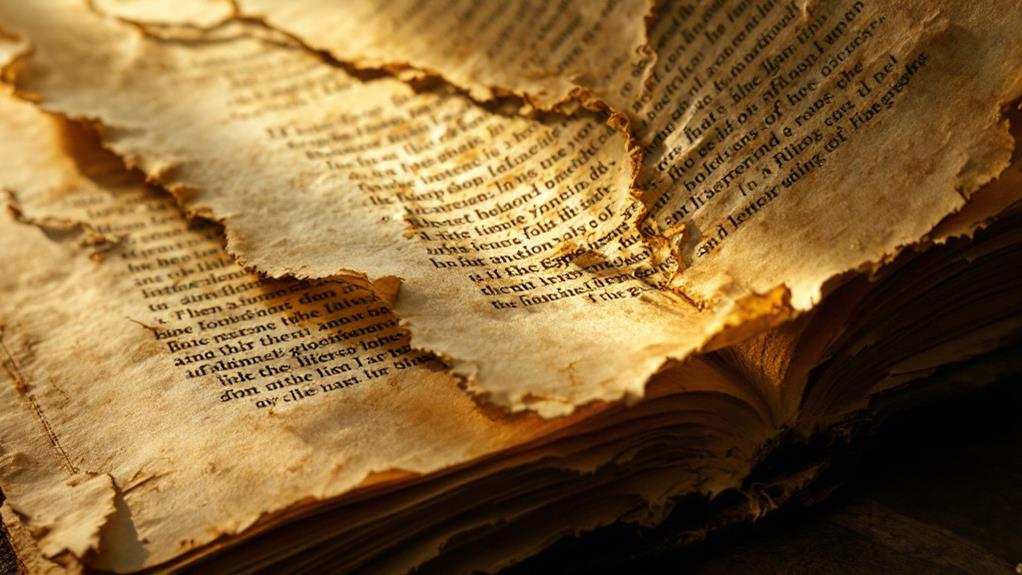
Throughout history, countless manuscripts have faced the ravages of time, yet many survive thanks to careful preservation techniques. As you investigate the protection of these invaluable documents, it's essential to comprehend how manuscript conservation has evolved. Initially, scribes and caretakers used basic methods, like storing manuscripts in dry, dark places, to combat moisture and light damage. Today, you can employ more sophisticated archival techniques to guarantee their longevity.
Start by controlling the environment where manuscripts are stored. Temperature and humidity fluctuate and can cause irreversible damage. You should maintain a stable climate with the right humidity levels to prevent paper brittleness and ink fading. Using acid-free folders and boxes helps protect manuscripts from chemical degradation, while proper handling assures oils from your skin don't transfer to the delicate surfaces.
Additionally, you can implement digital preservation as a backup strategy. By digitizing manuscripts, you create a safeguard against physical loss, making it easier to access and study them without direct contact. However, don't forget that digital preservation should complement, not replace, traditional methods. Through these combined efforts in manuscript conservation, you can help protect these cultural assets for future generations.
Modern Relevance of Ancient Skills
Bookbinding, an ancient craft, remains surprisingly relevant today as it bridges the gap between historical artistry and modern demands for durability and aesthetics. You might think it's just about preserving old books, but it's much more. The techniques developed centuries ago continue to influence contemporary design and craftsmanship. These skills aren't just relics of the past; they've sparked an artisan revival, bringing a renewed appreciation for handcrafted items.
Consider the modern relevance of these ancient skills:
- Cultural Significance: Bookbinding connects us to our history and heritage, ensuring stories and knowledge are preserved beautifully.
- Sustainability: Handmade books often use eco-friendly materials, promoting a more sustainable approach to production.
- Uniqueness: Each hand-bound book is a one-of-a-kind creation, offering a personal touch that mass-produced items simply can't.
- Artisan Revival: There's a growing demand for artisanal crafts, with people seeking meaningful connections with the items they own.
Related posts