Scanning, Digitizing, and Preserving: Technology in Manuscript Conservation
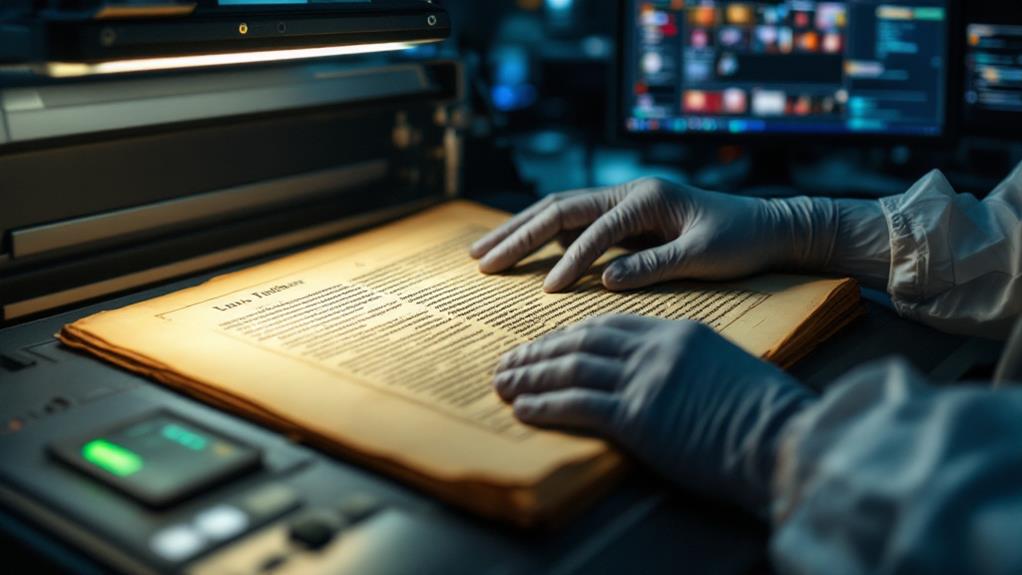
You're starting on a quest where technology plays a crucial role in preserving our cultural heritage through manuscript conservation. Scanning and digitizing ancient texts allow you to glimpse hidden details with advanced imaging techniques, including infrared and 3D scanning. These methods capture color fidelity and texture without risking the original manuscripts. Digitization guarantees that documents are not just preserved but also accessible to a global audience. With metadata and effective document management, you can navigate this technological era securely and efficiently. Stay tuned, as deeper insights await on how these technologies safeguard history for the future.
The Importance of Manuscript Conservation
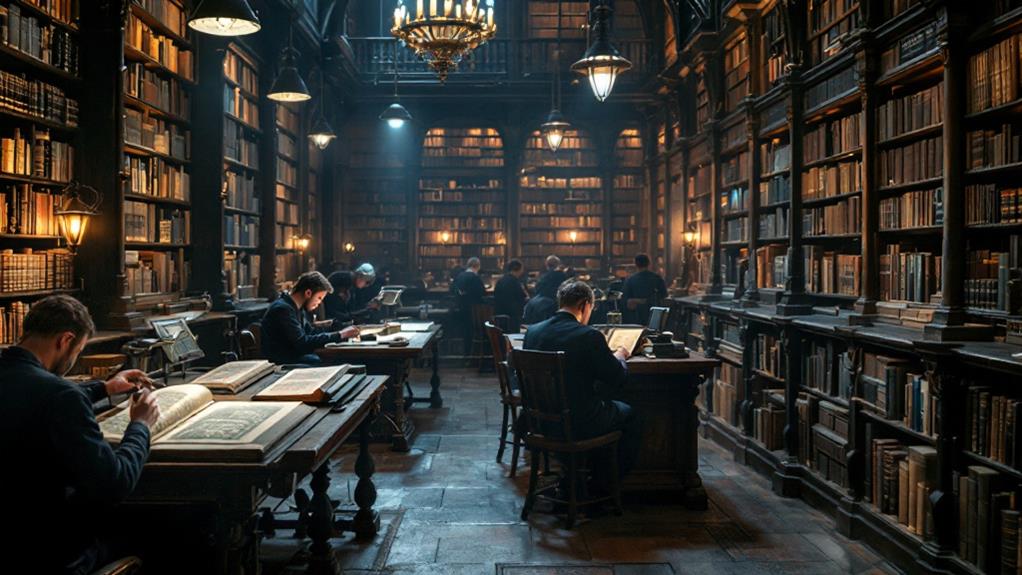
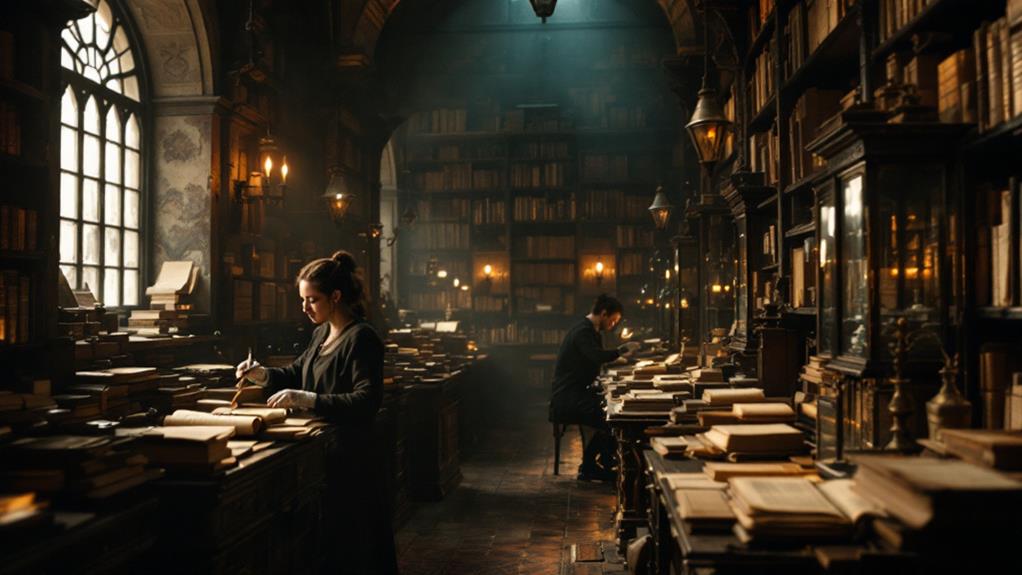
Imagine uncovering a stash of ancient manuscripts, each holding a wealth of knowledge, culture, and history waiting to be revealed. You'd quickly realize the importance of preserving these gems, as they embody cultural heritage and offer profound historical significance. Manuscript conservation isn't just about keeping old paper intact; it's about maintaining a bridge to our past. By applying proper archival practices and restoration methods, you guarantee these diverse manuscripts continue to inform and inspire future generations.
Consider the diversity of manuscripts you might encounter: religious texts, scientific works, or personal letters. Each has its own story and contributes to our collective understanding. Conservation ethics guide you in making decisions that honor the original creators' intent while assuring longevity. You engage with the community, raising awareness of the educational impact these documents hold.
Effective conservation involves not only physical preservation but also fostering community engagement. By involving the public, you help cultivate appreciation and support for these efforts. In doing so, you make history accessible, allowing people to connect with their roots. Remember, the manuscripts you preserve today will shape tomorrow's understanding of our shared past.
Advances in Scanning Technology
Preserving ancient manuscripts involves more than just traditional methods; it also incorporates technological innovations that push the boundaries of what's possible in conservation. Advances in scanning technology have transformed how you can preserve and study these priceless documents. 3D scanning, for instance, allows you to capture the intricate details of manuscripts, revealing features that were previously inaccessible. Infrared imaging and multispectral analysis help you uncover hidden texts and details obscured by time.
With portable scanners, you can scan documents on-site without risking damage from transportation. These devices are becoming increasingly sophisticated, featuring advanced software that guarantees archival standards are met. Color fidelity is vital, and modern scanners excel in capturing true-to-life colors, guaranteeing the digital copies are as close to the original as possible.
Here's what you can investigate with these advancements:
- Automated processing: Streamline the digitization workflow, saving time and resources.
- User interface: Intuitive designs make these technologies accessible to everyone.
- Preservation ethics: Balance technological intervention with the integrity of the original artifact.
- Software advancements: Improved tools for analyzing and storing data effectively.
These innovations not only preserve history but also make it accessible to a global audience.
High-Resolution Imaging Techniques
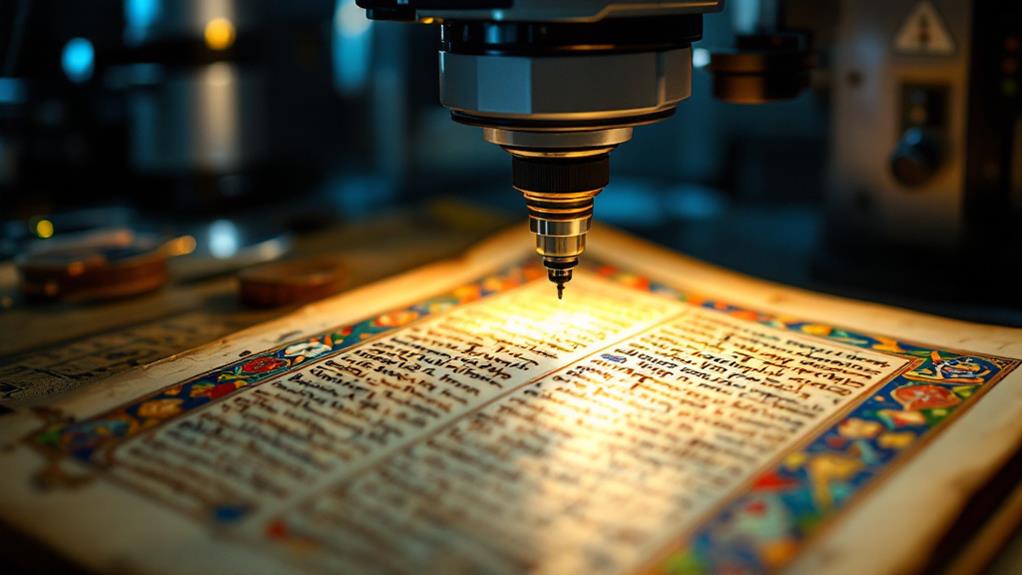
High-resolution imaging techniques have transformed the way you can investigate and conserve ancient manuscripts. By using advanced imaging systems, you achieve outstanding image resolution that reveals intricate details and hidden features in the manuscripts. These techniques guarantee color accuracy, essential for reproducing the original hues and shades, which is significant for both study and preservation. Furthermore, capturing the texture of the material provides insights into the manuscript's era and handling, offering a more thorough understanding of its history.
With light sensitivity adjustments, you can protect delicate manuscripts from damage, maintaining their integrity while capturing their essence. Selecting the right file formats is necessary to balance between scanning speed and maintaining archival quality. High-resolution scans must meet preservation standards to guarantee that the digital images are as enduring as the manuscripts themselves.
The advancements in these imaging techniques enable you to create digital replicas that serve as significant preservation tools. They help reduce physical handling, which can deteriorate fragile manuscripts over time. This technology not only safeguards the original documents but also makes them accessible to scholars and enthusiasts worldwide, guaranteeing that cultural heritage is preserved for future generations.
Digitization Processes Explained
With regard to converting ancient manuscripts into digital forms, understanding the digitization process is vital. It involves several steps to guarantee the preservation and accessibility of these valuable documents. Initially, you start with scanning the manuscript using high-resolution equipment. This step captures every detail, setting the stage for creating a digital replica. Image improvement techniques come into play next, refining the scanned images to boost clarity and readability.
Once you have improved images, the process of optical character recognition (OCR) begins. OCR technology is significant as it converts scanned images of text into machine-readable data. This step makes the text searchable, allowing you to find specific information quickly and easily. The final step involves storing and organizing these digital files for future access, guaranteeing the manuscripts are preserved in a user-friendly format.
Here's a quick breakdown of the digitization process:
- Scanning: Capture high-resolution images of the manuscript.
- Image Improvement: Refine images for better clarity.
- Optical Character Recognition (OCR): Convert images to searchable text.
- Storage and Organization: Guarantee easy access and preservation.
Metadata and Document Management
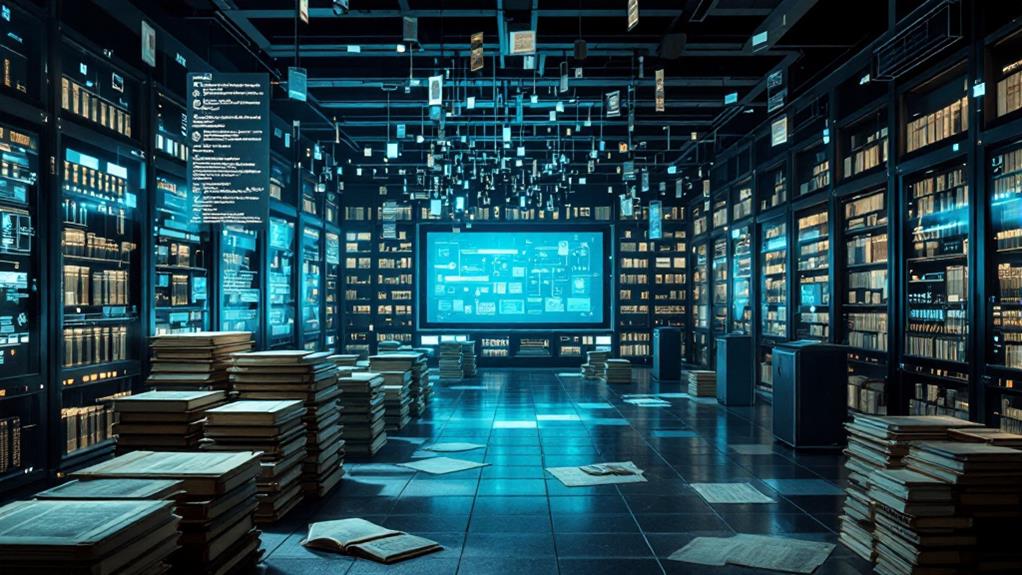
Enhancing the electronic preservation of manuscripts, metadata and document management play crucial roles in guaranteeing long-term accessibility and usability. By adhering to metadata standards, you guarantee consistency and precision in how information is recorded and retrieved. Proper document organization allows you to efficiently store and locate manuscripts within archival systems, supporting both current use and future explorations.
To maintain data integrity, employ automated tagging and indexing techniques. These tools help you categorize and access documents swiftly, minimizing human error and guaranteeing thorough coverage. Effective cataloging practices further bolster this by creating detailed records that guide users through the electronic repository.
Preservation policies are fundamental to safeguard the integrity and authenticity of your electronic collection. Implementing these policies helps you define the rules for maintaining and updating records, guaranteeing that the electronic copies remain reliable over time. As you manage your archival systems, focus on developing robust frameworks that address both immediate and long-term needs.
Incorporating these strategies into your document management process guarantees not only the safety of your manuscripts but also their continued relevance and accessibility in an increasingly electronic environment. Through thoughtful planning, you create a lasting legacy for future generations.
Ensuring Digital Preservation
Building upon the foundation of metadata and document management, guaranteeing digital preservation becomes an essential step in safeguarding electronic manuscripts. You need to focus on maintaining digital integrity by implementing effective storage solutions. This process involves not just securing the data but also making certain it remains accessible and unaltered over time. Here are some key steps you can take:
- Choose Reliable Storage Solutions: Opt for cloud services or external hard drives with redundancy features to protect your files from data loss.
- Regular Backups: Schedule frequent backups to confirm that you have multiple copies of your manuscripts in different locations.
- Monitor Digital Integrity: Use checksum tools to periodically verify that the files haven't been tampered with or corrupted.
- Implement Access Controls: Restrict who can view and edit the digital files to prevent unauthorized changes.
Accessibility Through Digital Archives

Digital archives play an essential role in making manuscripts more accessible to a wider audience. You can investigate rare and valuable cultural heritage from anywhere in the world, thanks to online access. This democratization of information promotes digital equity, guaranteeing that everyone, regardless of their location or background, can engage with these historical gems.
User engagement increases when you interact with curated content tailored to diverse interests. Digital platforms encourage archival education, helping you learn about the significance of these manuscripts while fostering a deeper appreciation for their historical contexts. By participating in community involvement initiatives, you can contribute to the preservation and interpretation of these documents, enhancing their value for future generations.
Resource sharing among institutions allows for a richer, more thorough digital archive. When libraries and museums collaborate, they create a more complete picture of our shared history, benefiting everyone. Content curation guarantees that you receive high-quality, relevant information, making your investigation more meaningful. These archives not only preserve the past but also inspire new research and creative projects. By embracing digital archives, you become part of a global effort to safeguard and celebrate our collective cultural heritage.
Challenges in Manuscript Digitization
How can the expedition of digitizing manuscripts be as intimidating as it is transformative? You'll find yourself maneuvering a maze of challenges, each demanding careful attention. Initially, you'll face copyright issues. Confirming that you have the right to digitize and share a manuscript is essential. Then there's the intricacy of metadata accuracy. Without precise metadata, locating and using digital texts becomes a formidable task.
Funding challenges can be a major roadblock. Digitization projects require substantial resources, and securing adequate funding is often easier said than done. You'll also need to evaluate software limitations. The best tools for digitization might not always be affordable or available, which could hinder the process.
- Archival standards need strict adherence to guarantee the longevity and usability of digital files.
- Cultural sensitivity is fundamental when dealing with manuscripts from diverse backgrounds.
- Textual analysis might be limited if the digitization quality isn't up to par.
- User engagement can fall short if the digital platform isn't user-friendly.
Case Studies in Successful Conservation
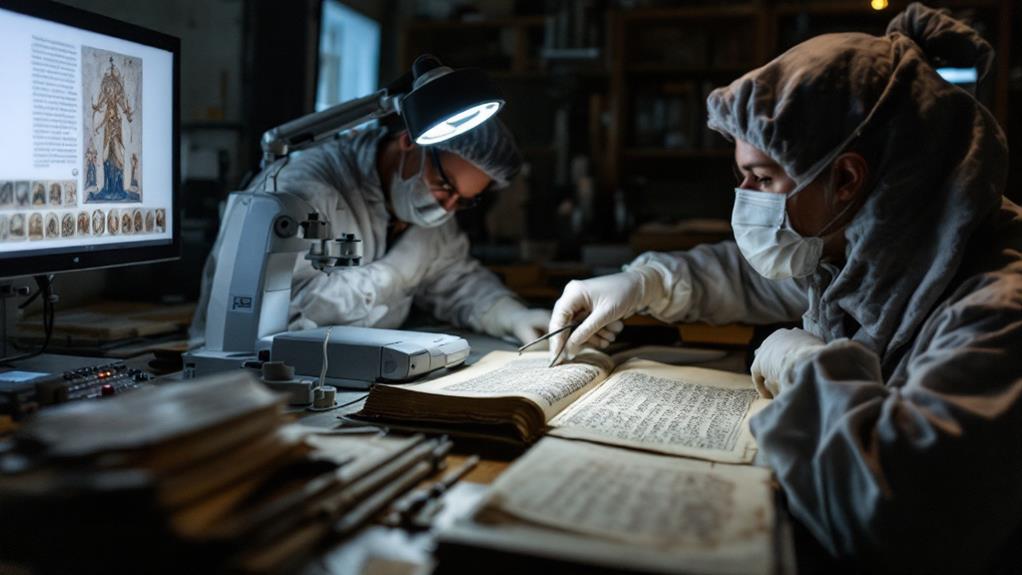
Among the myriad examples of successful manuscript conservation, you'll find projects that have not only preserved historical valuables but also improved accessibility for scholars worldwide. Take the case of the Dead Sea Scrolls. Their historical significance and value to cultural heritage prompted a careful restoration process. Experts employed advanced restoration techniques, balancing the need to preserve while adhering to archival ethics. This project didn't just happen in isolated labs; it involved community involvement, with local and international experts working together.
Another example is the conservation of the Timbuktu manuscripts. Here, funding sources played an essential role, with global entities providing financial support. The project was a demonstration of interdisciplinary collaboration, bringing together historians, conservators, and scientists. As a result, thousands of manuscripts were digitized, ensuring their preservation and enhancing educational outreach. The community's involvement was critical, as local knowledge helped identify the most important texts.
In both cases, the commitment to preserving cultural heritage through collaborative efforts and strategic use of technology has set a benchmark. These projects have shown that with the right resources and dedication, preserving history for future generations is not just a possibility but a reality.
Future Trends in Conservation Technology
Building on the remarkable successes in manuscript conservation, the future of this field promises even more exciting developments. Imagine using AI applications to predict and prevent damage to manuscripts before it happens. Machine learning can improve digitization processes, ensuring faster and more accurate conservation efforts. Blockchain security will safeguard the integrity of digital archives, protecting invaluable cultural heritage from unauthorized alterations.
Virtual reality and interactive interfaces will transform how you engage with ancient texts, allowing engaging experiences that bring history to life. As cloud storage solutions become more sophisticated, you'll have seamless access to vast digital libraries, improving collaboration networks among scholars and enthusiasts worldwide. Sustainability practices will drive the development of eco-friendly technologies, ensuring that conservation efforts are as gentle on the environment as they are on the manuscripts themselves.
Ethical considerations will guide the integration of these technologies, ensuring they respect cultural sensitivities and intellectual property rights. By focusing on user engagement and creating inclusive platforms, the conservation community will foster a more collaborative and informed approach.
- AI applications: Predict and prevent manuscript damage.
- Virtual reality: Experience engaging interactions with texts.
- Blockchain security: Protect digital archives.
- Sustainability practices: Eco-friendly conservation technologies.
Related posts