
Provenance Uncovered: The Journey of Folios Across Centuries

Uncover the enchanting expedition of ancient folios as they traverse through centuries, serving as cultural bridges across societies. You'll find these gems originating from monastic scriptoriums, where monks crafted them in isolation. With the advent of trade routes, folios spread far and wide, enriching distant cultures. The printing press later transformed their production, making them accessible and sparking movements like the Renaissance. Today, folios circulate in private collections and auction houses, while libraries preserve their legacy through exhibitions and digital archives. Authentication and conservation efforts guarantee their history remains intact. Venture further into this timeless story of cultural legacy.
Origins of Ancient Folios
When you investigate the origins of ancient folios, you're stepping into a world of rich history and careful craftsmanship. These folios, often representing the pinnacle of cultural significance, were painstakingly created to preserve knowledge and art throughout the eras. You'll find that each folio tells a unique story of the society that produced it, reflecting their values, beliefs, and intellectual pursuits. By studying these pages, you're not just reading texts; you're connecting with the past and understanding the evolution of human thought.
The artistic techniques employed in crafting these folios were nothing short of remarkable. Artists and scribes invested countless hours in ensuring that every detail was perfect. Intricate illustrations, lively colors, and exquisite calligraphy were common elements, showcasing the creativity and skill of those ancient artisans. As you examine these works, you'll notice how the choice of materials, like parchment and ink, was carefully considered to improve durability and visual appeal.
Understanding the origins of ancient folios allows you to appreciate their enduring legacy. These artifacts are more than just historical documents; they are masterpieces that continue to inspire and inform generations, illustrating the timeless power of art and culture.
Monastic Scriptoriums
Within the tranquil confines of monastic scriptoriums, the creation of folios took on a spiritual and scholarly dimension. You could almost feel the reverence as monks carefully applied manuscript techniques that were honed over centuries. Monastic traditions dictated not just the methods, but also the purpose of these works. Each folio was a symbol of both faith and medieval literacy, meant to enlighten minds and souls alike.
Scriptoria locations varied, often situated in remote areas to guarantee peace and focus. These places became the heartbeat of scriptorium communities, where monks came together, united by their task. Folio production was a communal effort, with each monk contributing through tasks like crafting parchment, copying texts, or illustrating. Illumination styles were diverse, yet they all shared a common goal: to glorify the divine through art.
Monastic culture thrived within these scriptoria, serving as a bridge between the sacred and the scholarly. The painstaking effort required to produce each manuscript was a reflection of their devotion. Through these manuscripts, you witness a legacy of knowledge and spirituality that continues to inspire, a symbol of the enduring power of monastic scriptoriums.
The Role of Trade Routes
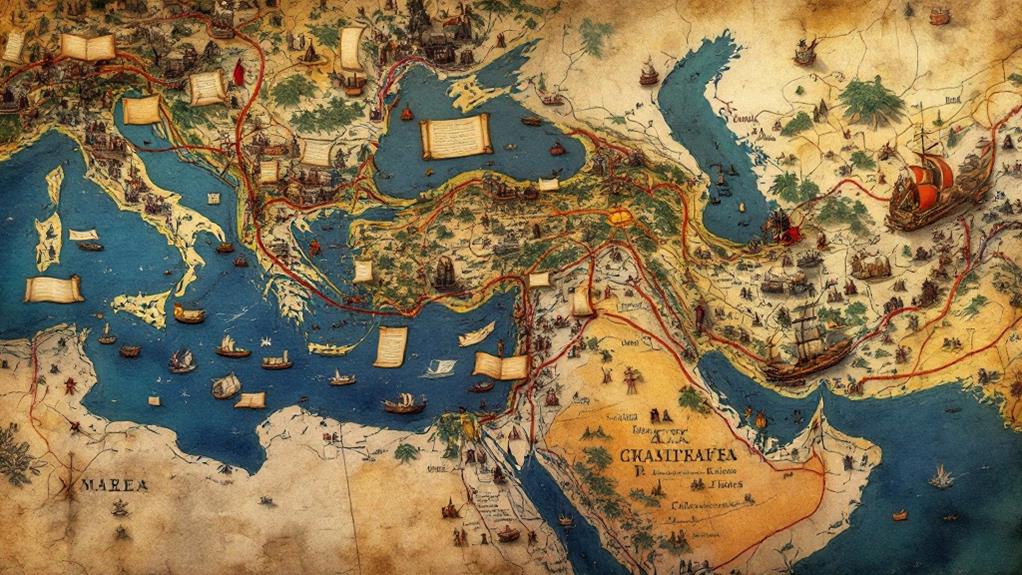
Trade routes were the lifeblood that connected distant lands, playing a crucial role in the dissemination of folios. As you trace the path of these ancient documents, you'll find that merchants and travelers carried them along vibrant trade networks. These routes weren't just conduits for goods; they facilitated cultural exchanges that enriched societies. Folios, filled with knowledge and stories, moved across continents, influencing and being influenced by the diverse cultures they encountered.
When you examine the role of trade routes, you can't overlook their economic influences. These pathways were crucial for commerce, and the exchange of folios was often intertwined with the trade of spices, textiles, and precious metals. Prosperous cities on these routes became hubs of learning, where scholars gathered to share and expand on the knowledge contained within these precious texts.
Impact of the Printing Press
How did the invention of the printing press revolutionize the world of folios and the dissemination of knowledge? Imagine a time when every book was painstakingly copied by hand. The printing press changed all that, igniting a printing revolution that forever altered how information spread. Suddenly, books and folios weren't just for the wealthy or scholarly elite. You could find them in the hands of merchants, artisans, and common folk, fueling a thirst for learning and exploration.
The cultural impact was immense. With more folios being printed, ideas crossed borders and sparked debates that shaped societies. You saw movements like the Renaissance flourish, as accessible texts allowed thinkers to build on each other's work. Think of the Reformation, where printed pamphlets fueled religious discourse. The press enabled a new age of communication, where ideas weren't confined by geography or class.
This revolution democratized knowledge. It empowered you to question, to learn, and to contribute to the vast pool of human understanding. The printing press didn't just change how folios were produced; it shifted the cultural landscape, setting in motion a cascade of changes that resonate even today.
Folios in Private Collections
Imagine holding a folio that once graced the hands of a renowned scholar or a notable historical figure. The folio's aesthetics captivate you, revealing its historical importance and the allure it holds for collectors. Many are driven by collector motivations stemming from a deep appreciation for history and the potential investment value. When evaluating value, it's vital to regard the folio's condition, rarity, and provenance challenges, as these factors greatly impact its worth.
In private collections, careful conservation techniques are employed to preserve these valuables. Collectors often invest in specialized treatments that protect and maintain the folio's delicate pages. Yet, one must remain vigilant; market trends fluctuate, affecting folio prices and demand. Staying informed can aid collectors in making sound decisions regarding acquisitions or sales.
Exhibition practices in private collections vary. Some collectors choose to share their prized folios with the public, lending them to museums or hosting private viewings. This not only improves the folio's cultural value but also strengthens its provenance. However, the decision to exhibit must weigh potential risks against the benefit of showcasing such historical wonders to a broader audience.
The Auction House Phenomenon
Within the lively world of antiquities, auction houses play a fundamental role in the exchange of folios. As you immerse yourself in this fascinating environment, you'll notice that these establishments serve as pivotal hubs for collectors and sellers. They set the stage for the revelation of rare and valuable folios, where each auction can redefine market valuation. The excitement of the bidding process often leads to unexpected highs and lows, making it an unpredictable yet thrilling experience.
Auction trends greatly influence how folios are perceived and valued. For instance, a sudden surge in interest for a particular period or author can drive prices to astonishing heights. As a bidder, you need to be aware of these trends to make informed decisions. Understanding the historical significance and condition of a folio is crucial, as these factors heavily impact market valuation.
In this competitive arena, auction houses not only facilitate transactions but also authenticate and appraise folios, ensuring their legitimacy. Their reputation often rests on their ability to connect the right folio to the right buyer at the right price. So, if you're keen on acquiring a piece of history, keeping an eye on auction trends is fundamental.
Folios in Modern Libraries

While auction houses electrify the market with their thrilling exchanges, contemporary libraries provide a more stable sanctuary for folios. You might find these institutions offer a refuge where folios are not only preserved but also shared with the public. Libraries curate folio exhibitions, allowing you to appreciate these historical gems up close, offering insights into the cultural and artistic milestones they represent.
In today's technological era, libraries have adopted technology, creating digital archives that make folios accessible to a global audience. You can investigate these remarkable collections from the comfort of your home, diving into the pages of history without the constraints of geography. Digital archives guarantee that even the rarest folios are available to scholars, students, and enthusiasts worldwide, fostering a deeper understanding of our shared heritage.
Moreover, contemporary libraries often collaborate with other institutions to host traveling exhibitions, bringing these fascinating works to you wherever you are. These events not only highlight the beauty and significance of folios but also encourage public engagement and education. By visiting libraries, you step into a world where the past and present coexist, witnessing firsthand the enduring legacy of these valued folios.
Authenticating and Preserving Folios
To truly appreciate the value of a folio, you must initially verify its authenticity and preservation. Start by conducting thorough provenance research to trace its history and establish its origins. Understanding the historical context adds depth to its cultural significance, offering insights into its passage across centuries. Use authentication technology to confirm the folio's genuineness. Techniques like ultraviolet light examination, spectrography, or even carbon dating can validate its timeline and authenticity.
Once authenticated, focus on preservation. Archival methods are essential in maintaining the folio's condition. Store it in a climate-controlled environment to protect against humidity and temperature fluctuations. Digital preservation is another crucial tool. By creating high-resolution digital copies, you guarantee its accessibility for future generations without risking physical degradation.
Restoration techniques should be applied with caution, adhering to conservation ethics. It's significant to preserve the original material as much as possible while stabilizing any damage. Avoid over-restoration, which can alter the folio's authenticity and intrinsic value. Balancing preservation with conservation ethics guarantees that the folio remains a genuine artifact of cultural significance, allowing you to safeguard this remarkable piece of history for the future.
Related posts