Preservation Techniques for Historical Folios: A Complete Guide

Preserving historical folios requires careful attention to common threats like pests, improper humidity, and poor handling. Keep conditions between 30%-50% humidity and 65-70°F for ideal preservation. Use gloves and protective sleeves when handling, and guarantee folios are stored in acid-free materials to prevent chemical degradation. Regular maintenance with inspections helps catch problems early, like mold or insects. Digital preservation through high-resolution imaging protects originals while making them accessible. By implementing these strategies, you maintain folios' historical significance and physical condition. Investigate more strategies to guarantee your collection stands the test of time.
Understanding Historical Folios
Delving into the world of historical folios reveals an enchanting glimpse into the past. As you examine these ancient documents, you'll uncover their folio significance, which lies in their ability to transport us back to the moments they were created. Each folio is a window into the historical context of its time, offering insights into societal norms, cultural values, and the knowledge that shaped civilizations. Imagine holding a document that once influenced monarchs or sparked intellectual revolutions. It's not just paper and ink; it's a tangible connection to history.
To truly understand these historical folios, you need to appreciate the craftsmanship involved in their creation. Skilled artisans painstakingly produced them, often with limited resources, yet they stand as enduring reflections of human ingenuity. As you study these folios, consider the historical context they were born from—times of war, peace, prosperity, or turmoil. Recognizing this context helps you appreciate their importance beyond mere aesthetics.
Identifying Common Threats
When you investigate the preservation of historical folios, it is important to identify the common threats these documents face. One of the primary challenges is pest infestation. Silverfish, bookworms, and other insects can wreak havoc on fragile paper, leaving holes and compromising the integrity of the folios. Implementing effective pest control measures is imperative. You'll want to regularly inspect storage areas and use non-toxic deterrents to keep these unwanted visitors at bay.
Another significant threat is improper humidity levels. Paper is particularly sensitive to changes in moisture, and fluctuations can lead to warping, mold growth, and even ink smudging. Maintaining stable humidity levels is key to preventing these issues. You should monitor the environment continuously, ensuring that the levels remain consistent and within the safe range for paper preservation.
Additionally, be mindful of handling practices. Oils and dirt from your hands can transfer to the paper, accelerating deterioration. Always use clean hands or wear gloves when handling these precious documents. By identifying and addressing these common threats, you're taking important steps in preserving the historical value and physical condition of your folios for future generations to appreciate.
Optimal Environmental Conditions
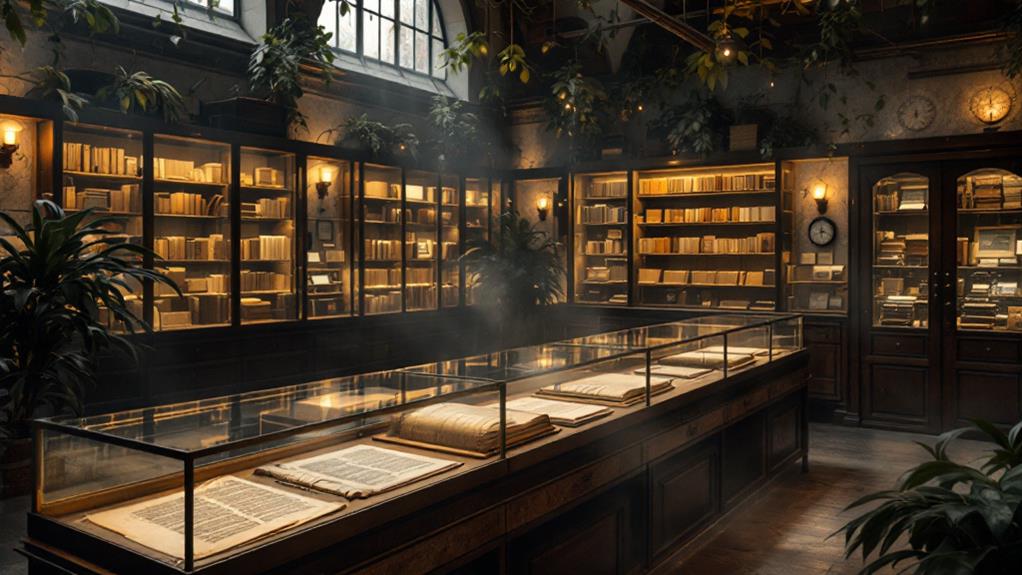
To guarantee the long-term preservation of historical folios, maintaining ideal environmental conditions is vital. You need to focus on two main factors: humidity control and temperature stability. These elements play a significant role in preventing damage to delicate materials. Fluctuating humidity levels can cause paper and bindings to expand and contract, leading to warping or cracking. Aim to keep the relative humidity between 30% and 50%. Too much moisture can encourage mold growth, while too little can make the paper brittle.
Temperature stability is just as significant. Rapid temperature changes can cause materials to deteriorate or even break. Ideally, keep the temperature around 65°F to 70°F (18°C to 21°C). Consistency is key, so avoid placing folios near windows, radiators, or other heat sources that might lead to temperature fluctuations.
Invest in a good hygrometer to monitor humidity levels and a reliable thermostat for temperature control. If possible, use an air conditioning system with built-in humidity control to maintain these conditions effortlessly. By ensuring proper humidity control and temperature stability, you're taking substantial steps toward preserving the integrity and longevity of your valuable historical folios.
Safe Handling Practices
While maintaining ideal environmental conditions lays the foundation for preserving historical folios, how you handle these delicate artifacts is just as important. Start by using handling gloves to avoid transferring oils from your skin onto the folios. This simple step can prevent deterioration over time. Protective sleeves are also vital; they shield the folios from direct contact with dust and reduce light exposure that can lead to fading.
Safe transportation of these folios demands careful planning. Use rigid containers to provide physical support and minimize movement that might cause wear or damage. User training is fundamental for anyone interacting with these artifacts. Training should cover proper handling techniques, the importance of moisture control, and how to conduct a preliminary damage assessment.
Be mindful of the environment where you handle the folios. Avoid areas with high humidity levels to maintain moisture control, and limit light exposure by working in dimly lit spaces. If you notice any signs of damage, such as tears or discoloration, it's imperative to address them immediately to prevent further deterioration. By following these practices, you'll guarantee that these historical valuables are preserved for future generations.
Cleaning and Repair Techniques

Preserving historical folios requires careful cleaning and repair techniques to maintain their integrity. Initially, assess the folio's condition thoroughly. Dust and dirt can be gently removed using a soft brush or a HEPA-filtered vacuum. Never use water or liquid cleaners, as moisture can damage delicate paper fibers. For stubborn stains, consider specialized chemical treatments, but only if you're experienced or have consulted a professional conservator, as improper use can lead to irreversible damage.
When it comes to repairing folios, choose appropriate repair materials. Japanese tissue paper is ideal for patching tears because it's both strong and thin. Use wheat starch paste as an adhesive, as it's reversible and won't harm the paper over time. Align torn edges carefully before applying any repair material, ensuring the folio's original structure remains intact.
Archival Storage Solutions
After confirming historical folios are clean and repaired, focus on proper archival storage to prolong their lifespan. The initial step is to use acid-free materials. Acid-free folders and boxes are crucial because they prevent harmful chemical reactions that can degrade paper over time. When selecting these materials, verify they're of high quality and specifically designed for archival purposes.
Temperature control is another key factor. Store folios in a space where the temperature is consistently maintained around 65-70°F (18-21°C). Fluctuations in temperature can cause the paper to expand and contract, leading to damage. Similarly important is humidity control; aim for a relative humidity level of 30-50%. Too much moisture can encourage mold growth, while too little can make the paper brittle.
Shelving is also critical. Place folios on sturdy shelves, confirming they're not packed too tightly. This allows for adequate air circulation, which helps maintain the ideal environment for preservation. Avoid direct sunlight, as UV rays can fade and weaken paper. By using acid-free materials and maintaining proper temperature control, you'll create a stable environment that greatly extends the life of your historical folios.
Digital Preservation Strategies
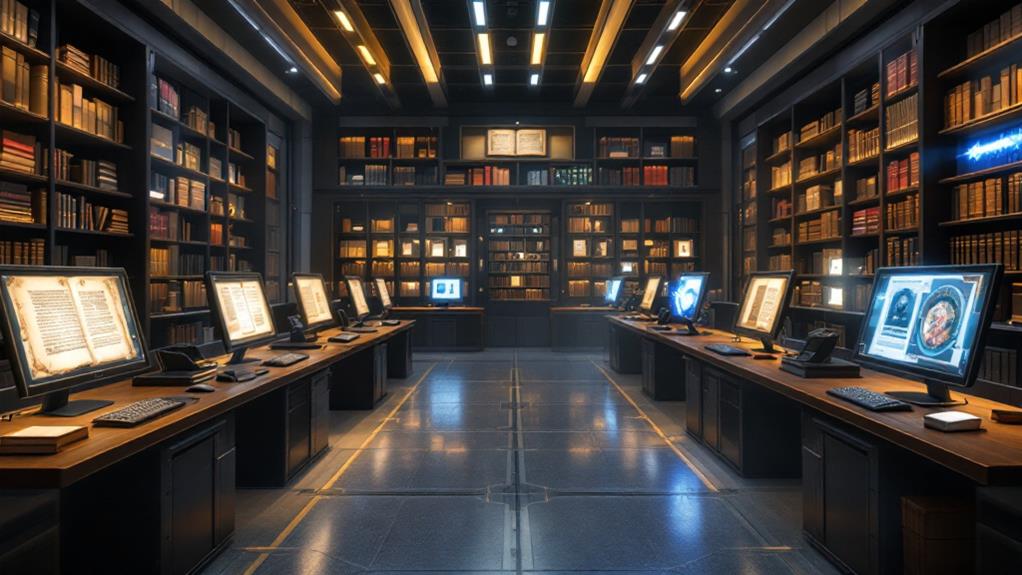
In conjunction with traditional methods, digital preservation strategies provide a groundbreaking approach to safeguarding historical folios. By digitizing these valuable documents, you guarantee their protection against physical deterioration. Digital imaging allows you to create high-resolution replicas, preserving every detail and nuance of the original folios. This not only facilitates easy access for researchers and historians but also reduces the handling of the fragile originals, minimizing wear and tear.
To maintain the longevity and usability of digital copies, adhering to metadata standards is vital. Metadata provides significant information about the folios, such as their origin, context, and content descriptions. By following standardized metadata protocols, you make it easier for users to search, retrieve, and understand digital folios. Furthermore, consistent metadata guarantees that digital archives remain organized and maintain their integrity over time.
It's significant to choose the right digital storage solutions. Opt for formats that are widely supported and regularly updated to avoid obsolescence. Regularly back up your digital files in multiple locations to prevent data loss. By incorporating these digital preservation strategies, you're not only preserving history but also making it accessible to future generations, securing a lasting legacy.
Regular Maintenance and Monitoring
While digital preservation strategies provide a robust foundation for safeguarding historical folios, regular maintenance and monitoring confirm these efforts remain effective over time. You can't just rely on technology; you need to incorporate preventive measures that address physical vulnerabilities. Start by conducting routine inspections of your folio collection. These inspections help you catch potential issues early, like mold growth or pest infestations, before they cause significant damage.
During these inspections, check the environmental conditions where the folios are stored. Humidity and temperature fluctuations can accelerate deterioration, so ascertain your storage area maintains stable conditions. Utilize tools like hygrometers to monitor these factors consistently. If you notice any anomalies, adjust your climate control systems promptly.
Don't overlook the importance of handling practices during your inspections. Make certain you and your team always use clean hands or gloves, and support the folios properly to prevent stress to the bindings and pages. Regularly update your maintenance protocols to incorporate new preventive measures as they become available. By staying proactive and vigilant, you'll not only extend the life of your historical folios but also preserve their rich legacy for future generations.
Related posts