Philosophical Wisdom in Folios: How Ancient Thinkers Were Preserved

You'll find that the preservation of ancient philosophical wisdom relied heavily on careful manuscript copying and the dedication of monastic scribes. These scribes faithfully transcribed texts, using choices of ink and parchment that guaranteed longevity. The translation of these works allowed ideas to transcend languages and periods, as seen with the enrichment of Greek philosophy by Arabic scholars. Ancient libraries like Alexandria facilitated the circulation of knowledge, while cultural exchanges broadened the philosophical landscape. With the Renaissance's rediscovery of Classical thought and ongoing modern conservation efforts, these timeless ideas continue to inspire and inform us today. There's much more to uncover.
The Art of Manuscript Copying
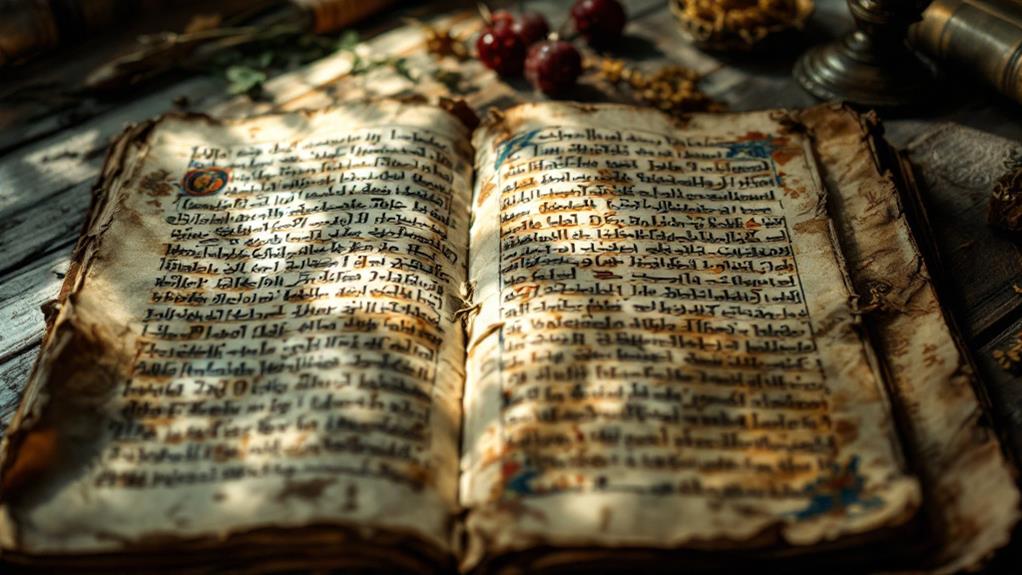
Manuscript copying is a careful craft that demands both precision and patience. As you step into the scriptorium, you're enveloped by the quiet dedication of scribes around you. Each detail matters, from the choice of ink to the quality of parchment. You'd quickly realize that the parchment quality directly affects the manuscript's longevity and readability. The smoother and finer the parchment, the easier it is for your quill to glide, ensuring clarity and consistency in your script.
Scriptorium practices are thoroughly structured, guiding you through each step of the copying process. You'd begin by preparing your workspace, ensuring it's free from distractions. The lighting has to be just right, often relying on natural daylight to minimize errors. As you dip your quill into the inkpot, you focus intently on replicating each letter with precision. Your eyes dart between the original text and your parchment, ensuring each word is faithfully transcribed.
In this environment, every scribe is part of a long-standing tradition, preserving philosophical ideas and wisdom. By adhering to these practices, you contribute to safeguarding the knowledge that shapes the world, one carefully crafted folio at a time.
Monastic Scribes and Their Role
Throughout history, monastic scribes have played a crucial role in the preservation and dissemination of knowledge. Imagine being part of monastic life, where you dedicate yourself not only to spiritual growth but also to the painstaking task of copying texts. These scribes, often monks, lived in monasteries where scriptoria, or dedicated writing rooms, were the heart of intellectual activity. In these scriptoria, they carefully copied manuscripts by hand, ensuring that the wisdom of ancient thinkers was not lost to time.
You can picture the scene: rows of desks, the quiet hum of concentration, and the smell of ink and parchment filling the air. Scribes used their skills to transcribe texts, correcting errors in the process, and sometimes adding their own annotations. Their dedication was crucial in preserving works of philosophy, science, and literature that might have otherwise vanished.
Through their disciplined scriptoria practices, these scribes allowed ancient texts to survive and be passed down through generations. Without their efforts, much of the philosophical wisdom we draw upon today could have been lost. So, when you explore ancient texts, remember the monastic scribes and their unwavering commitment to preserving knowledge.
The Influence of Ancient Libraries
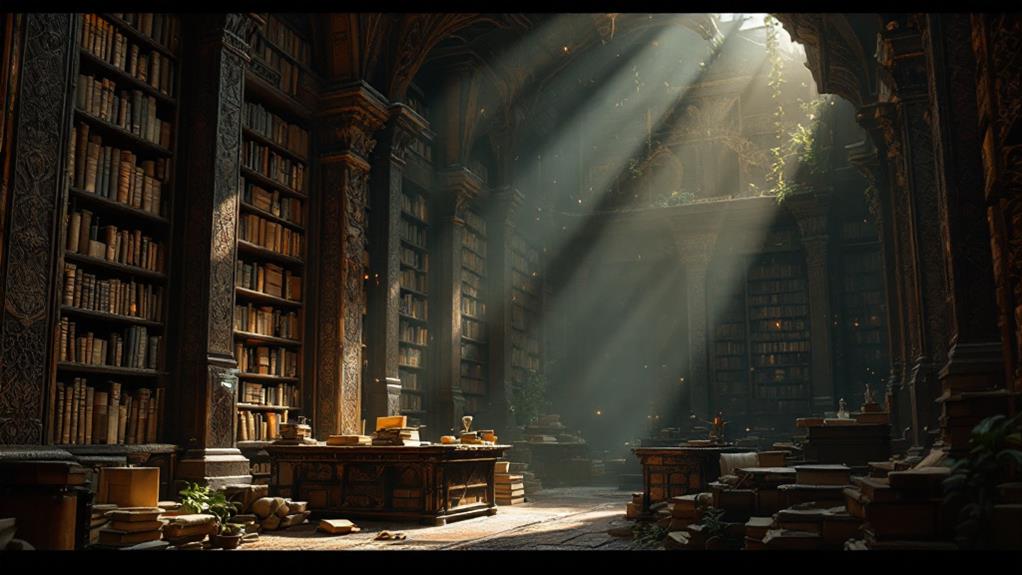
Countless ancient libraries have left an indelible mark on the course of human history, serving as epicenters of knowledge and learning. When you think of places like the Library of Alexandria or the Library of Pergamum, you're reminded of their profound influence on how information was gathered, preserved, and shared. The library architecture of these monumental institutions wasn't just about grandeur but functionality. It facilitated the organization and accessibility of vast collections of scrolls.
Imagine walking through the grand halls, where scroll organization was carefully planned. This thoughtful arrangement allowed scholars to access works by philosophers, scientists, and historians. As a visitor, you'd find scrolls categorized by subject, making it easier to explore specific areas of interest. This systematic approach guaranteed that the wisdom of ancient thinkers was not only preserved but also readily accessible to those seeking knowledge.
These libraries didn't just store information; they fostered an environment where intellectual exchange thrived. By facilitating the study of diverse ideas and theories, they played a significant role in shaping philosophical thought. Their influence extended beyond their walls, impacting the development of future educational institutions and the dissemination of knowledge throughout the world.
The Impact of Cultural Exchanges
While ancient libraries served as the heart of knowledge preservation, cultural exchanges acted as the lifeblood that enriched and diversified that understanding. When you consider the movement of people, ideas, and goods across regions, you see how cultural diffusion played a crucial role. It wasn't just about the physical texts being transported; it was about the philosophical dialogue that ensued. Imagine traders on the Silk Road or scholars traveling between ancient Greece and Persia. They didn't just trade goods; they exchanged ideas, philosophies, and worldviews.
These interactions allowed you to witness the blending of thought systems. For instance, when Greek philosophy met Eastern traditions, both were transformed. You can see this in the works of philosophers like Plotinus, who integrated elements from different cultures. It wasn't a one-way street, either. Eastern philosophies, like Buddhism or Confucianism, also absorbed and adapted ideas from the West.
Through these exchanges, you realize how civilizations didn't exist in isolation. They influenced each other, creating a rich tapestry of wisdom that transcended borders. As you explore ancient texts, keep in mind that the diversity of ideas they contain is an indication of the power of cultural exchanges.
Preservation Through Translation

As cultural exchanges spread ideas across regions, the role of translation emerged as a key factor in preserving and transmitting philosophical wisdom. You don't just swap words; you bridge worlds. Maintaining translation accuracy is vital. It guarantees that the essence of ancient texts remains intact, allowing you to grasp the original ideas. When translators approached these texts, they had to decide how to convey meanings that might not exist in their new language. This is where linguistic evolution comes into play.
Language isn't static. It evolves as cultures grow and change. By translating philosophical works, you can see how language adapts—how new words are formed or how existing ones expand to capture complex ideas. Take Arabic scholars, for instance, who translated Greek philosophy. They didn't just preserve these works; they enriched them, adding their interpretations and insights. You can thank them for keeping ancient wisdom alive and accessible.
The intricate dance between translation accuracy and linguistic evolution not only preserves but also revitalizes philosophical thought. As you read these translated works, you become part of a long history of preserving and evolving wisdom, making sure it speaks to you today.
The Role of Hidden Archives
Tucked away in quiet corners of the world, hidden archives play an essential role in the preservation and uncovering of philosophical wisdom. These archives house hidden texts that have been shielded from time and conflict, waiting for curious minds to rediscover them. You'll find that these clandestine collections are often filled with forgotten manuscripts, each one a reflection of the intellectual gems of the past.
As you explore these secrets, you realize the importance of scholarly networks. These networks consist of knowledge guardians who dedicate themselves to the preservation and ethical handling of these documents. Their commitment guarantees that the archival secrets remain intact and accessible for future generations.
Rediscovery During the Renaissance

The Renaissance marked a lively period of rediscovery where long-forgotten philosophical texts were brought back to light. You can imagine the excitement as scholars unearthed these Classical texts, rekindling interest in ancient wisdom. Renaissance humanism played an essential role in this revival, emphasizing the value of human potential and achievements derived from Greek and Roman thought. This wasn't just an academic exercise; it was a cultural movement that reshaped society's worldview.
During this time, you would've seen:
- Scholars tirelessly searching monastic libraries for hidden manuscripts.
- The translation of Greek and Latin texts into vernacular languages, making them accessible to a broader audience.
- A surge in the establishment of universities focused on studying the classical world.
- Humanists like Petrarch and Erasmus championing the study of ancient philosophy.
- Printing presses proliferating, allowing for the mass production of texts.
Each rediscovery was a portal into a world where reason and inquiry were held in high esteem. These texts didn't just sit on dusty shelves; they fueled discussions and debates, enriching minds daily. By diving into these Classical texts, you could see how the Renaissance became a bridge from the past to an enlightened future.
Modern Efforts in Conservation
Building upon the Renaissance's rediscovery of philosophical wisdom, modern efforts in conservation focus on guaranteeing these invaluable texts remain accessible and preserved for future generations. You play a significant role in this mission by leveraging digital archiving. This process involves scanning ancient manuscripts and creating high-resolution digital copies. By doing so, you not only safeguard the content against physical deterioration but also make it widely available online, breaking geographical and temporal barriers. Digital archives allow you to investigate these texts from anywhere, making it easier for scholars and enthusiasts alike to study and appreciate ancient philosophy.
Community engagement is another essential aspect of modern conservation. By involving local communities in the preservation process, you foster a sense of shared responsibility and pride in these cultural artifacts. Workshops, lectures, and exhibitions can educate the public about the significance of these texts and the importance of their conservation. Encouraging volunteers and local organizations to participate in these efforts helps build a network of passionate individuals dedicated to preserving philosophical wisdom. In this way, you guarantee that the legacy of ancient thinkers continues to inspire and educate, fostering a deeper understanding of our shared intellectual heritage.
Related posts