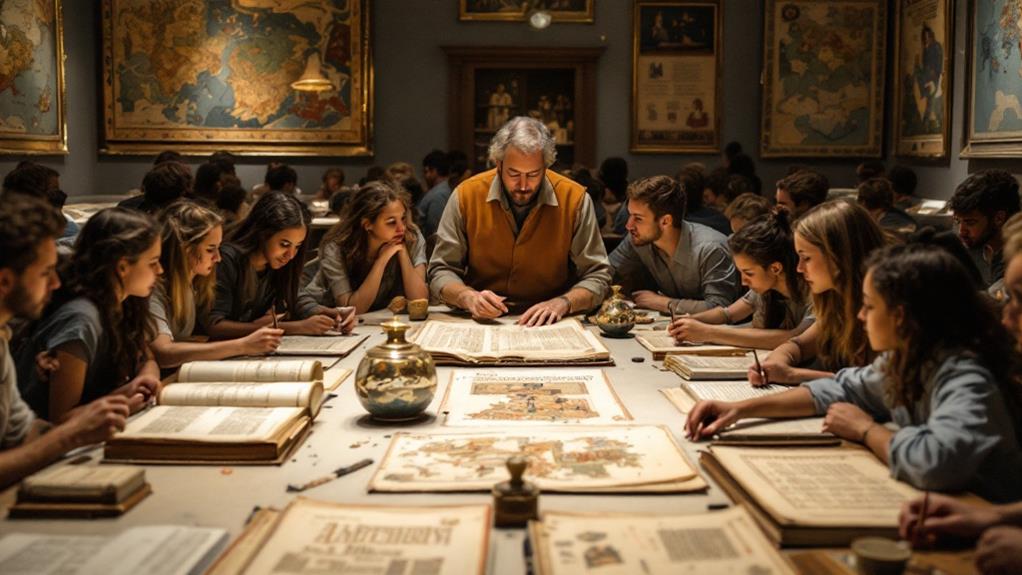
Literature’s Roots in Folios: How Ancient Texts Shape Our Stories

You're exploring the depth of modern storytelling rooted in ancient folios. Early written systems like cuneiform and hieroglyphs transformed oral tales to tangible narratives, preserving them for future generations. Texts like "The Epic of Gilgamesh" and Homer's epics illustrate foundational themes and archetypes still present today. Philosophies from Ancient Greece and Eastern tales enriched storytelling with moral and ethical layers. Medieval manuscripts expanded myths, while the Renaissance revived classical ideas, infusing creativity into literature. These ancient texts are more than just historical artifacts; they influence contemporary stories profoundly. There's much more to uncover beneath these timeless influences.
Origins of Written Language
Throughout history, the origins of written language have profoundly impacted human communication and culture. As you investigate the past, you'll uncover that cuneiform inscriptions and hieroglyphic symbols were among the initial methods humans used to record information. These ancient scripts, carved into clay tablets and etched onto stone walls, served as the foundation for documenting everything from trade transactions to religious beliefs.
Before these writing systems, oral traditions were the primary means of storytelling and knowledge transfer. However, pictographic writing soon emerged, allowing for a more permanent and symbolic representation of ideas. This shift marked the beginning of linguistic evolution, as societies began to develop more complex systems of communication.
Early alphabets, such as the Phoenician script, played an essential role in this transformation. They provided a more streamlined way to represent spoken language, enabling broader literacy and more efficient dissemination of information. As you investigate the rich tapestry of ancient scripts, it's clear that the development of written language was a significant moment in human history, shaping cultures and societies across the globe. Without these innovations, the stories and knowledge passed down through generations might have been lost.
The Epic of Gilgamesh
One of the earliest and most enduring works of literature, "The Epic of Gilgamesh," offers a fascinating glimpse into ancient Mesopotamian culture and beliefs. As you investigate Gilgamesh's legacy, you'll reveal themes of friendship and an epic quest for immortality. These themes reveal the deep bonds between Gilgamesh and Enkidu, highlighting their ancient heroism. Their friendship sets the stage for the narrative structure, guiding you through a powerful tale of growth and transformation.
You'll notice how the quest for immortality drives Gilgamesh to confront mortality's inevitability. This quest underscores the moral lessons woven throughout the epic, reminding you of life's fleeting nature and the importance of human relationships. The narrative's poetic form enriches the storytelling, creating a rhythm that captivates you.
The historical context of the epic provides insights into the cultural exchange between ancient civilizations. Through divine intervention, the gods influence the characters' fates, reflecting the beliefs of the time. As you investigate deeper, you'll reveal how these elements combine to form a timeless story that continues to resonate with readers. "The Epic of Gilgamesh" remains a reflection of the enduring power of storytelling and its ability to convey profound truths.
Homer's Lasting Influence

Homer's epic poems, "The Iliad" and "The Odyssey," burst forth as foundational pillars of Western literature, shaping storytelling for millennia. When you investigate these texts, you'll notice how Homeric themes like heroism, fate, and the gods' influence permeate through countless narratives. Odyssean expeditions, characterized by long, adventurous quests and personal transformation, have become a staple in storytelling, echoing in modern tales of adventure and self-discovery.
Epic conventions introduced by Homer, such as invoking the muse and starting in medias res, are still employed by writers today. These elements help establish a narrative structure that captivates audiences, ensuring they remain engaged from beginning to end. You'll also recognize literary archetypes born from these works, like the heroic warrior and the cunning trickster, which continue to populate literature and film.
Homer's use of poetic devices—such as similes and epithets—enhances the vivid imagery and rhythm of his tales. These works, rooted in oral traditions, carry a cultural impact that transcends time, influencing countless generations. As you examine modern narratives, you'll see Homer's fingerprints everywhere, a reflection of his enduring legacy.
Philosophies of Ancient Greece
Ancient Greece birthed a rich tapestry of philosophical thought that continues to influence modern thinking. When you immerse yourself in the world of Greek philosophy, you encounter Socratic dialogues, which serve as a cornerstone in investigating ethics and human nature. Socrates, through his method of questioning, encourages you to examine your beliefs critically. His dialogues don't just provide answers but rather urge you to think deeply about life's fundamental questions.
Plato, a student of Socrates, further expands on these teachings with his Platonic ideals. You're introduced to the concept of forms—a belief that non-material abstracts, like justice and beauty, represent the most accurate reality. This notion challenges you to look beyond the physical world and reach for a deeper understanding of truth and perfection.
As you investigate these ancient texts, you'll find that they lay the groundwork for Western philosophy and literature. They push you to question, analyze, and seek wisdom. The philosophies of ancient Greece are more than historical footnotes; they are active, living traditions that shape how you perceive the world today. Engaging with these ideas invites you to continue the dialogue, evolving your own understanding of life's complexities.
Eastern Texts and Narratives

Delving into Eastern texts and narratives offers you a profound odyssey into the rich cultural and philosophical traditions of Asia. These ancient stories, laden with Eastern parables and intricate narrative structures, guide you through a tapestry of cultural symbolism and spiritual themes. By exploring these texts, you encounter oral traditions that have been passed down through generations, preserving wisdom and moral lessons embedded within mythological elements.
Eastern parables, like those found in the teachings of Confucius or the Jataka tales, offer insights into philosophical teachings that continue to influence contemporary thought. You see how these narratives are shaped not only by their historical influences but also by the spiritual themes that resonate throughout. The Mahabharata and the Ramayana, for instance, are epic tales rich in cultural symbolism and mythological elements, providing a window into the values and beliefs of ancient societies.
As you engage yourself in these texts, you recognize the enduring power of their oral traditions. They remind you of the universal quest for understanding and meaning, bridging the past with the present. This exploration fosters a deeper appreciation for how Eastern narratives shape our collective storytelling heritage, enriching your own narrative odyssey.
The Roman Literary Tradition
In examining the Roman literary tradition, you uncover a world where history, politics, and culture intertwine through the written word. Roman satire, with its biting wit and societal reflections, becomes a mirror to the times, exposing human folly and political corruption. You see how Virgil's legacy in works like the "Aeneid" sets the standard for epic traditions, weaving heroic tales that resonate through the eras. Ovid's influence, particularly in "Metamorphoses," introduces poetic forms that investigate transformation and myth, impacting literature across centuries.
Dramatic poetry in Rome often blends entertainment with moral lessons, using rhetorical techniques to captivate audiences and convey deeper truths. These techniques also appear in historical narratives, where authors like Livy and Tacitus provide detailed accounts of Rome's past, shaping our understanding of its evolution and ethos.
Moreover, Roman writers engage in literary criticism, analyzing texts to improve their own work's depth and precision. This tradition of critique and commentary enriches the literary landscape, encouraging writers to refine their craft. As you probe deeper, you realize how these foundations influence modern storytelling, echoing in the narratives we cherish today.
Medieval Manuscripts and Myth
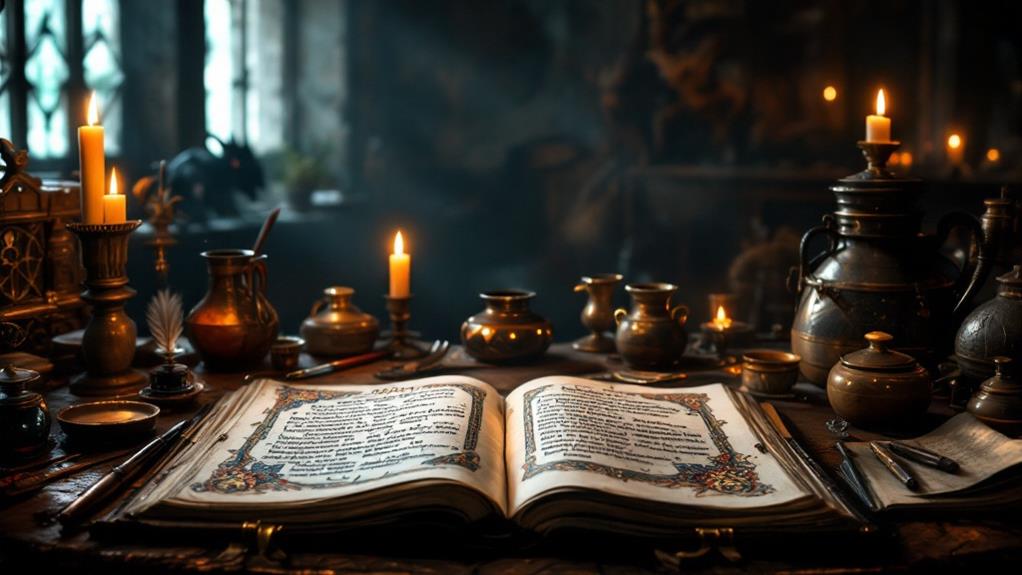
Medieval Europe's fascination with manuscripts reveals a lively tapestry of myth and legend, intricately woven into the fabric of its literary tradition. As you explore these ancient texts, you're transported to a world where stories weren't just stories; they were vehicles of moral and spiritual teachings. Medieval allegories were more than narratives—they were lessons wrapped in tales of knights, dragons, and quests. Each manuscript served as a window into the medieval mind, reflecting society's values and beliefs.
In this period, manuscript preservation was vital. Monasteries became sanctuaries for these texts, where monks painstakingly copied each page by hand. This laborious process guaranteed that the rich myths and allegories endured through centuries. You can almost imagine the candlelit scriptoriums where scribes worked tirelessly, preserving not just words but entire worlds.
These manuscripts didn't just preserve existing myths; they also sparked new legends. You find tales like those of King Arthur and the Knights of the Round Table, which grew and evolved as they were retold. Medieval manuscripts helped bridge the gap between the ancient and the modern, shaping the stories that continue to captivate us today.
Renaissance Rediscovery of Classics
As you voyage from the candlelit scriptoriums of the medieval period, the Renaissance bursts onto the scene with a fervor for rediscovering the classics. This epoch is marked by a profound thirst for knowledge that propelled scholars to plunge into ancient texts, bringing them back to life. You see the rise of Renaissance humanism, a movement that places human potential and achievements at the forefront. It's this humanism that drives you to investigate the ancient wisdom captured in the works of Greek and Roman philosophers, poets, and historians.
The Classical revival isn't just about reading old texts; it's about integrating their ideas into a new cultural framework. You watch as artists, writers, and thinkers draw inspiration from these ancient sources, reshaping them to fit their contemporary world. This blending of past and present ignites a creative explosion that influences art, architecture, and literature. You recognize the echoes of Homer, Virgil, and Aristotle in the works of Shakespeare, Michelangelo, and Leonardo da Vinci. Through this rediscovery, you gain a deeper understanding of humanity and its stories, laying the groundwork for the evolution of modern literature and thought.
Folios and Storytelling Techniques

Often, you find that the evolution of storytelling intertwines closely with the formats that carry these tales, and folios play an essential role in this development. Folios, particularly in their early forms, served as important vessels for manuscript preservation, allowing stories to transcend time and space. Before the widespread use of folios, oral traditions dominated. These traditions relied on memory and verbal transmission, which, while rich and engaging, often led to variations and loss of content over time.
With the advent of folios, you gained a more permanent method to capture and convey these stories. This shift from oral to written forms allowed for greater consistency and detail in storytelling techniques. You could now investigate complex plots, intricate character development, and vivid settings in ways oral traditions struggled to maintain over generations. Folios provided a structured format to document these elements, ensuring that stories remained intact and accessible to future audiences.
Moreover, the physicality of folios contributed to storytelling's evolution. You can imagine how the tangible nature of a folio—its weight, texture, and presence—enhanced the reader's experience, making stories feel more real and enveloping. This connection between format and technique continues to influence the way stories are told today.
Modern Narratives and Ancient Echoes
In many ways, modern narratives draw inspiration from the echoes of ancient storytelling techniques found in folios. When you examine today's stories, you'll notice the cultural resonance that mirrors the timeless themes rooted in ancient texts. These narratives often rely on narrative archetypes, the familiar characters and plots that have been with us since the dawn of storytelling. Think about the hero's odyssey, a concept that's been told and retold over centuries, shaping the backbone of countless modern tales.
You might not realize it, but when you read a contemporary novel or watch a film, you're engaging with these ancient echoes. Authors and creators often draw on these archetypes, weaving them into new settings and contexts to investigate modern issues while maintaining a connection to our storytelling past. This blend of old and new allows you to find deeper meaning and familiarity in stories, even if they're set in entirely different worlds.
Related posts