Legendary Folio Collectors and Their Influence on Preservation
Legendary folio collectors like Sir Robert Cotton and Thomas Bodley have shaped the preservation of our cultural heritage. Their dedication to safeguarding rare manuscripts and historical texts guarantees you have access to these gems. Early pioneers laid the groundwork for major libraries, like the Bodleian Library and British Library. Today's collectors continue their legacy, using digital archiving and climate control to protect these works. They overcome challenges like high costs and forgeries, assuring authenticity remains intact. As you investigate further, you'll uncover the profound impact these collectors have on preserving our shared history.
The Role of Folio Collectors
Folio collectors play a significant role in the preservation of literary and historical works. As a collector, you're driven by a passion for safeguarding these valuables, guaranteeing that future generations can access and appreciate them. Your motivations might range from a deep love for literature and history to a keen interest in the financial potential of these rare items. Whatever your reasons, your dedication is critical for keeping these works alive.
In the lively folio markets, you have the opportunity to acquire rare editions and unique manuscripts. These markets are dynamic hubs where collectors like you exchange knowledge and expertise, often leading to the revelation of hidden gems. By participating in these markets, you contribute to a thriving ecosystem that supports the preservation of significant cultural artifacts. Your choices in these markets help shape the landscape of what gets preserved and celebrated.
Every folio you collect tells a story, and your role guarantees these stories are not lost to time. You're not just acquiring pieces of paper; you're safeguarding history. Your passion and commitment make you an indispensable part of the cultural preservation community.
Early Pioneers of Preservation
While modern collectors play an essential role today, it's significant to recognize the early pioneers who laid the groundwork for preserving literary and historical gems. You can trace the roots of book preservation back to individuals like Sir Robert Cotton and Thomas Bodley. These visionaries understood the immense cultural importance of maintaining texts and documents within their historical context. They collected works not just for personal gain but to protect knowledge for future generations.
Imagine walking through the halls of the British Museum or the Bodleian Library, where the dedication of these early collectors is palpable. Sir Robert Cotton's library, for instance, became the foundation for the British Library. His foresight in preserving everything from royal decrees to medieval manuscripts highlighted how maintaining these works could shape a nation's cultural identity.
Thomas Bodley, on the other hand, focused on establishing a library at Oxford, now known as the Bodleian Library. His efforts guaranteed that scholars could access a wealth of knowledge, emphasizing the cultural significance of preservation. By valuing these texts within their historical context, early pioneers helped cement the importance of literary preservation, creating a legacy that continues to inspire collectors today.
Iconic Collections and Their Impact
Undeniably, iconic collections have reshaped the landscape of literary and historical preservation. When you think about the cultural significance of these collections, you realize how much they contribute to our understanding of history and literature. Iconic collectors have painstakingly gathered rare folios, ensuring that these valuables are preserved for future generations. Their dedication to amassing such works doesn't just safeguard the past; it also enriches our present by making these pieces accessible for study and appreciation.
You'll find that these collections often become cornerstones of libraries and museums worldwide. They serve as tangible links to our shared cultural heritage. By collecting and preserving these folios, iconic collectors help maintain the narratives and knowledge encapsulated within them. They've also spurred an increased awareness of the importance of preservation, encouraging others to recognize the value of safeguarding historical texts.
The impact of these collections is profound. They not only preserve the past but also inspire ongoing dialogue about cultural significance and the role of collectors in shaping our understanding of history. As a result, these collections invite you to investigate and engage with history in a deeply meaningful way.
Notable Figures in Folio Collecting
When you investigate the world of folio collecting, certain figures stand out for their remarkable contributions. These famous collectors have shaped the landscape of rare editions, setting trends and standards that echo through time. One such influential figure is Sir Thomas Phillipps, a 19th-century bibliophile whose insatiable appetite for books led to a personal library of over 60,000 manuscripts. His passion for preserving works of historical significance laid the groundwork for future collectors.
Another crucial name in folio collecting is Henry Clay Folger, whose auction strategies were legendary. Folger's keen eye and dedication to Shakespearean works resulted in the world's largest collection of Initial Folios. His efforts highlighted the importance of both acquiring and maintaining rare editions, influencing collecting trends and inspiring others to prioritize preservation ethics.
James Lenox, too, holds a place among the greats. As a collector, he focused on building a library that offered cultural and historical insight. Lenox's collections eventually formed the foundation of the New York Public Library, showcasing how personal libraries can transform into public gems. These collectors not only amassed books but also fostered a legacy of appreciation and respect for literary history.
Techniques in Preserving Manuscripts

Preserving manuscripts demands careful attention to detail and a deep understanding of conservation techniques. You need to reflect on digital preservation as a significant tool for safeguarding historical documentation. By digitizing manuscripts, you guarantee access without risking physical degradation. However, it's imperative to balance this with preservation ethics, respecting the original material's integrity.
Effective archival methods are fundamental. You should employ climate control to maintain stable temperature and humidity levels, preventing damage from environmental fluctuations. Material science plays a key role here, helping you select appropriate storage materials that won't react adversely with the manuscripts.
When tackling manuscript restoration, use conservation techniques that are reversible and minimally invasive. You want to maintain the manuscript's authenticity and historical value. Always document your restoration processes carefully to provide future conservators with a clear understanding of what's been done.
Contributions to Modern Libraries
Modern libraries owe much of their evolution to folio collectors who have preserved and shared invaluable manuscripts. These collectors' efforts have guaranteed that rare texts don't just gather dust, but instead, enrich our modern understanding. By digitizing ancient works, collectors have laid the groundwork for digital archiving, allowing you to access centuries-old manuscripts with a few clicks. This transformation has made knowledge more democratic, breaking down barriers that once kept these gems hidden away.
You can't underestimate the emotional power of these contributions:
- Awe: Witnessing a digital version of a rare manuscript that once seemed out of reach.
- Gratitude: Knowing that these works have been saved from the ravages of time.
- Inspiration: Imagining the stories and wisdom hidden within these ancient texts.
Collaborative sharing has also played a crucial role. Collectors often work hand-in-hand with librarians and scholars, creating networks that bring together expertise from around the globe. This teamwork guarantees that preservation methods are up-to-date and effective, nurturing a culture of shared responsibility. As you delve into these modern libraries, remember the collectors whose passion and dedication have made such access possible. Their legacy continues to shape the future of library collections and access.
Challenges Faced by Collectors
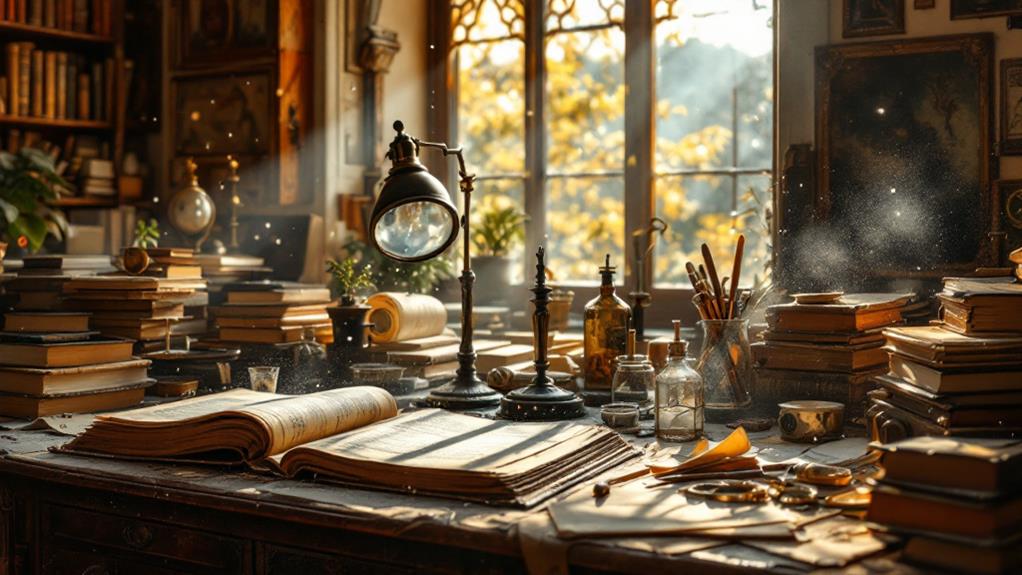
Steering through the world of folio collecting isn't without its challenges. Initially, you'll face financial constraints. Folios, especially rare ones, are pricey investments. Balancing your budget with your passion can be tricky. You must also grapple with authenticity concerns. With forgeries circulating, verifying the legitimacy of a folio becomes imperative. You'll need to rely on expert opinions, which might add to your costs.
Environmental factors pose another hurdle. Maintaining the right temperature and humidity levels is fundamental to preserve your folios. Too much moisture or heat can lead to deterioration, so you'll want to invest in proper storage solutions, like climate-controlled rooms or special cases. Then there's the challenge of staying updated with technological advancements. New tools and methods for preservation and verification are constantly being developed. Keeping pace with these changes can be overwhelming, yet essential.
Lastly, while maneuvering through these obstacles, connecting with collector communities proves invaluable. These networks offer support and share insights. Engaging with fellow collectors helps you learn from their experiences and find solutions to common issues. Accept these communities, as they can be a lifeline in your collecting experience.
The Future of Folio Preservation
As you look ahead, the future of folio preservation seems bright with possibilities. You're stepping into a period where technology and tradition blend seamlessly, ensuring the legacy of these valued works endures. Digital archiving plays an essential role, allowing you to preserve and access folios without the risk of physical degradation. Imagine a world where rare manuscripts are just a click away, available for study and admiration from anywhere.
Climate control is another game-changer. By maintaining ideal environmental conditions, you can prevent damage caused by humidity, temperature fluctuations, and pollutants. This not only safeguards the physical integrity of folios but also prolongs their life span for generations to come.
Consider the emotional impact of this progress:
- Peace of mind knowing historical folios are protected.
- Excitement at the accessibility of digital archives.
- Satisfaction in contributing to cultural preservation.
Related posts