Iconography in Illuminated Manuscripts: Decoding Symbols and Meanings
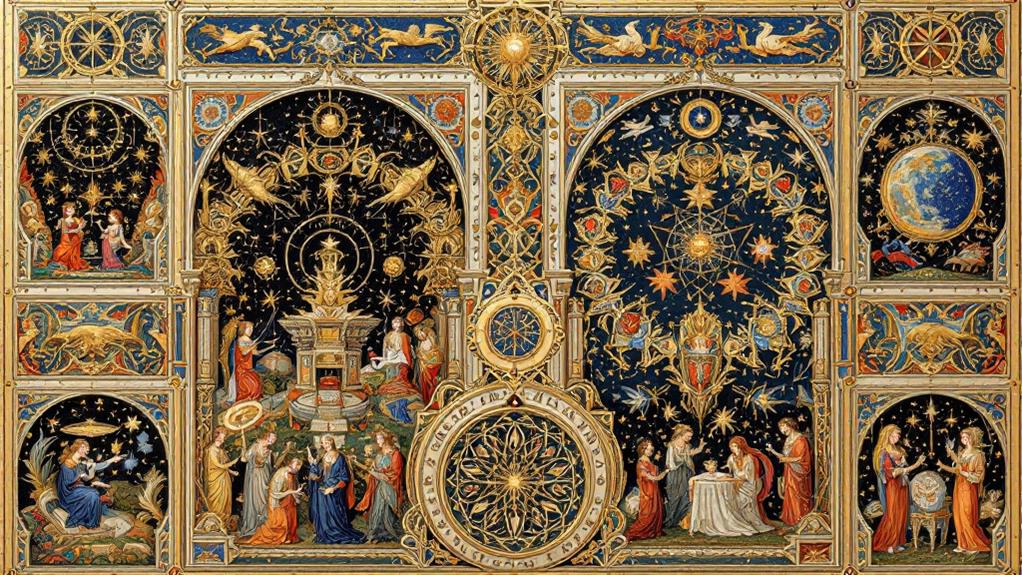
When you investigate the iconography in illuminated manuscripts, you'll find a wealth of medieval symbolism. Each manuscript weaves colors like gold and blue, representing divinity and loyalty, with symbols such as the cross and lamb, embodying Christian beliefs. Mythical creatures, from dragons to unicorns, serve dual roles as guardians and spiritual allegories. Saints appear with distinct attributes, revealing their virtues and stories. Floral and fauna motifs, like roses for love and lions for strength, enrich narratives further. These creations showcase cultural exchanges, blending Eastern and Western styles. By examining these elements, you uncover the depths of medieval artistry.
Historical Context and Significance
When you dive into the historical context of illuminated manuscripts, you uncover a rich tapestry of cultural and religious significance. These extraordinary works of art, born from medieval artistry, were not just about embellishing texts but also served as a bridge between the sacred and the secular. Illuminated manuscripts were painstakingly crafted, and their production was a labor-intensive process that involved scribes, illuminators, and bookbinders. Each played an essential role in transforming plain text into magnificent works of art.
In the medieval period, manuscript production was often centered in monasteries, where monks dedicated their lives to creating these intricate pieces. The artistry involved was a reflection of their devotion, as they incorporated lively colors, gold leaf, and detailed illustrations into the pages. These manuscripts were more than just books; they were symbols of knowledge and spiritual devotion, reflecting the values and beliefs of the time.
As you investigate these pages, you'll notice the careful attention to detail present in every stroke of the pen and brush. The illuminated manuscripts served as a visual representation of the medieval world, capturing its essence and preserving its stories for future generations.
Common Religious Symbols
Exploring the common religious symbols in illuminated manuscripts reveals a fascinating layer of meaning and devotion embedded within these artistic creations. As you examine these symbols, you'll uncover how they reflect the intricate relationship between art and faith, providing insight into historical liturgical practices. Illuminated manuscripts often feature a variety of symbols that have been interpreted in specific religious contexts, each carrying a unique symbolic interpretation.
- The Cross: Recognized across many manuscripts, the cross symbolizes the crucifixion and resurrection of Jesus Christ. Its presence is a representation of the central tenets of the Christian faith and serves as a powerful reminder of salvation and eternal life.
- The Lamb: Often depicted with a halo, the lamb represents Christ as the sacrificial lamb, highlighting His role as the redeemer in Christian theology. This symbol frequently appears in manuscripts used during significant liturgical practices, such as Easter.
- The Dove: Symbolizing the Holy Spirit, the dove is often shown descending from above. This image is particularly associated with events like the baptism of Jesus, where the Spirit descends, bringing peace and divine presence.
Depictions of Saints
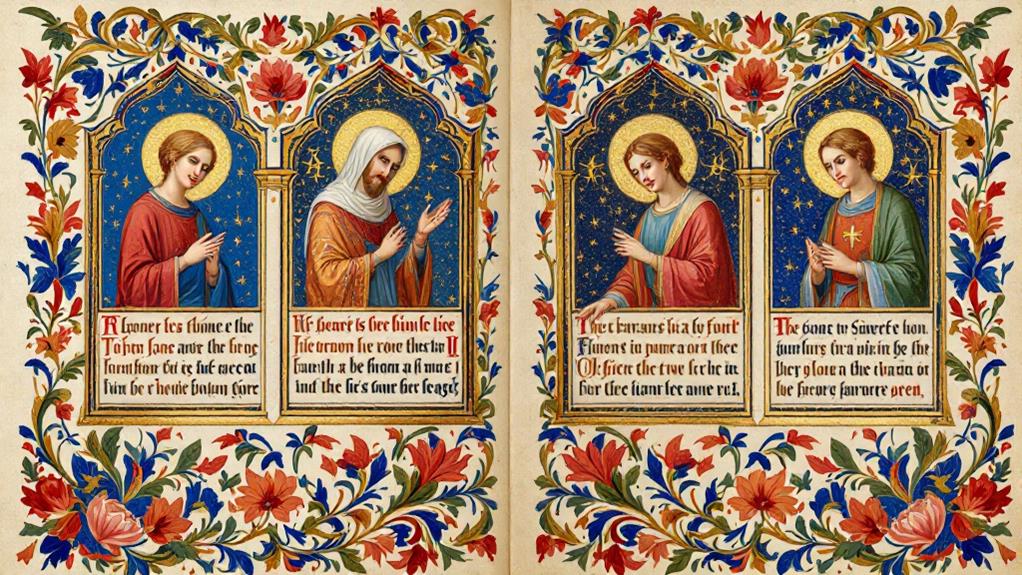
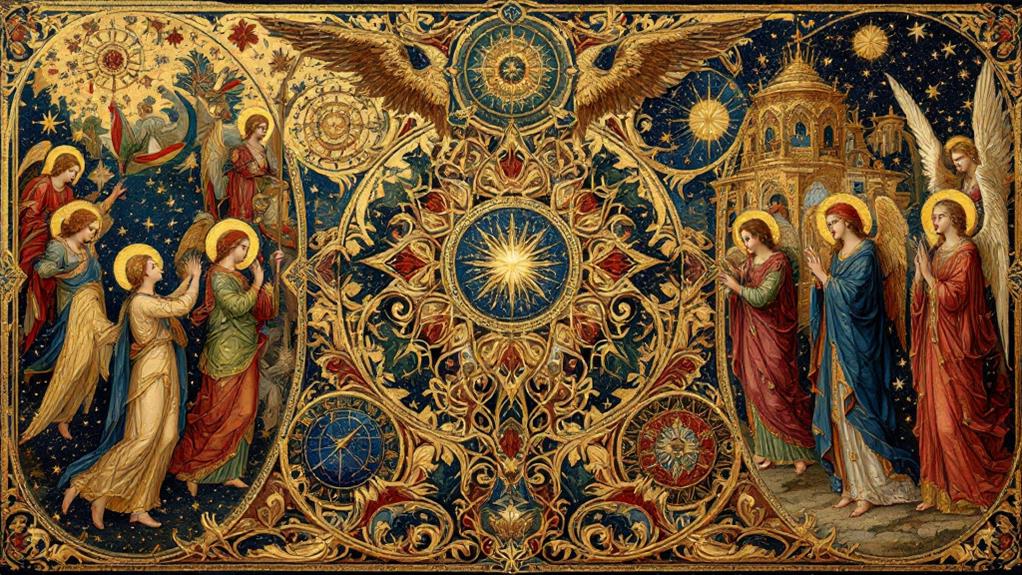
Frequently, illuminated manuscripts captivate viewers with their detailed depictions of saints, showcasing their revered status within the Christian tradition. As you investigate these manuscripts, you'll notice that saint iconography plays a vital role in conveying their holiness and virtues. Each depiction is not merely an artistic endeavor but a narrative that combines visual elements with hagiographic narratives—stories of the saints' lives, miracles, and martyrdoms. These narratives are fundamental in understanding the cultural and spiritual significance of each saint.
When you examine the images, pay attention to the symbols and attributes associated with each saint. Saint iconography often includes specific items like a saint's traditional clothing, tools of their trade, or objects related to their miracles. For example, Saint Peter is frequently depicted holding keys, symbolizing the keys to heaven. These visual cues are important in distinguishing different saints and understanding the stories behind them.
Mythical Creatures in Manuscripts
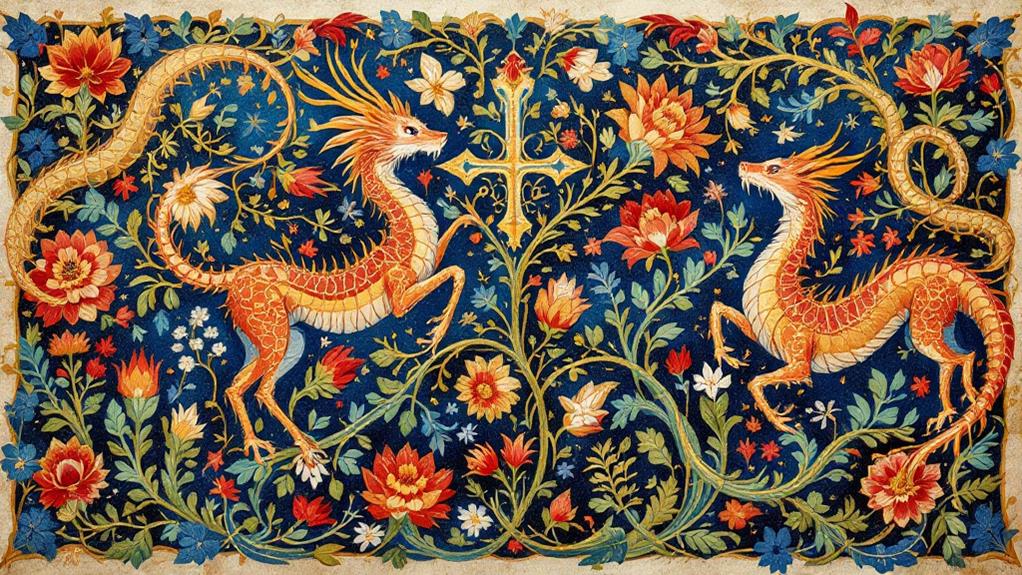
While saint iconography conveys tales of virtue and sanctity, illuminated manuscripts also enchant with their depictions of mythical creatures. You'll find dragons and griffins that leap off the pages, each serving distinct narrative roles. Dragons often symbolize chaos or evil, yet they can also be guardians of wisdom, reflecting deep folklore influences. Griffins, with their lion's body and eagle's head, symbolize divine power and protection, embodying hybrid creatures that captivate the imagination.
Unicorn symbolism in these manuscripts is similarly fascinating. Unicorns often represent purity and grace, appearing in religious contexts as symbols of Christ or the Virgin Mary. Their otherworldly presence in manuscripts highlights artistic interpretations that intertwine spiritual and mythical themes.
Here's how you can appreciate these mythical creatures further:
- Examine Their Context: Look at the surrounding text and images to understand each creature's narrative role.
- Identify Folklore Influences: Notice elements that reflect cultural tales from the manuscript's origin.
- Appreciate Artistic Interpretations: Observe the details that bring these creatures to life, revealing the artist's unique vision.
Floral and Fauna Motifs
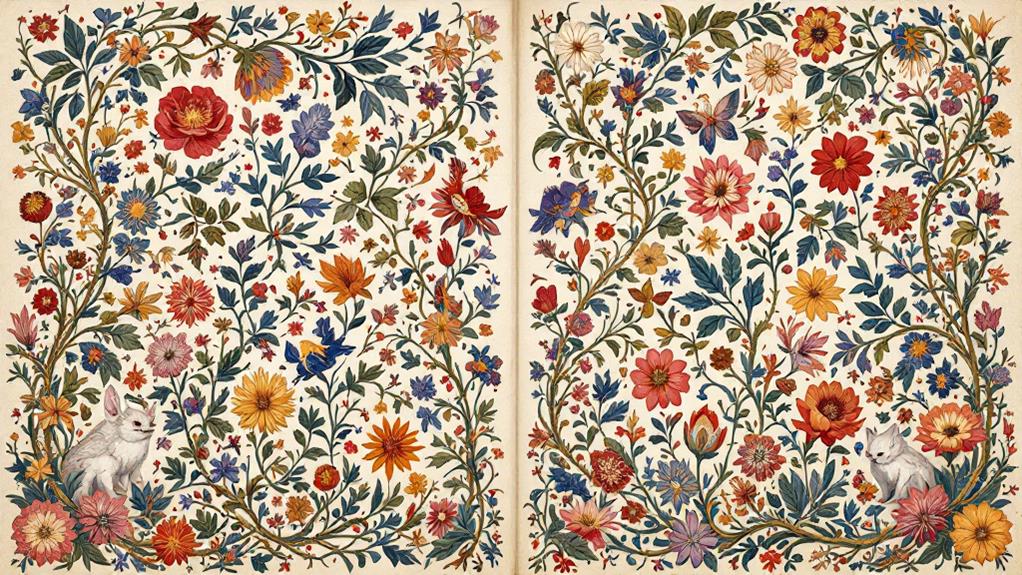
Delight in the intricate floral and fauna motifs that grace the margins and pages of illuminated manuscripts. These artistic elements aren't just decorative; they carry rich layers of meaning and symbolism. By examining these motifs, you uncover the world of botanical symbolism and animal representations that medieval artists used to communicate ideas and stories.
Floral motifs often symbolize virtues, emotions, or religious concepts. For instance, roses might represent love or the Virgin Mary, while lilies often signify purity. Each flower in a manuscript holds a specific meaning, allowing you to decode the text's deeper messages. As you investigate these pages, consider how each botanical element contributes to the narrative's context and theme.
Animal representations are similarly significant. Creatures like lions or eagles often embody strength, courage, or divine power. Rabbits and deer, on the other hand, can represent gentleness or meekness. These motifs guide you to understand the moral or spiritual lessons embedded within the manuscript. By recognizing these symbols, you gain insight into the medieval mindset and the cultural values of the time. So, as you read these illuminated texts, keep in mind that every floral and fauna motif tells its own story.
Color Symbolism
As you engage yourself in the world of illuminated manuscripts, color symbolism offers another layer of meaning that complements the floral and fauna motifs. The colors chosen in these artworks aren't just for aesthetic pleasure; they're deeply rooted in color psychology and intended to evoke specific emotions and ideas. By understanding this symbolism, you can gain a richer appreciation of the narratives and messages conveyed.
Consider three significant colors often found in these manuscripts:
- Gold: Often used to denote wealth, divinity, and eternal light. Its presence highlights the importance of the subject, making it the centerpiece of attention.
- Blue: Symbolizes loyalty, trust, and the divine. The use of blue, especially in specific color palettes like ultramarine, was costly, indicating a high value placed on the text or image.
- Red: Represents passion, power, and martyrdom. Red's lively nature draws the eye, emphasizing critical elements or themes within the manuscript.
Cultural Influences and Variations
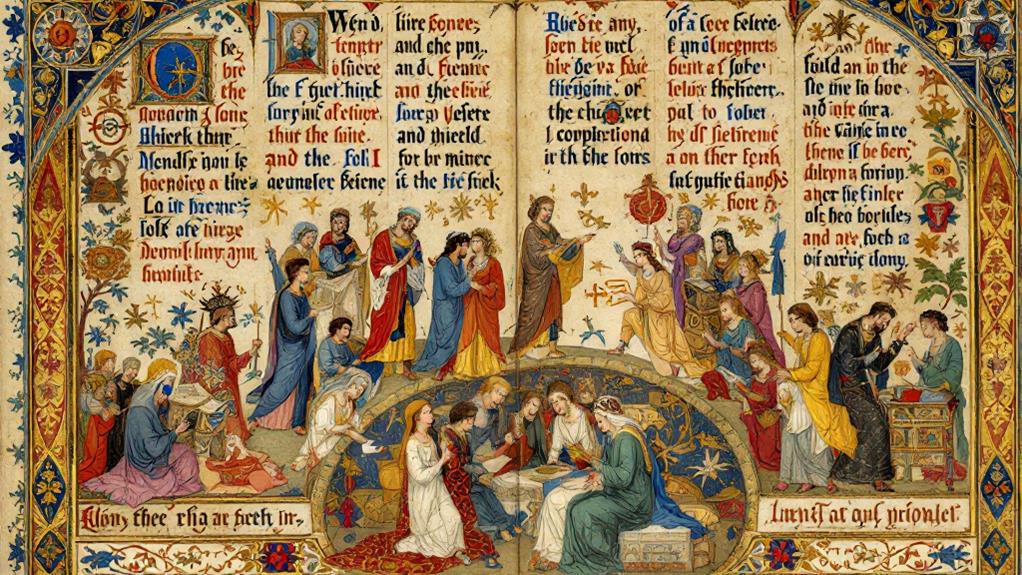
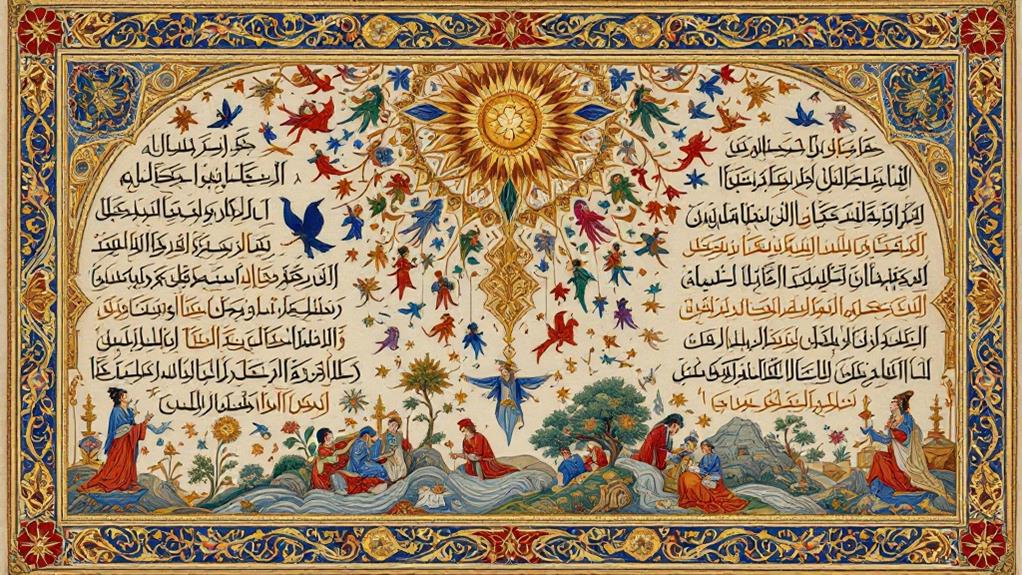
Cultural diversity plays a vital role in shaping the iconography of illuminated manuscripts. As you investigate these manuscripts, you'll notice how cultural exchanges and regional differences lead to varied artistic styles and iconographic traditions. Each region brings its unique historical influences and symbolic interpretations, making every manuscript a reflection of its time and place.
You might find that narrative techniques differ based on the manuscript audiences. For instance, a manuscript intended for a monastic community may emphasize spiritual iconography, while one created for a noble family could highlight secular themes. These choices reflect the cultural nuances and priorities of the audience, offering insights into their worldviews.
Historical influences also play an important role. The Crusades, for instance, introduced Western Europe to new artistic styles from the East, enriching the visual vocabulary of manuscripts. These interactions often led to the blending of motifs, creating a tapestry of shared cultural symbols.
Recognizing these cultural influences helps you appreciate the depth and richness of illuminated manuscripts. By decoding these variations, you gain a deeper understanding of how different societies expressed their beliefs and stories through the art of illumination.
Related posts