How Parchment and Vellum Shaped the History of Folios
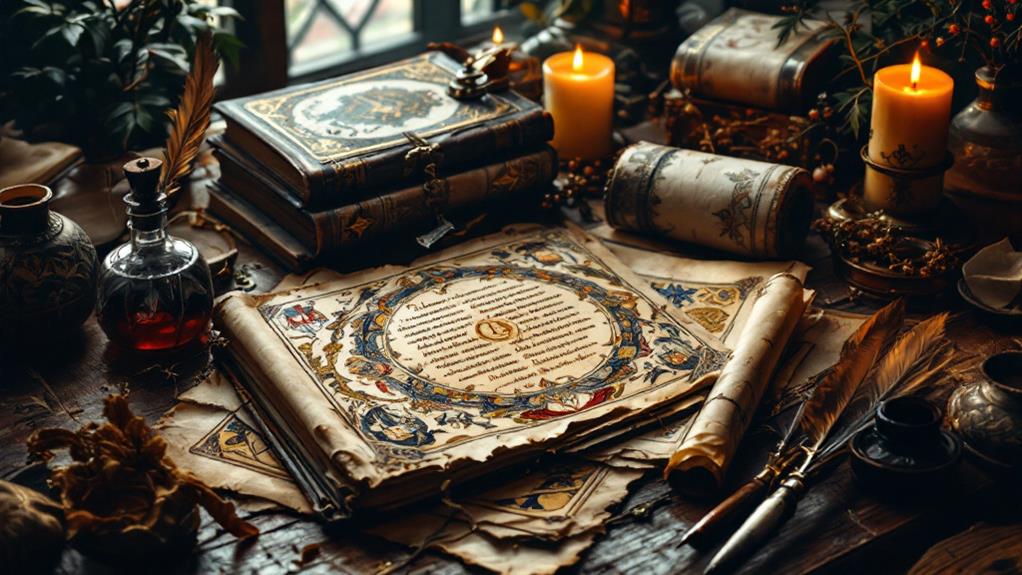
You'll find that parchment and vellum have notably shaped the history of folios, initially crafted from animal skins like calf, sheep, and goats. These materials became essential as they offered durability and a smooth surface for writing, vital during papyrus shortages. In medieval Europe, vellum was especially valued for illuminated manuscripts, allowing scribes to create lasting works with lively illustrations. Its strength preserved legal documents for centuries, maintaining their integrity. The change to paper didn't erase their influence; instead, it marked a shift to broader access. Uncover how these timeless materials continue to impact artistry and preservation today.
Origins of Parchment and Vellum
Parchment and vellum have captivating origins that date back thousands of years. As you investigate their history, you'll uncover their tremendous historical significance. These materials played an essential role in preserving knowledge long before paper became widespread. Parchment, made from animal skins, primarily sheep or goats, has a sturdy material composition that allowed it to withstand the test of time. Vellum, often considered a finer version, uses calfskins, making it smoother and more refined.
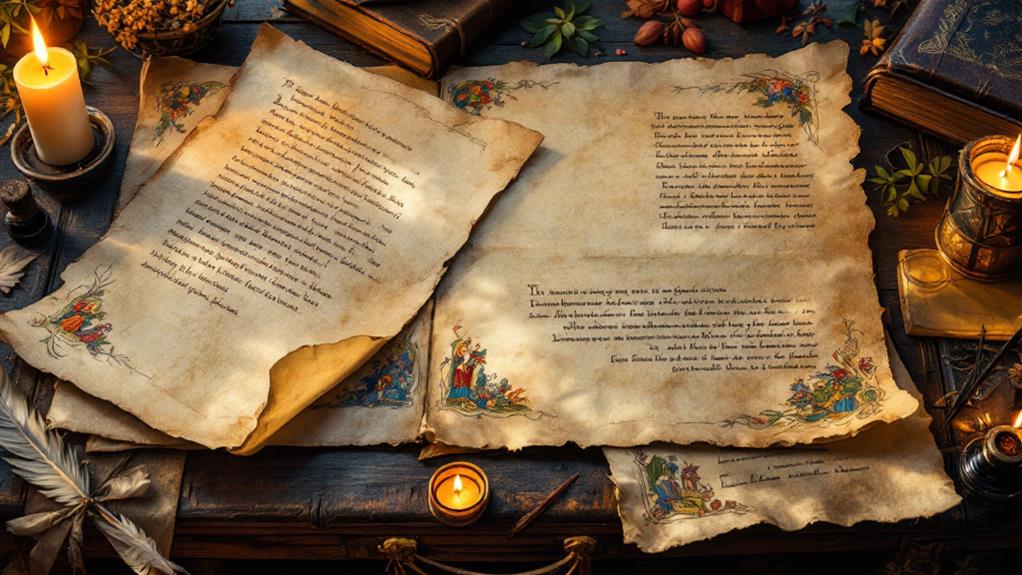
Imagine yourself in ancient Pergamon, where parchment's development is thought to have begun. It emerged as a response to a papyrus shortage, and its durability and flexibility quickly made it a favored medium for writing. As you examine the use of vellum, you'll see its significance in medieval Europe, where it became the choice material for illuminated manuscripts. These documents, often religious texts, showcase vellum's ability to hold lively pigments and intricate details.
Understanding the origins of parchment and vellum highlights their importance in history. Their unique material composition provided a foundation for recording and preserving the thoughts, stories, and innovations of past civilizations, deeply influencing the way information was shared across generations.
Crafting Techniques
In regard to crafting techniques, you'll find that creating parchment and vellum requires a detailed process, blending both art and science. Initially, you start with selecting the right animal skin, typically sheep, goats, or calves. During parchment processing, you soak the skins in a lime solution to loosen the hair and flesh. Once the hair is removed, you stretch the skin on a frame to dry. As it dries, you scrape it with a special knife to achieve the desired thickness and texture. This scraping is vital, as it affects the quality of the parchment.
Moving on to vellum production, the process is similar but often involves calfskin, which is finer and smoother. You need to verify the skin remains moist during stretching to maintain its suppleness. The final steps include sanding the surface to create a smooth writing surface and cutting the vellum to the needed size. Mastering these techniques requires patience and precision, as any misstep can lead to flaws in the final product. By perfecting these processes, you'll craft materials that have served as the foundation for countless historical documents and beautiful folios.
Durability and Preservation
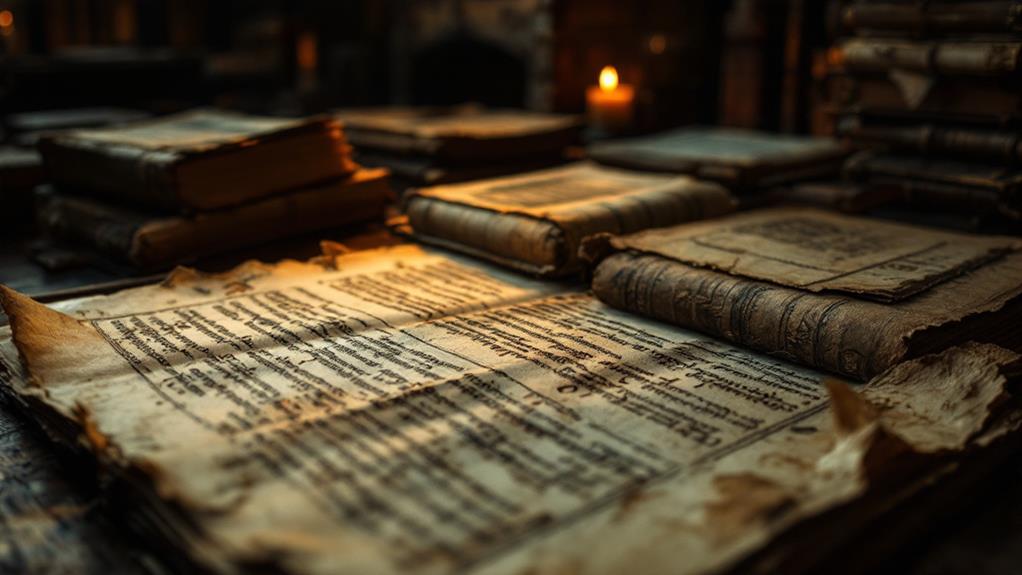
Crafting these exquisite materials is just the beginning; ensuring their longevity is just as important. When you reflect on preserving parchment and vellum, it is crucial to focus on proper archival practices. These include controlling environmental factors like temperature, humidity, and light exposure. Too much moisture can lead to mold growth, while extreme dryness might cause the materials to become brittle. By maintaining a stable environment, you can greatly extend the life of these precious folios.
You also need to take into account how you handle and store them. Use gloves to prevent oils from your skin from transferring onto the pages. Keep the folios in acid-free boxes or sleeves to protect them from dust and other contaminants. Regular inspections for signs of deterioration will help catch issues early, allowing for timely intervention.
Role in Medieval Manuscripts
During the Middle Era, parchment and vellum played a crucial role in the creation of manuscripts. You'd find these materials as the backbone of countless texts, from religious scriptures to scientific works. They provided a durable surface that accommodated the intricate details of manuscript illumination. Crafting a manuscript required a great deal of skill and precision, made possible by these materials' smooth texture and durability.
Here's how parchment and vellum influenced medieval manuscripts:
- Manuscript Illumination: Artists used these surfaces to create vivid illustrations and ornate decorations that captured the imagination.
- Script Styles: The flexibility of these materials allowed scribes to experiment with diverse script styles, leading to the evolution of distinct writing techniques.
- Durability: Parchment and vellum were resistant to wear and tear, ensuring the longevity of the manuscripts.
- Versatility: These materials were suitable for both text and illustrations, making them ideal for complex manuscripts.
- Prestige: Using parchment or vellum signified the manuscript's importance, often reserved for high-status or sacred texts.
Influence on Artistic Expression
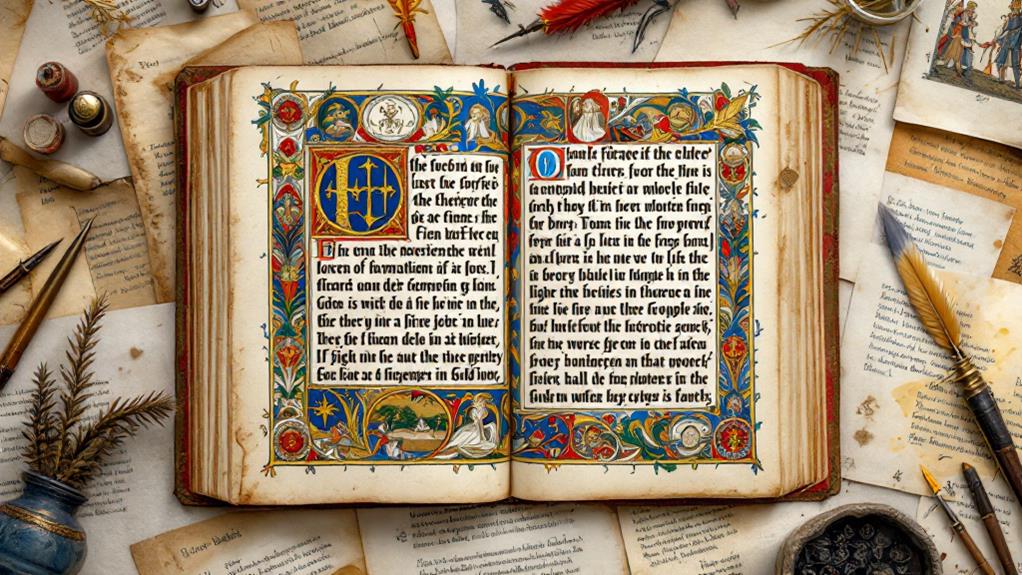
Parchment and vellum greatly shaped artistic expression in the medieval epoch, providing a unique canvas that heightened creativity. When you investigate illuminated manuscripts, you'll notice how these materials advanced the artistry of the time. The smooth, durable surface of parchment allowed artists to experiment with lively pigments and gold leaf, creating intricate designs that were both visually stunning and enduring. These manuscripts weren't just books; they were masterpieces that showcased the artistic styles of different regions and periods.
As you probe deeper, you'll find that the cultural significance of these works can't be overstated. They served as a bridge between art and spirituality, often depicting religious themes with a depth and reverence that resonated deeply within communities. The use of parchment and vellum allowed for the preservation of these cultural gems, ensuring their influence endured through the generations. Artists were not merely illustrators; they were storytellers who communicated historical and spiritual narratives, using their craft to inspire and educate.
Impact on Legal Documents
The role of parchment and vellum extended beyond artistic expression and deeply influenced legal documentation. As you examine the significance of these materials in legal contracts, you'll uncover their historical relevance. Parchment's durability and vellum's smoother texture made them ideal for creating documents that needed to stand the test of time. In medieval law, these materials guaranteed that legal agreements were preserved, allowing us to access ancient records today.
Consider the impact of parchment and vellum on legal documentation:
- Parchment quality: Its strength and resilience meant that legal documents remained intact over centuries.
- Vellum advantages: The smooth surface of vellum allowed for precise writing, essential for clarity in legal matters.
- Document authenticity: The unique qualities of these materials helped maintain the integrity of legal texts.
- Legal preservation: Significant agreements and decrees were safeguarded against the ravages of time.
- Historical significance: These documents provide insight into the legal practices and societal norms of past periods.
Transition to Paper
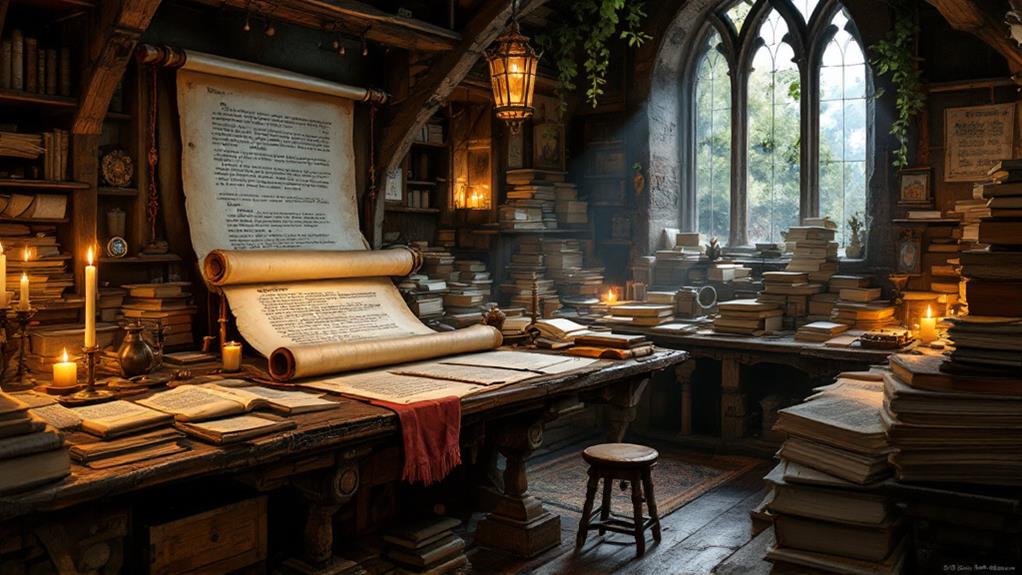
As societies evolved and technology advanced, paper's introduction ushered in a new era for document creation. You might wonder how this change impacted the cultural landscape. Paper, cheaper and more versatile than parchment or vellum, democratized information dissemination. Suddenly, more people could access written materials. In turn, this alteration had a profound cultural significance, allowing education and literacy to spread across different social strata. You see, paper wasn't just a new medium; it was a catalyst for societal change.
The economic impact of paper's rise can't be understated either. Producing parchment and vellum involved labor-intensive processes and the use of animal skins, making it expensive. Paper, made from easily available materials like rags and fibers, dramatically cut costs. This affordability meant that not only institutions but also individuals could commission and own written works. You'd notice that businesses, governments, and academics adopted paper for its cost-effectiveness, leading to a boom in written records and books.
In essence, shifting to paper didn't merely change what documents were made of; it transformed who could create, access, and benefit from them. It was a turning point, setting the stage for future innovations.
Modern Uses and Relevance
In the present world, countless modern applications keep parchment and vellum relevant, despite the dominance of paper. You might think these materials belong to the past, but they continue to play a significant role today. They're not just relics; they're actively used in numerous fields, bridging the gap between the tactile and the digital. In an age where digital documents reign, parchment and vellum offer a unique, tangible experience that digital can't replicate.
Consider these modern uses:
- Contemporary Art: Artists often use parchment and vellum as canvases, appreciating their texture and historical resonance.
- Calligraphy: The smooth surface of vellum is ideal for calligraphers aiming for precision and beauty in their work.
- Diplomatic Documents: Certain official documents still use vellum for its durability and formality.
- Bookbinding: High-end bookbinders choose parchment to give books a touch of elegance and tradition.
- Restoration Projects: Conservators utilize parchment in restoring historical documents, maintaining authenticity.
Even with the rise of digital documents, these materials provide a connection to history and a tactile quality that improves their relevance. So, while technology evolves, parchment and vellum continue to hold their own unique space in the modern world.
Lasting Legacy in History

Parchment's enduring legacy tells a story of transformation and resilience. As you explore its history, you'll see how it transcended its original use, impacting cultures worldwide. Parchment and vellum have played vital roles in preserving significant historical texts and religious manuscripts, contributing to their immense cultural significance. Through these materials, ancient knowledge was safeguarded, allowing future generations to access the past's wisdom and creativity.
The economic implications of parchment production were substantial. In medieval times, parchment was a valuable commodity, influencing trade and commerce. Its production required skilled labor and resources, creating specialized industries that bolstered local economies. You might find it fascinating how centers of parchment production became hubs of economic activity, with artisans perfecting the craft over centuries.
Today, parchment still captures our imagination, symbolizing a connection to history and tradition. It reminds us of the delicate balance between preserving the past and embracing innovation. When you hold a piece of parchment, you're touching not just a material but a legacy that shaped cultural and economic landscapes. This lasting legacy continues to inspire, reminding you of the enduring power of human ingenuity.
Related posts