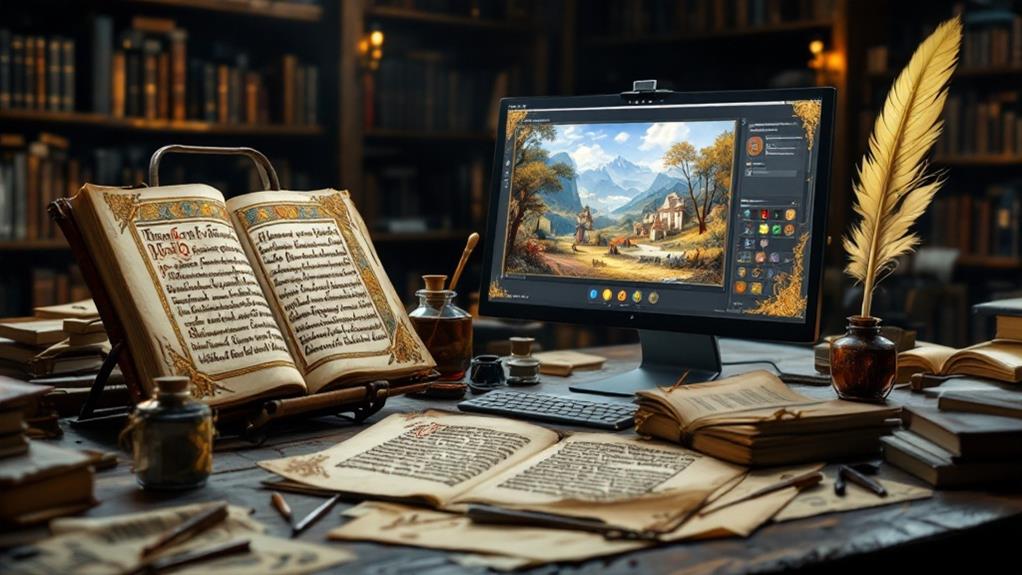
How Museums Protect and Exhibit Historic Folios as Cultural Icons
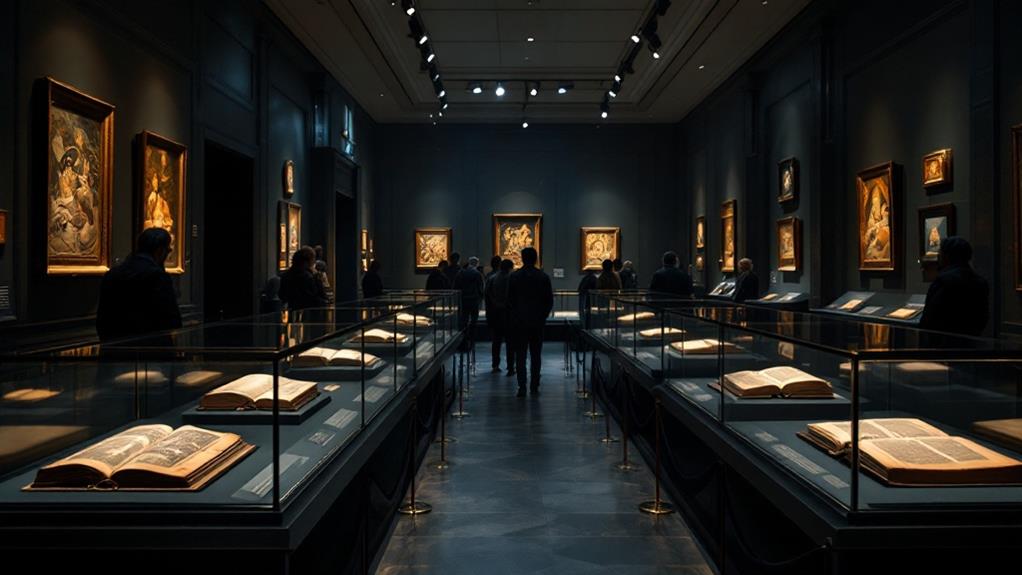
Museums play an essential role in protecting and showcasing historic folios, treating them as significant cultural icons. To preserve their integrity, museums use advanced conservation techniques such as digital preservation and custom encapsulation. They maintain ideal climate conditions and employ robust security systems with surveillance and access control. Folios are displayed creatively using augmented reality, touchscreen interfaces, and interactive exhibits to improve visitor engagement. By offering workshops and guided tours, museums make these artifacts accessible and relatable, all while ensuring their preservation for future generations. Exploring how these strategies unfold can offer insights into the evolving museum experience.
Understanding Historic Folios
The allure of historic folios lies in their ability to connect us to the past, providing glimpses into the cultures, knowledge, and artistry of previous periods. These folios aren't just collections of pages; they are essential links to our shared human history. Understanding their folio significance requires delving into the historical context in which they were created. Each folio encapsulates the time's intellectual pursuits, religious beliefs, and social structures, offering a tangible reflection of the period.
When you examine a historic folio, you're holding a piece of history that has survived countless generations. Its significance is immense, often containing rare manuscripts, illustrations, or early printed works that reveal the evolution of thought and creativity. The historical context of these folios enriches your appreciation, highlighting how they influenced societies and shaped cultural narratives.
Conservation Techniques
Within the delicate domain of conserving historic folios, museums employ a range of sophisticated techniques to secure these valuables endure for future generations. As someone responsible for the preservation of these artifacts, you need to understand the intricate processes involved. The initial step often involves material analysis, where you examine the paper, ink, and any pigments used. This analysis informs you on how best to treat and store the folios.
Digital preservation is another key technique. By creating high-resolution digital copies, you guarantee that the content is accessible without handling the original, reducing wear and tear. Digitization also provides a backup in case of physical damage.
Here are some crucial conservation techniques you should consider:
- Material Analysis: Identify the composition and condition of folios to tailor conservation efforts.
- Digital Preservation: Create digital copies to protect content and minimize handling.
- Custom Encapsulation: Use protective enclosures to shield folios from physical damage.
- Restoration: Carefully repair any tears or damages using sympathetic materials that won't add stress to the original.
Climate Control Systems
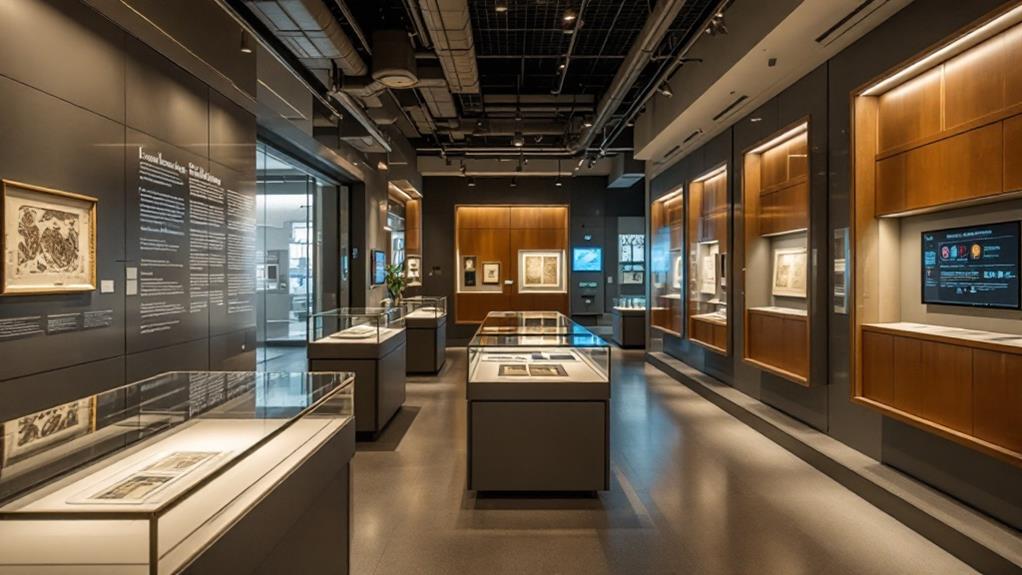
When preserving historic folios, controlling the environment is vital to prevent deterioration. You must focus on two key aspects: humidity regulation and temperature stability. These elements play a significant role in ensuring that the delicate pages of folios remain intact over time. In a museum setting, if the humidity levels fluctuate too much, it can lead to mold growth or cause the paper to warp and crack. That's why maintaining an ideal humidity level, typically around 45-55%, is critical.
To achieve this, you'd use advanced climate control systems specifically designed for museums. These systems constantly monitor and adjust the environment to keep conditions stable. Temperature stability is just as significant. Sudden temperature changes can cause materials to expand or contract, which may lead to physical damage. Ideally, the temperature should be kept between 65-70°F for preserving paper artifacts.
Innovative Display Methods
How can museums showcase historic folios while ensuring their protection? It's an exciting challenge that museums tackle with creative display methods. By integrating interactive technology, they create engaging and educational experiences for visitors. Here's how:
- Augmented Reality (AR) Displays: You can use AR to overlay digital information on the folios, allowing visitors to interact with the texts without touching them. This approach provides an engaging experience, making history come alive.
- 360-Degree Virtual Tours: With virtual reality headsets, visitors can investigate the folios in detail from all angles. This tool not only protects the actual documents from wear and tear but also offers a deeper understanding of their context and significance.
- Touchscreen Interfaces: These displays allow you to zoom in on high-resolution images of the folios, offering insights into the intricate details of the texts. It's a hands-on experience that keeps the originals safe.
- Interactive Exhibits with Motion Sensors: By using motion sensors, displays can change based on visitor movements, offering a personalized experience through the folio's history. This method improves engagement while maintaining document integrity.
Security Measures
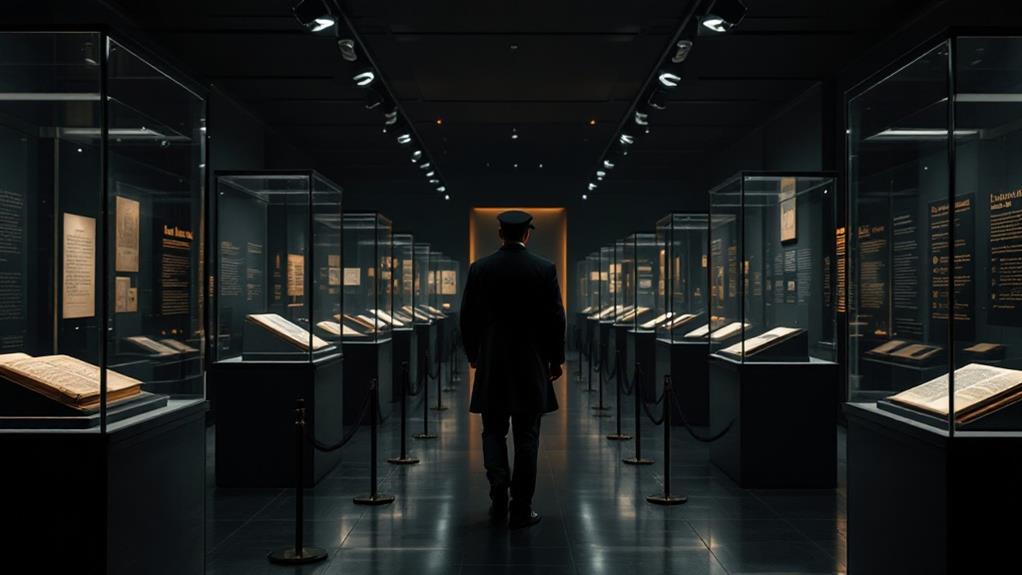
Guaranteeing the safety of historic folios requires robust security measures, as these invaluable documents are irreplaceable. You must implement a thorough plan that combines both physical and digital security to protect these cultural icons. Access control is vital; only authorized personnel should enter storage areas. Utilize key cards or biometric systems to manage and monitor who has entry. This guarantees that each folio remains untouched by unauthorized hands.
Digital security plays an essential role in safeguarding these documents. You need to employ advanced surveillance systems, including CCTV cameras, to keep a constant watch over exhibit areas. Modern systems can alert security teams to unusual activities in real-time. Furthermore, integrating alarm systems that trigger alerts in case of unauthorized access guarantees immediate response to potential threats.
Conduct regular audits of security protocols to identify any vulnerabilities. You should also train staff in emergency procedures, guaranteeing everyone knows their role in protecting these valuables. By establishing a culture of vigilance and responsibility, you create an environment where historic folios are secure. Remember, your efforts in maintaining stringent security measures directly contribute to preserving history for future generations.
Engaging the Public
While robust security measures are fundamental in safeguarding historic folios, connecting these cultural valuables with the public is likewise significant. Museums need to captivate your interest and foster a deeper appreciation for these artifacts. A dynamic way to achieve this is through interactive workshops, where you can engage directly with the materials, learn about their history, and even try your hand at related crafts or activities.
Community outreach is another crucial component. Museums can host events in local neighborhoods, bringing folios to those who might not typically visit the museum. This not only broadens access but also cultivates a sense of ownership and pride within the community.
To improve your engagement with historic folios, museums can implement several strategies:
- Guided Tours: Expert-led tours offer rich narratives, adding context and insight into each folio's significance.
- Digital Displays: Use technology to provide interactive screens that allow in-depth exploration of folios' details and histories.
- Storytelling Sessions: Invite storytellers to narrate tales related to the folios, sparking imagination and interest.
- Volunteer Programs: Encourage you to become a museum ambassador, sharing your newfound knowledge with others.
Future of Folio Exhibitions
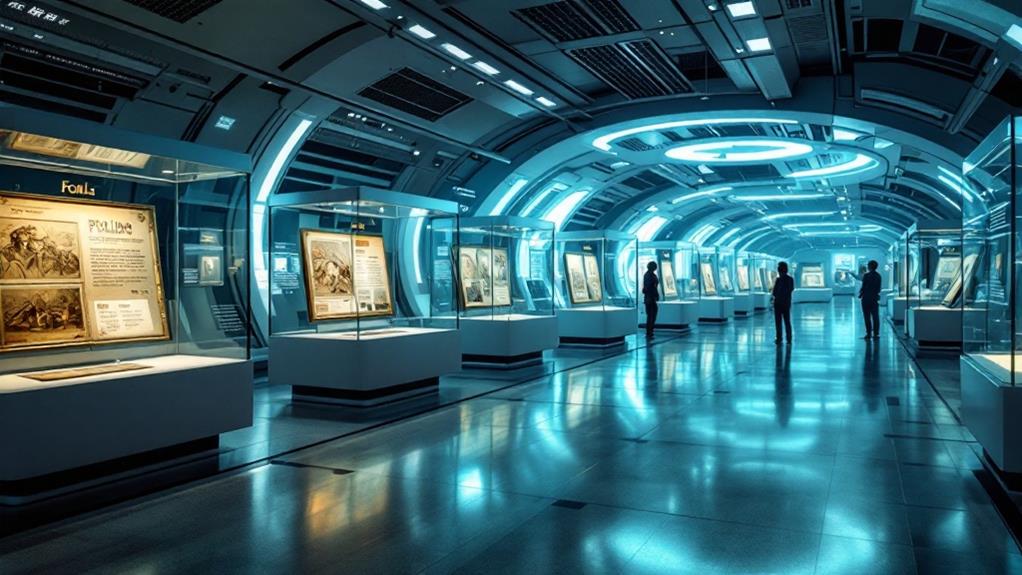
The future of folio exhibitions lies in embracing both creativity and inclusivity. As a museum-goer, you'll witness a transformation where digital preservation becomes paramount. This guarantees that even the most fragile folios can be experienced by a global audience without risking damage. By digitizing these gems, museums make them accessible to everyone, regardless of location. You'll find yourself traversing virtual galleries, exploring these historic documents from the comfort of your home.
Interactive experiences will also redefine how you engage with folios. Imagine walking into an exhibition where augmented reality brings the pages to life, letting you plunge deeper into the context and history behind each folio. Museums are moving towards creating spaces that encourage you to interact, learn, and connect with the past in ways that traditional displays can't offer.
Incorporating technology doesn't mean losing the essence of these cultural icons. Instead, it improves your understanding and appreciation. As museums adopt these creative methods, you'll gain a richer experience, one that's both educational and engaging. The future of folio exhibitions isn't just about preserving the past; it's about inviting you to be a part of it.
Related posts