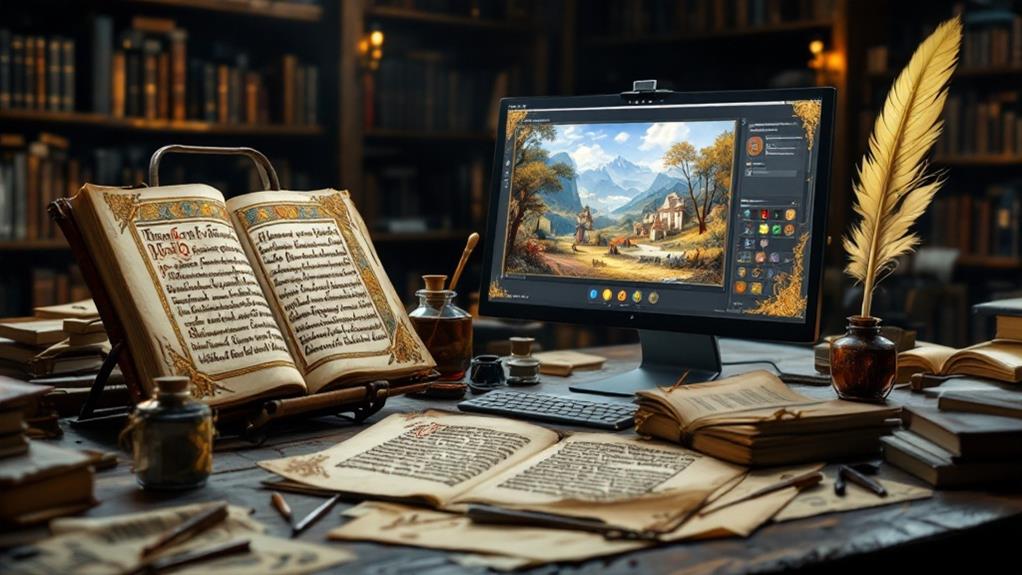
How Museums Preserve and Showcase Historic Folios for the Public
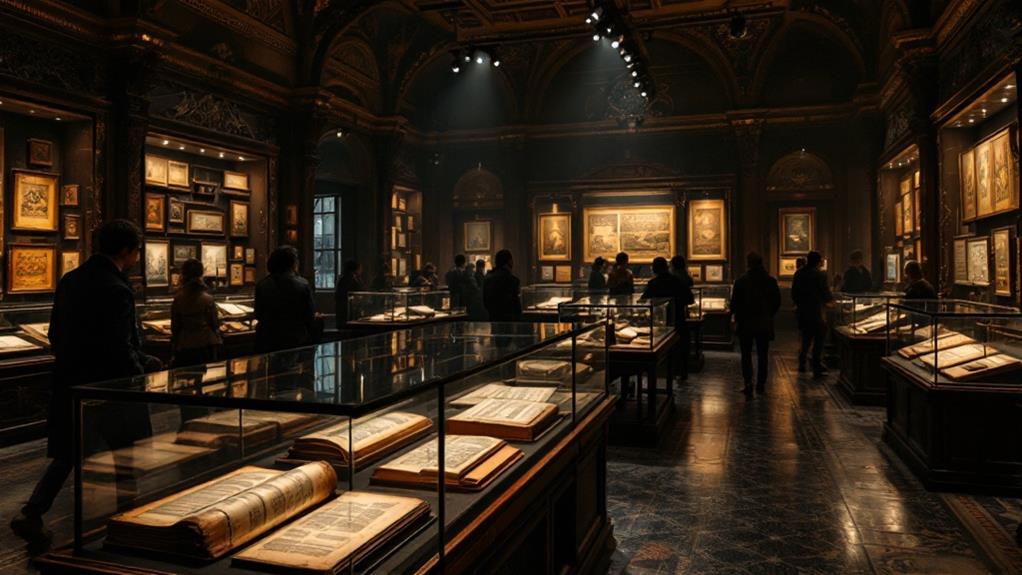
When museums preserve and showcase historic folios, they use a combination of traditional and modern methods. You'll find that they maintain climate-controlled environments to prevent damage and use acid-free materials for storing delicate pages. Digital cataloging systems enhance accessibility, letting you investigate collections online from anywhere. Interactive public displays and augmented reality bring manuscripts to life, revealing hidden details and historical contexts in engaging ways. Educational programs and workshops offer hands-on experiences, providing insights into the preservation processes. As you delve further, you'll see how these efforts preserve both the physical and cultural essence of these valuable documents.
Climate-Controlled Preservation
In relation to preserving historic folios, climate-controlled environments are vital. You need to understand that these fragile documents require exact conditions to prevent deterioration over time. Humidity control plays a significant role in this process. If the air is too moist, folios can develop mold and other microbial damage. On the other hand, excessively dry conditions may lead to brittleness and cracking. By maintaining a balanced humidity level, you guarantee the longevity of these priceless artifacts.
Temperature monitoring is similarly significant for safeguarding historic folios. Fluctuating temperatures can cause paper fibers to expand and contract, leading to warping or weakening. By keeping a stable temperature, you reduce the risk of such damage. Typically, museums set a standard temperature range that is consistently monitored and adjusted as needed.
You'll find that combining humidity control with temperature monitoring creates a prime environment for storing these invaluable collections. This careful approach not only preserves the physical integrity of the folios but also protects their historical and cultural significance. With the right climate-controlled strategies in place, you can guarantee these folios continue to educate and inspire future generations.
Archival Storage Techniques
While climate-controlled environments form the foundation for preservation, the methods of archival storage are equally significant in safeguarding historic folios. You need to guarantee that these precious documents remain in pristine condition, which starts with choosing the right materials. Acid free materials are vital because they prevent chemical reactions that could degrade the paper over time. Regular paper can release acids that cause yellowing and brittleness, so it's important to avoid them when storing folios.
Next, consider specialized enclosures that provide an extra layer of protection. These enclosures, such as boxes or folders designed specifically for archival purposes, help shield folios from dust, light, and environmental fluctuations. They also offer structural support, preventing folds or tears. When placing folios in these enclosures, make certain they're not too tight, allowing some space for natural expansion and contraction.
Digital Cataloging Systems
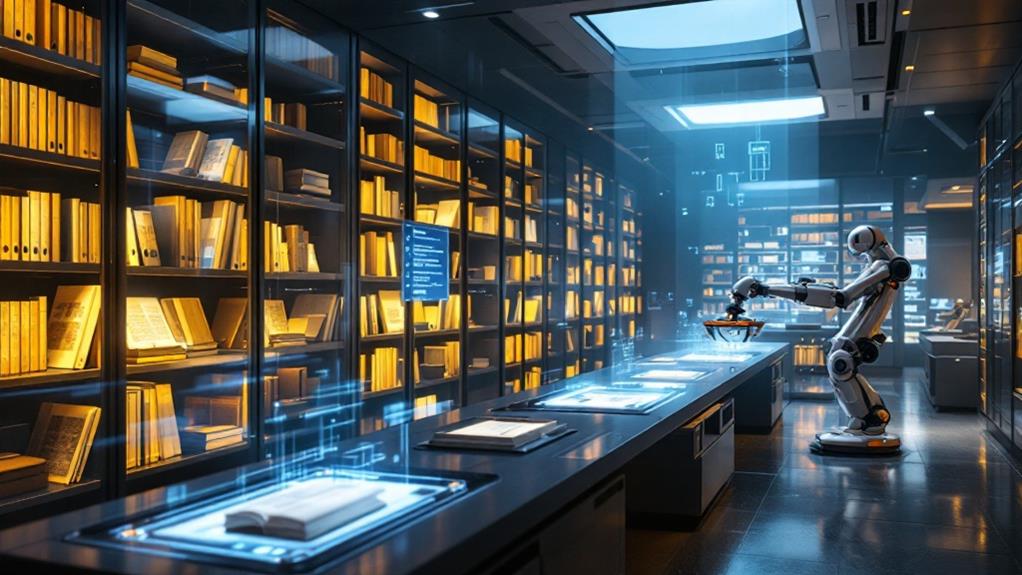
As museums work to make their collections more accessible, digital cataloging systems play a vital role in this endeavor. They allow you to investigate historic folios without physically visiting a museum. By implementing metadata standards, museums guarantee that each item in their collection is described consistently, making it easier for you to find what you're looking for. These standards include details like the date of creation, artist, and historical context, which enrich your understanding of each piece.
User accessibility is a critical consideration when designing these systems. Museums aim to create platforms that are intuitive and easy for anyone to navigate, regardless of technical skill. This means you can browse, search, and uncover gems with ease.
Consider the following benefits of digital cataloging systems:
- Enhanced search capabilities: You can quickly locate items by using keywords or phrases.
- Remote access: Investigate museum collections from anywhere in the world.
- Detailed metadata: Gain insights into the historical significance of each folio.
- Regular updates: Stay informed about new inclusions and exhibitions.
Interactive Public Displays
Imagine walking into a museum where you're not just a spectator but an active participant in the exhibits. Interactive installations transform your visit into a dynamic experience, allowing you to engage directly with historic folios in ways you never thought possible. Instead of merely viewing these cherished documents behind glass, you can investigate their stories and contexts through touchscreens, augmented reality, and even holographic displays.
These interactive installations elevate visitor engagement by inviting you to probe deeper. You might find yourself flipping through a digital version of a fragile manuscript, revealing hidden annotations and details that would otherwise remain unseen. With augmented reality, you can watch historical events unfold on the pages, offering a vivid glimpse into the past.
The museum's goal is to make learning both fun and memorable. By actively engaging with the material, you gain a more profound appreciation for the history and craftsmanship of these folios. This hands-on approach caters to different learning styles, ensuring that everyone, from the casual visitor to the avid historian, walks away with a richer understanding. Interactive public displays bridge the gap between the past and present, making history accessible and exciting for all.
Educational Programs and Workshops
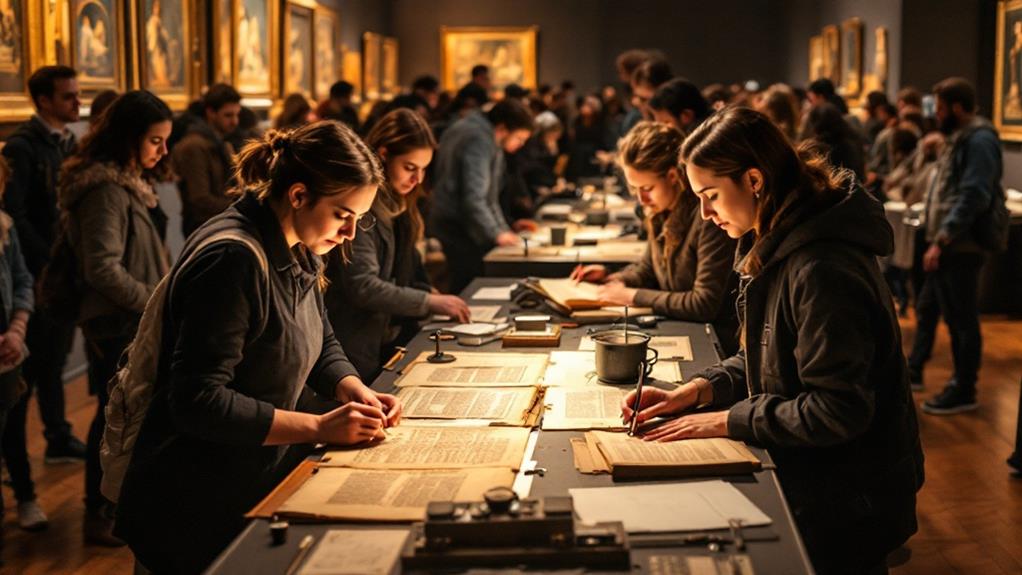
Investigate deeper into history with the museum's educational programs and workshops, where you can truly immerse yourself in the world of historic folios. These programs are designed to improve community engagement and provide hands-on learning experiences. By participating, you don't just read about history; you interact with it, gaining a personal connection to the past.
The museum offers a variety of educational activities that cater to different interests and demographic groups. Here are some highlights:
- Hands-on Workshops: Get up close with historic folios, learning techniques of preservation and restoration from experts.
- Lecture Series: Attend talks by historians and scholars who probe into the stories behind the folios, offering insights into their cultural significance.
- Family Days: These events invite families to investigate history together through interactive sessions, making learning fun for all age ranges.
- Community Art Projects: Collaborate with others in creating art inspired by the folios, fostering a deeper connection to historical narratives.
Related posts