How Medieval Manuscripts Were Illustrated Without Modern Tools
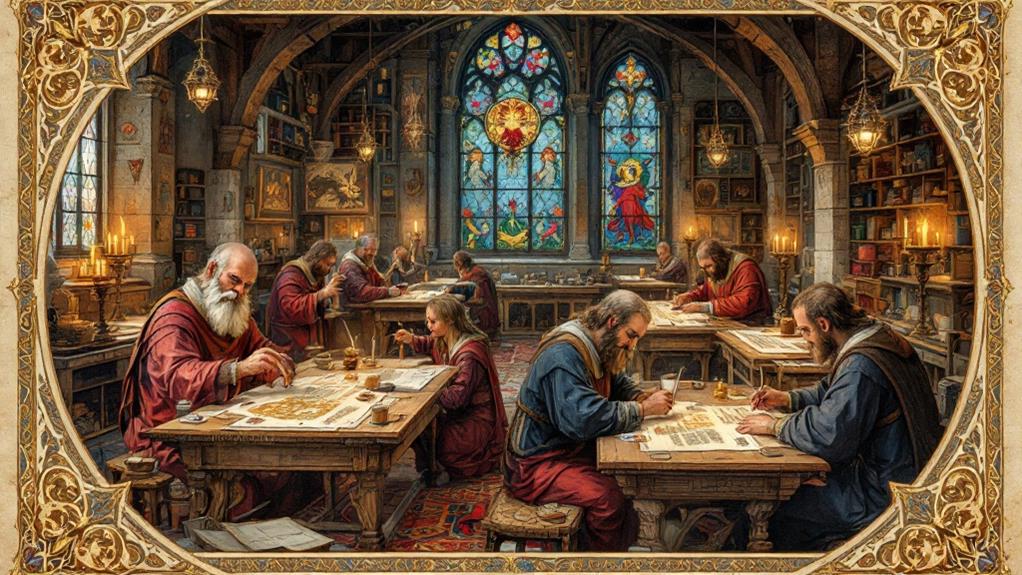
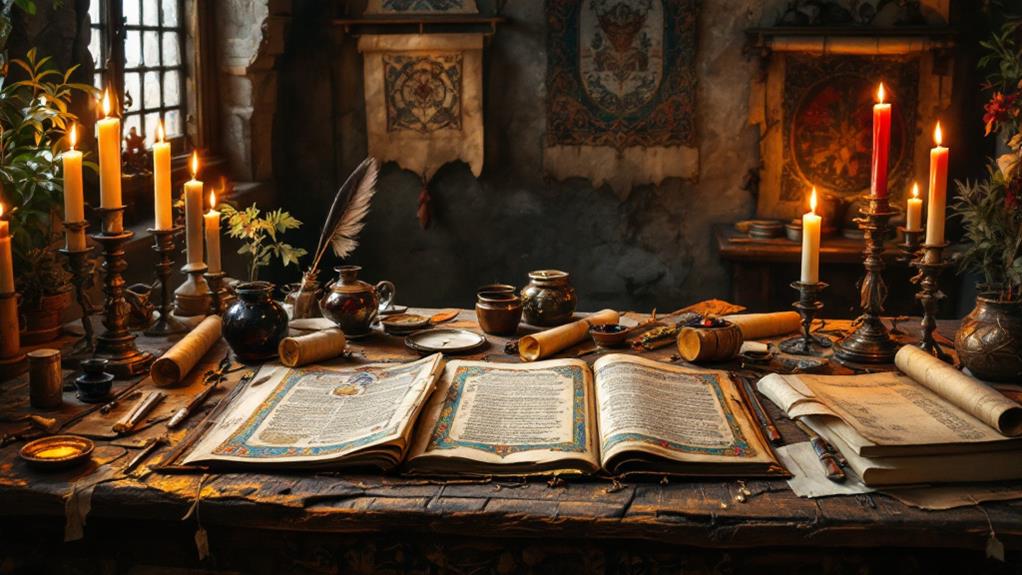
When considering how medieval manuscripts were illustrated, imagine artisans using quills and inks made from natural dyes. They prepared parchment from animal skins, creating a suitable canvas for lively colors. Brushes were crafted from animal hair, carefully selected for texture. Illustrators used natural pigments from minerals and plants like madder root for red or lapis lazuli for blue. Illuminators added striking gold leaf and intricate designs, while marginalia provided engaging visuals. Symbolic and geometric patterns added deeper meanings, connecting script with spiritual themes. It's a fascinating blend of skill and creativity that still captivates today. Uncover more insights into this ancient craft.
The Role of the Scribe
In the world of medieval manuscripts, scribes played an imperative role in bringing texts to life. Imagine stepping into a scribe's shoes, where your day begins with rigorous training to perfect your craft. You're not just copying words; you're preserving history. The scribe's training is intense, often starting in childhood and lasting for years. You learn to master not just the language but the intricate scripts that vary across regions and periods. Precision and consistency become your mantra.
As a scribe, your tools are as vital as your skills. Your quill, carved from a feather, becomes an extension of your hand. You painstakingly shape it to achieve the perfect line width. Ink, made from natural dyes and ingredients, requires careful preparation to guarantee durability and clarity on the page. You rely on a steady hand and keen eye, using a straightedge to guide your lines, making sure that every letter aligns perfectly. Each stroke you make is a reflection of your dedication and craftsmanship. Your work transforms blank pages into masterpieces that will endure for centuries, connecting the past to the present through the art of writing.
Materials and Mediums
When creating medieval manuscripts, the choice of materials and mediums directly influenced the final work's quality and durability. You'd start with parchment preparation, an elaborate process that transformed animal skins into a suitable writing surface. This involved cleaning, stretching, and scraping the skins to achieve a smooth finish, guaranteeing they were sturdy and receptive to ink. The quality of the parchment could fluctuate based on the source and treatment, affecting how colors and inks adhered.
Next, you'd focus on ink formulation. Medieval inks were crafted from natural ingredients, each carefully selected for its properties. Commonly, iron gall ink was used due to its deep, lasting color, made by combining tannin from oak galls with iron salts. This ink was vital for text and detailed illustrations, offering a rich, black hue that stood the test of time.
To improve your manuscript, you might use different pigments mixed with binders for illumination. These pigments were derived from:
- Minerals, like lapis lazuli for blue.
- Plants, such as saffron for yellow.
- Metals, including gold leaf for gilding.
Understanding these materials guaranteed your manuscript's beauty and longevity.
Crafting Handmade Brushes
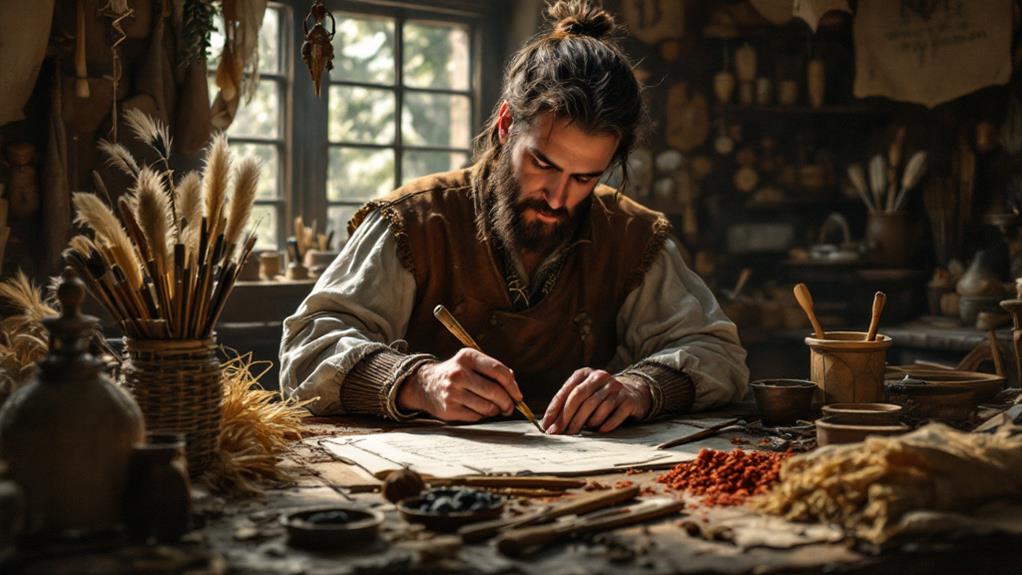
Creating your own brushes was an important step in illustrating medieval manuscripts. You couldn't just run to the store for supplies, so you had to rely on brush making techniques passed down through generations. Historical tools were your allies in this intricate process. You'd start by selecting suitable animal hair, often from squirrels, marten, or sometimes hogs, depending on the desired texture and thickness.
Once you gathered the hair, you'd carefully align and trim it to form a fine point. Next, you'd bind the hairs together, traditionally using thread or glue derived from natural sources. This step required precision to guarantee the brush wouldn't shed its bristles during use, which would ruin your artwork.
For the handle, you might carve wood or even use a hollow reed, shaped to fit comfortably in hand. Attaching the hair to the handle demanded skill, ensuring a seamless join that wouldn't interfere with your illustration work. The brush's balance and flexibility were vital, allowing you to create the delicate lines and intricate details characteristic of medieval art. By mastering these brush making techniques, you could bring your manuscript illustrations to life without modern conveniences.
Natural Pigment Sources
Having crafted your own brushes, you're now ready to examine the colorful world of natural pigment sources, which bring color to medieval manuscripts. Forget about synthetic dyes; in the medieval period, you relied on what nature offered. You'd investigate both plant-based pigments and mineral sources to achieve the stunning hues that adorned manuscripts.
Plant-based pigments were derived from numerous flora. For instance, you could extract deep blues from the leaves of the woad plant, while bright reds might come from the madder root. Mineral sources, on the other hand, required a different approach. You'd find that the renowned ultramarine blue came from lapis lazuli, a semi-precious stone imported from distant lands.
Here's a quick guide to some natural pigments:
- Ochre: A yellow to red pigment derived from iron-rich earth, used for earthy tones.
- Malachite: A green mineral source that provided a rich, verdant color.
- Indigo: A plant-based source known for its intense blue, obtained from the indigofera plant.
Experimenting with these pigments, you'd have the palette needed to bring medieval manuscripts to life, proving that even without modern tools, creativity knew no bounds.
Techniques of Illumination
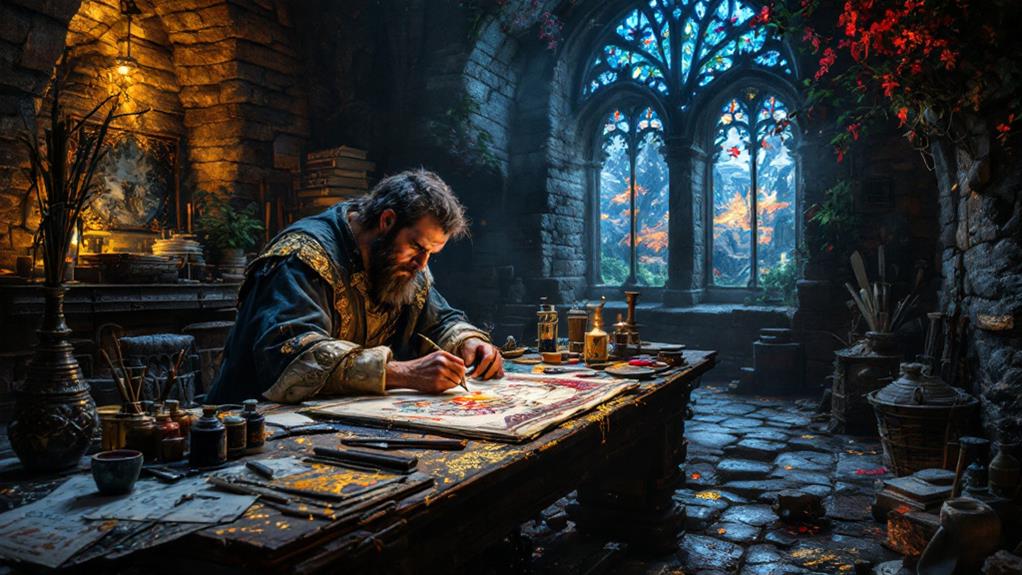
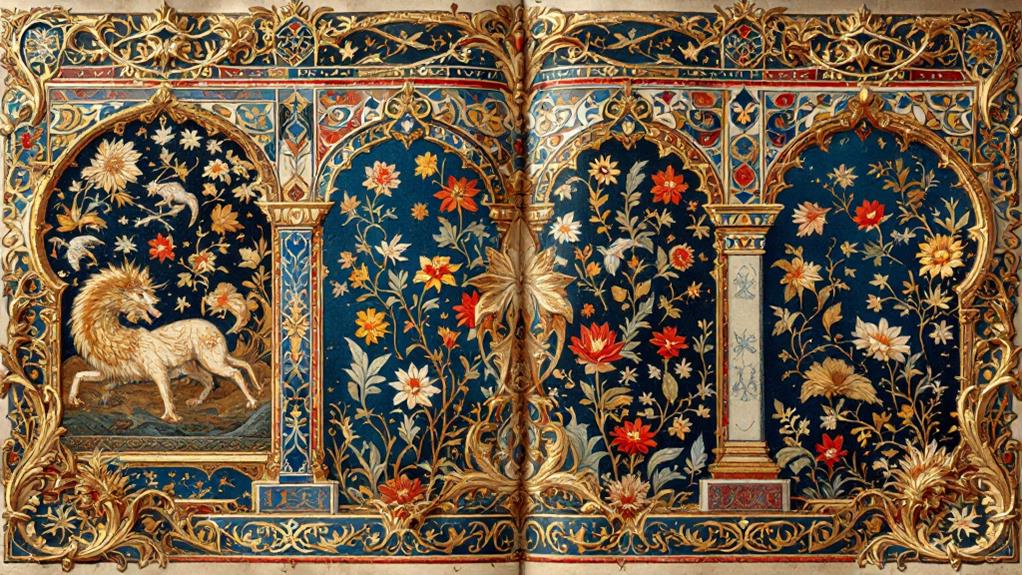
The art of illumination in medieval manuscripts dazzled readers with its intricate designs and vivid colors. You'd marvel at the way scribes and artists transformed simple pages into works of art using techniques honed over centuries. One of the standout methods was the application of gold leaf. This was a detailed process where thin sheets of gold were carefully laid onto the manuscript's surface, providing a shimmering effect that caught the light beautifully. You'd need a steady hand and patience to apply the gold leaf, often using a brush to smooth it over a layer of adhesive.
In addition to gold leaf, marginalia played a key role in illumination. These were the decorative elements included in the margins of the page, often filled with fanciful creatures, intricate vines, or tiny scenes that complemented the main text. Marginalia weren't just decorative; they served to engage readers and sometimes offered a humorous or satirical commentary on the text.
Symbolism and Geometry
While the brilliance of illumination techniques captivated the eye, the use of symbolism and geometry in medieval manuscripts engaged the mind and spirit. You'd be amazed at how scribes wove symbolic interpretation into every line and curve. These manuscripts weren't just books; they were gateways to deeper meanings and spiritual truths. Each geometric pattern held a purpose, a reflection of the divine order of the universe.
When examining these ancient pages, you can notice how:
- Circle motifs often represented eternity and the divine, as they have no beginning or end.
- Interlaced designs symbolized the interconnectedness of life and faith, drawing you into a web of spiritual mystery.
- Square patterns stood for stability and Earth, grounding the reader in the physical world while pointing to heavenly aspirations.
Preservation and Legacy
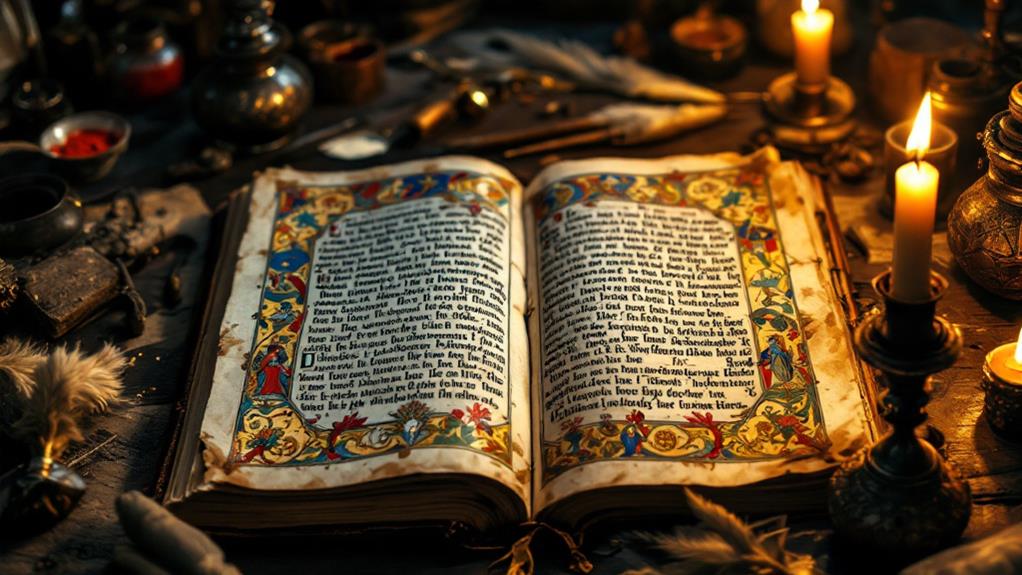
In the domain of medieval manuscripts, preserving these valuables for future generations is both an art and a science. You might wonder how these delicate pieces have survived centuries. It's due to scrupulous care and understanding of their historical significance. Medieval manuscripts aren't just old books; they're cultural artifacts that offer insights into the past. Their preservation guarantees that the knowledge, beliefs, and artistry of bygone periods continue to inform and inspire us today.
To appreciate their cultural impact, consider how these manuscripts connect us to the medieval world. They reveal the evolution of language, art, and thought, providing a tangible link to our ancestors. When you engage with these texts, you're not just reading words; you're experiencing a piece of history.
Preserving these works involves careful storage, climate control, and sometimes, delicate restoration. You play a part by supporting libraries and institutions dedicated to this cause. By valuing these manuscripts, you help uphold their legacy. They're not merely pages in a book; they're a bridge connecting past and present, reminding us of the enduring human quest for knowledge and expression.
Related posts