How Experts Handle Ethical Dilemmas in Manuscript Restoration
When you're handling ethical dilemmas in manuscript restoration, start by understanding the historical context and significance of the piece. Set restoration goals that align with cultural importance while considering minimal intervention to preserve authenticity. Use materials that are compatible and durable, guaranteeing the manuscript's longevity without altering its original state too much. Engage with key stakeholders, including historians and cultural leaders, to respect cultural sensitivities. Document every step carefully to promote transparency and maintain trust. Continuous ethical review helps you balance intervention with preservation, respecting the creator's original intent. There's a lot more to investigate in this nuanced field.
Assessing Historical Context
Understanding the historical context of a manuscript is essential before diving into its restoration. You need to uncover its historical significance to appreciate its original purpose and the environment in which it was created. This understanding guides your approach and guarantees that you respect the manuscript's integrity. Without contextual analysis, you risk altering or even erasing key aspects of the work that give it meaning.
To perform a thorough contextual analysis, start by investigating the manuscript's origins. Look into the period it was created, the cultural influences at the time, and why it was significant to its original audience. Ask yourself: What events might have influenced its creation? Who commissioned or authored it, and what was their intention? These questions help you piece together a fuller picture of its past.
Additionally, examine any annotations or marginalia. These elements can offer insights into how the manuscript was used or interpreted over time, adding layers to its historical significance. By understanding these nuances, you can make informed decisions that honor the manuscript's legacy. It's your responsibility to guarantee that the restoration process respects and preserves this historical context.
Determining Restoration Goals
When setting restoration goals, it is crucial to align them with the manuscript's historical and cultural significance. You need to take into account how the manuscript's context informs its restoration philosophy. Are you aiming to return it to its original state, or do you want to preserve the signs of time and usage that contribute to its story? Clearly defining your goals helps maintain focus and guarantees the work respects the manuscript's intrinsic value.
Start by employing ethical frameworks that guide decision-making in restoration. These frameworks help you weigh the importance of each aspect of the manuscript, such as its aesthetic, historical, and informational values. By doing this, you can establish priorities that align with the manuscript's broader significance and intended use.
Take into account the stakeholders involved, including historians, curators, and the public. Their perspectives can shape your restoration goals, assuring a well-rounded approach. Engaging with these viewpoints helps you balance preserving authenticity with enhancing accessibility.
Balancing Preservation and Intervention
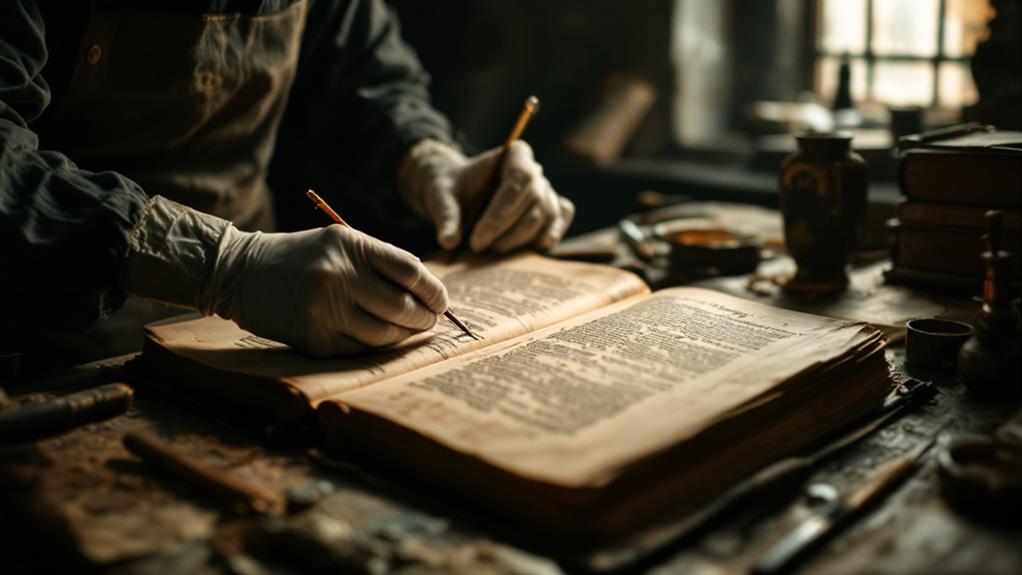
Balancing preservation and intervention is a delicate dance that demands careful consideration. When you're faced with restoring a manuscript, you must weigh the benefits of preserving its original form against the need for intervention to prevent further decay. Ethical frameworks guide you, ensuring that your efforts respect the manuscript's historical and cultural significance. By adhering to these frameworks, you can navigate the fine line between maintaining authenticity and necessary restoration.
Your intervention strategies should be carefully chosen, taking into account the manuscript's condition and historical context. Sometimes, minimal intervention is best, preserving the original as much as possible while stabilizing it for future generations. Other times, more significant intervention might be required to save a deteriorating piece. You'll need to assess each situation individually, considering factors like the manuscript's material, period, and current state.
Authenticity Versus Alteration
Choosing between authenticity and alteration presents a significant challenge in manuscript restoration. As a restorer, you constantly face the dilemma of maintaining a document's historical integrity while making necessary repairs. The key is to strike a balance between preserving the original characteristics and addressing the inevitable wear and tear that time imposes.
When you focus on authenticity, you aim to conserve the manuscript's original state as much as possible. This approach helps in forgery detection, as it guarantees the document remains true to its initial form, making it easier to identify any false alterations that may have occurred over time. Adhering to authenticity allows historians and scholars to study the document's true nature without the noise of modifications clouding their analysis.
On the other hand, alteration may sometimes be necessary to guarantee the manuscript's longevity. You might need to intervene by fixing tears or stabilizing the structure. However, any modification risks compromising the manuscript's historical integrity. It's vital to document every change you make scrupulously, guaranteeing future experts can understand what was original and what was restored. Balancing these aspects is fundamental in safeguarding the manuscript's authenticity while guaranteeing its survival for future generations.
Material Selection and Compatibility
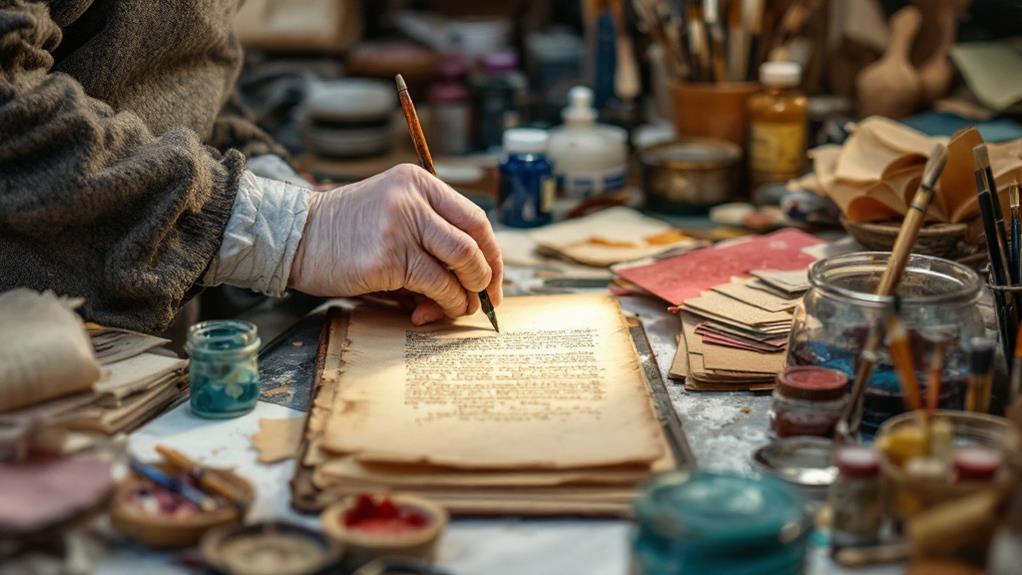
Material selection stands as a vital component in manuscript restoration. When you're restoring a manuscript, it's imperative to choose materials that guarantee both durability and aesthetic integrity. You don't want materials that might degrade quickly or alter the manuscript's original look and feel. Instead, you should select materials that closely match those originally used. This approach preserves not only the manuscript's physical structure but also its authentic appearance.
Consider the manuscript's lifespan and condition. You should assess the original materials and understand how they've aged over time. This knowledge helps you select new materials with similar aging characteristics, guaranteeing the manuscript's longevity. Material durability is fundamental because the goal is to extend the life of the manuscript for future generations. You don't want your restoration efforts to be short-lived.
Aesthetic integrity is just as significant. When you introduce new materials, they should blend seamlessly with the original parts. You aim for a restoration that respects the manuscript's history and visual coherence. By doing so, you maintain the manuscript's historical significance and guarantee it's appreciated for years to come. Balancing these factors requires careful consideration and expertise in the field.
Addressing Cultural Sensitivities
While selecting the right materials is essential to maintaining a manuscript's physical and aesthetic integrity, another layer of complexity involves addressing cultural sensitivities. When restoring manuscripts, you must navigate the delicate balance between preserving historical narratives and respecting cultural heritage. Avoiding cultural appropriation is vital; you should engage with the communities connected to the manuscripts. This guarantees that indigenous practices and traditions are honored and integrated appropriately.
Ethical stewardship is more than a responsibility—it's a commitment to preserving the authenticity of these cultural artifacts. By involving community engagement, you foster collaboration that respects the values and histories embedded in the manuscripts. You might consult with cultural leaders or historians to confirm that restoration efforts align with the community's expectations and traditions.
Understanding the cultural context of a manuscript allows you to restore it in a way that respects its origins and significance. It's not just about the physical restoration; it's about safeguarding the cultural narratives and confirming that they are presented authentically. This approach not only improves the restoration process but also strengthens the bond between the manuscript and its cultural roots, honoring the legacy it represents.
Documentation and Transparency
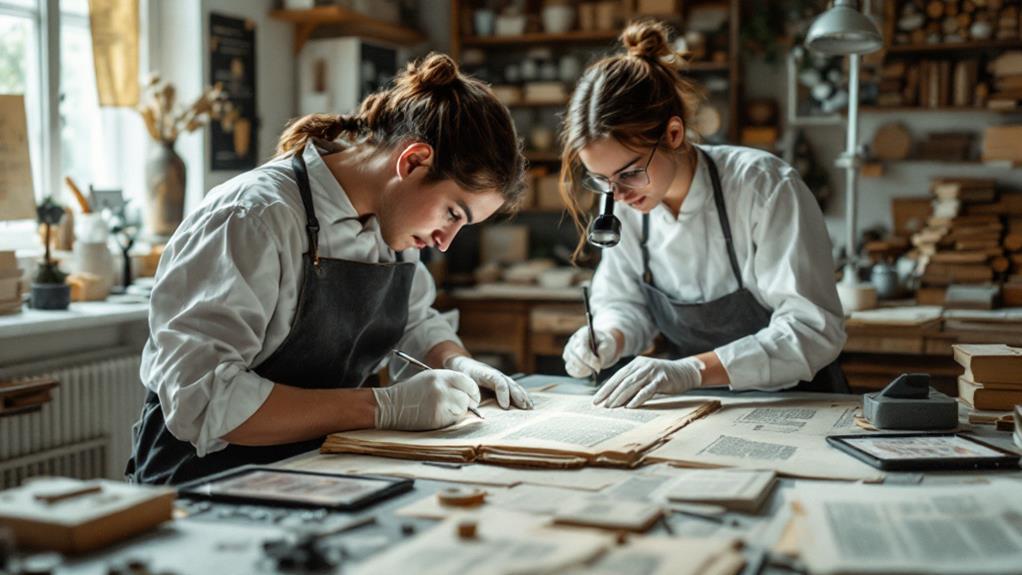
Clarity is key regarding the documentation and transparency of manuscript restoration. When you're involved in restoring manuscripts, adhering to ethical standards is essential. You need to follow restoration guidelines that prioritize historical accuracy and archival integrity. Documentation practices should be thorough, ensuring every step of the restoration process is recorded. This transparency helps maintain trust and credibility, as anyone reviewing the work can understand the decisions made.
To uphold transparency measures, you should seek informed consent from relevant parties. Before starting the restoration, make sure stakeholders are aware of and agree to the proposed methods and potential outcomes. This consent respects their connection to the manuscript and reinforces the ethical approach to restoration.
You'll also want to engage with diverse stakeholders throughout the process. Their insights can provide valuable perspectives that might influence your approach, ensuring the restoration aligns with both historical and cultural contexts. Ultimately, a well-documented and transparent restoration process not only preserves the manuscript's integrity but also respects the legacy it represents. By prioritizing these practices, you contribute to the responsible stewardship of cultural heritage and foster trust within the archival community.
Consulting With Stakeholders
Engaging with stakeholders is a fundamental component of ethical manuscript restoration. When you're involved in restoring a manuscript, it's important to reflect on everyone who might be affected by your decisions. Stakeholder engagement guarantees that varied perspectives are included, helping you make more informed choices. Start by identifying key stakeholders such as historians, conservators, and the manuscript's owners. Once you've identified them, use effective communication strategies to keep them in the loop.
Open and honest dialogue is significant. You should actively listen to stakeholders' concerns and suggestions, creating a collaborative atmosphere. By doing so, you foster trust and transparency, which are essential for ethical decision-making. Utilize different communication strategies, like regular meetings, emails, or digital platforms, to maintain consistent and clear updates.
Involving stakeholders early in the process can help prevent conflicts and misunderstandings. Their insights can highlight potential issues or cultural sensitivities you might not have reflected on. By engaging them, you guarantee that the restoration process respects both the manuscript's integrity and the diverse interests of those it impacts. Ultimately, consulting with stakeholders not only guides ethical restoration but also enriches the final outcome.
Continuous Ethical Review

Throughout the restoration process, a continuous ethical review acts as a crucial safeguard for maintaining integrity and accountability. You're responsible for ensuring that every decision aligns with established ethical frameworks. These frameworks help guide your actions and choices, making sure you respect the manuscript's historical significance and cultural context. By continually reviewing your decisions, you can catch potential ethical pitfalls before they become significant issues.
Incorporating a continuous ethical review into your decision making processes isn't just about following rules—it's about fostering a mindset that prioritizes ethical considerations at every turn. This approach keeps you honest and transparent, reassuring stakeholders that you're committed to preserving the manuscript's authenticity. You should always question if your restoration methods honor the original creator's intent and if they might unintentionally alter the manuscript's historical narrative.
Related posts