How Digital Technology Is Transforming Access to Historic Folios

You're witnessing a revolution as digital technology transforms your access to historic folios. High-resolution scans capture exquisite details and protect fragile documents from damage, while metadata guarantees you can efficiently investigate vast collections. Online platforms and archives break down geographical barriers, allowing you to appreciate history from anywhere. With virtual reality and gamification, interacting with ancient texts grows engaging and engrossing. Open access initiatives and multilingual support further democratize your ability to study these cultural gems globally. Curious about how this transformative odyssey continues to evolve? There's plenty more to uncover about the exciting blend of technology and history.
Digital Imaging Techniques
Digital imaging techniques have transformed the way we preserve and study historic folios. By employing high resolution scans, you're able to capture every intricate detail of these precious documents. This technology guarantees that you can examine the folios without risking any physical damage. High resolution scans provide a digital replica that retains the textures, colors, and nuances of the original, making it easier for you to access and analyze them from anywhere in the world.
When it comes to archival preservation, digital imaging is a game-changer. Instead of handling fragile pages that might deteriorate over time, you can interact with digital versions that remain unchanged. This not only extends the life of the original documents but also makes them more accessible to researchers like you. With digital techniques, you're able to store these high-quality images in vast digital archives, assuring they're protected against physical threats such as fire, water damage, or decay.
Enhanced Metadata Utilization
As you investigate the benefits of digital imaging, another key innovation emerges: improved metadata utilization. Metadata isn't just a digital footnote; it's the backbone that supports efficient search and retrieval of historic folios. By adhering to metadata standards, you guarantee that each piece of information is organized in a consistent and recognizable way. These standards make your searches more effective, allowing you to sift through vast digital archives with ease.
Semantic indexing further improves this process by understanding the context and relationships between different metadata elements. Imagine you're searching for a specific folio but only remember a few details. With semantic indexing, the system connects those dots for you, finding relevant documents even if your search terms aren't exact matches.
This sophisticated approach to metadata utilization means you can uncover hidden connections between documents, enriching your research. You'll find it easier to draw insights from historic texts as the digital framework does much of the heavy lifting. In embracing these innovations, you're not just accessing data; you're engaging in a more intuitive and insightful exploration of history. It's a new era for researchers seeking the gems of the past.
Online Platforms and Archives

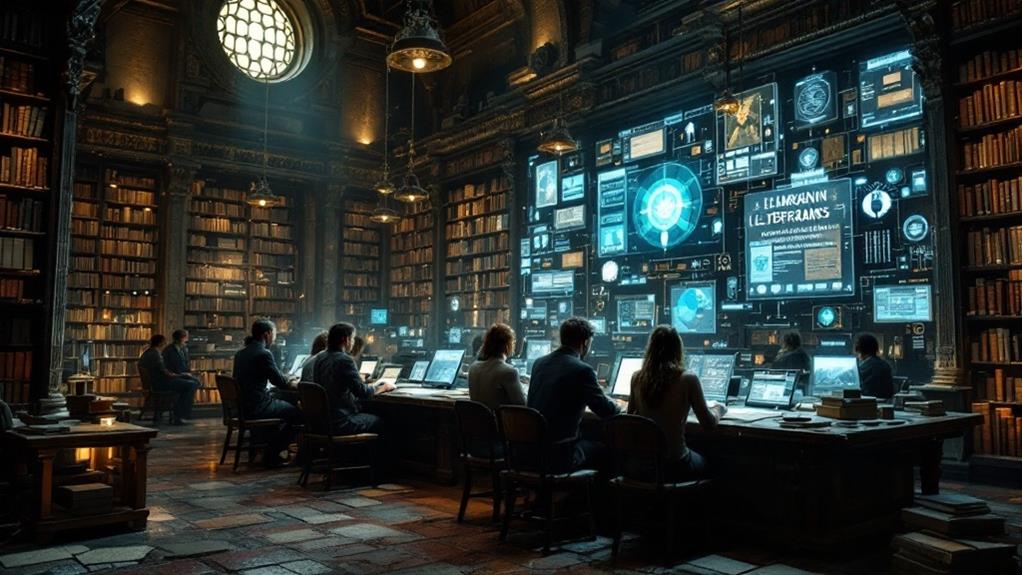
While investigating the domain of historical research, online platforms and archives have become indispensable tools for scholars and enthusiasts alike. These digital spaces offer unprecedented access to historic folios, allowing you to immerse yourself in the past from anywhere in the world. Online archives house vast collections, carefully digitized, making it easier than ever to find specific documents or examine entire collections.
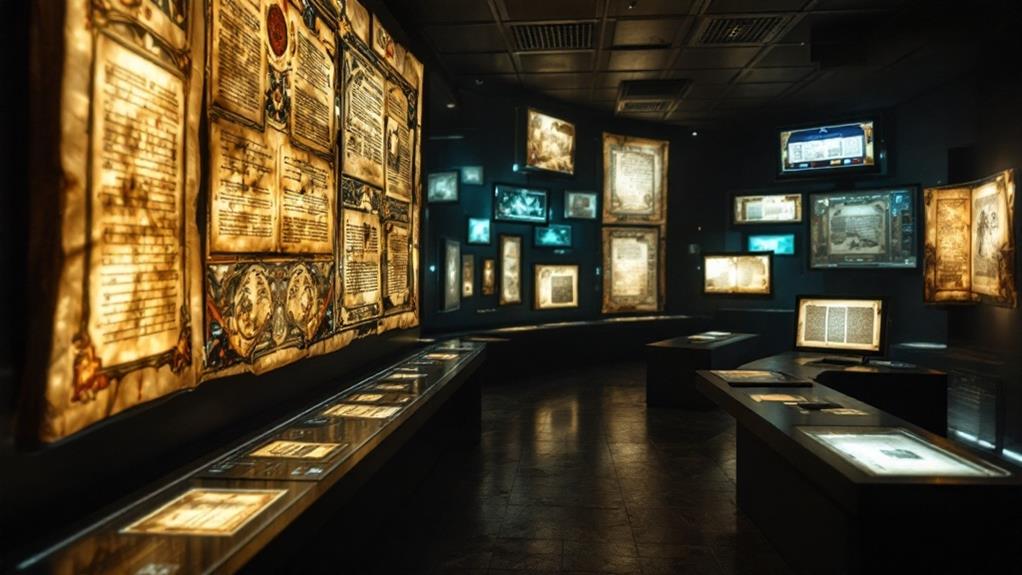
Virtual exhibitions are a highlight, transforming static images into dynamic experiences. They let you engage with curated selections of historic folios, providing context and interpretation that might not be accessible in a physical setting. These exhibitions are perfect for showcasing rare or fragile documents, ensuring they reach a broad audience without the risk of damage.
Collaborative projects have also flourished on these platforms. You can join forces with other researchers, sharing insights and resources in real-time. This collaboration fosters a community of learning and exploration, breaking down geographical and institutional barriers. By pooling knowledge and expertise, you can contribute to a deeper understanding of historical texts.
In essence, online platforms and archives not only preserve history but also transform how you interact with it, enhancing both research and appreciation.
Interactive User Experiences
Engaging technology's allure lies in its ability to transform your interaction with historic folios into enchanting, interactive user experiences. Imagine stepping into a world where you don't just view ancient texts but live within them. Virtual reality (VR) immerses you in a three-dimensional space, allowing you to investigate the depths of a medieval manuscript as if you're turning its pages in a grand library. It's like teleporting to a different time, where you can examine intricate details, textures, and annotations up close, making history feel alive and tangible.
But that's not all. Gamification adds another layer of engagement, making learning about historic folios a thrilling adventure. You could undertake quests to uncover hidden texts, solve puzzles that reveal the stories behind the folios, or compete with others to identify the origins of an ancient script. These elements transform a passive reading experience into an active investigation, drawing you in with challenges and rewards. By merging VR and gamification, digital technology not only improves your understanding of history but also makes it enjoyable and memorable. It turns the study of historic folios into an expedition you won't want to end.
Global Accessibility Initiatives

Digital technology breaks down barriers, making historic folios accessible to a global audience. You can now access centuries-old texts from anywhere in the world, thanks to open access initiatives. These initiatives guarantee that anyone, regardless of location, can investigate these gems without needing to visit a physical library. With just a few clicks, you're diving into rich archives that were once limited to scholars and researchers in specific regions.
The push for open access doesn't just make these folios available; it invites you to engage with them. Community engagement is a key component of these initiatives. By participating in online forums and virtual exhibitions, you join a global community of enthusiasts and experts sharing insights and interpretations. This dynamic interaction breathes new life into historic documents, making them more relevant and understood in the present context.
Moreover, institutions are constantly improving digital platforms to boost accessibility. They focus on user-friendly interfaces and multilingual support, guaranteeing you can navigate effortlessly. By prioritizing these elements, global accessibility initiatives not only preserve cultural heritage but also democratize knowledge, empowering you to contribute to the ongoing dialogue surrounding these historic folios.
Related posts