How Digital Technology Is Saving Ancient Texts for the Future
You're witnessing a technological revolution that's breathing new life into ancient texts. Digital imaging creates high-resolution copies of manuscripts, preserving their details for eternity. Cloud storage makes these digital gems globally accessible, letting you study them without geographical limits. AI steps in to restore lost text by analyzing patterns and predicting missing words. Crowdsourced transcriptions and virtual exhibitions further improve access, breaking barriers to history. However, challenges like metadata inconsistency and funding hurdles remain. Institutions like the Vatican Library lead successful digitization projects. Stay tuned to uncover how emerging trends are shaping the future of text preservation.
The Role of Digital Imaging
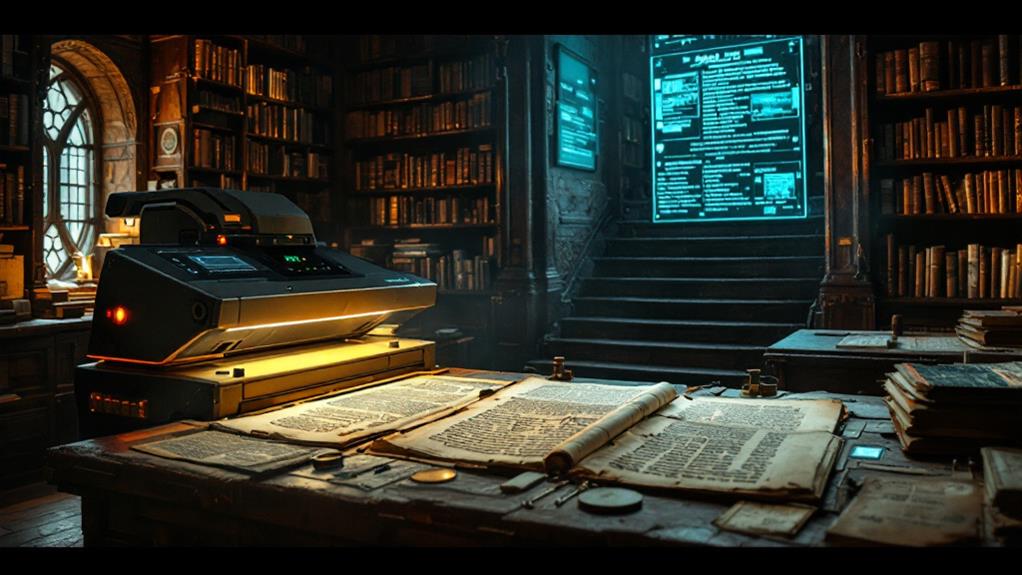
Digital imaging is transforming the preservation of ancient texts. When you think about how fragile historical manuscripts can be, it's clear why digital photography has become essential. By capturing high-resolution images of these manuscripts, you're guaranteeing their details won't be lost to time. This is where manuscript digitization comes into play. Digitizing these texts means you're creating digital copies that can be easily accessed and studied by researchers worldwide without handling the delicate originals.
Imagine you're at a library or archive with rare and ancient texts. With just a few clicks, digital photography allows you to capture the intricacies of these manuscripts, from faded ink to the texture of the paper or parchment. This technology doesn't just help preserve the texts; it also opens up new possibilities for analysis and research. You can zoom in, improve, and even decipher texts that might be invisible to the naked eye.
Moreover, manuscript digitization democratizes access to knowledge. Instead of traveling to distant locations, you're able to investigate these ancient artifacts from the comfort of your own space. Digital imaging guarantees that these texts remain available for future generations, preserving their historical and cultural significance.
Advances in Data Storage
While digital imaging preserves the visual details of ancient texts, advances in data storage guarantee these digital gems are both secure and accessible. You're probably aware that one of the most significant breakthroughs is cloud solutions, which allow vast amounts of data to be stored remotely and accessed from anywhere. This means that scholars and researchers can study ancient manuscripts without geographical constraints, making certain that these precious texts are available to a worldwide audience.
Data longevity is another critical aspect of these storage advances. You don't want to lose access to thousands of years of history due to outdated technology or corrupt files. By using cloud solutions, you make certain that your data is continually backed up and preserved against potential threats like hardware failure or natural disasters. In addition, cloud providers often use the latest technologies to maintain data integrity, including redundancy and regular updates to mitigate risks.
With these storage advancements, you can focus on analyzing and learning from ancient texts, knowing they're housed in a secure and future-proof environment. The marriage of digital imaging and cutting-edge data storage truly transforms how we preserve and investigate our rich historical heritage.
AI in Text Restoration
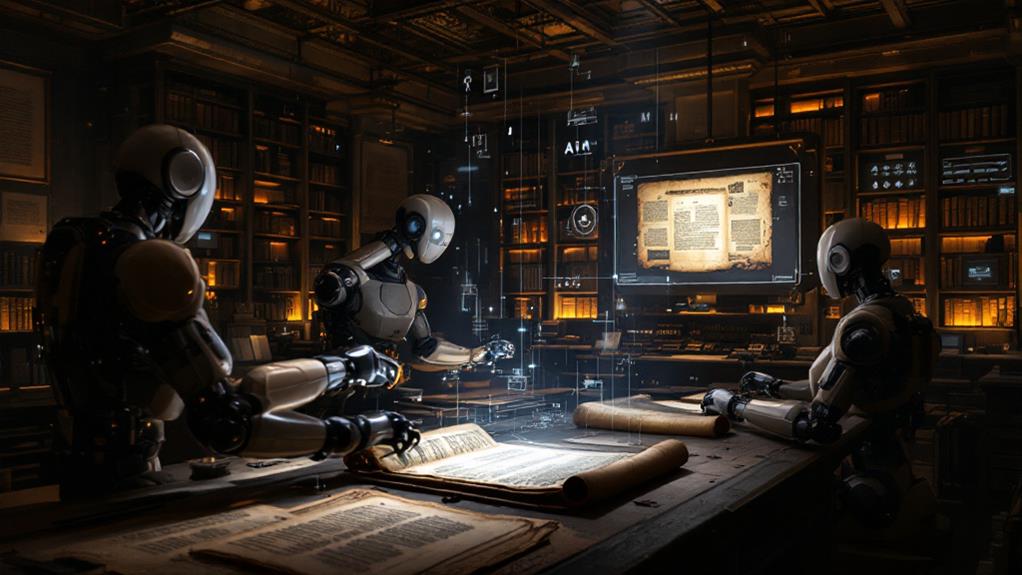
Artificial intelligence is transforming the field of text restoration, breathing new life into ancient manuscripts. You're probably aware that many ancient texts have suffered damage over the centuries—fading ink, torn pages, and missing sections. AI, particularly through machine learning, has become a game-changer in addressing these challenges. By training algorithms on vast amounts of data, computers can now predict and fill in missing parts of a text with remarkable accuracy.
With machine learning, you can analyze patterns in handwriting and ink degradation, enabling software to reconstruct what's been lost. It's like piecing together a jigsaw puzzle, but with the added complexity of historical context and linguistic nuances. Natural language processing, a branch of AI, plays an essential role here. It helps machines understand and generate human language, allowing them to make educated guesses about the missing words or phrases in ancient texts.
Global Accessibility of Archives
As AI revolutionizes text restoration, it also paves the way for making archives globally accessible. Imagine the ability to investigate ancient manuscripts from your home, thanks to digital technology. With the world connected online, you can now partake in initiatives that bring historical documents to life. Here are three ways archives are becoming more accessible:
- Crowdsourced Transcriptions: You can join global communities dedicated to transcribing ancient texts. This collaborative effort not only enriches historical understanding but also guarantees accuracy and speed in translating valuable records.
- Virtual Exhibitions: Museums and libraries create online platforms where you can experience historical archives as if you were there in person. These virtual exhibitions allow you to interact with rare artifacts and texts without geographical limitations.
- Open Access Databases: Many institutions now offer open access to their collections, enabling you to search, study, and share ancient texts freely. This democratization of knowledge empowers researchers and enthusiasts alike to engage with history in unprecedented ways.
Challenges in Digital Preservation
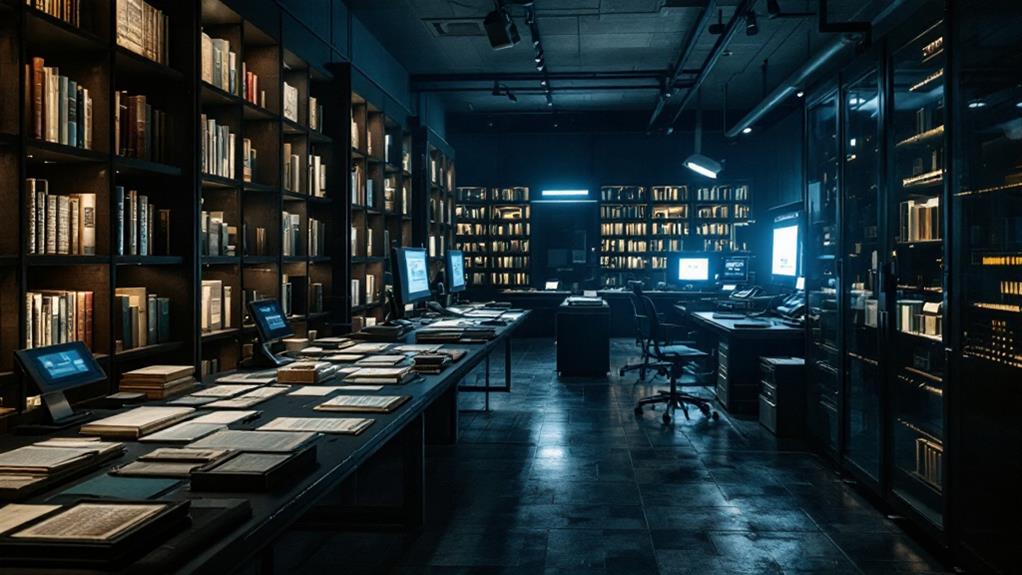
Digital preservation faces several challenges that can hinder the longevity of ancient texts. Initially, metadata standards differ widely, making it tough to guarantee consistency and accessibility across different platforms. You need to adopt a universal approach to cataloging information so that these precious texts remain searchable and usable.
Funding challenges also pose a significant hurdle. Without adequate financial support, it's hard to maintain the technology and human resources needed for ongoing preservation efforts. You'll need to secure funding from diverse sources, which isn't always straightforward.
Then, there's the issue of copyright. Steering through legal restrictions can be a minefield, especially when you're trying to digitize works that are still under protection. It's vital to understand these laws to avoid legal pitfalls.
Choosing the right digitization methods is another essential step. You must select techniques that capture the text's intricacies without damaging the original material. User engagement is just as significant; without it, the digital archives you create may languish unseen.
Case Studies of Successful Projects
Overcoming the challenges of digital preservation requires looking at successful projects that have navigated these obstacles effectively. You'll find that manuscript digitization is a field where collaborative projects truly shine. By examining these successes, you can gain insights into best practices and creative strategies.
- The Vatican Apostolic Library: This project is a brilliant example of manuscript digitization. The library joined forces with researchers and tech companies to digitize thousands of manuscripts, making them accessible to scholars worldwide. This collaborative project demonstrates the power of combining historical expertise with cutting-edge technology.
- The Dead Sea Scrolls: The Israel Antiquities Authority partnered with Google to digitize and release high-resolution images of the Dead Sea Scrolls. This collaboration allowed people around the globe to view and study these ancient texts online, preserving them for future generations while expanding access.
- The British Library's Endangered Archives Programme: This initiative involves international partnerships aimed at digitizing and preserving rare and at-risk documents. By working with local communities and institutions, they guarantee that cultural heritage is protected and shared beyond geographical and political barriers.
These case studies highlight the importance of teamwork and technology in preserving ancient texts for the future.
Future Trends in Text Preservation
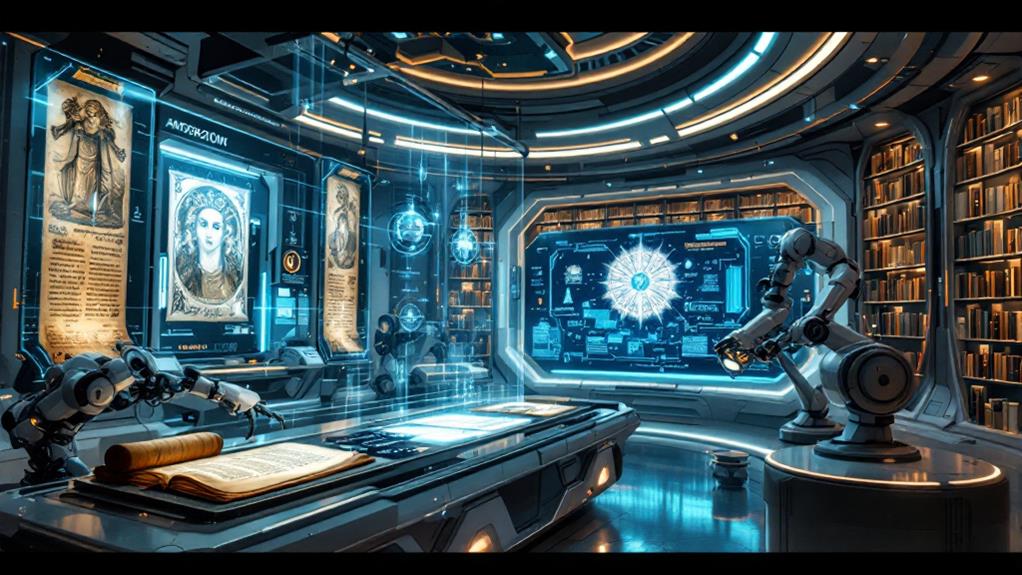
Looking ahead, text preservation is poised to adopt groundbreaking innovations that will redefine how we protect and access ancient manuscripts. One exciting trend is crowdsourced transcription, where enthusiasts worldwide can contribute to transcribing texts. This method not only accelerates the transcription process but also democratizes access to these documents. You can participate using user-friendly platforms designed to guarantee accuracy and collaboration. It empowers you to engage directly with historical texts, making preservation a collective effort.
Another transformative trend is the development of virtual reality archives. Imagine slipping on a VR headset and stepping into a virtual library filled with ancient scrolls and manuscripts. These archives offer engaging experiences, allowing you to investigate and interact with texts in ways traditional methods can't match. You can examine every detail up close, gaining a deeper understanding of the materials without risking damage to the originals.
Related posts