How Conservators Protect Ancient Manuscripts From Deterioration
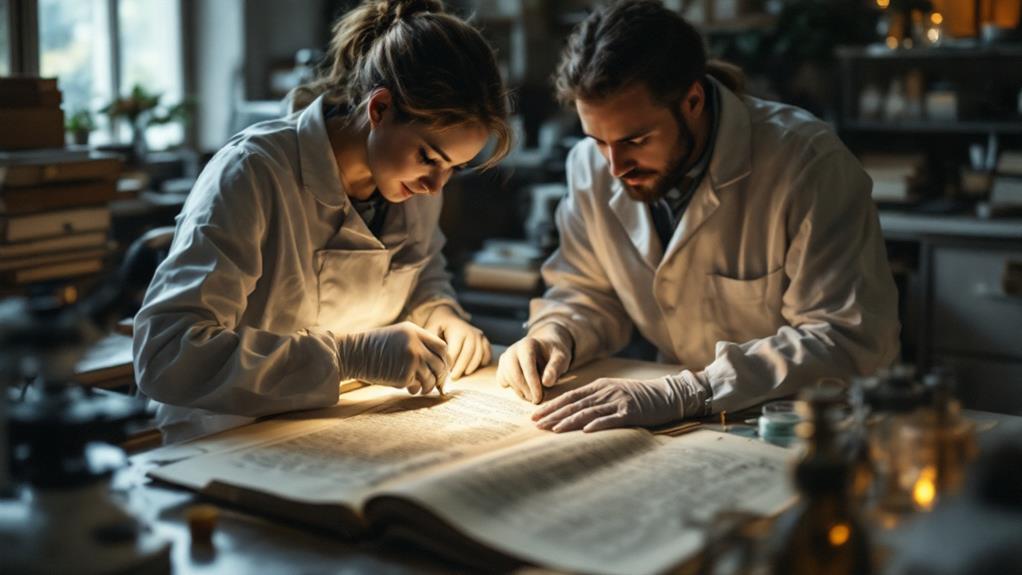
You protect ancient manuscripts by managing the environment around them. Keep temperature between 65-70°F and humidity at 30-55% to prevent damage. Limit light exposure by using UV filters and LED lighting. Handle manuscripts with clean hands and store them in acid-free, lignin-free materials to prevent chemical reactions. For repairs, use reversible methods and gentle tools to maintain their historical integrity. Digital scans act as backups, preserving the information while minimizing handling. Each material, like parchment and vellum, needs specific care for longevity. These methods guarantee manuscripts continue to reveal their stories for generations.
Understanding Manuscript Materials
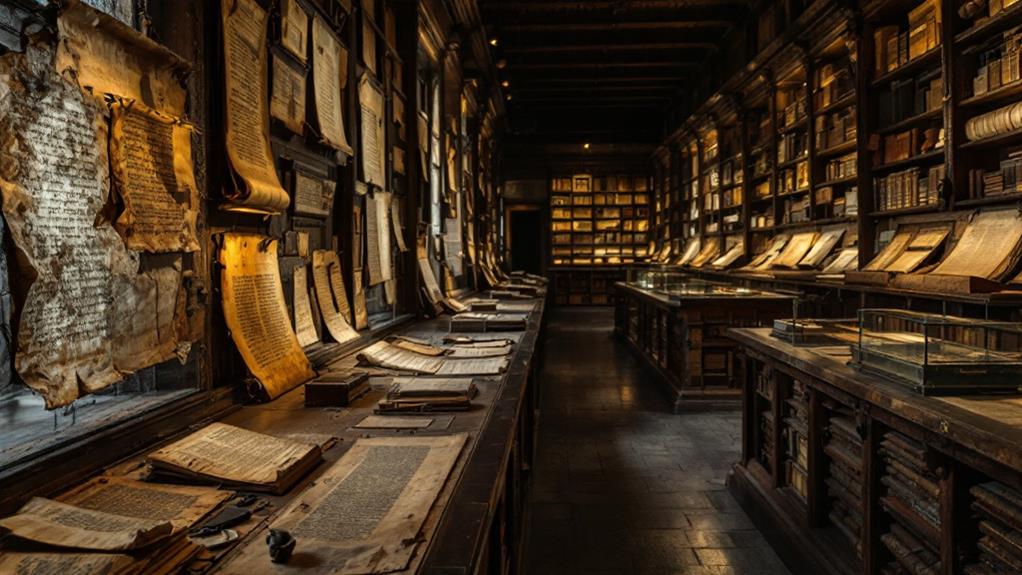
Manuscripts, often crafted from materials like parchment, vellum, and papyrus, require a keen understanding to guarantee their preservation. You need to recognize the nuances of each material. Parchment, made from animal skins, comes in different types, each demanding specific care. Vellum, for instance, is a higher-quality parchment, prized for its smoothness and durability. Understanding these differences is essential for proper conservation techniques.
In addition to the base material, ink composition plays a significant role in preserving manuscripts. Inks can be plant-based, carbon-based, or iron gall. Each type reacts differently to environmental conditions, affecting how the writing withstands the test of time. For instance, iron gall ink, common in many historical manuscripts, can corrode the writing surface over time, leading to deterioration. Recognizing these characteristics helps you make informed decisions about handling and storing these texts.
Knowing the materials used in manuscript creation not only aids in preservation but also in understanding the historical context and production techniques of the time. By delving into these details, you guarantee that ancient manuscripts continue to be cherished and studied for generations to come.
Assessing Manuscript Condition
Before starting on the preservation expedition, you need to accurately assess the condition of a manuscript. This initial step, known as manuscript assessment, is essential for identifying any signs of deterioration or damage. You'll want to examine the manuscript carefully, noting any tears, stains, or discolorations that may affect its integrity. Check for brittleness in the pages, along with any missing or loose elements that might require attention.
During the condition evaluation, pay close attention to the binding, as it often reveals how well or poorly the manuscript has been preserved over time. Look for signs of cracking, stretching, or even mold, which can indicate potential issues. Don't neglect the ink and illustrations; fading or smudging can signal chemical instability or improper handling.
Use tools like magnifying glasses and good lighting to conduct a thorough manuscript assessment. Document your findings carefully, creating a baseline that helps in tracking any future changes. By understanding the current state of the manuscript, you can prioritize preservation actions effectively. This careful evaluation guarantees you're making informed decisions, safeguarding the manuscript's historical and cultural value for future generations.
Controlling Temperature and Humidity
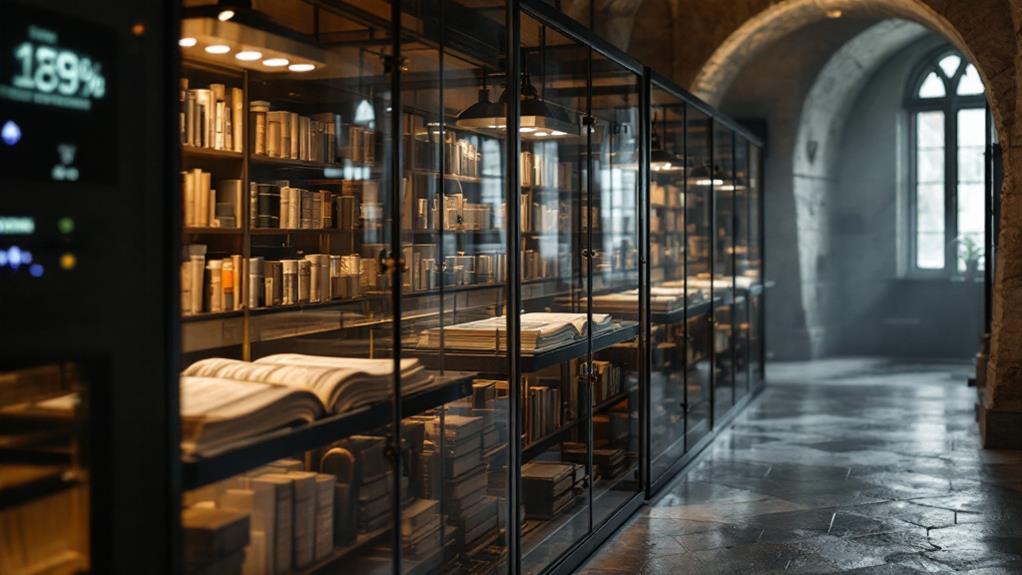
To guarantee the longevity of ancient manuscripts, controlling temperature and humidity is crucial. These factors play a critical role in the preservation process, as fluctuations can cause irreversible damage. You might not realize it, but preventive measures such as climate control systems are your best allies in this battle against deterioration. By maintaining stable temperature and humidity levels, you can greatly reduce the risk of mold growth, paper warping, and ink fading.
First, focus on setting up a climate control system that monitors and adjusts the conditions in the storage area. Aim for a consistent temperature, ideally between 65-70°F (18-21°C), and keep relative humidity around 45-55%. These levels help balance the moisture content within the manuscripts, preventing them from becoming too dry or too damp.
Regularly check and calibrate your climate control equipment to verify it's functioning correctly. Don't underestimate the importance of sealing windows and doors to prevent external influences from disrupting the controlled environment. Moreover, consider using dehumidifiers and air conditioning units as part of your preventive measures. By taking these steps, you can protect ancient manuscripts from the damaging effects of temperature and humidity fluctuations, preserving their integrity for generations to come.
Protecting Against Light Exposure
While temperature and humidity control are vital, protecting ancient manuscripts from light exposure is just as significant. You must realize that light, especially ultraviolet (UV) rays, can cause irreversible damage to these delicate documents. The ink can fade, paper can yellow, and the comprehensive integrity of the manuscript can be compromised. To effectively safeguard these valuables, you need to implement light filtering techniques.
Start by evaluating the environment where the manuscripts are displayed or stored. Natural sunlight is a major culprit in causing deterioration. Use curtains or blinds to minimize direct exposure, and consider installing UV protection films on windows. These films can block a significant portion of harmful rays without obstructing visibility.
Artificial lighting also requires careful consideration. Opt for LED lights, as they emit less UV radiation compared to traditional bulbs. In addition, you can use light filtering covers on fixtures to further reduce exposure. When displaying manuscripts, guarantee they're housed in cases with UV-filtering glass or acrylic. Limit the duration of light exposure by rotating exhibits regularly. With these measures, you'll provide a safer environment, helping preserve the manuscripts for future generations.
Implementing Proper Storage Solutions
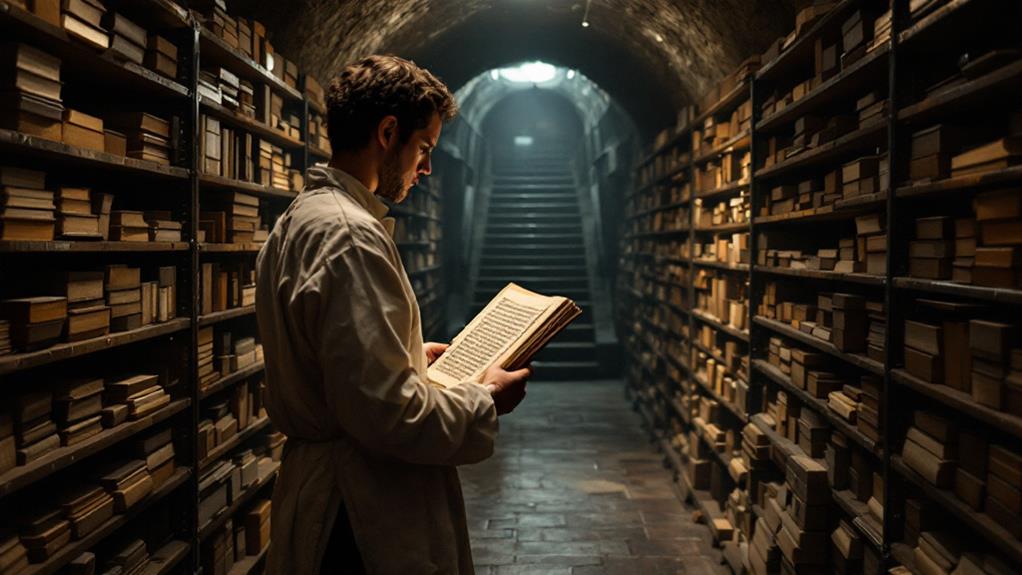
After addressing light exposure, let's focus on storing ancient manuscripts properly to secure their long-term preservation. You need to take into account multiple environmental factors, such as temperature, humidity, and air quality, which can greatly influence the condition of these valuable documents. Ideally, maintain a stable temperature around 65-70°F and humidity levels between 30-50%. Fluctuations can cause paper and ink to warp or deteriorate, so use climate control systems to stabilize these conditions.
Next, choose the right storage materials. Avoid acidic materials, which can accelerate deterioration. Opt for acid-free folders and boxes that provide a safe environment for the manuscripts. These materials should also be lignin-free to prevent any chemical reactions that can harm the documents. You might want to use archival-quality polyester or polypropylene sleeves to protect the manuscripts from dust and physical damage while allowing for easy viewing.
Store the manuscripts horizontally to avoid stress on bindings. If vertical storage is necessary, make sure they're adequately supported. By implementing these storage solutions, you'll effectively shield your manuscripts from potential damage, preserving them for future generations to study and appreciate.
Handling and Transport Guidelines
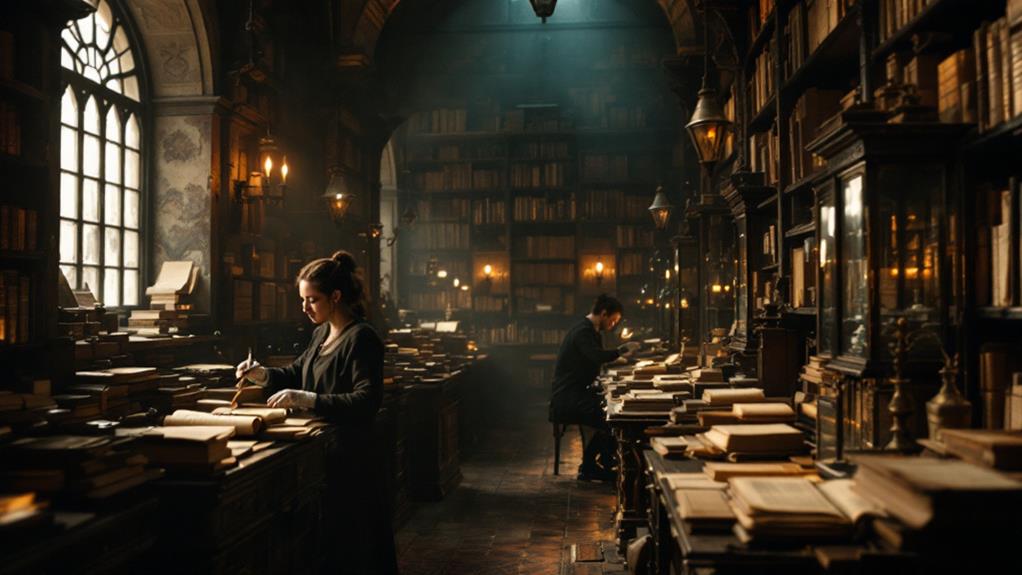
When handling ancient manuscripts, it's vital to prioritize their protection to prevent any damage. Always verify your hands are clean and dry, or use gloves if recommended. Approach each manuscript with a gentle touch, avoiding sudden movements that could stress the delicate materials. Safe lifting is imperative; always support the manuscript fully, using both hands to prevent any bending or twisting.
When preparing a manuscript for transport, careful packing is of utmost importance. Use acid-free materials to wrap the manuscript, providing a buffer against environmental changes. Secure the manuscript in a sturdy, appropriately-sized box that allows little movement. Fill any empty spaces with padding to protect against bumps during transit. Confirm the box is clearly labeled as fragile to alert handlers to exercise caution.
During transport, maintain a stable environment. Avoid exposing the manuscript to extreme temperatures or humidity levels. If you're using a vehicle, make sure it's climate-controlled. Direct sunlight can also be harmful, so keep the manuscript shielded. Always plan your route to avoid unnecessary delays or extreme conditions. By following these guidelines, you guarantee that the manuscript arrives at its destination in the best possible condition.
Restoration and Repair Techniques
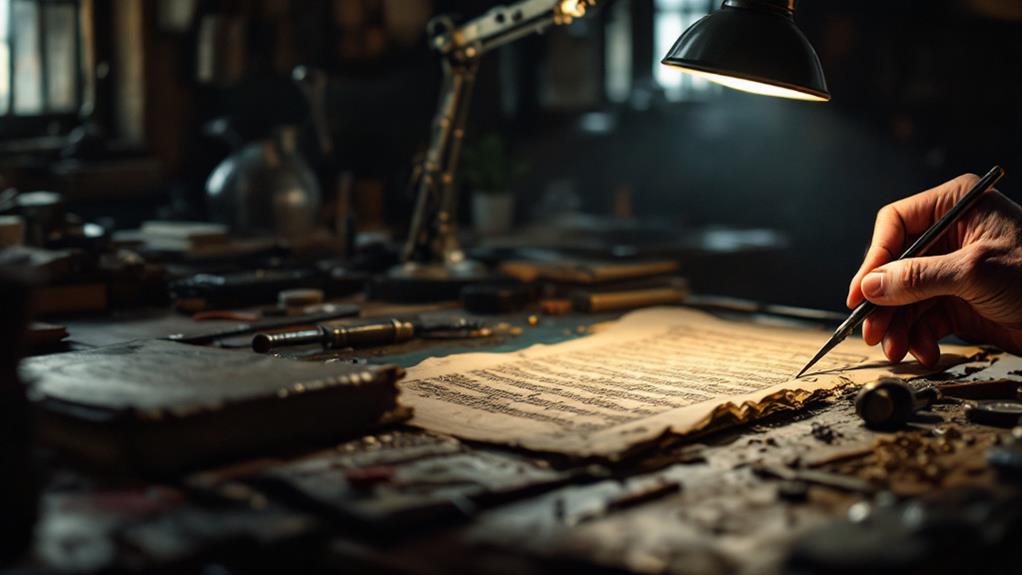
Having secured safe handling and transport, attention now turns to the essential work of restoration and repair. When you begin restoring an ancient manuscript, your initial step is to conduct a thorough ink analysis. This process helps you understand the composition and era of the ink, which is crucial for choosing appropriate restoration materials and techniques. By identifying the ink's components, you can also detect any chemical reactions that may have caused deterioration, allowing you to address these issues directly.
Next, you'll need to focus on binding restoration. A manuscript's binding is as significant as the pages it holds since it provides structural integrity. In this step, you'll carefully assess the binding's condition. Is it weak or damaged? If so, you'll employ techniques like re-sewing loose sections or reinforcing the spine with archival-quality materials. This guarantees the manuscript can be handled without risk of further damage.
Throughout the process, you should use gentle tools and reversible methods, so future conservators can make adjustments if needed. Your thorough work in restoration and repair not only preserves the manuscript's physical form but also its historical significance for future generations.
Utilizing Digital Preservation Methods
Digital scanners and cameras have transformed the preservation of ancient manuscripts, offering a way to safeguard their contents without physical contact. By creating high-resolution digital copies, you can guarantee that the information remains accessible even if the originals deteriorate over time. This method allows you to store documents in digital archives, providing a backup that can be easily accessed and shared globally.
Using digital preservation methods, you can host virtual exhibitions that bring these historical gems to a wider audience. Instead of limiting access to those who can visit a physical location, digital platforms allow anyone with internet access to investigate ancient texts. This not only democratizes knowledge but also reduces the wear and tear on the original manuscripts by minimizing handling.
Digital archives serve as an essential tool for researchers and historians, enabling them to analyze texts without risking damage to the fragile originals. By embracing these technologies, you contribute to the ongoing efforts to preserve cultural heritage. Digital preservation isn't just about safeguarding the past—it's about making certain future generations can learn from it, too. So, when you use these methods, you're playing an important role in protecting history.
Related posts