How Bookbinding Techniques Protected Historical Folios for Centuries

You'd be surprised at how centuries-old bookbinding techniques protected historical folios. Craftsmen used wooden boards and leather to shield manuscripts from damage. Sewing methods like chain and kettle stitch guaranteed each page stayed intact, making the folios durable. Protective covers acted as barriers against environmental threats, reflecting the folio's significance and allure. Materials like leather and linen thread were chosen for their strength and flexibility, promising robust protection. Over time, innovations blended traditional craftsmanship with modern tech to improve preservation. As you investigate further, you'll uncover the fascinating interplay of history and technology in bookbinding.
Origins of Bookbinding
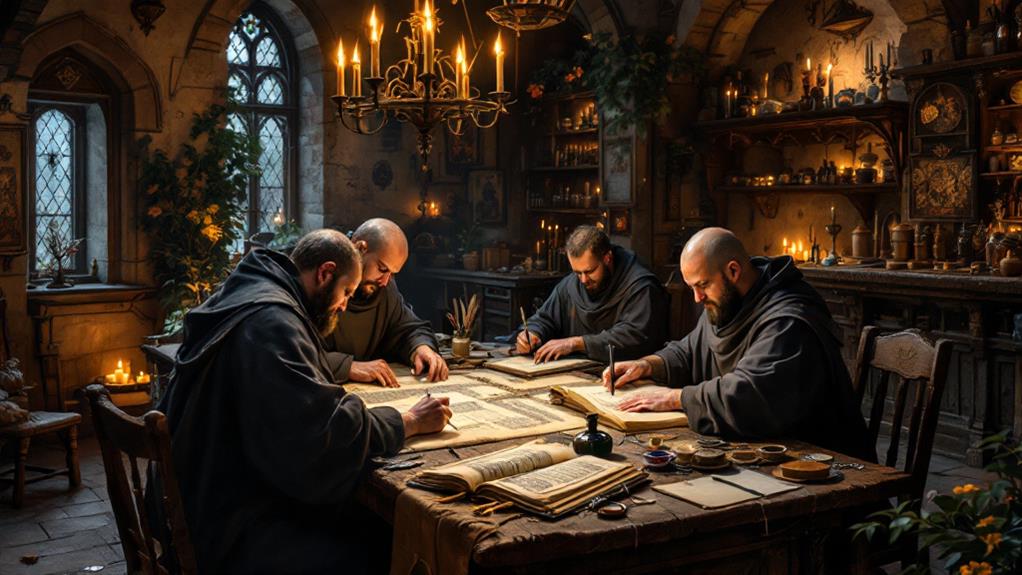
Bookbinding, as an art and craft, traces its origins to ancient civilizations where the necessity to preserve written records took shape. You can imagine how ancient manuscripts held immense cultural significance, serving as vessels of knowledge, tradition, and history. These manuscripts, from the papyrus scrolls of Egypt to the clay tablets of Mesopotamia, were the precursors to the bound books we're familiar with today. The desire to protect and organize these documents led to the development of early bookbinding techniques.
In ancient times, scribes and artisans recognized the importance of safeguarding manuscripts. They began experimenting with different materials and methods to guarantee longevity. You'd find that the earliest form of bookbinding involved using wooden boards and leather to protect the fragile contents within. These bound volumes were often adorned with elaborate designs, reflecting the cultural significance of the texts they contained.
Sewing and Stitching Methods
Among the many techniques in bookbinding, sewing and stitching methods stand out for their vital role in guaranteeing a book's structural integrity. When you're dealing with historical folios, hand sewing becomes fundamental. This detailed process involves binding pages alongside needle and thread, allowing for flexibility and durability. By using hand sewing, you guarantee each folio is securely fastened, reducing the risk of pages loosening over time.
Choosing the right thread types is imperative in this process. Linen thread, known for its strength and longevity, is often preferred. It withstands the test of time, resisting wear and breakage. Silk thread, another popular option, offers a smoother finish and is less abrasive on delicate paper. Each thread type serves a different purpose, so you must select one that complements the folio's specific needs.
Stitching methods such as the chain stitch or kettle stitch play a significant role. These techniques create tight bonds between pages, preventing separation even with frequent handling. By mastering these methods, you'll contribute greatly to the preservation of historical texts, guaranteeing they remain intact and accessible for future generations.
Use of Protective Covers

A historical folio's value extends beyond its pages, making the use of protective covers essential. You want these covers to act as both a shield and a showcase. Protective layers form the primary line of defense against the elements, guaranteeing the folio remains intact for future generations. It's not just about keeping dust and moisture at bay; these covers must also reflect the folio's importance. The aesthetics of a cover can improve its allure, drawing the viewer in and accentuating the folio's historical significance.
Consider the following when choosing a protective cover:
- Protection: Confirm the cover can withstand environmental threats, preserving the folio's condition.
- Aesthetics: Choose a design that complements the folio's time period and style, adding to its charm.
- Functionality: A cover should be easy to handle, allowing safe access to the folio.
Materials and Their Durability
When selecting materials for historical folios, consider their durability as a top priority. You want these precious documents to endure through the centuries, so choosing the right binding materials is essential. Leather, a popular choice, offers flexibility and strength. It matures well, developing a patina that adds character while still protecting the contents. If you're looking for something less traditional, consider materials like vellum or sturdy cloth, which also provide excellent durability.
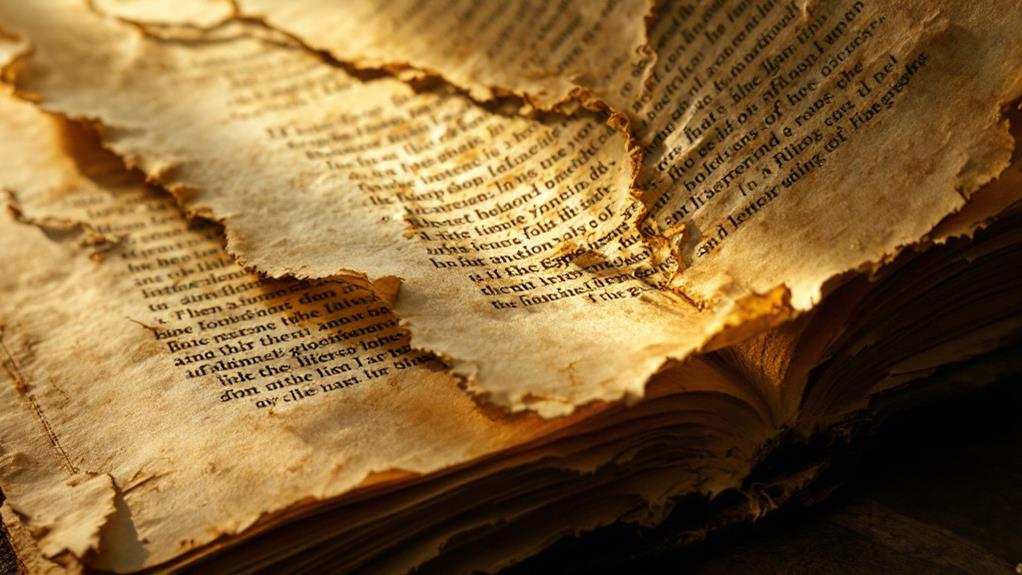
Historical parchment, often used for the pages themselves, needs proper protection. While parchment is inherently tough, exposure to moisture and light can cause deterioration. That's why the binding materials must complement and safeguard the parchment. Opt for materials that can withstand environmental changes, keeping the parchment safe from brittleness or fading.
Don't overlook adhesives and threads, either. High-quality, acid-free adhesives guarantee the folios remain intact without damaging the historical parchment. Linen threads, known for their durability, are ideal for sewing the folios together, providing a robust binding that withstands frequent handling.
Ultimately, selecting the right materials is about preserving history. By focusing on durability, you'll guarantee the folios remain a window into the past for generations to come.
Innovations in Bookbinding
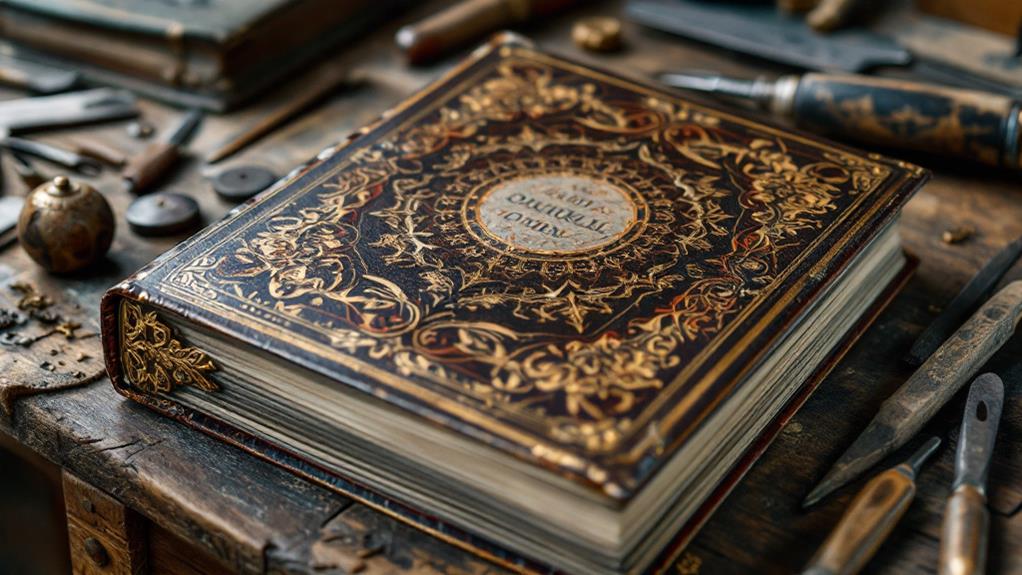
How have modern technologies transformed the ancient craft of bookbinding? You've stepped into an exciting period where traditional methods blend with contemporary techniques, making bookbinding more durable and environmentally friendly. One major shift is the use of cutting-edge adhesives. These high-tech glues not only create stronger bonds but also resist the degradation that plagued older materials. So, your books stay intact for generations.
Furthermore, the push for sustainable materials is at the forefront of today's bookbinding advancements. Instead of relying on harmful chemicals or non-renewable resources, you're seeing a rise in eco-friendly options like recycled paper and biodegradable threads. These choices help reduce the environmental impact and guarantee that the art of bookbinding aligns with modern ecological values.
Consider these intriguing advancements:
- 3D printing: It's transforming how you create intricate book covers and unique bindings, previously unimaginable with traditional methods.
- Laser cutting: This allows for precise, intricate designs that bring a new level of artistry to bookbinding.
- Digital technology: With sophisticated design software, you can easily customize book aesthetics, making each creation truly unique.
These advances are changing bookbinding, making it stronger, more sustainable, and infinitely more creative.
Contemporary Relevance
While modern innovations have transformed bookbinding techniques, the craft's contemporary relevance lies in its ability to bridge the past and the present. You might wonder how a centuries-old technique fits into today's technological era. Bookbinding remains vital as it complements digital preservation. Physical books, especially historical folios, offer a tangible connection to our cultural heritage. They provide insights into the craftsmanship and artistry of past generations, something digital replicas can't fully replicate.
Imagine holding a beautifully bound book from centuries ago. Its weight and texture tell a story beyond the words. Bookbinding gives you a tangible link to history, allowing you to appreciate the dedication and skill that went into preserving knowledge. In this period of digital overload, bookbinding offers a tactile experience that digital devices can't match.
Moreover, bookbinding techniques have inspired modern-day preservation efforts. Libraries and archivists use them to guarantee that rare and valuable texts remain intact for future generations. As you explore digital archives, keep in mind that these efforts are rooted in traditional bookbinding skills. By valuing both digital and physical preservation, you actively participate in safeguarding our cultural heritage.
Related posts