How Ancient Scripts Survived Through Translation and Folios
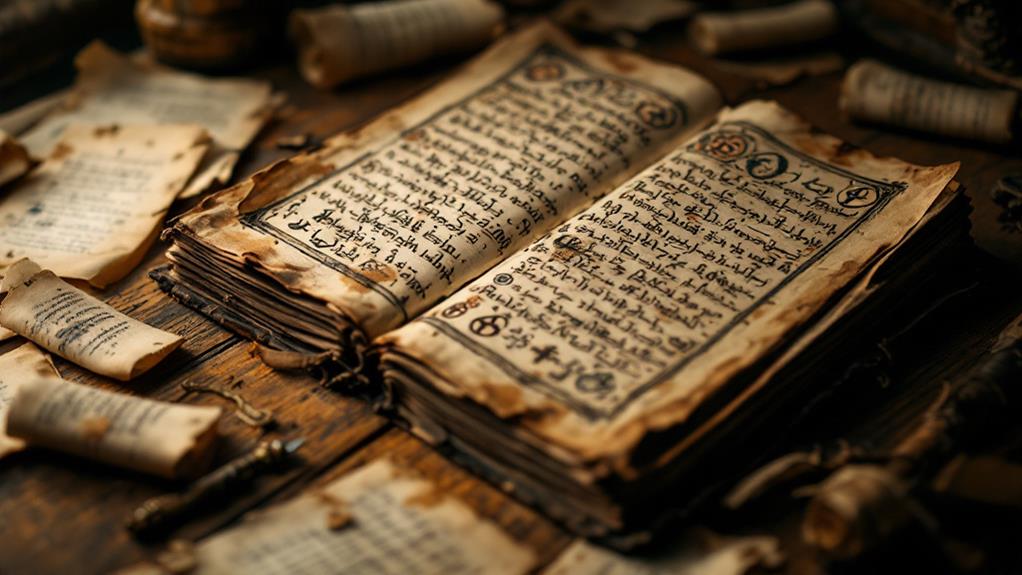
You've probably wondered how ancient scripts have managed to endure through centuries. It's a fascinating blend of translation and the diligent work of scribes. Translating ancient texts not only kept them alive but connected cultures, preserving their wisdom for future generations. Scribes played an essential role, their careful work on papyrus and parchment ensuring the scripts' longevity. They used special methods and materials to protect these texts from environmental threats. Despite challenges like wars and language barriers, these efforts allowed ancient scripts to influence our modern world. You're just starting to uncover the rich legacy they left behind.
The Origins of Ancient Scripts
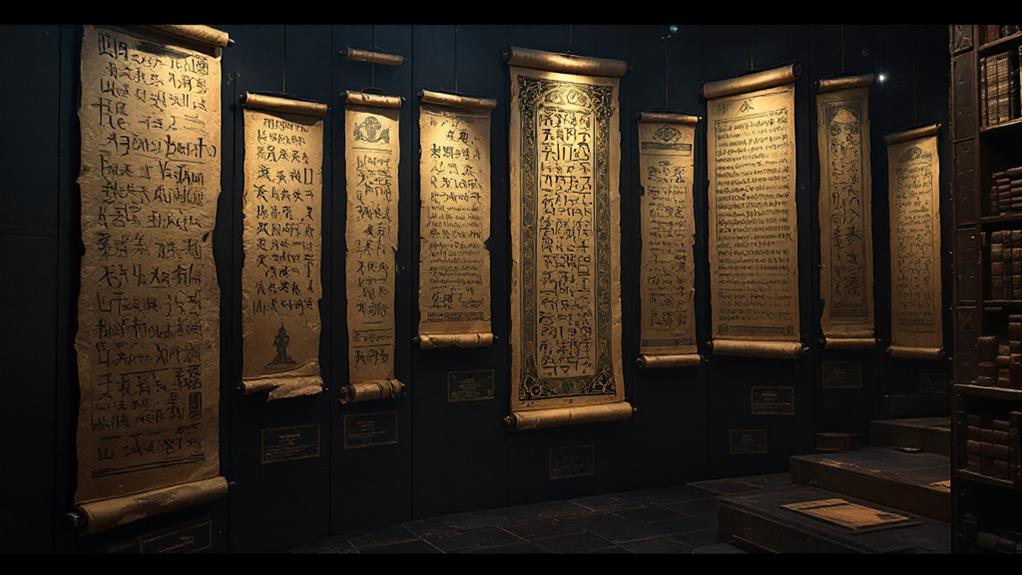
Commence on a voyage through time as you investigate the fascinating origins of ancient scripts. Imagine yourself in the lively heart of ancient civilizations, where the initial written language emerged from the creative minds of early humans. These civilizations used pictographic symbols to record their world, communicate ideas, and manage daily affairs. You can picture these symbols etched on stone tablets or drawn on papyrus, each one representing a different aspect of their lives, from trade transactions to religious ceremonies.
In Mesopotamia, the Sumerians pioneered cuneiform, utilizing wedge-shaped marks to convey complex ideas. Meanwhile, in ancient Egypt, hieroglyphics flourished, with pictographic symbols that captured the imagination with their intricate designs. These scripts weren't just random drawings; they held profound meaning, crafted to preserve the knowledge and culture of their creators for future generations.
As you investigate these ancient scripts, you'll notice that each civilization contributed distinctly to the development of written language. Their pictographic symbols laid the groundwork for more abstract forms of writing that would evolve over centuries. By unraveling these origins, you gain insight into the minds of those who initially dared to transform thought into tangible symbols.
The Role of Translation
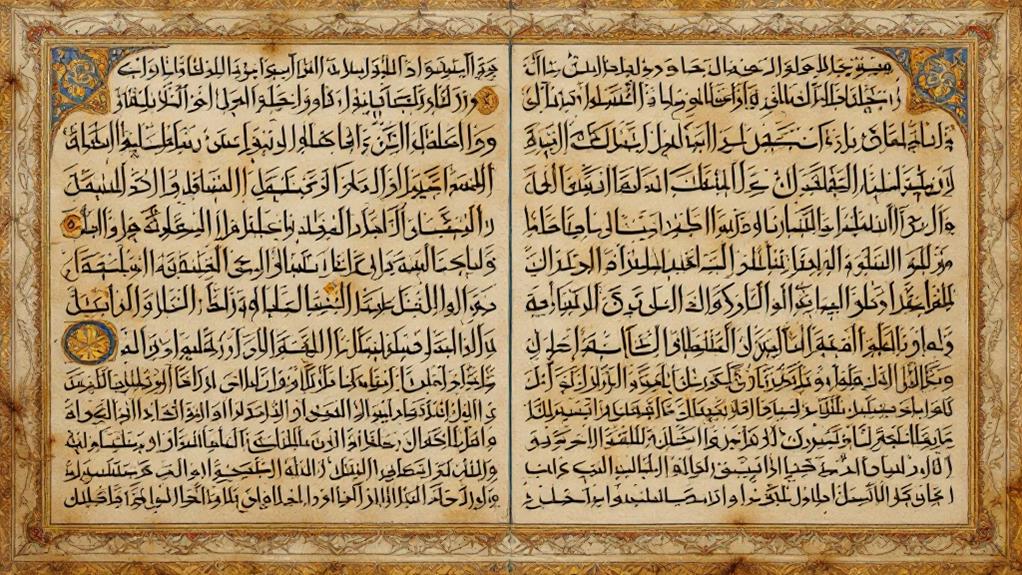
Translation serves as a bridge connecting ancient scripts to the modern world, revealing the mysteries of languages long forgotten. When you immerse yourself in these ancient texts, you're not just reading words; you're experiencing a form of cultural exchange. Translation allows you to access the thoughts, beliefs, and stories of civilizations that might otherwise remain obscured by time. This process is about more than swapping words from one language to another—it's about capturing the essence and intent of the original authors.
Through translation, you witness the magic of linguistic evolution. Languages change over time, influenced by the cultures that speak them. When ancient texts are translated, they often adapt to modern expressions and ideas, making them accessible to contemporary audiences. This adaptation reflects the dynamic nature of language itself.
You also play an essential role in ensuring that these ancient messages don't fade away. By engaging with translated texts, you help keep ancient wisdom alive and relevant. Translation isn't just a technical task; it's a commitment to preserving the rich tapestry of human history. So, the next time you read a translated ancient script, remember you're part of a long tradition of cultural and linguistic exchange.
Scribes and Their Craft
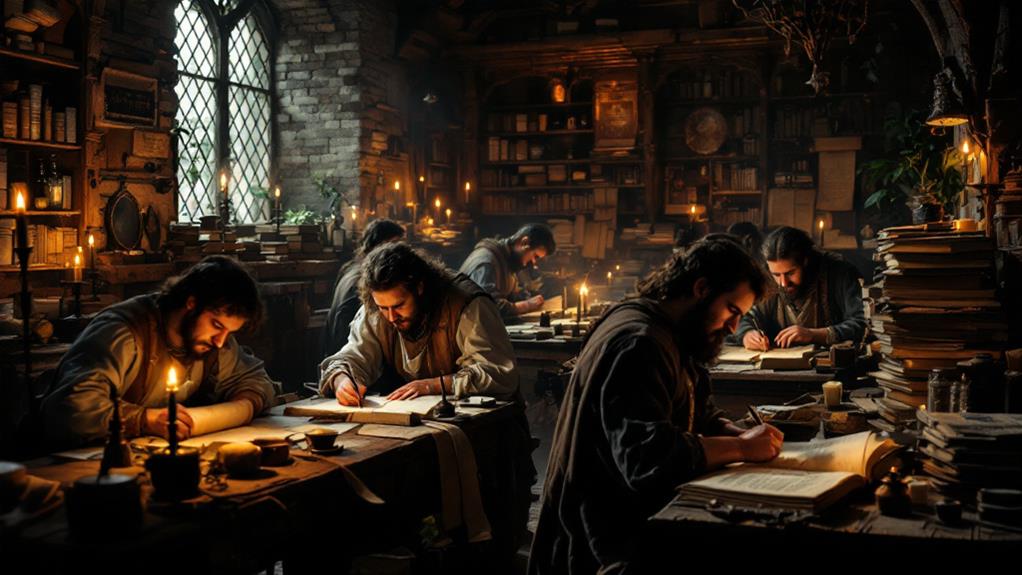
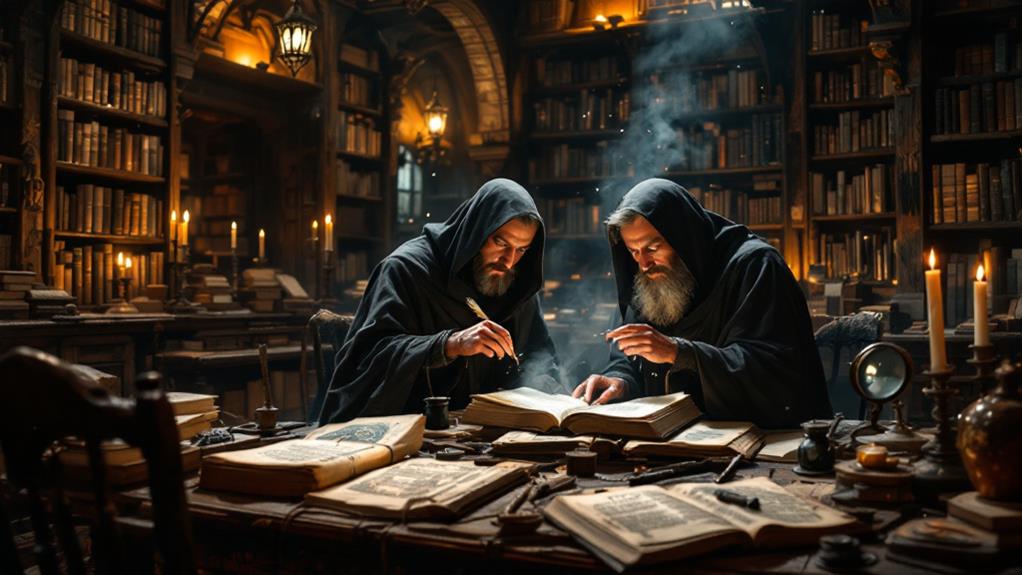
The world of ancient scribes is both captivating and essential, as these skilled artisans of writing played a key role in preserving the knowledge of their time. You might imagine a scribe hunched over a wooden desk, surrounded by scrolls and ink pots. They were masters of their craft, employing precise scribe techniques to copy texts by hand. Every stroke of the quill was deliberate and required immense concentration, guaranteeing accuracy in their work.
Scribes used diverse ancient materials in their craft, such as papyrus, parchment, and ink derived from natural sources like berries and soot. Papyrus, made from the papyrus plant, was a common writing surface in ancient Egypt. Meanwhile, parchment, crafted from animal skins, became popular in Europe. Each material demanded specific handling, and scribes had to adapt their techniques accordingly.
Your understanding of scribes' significance grows when you consider that they didn't just copy texts—they also translated them, making knowledge accessible across cultures. They safeguarded the survival of ancient wisdom, bridging the gap between generations. So, next time you read about ancient texts, remember the scribes who carefully preserved them for you to uncover. Their dedication and skill truly shaped the course of history.
Folio Preservation Techniques
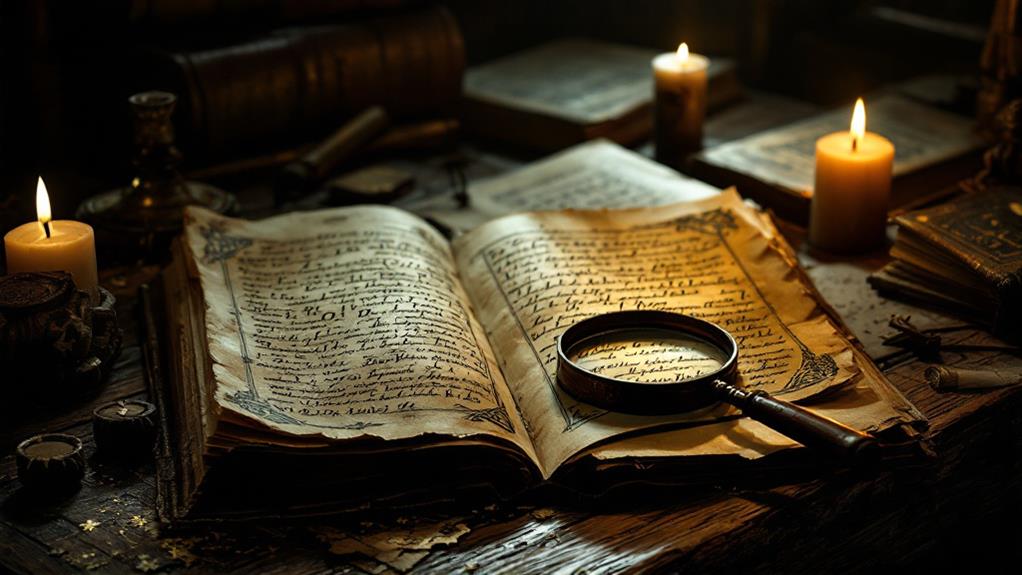
As you investigate the role of ancient scribes, it's essential to acknowledge the careful techniques they employed to guarantee the longevity of their work. These scribes were thorough in preserving folios, whether crafted from papyrus or parchment. Papyrus preservation was an art form in itself. You'd often find scribes using specific storage methods, like keeping scrolls in dry, dark conditions to prevent deterioration. They might apply oils or other natural substances to improve durability and resist decay.
When it comes to parchment, the approach was different yet similarly thoughtful. Parchment techniques involved preparing animal skins through a labor-intensive process. Initially, they soaked the skins in lime and then carefully scraped them to an even thickness. You'd see the parchment being stretched and dried under tension to create a smooth writing surface. To protect the writings, scribes sometimes used animal glue or other natural coatings to seal the surface, preventing ink from smudging and moisture from penetrating.
Challenges in Script Survival
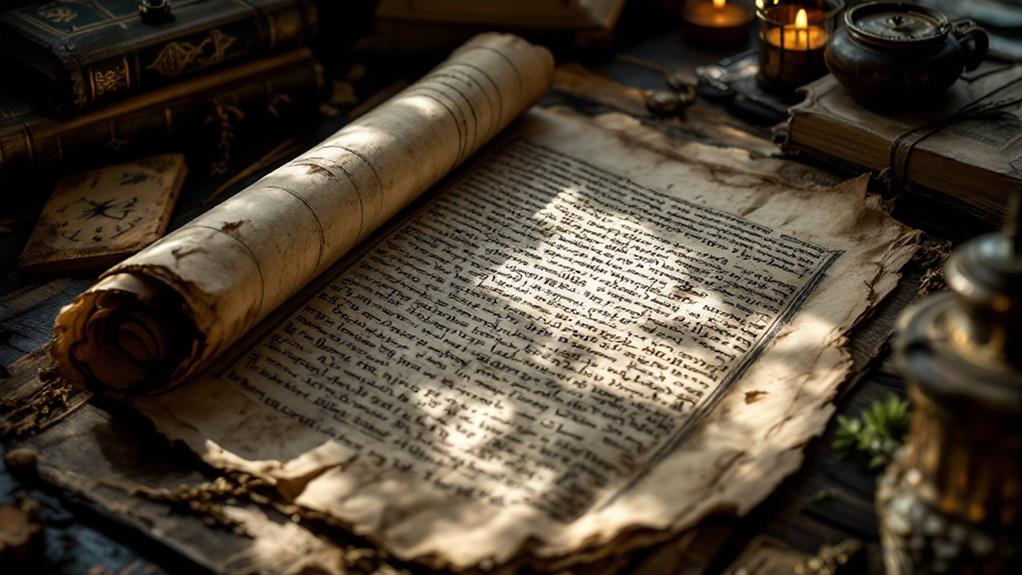
Preserving ancient scripts posed significant challenges due to environmental factors and human intervention. You'd face the threat of decay from humidity, temperature fluctuations, and pests that love to feast on organic materials like papyrus and parchment. Human actions weren't always helpful either; wars, conquests, and colonization led to the destruction or dispersal of countless texts. Sometimes, people just didn't understand the cultural context of the scripts they found, leading to misinterpretations or outright neglect.
Linguistic barriers also played a significant role in these challenges. Imagine unearthing a text written in an ancient language that no one speaks anymore. You'd have to rely on the limited expertise of scholars who might not fully grasp the nuances of the original language. Misinterpretations could easily occur, altering the intended meaning of the texts.
Moreover, as cultures evolved, so did their languages. You'd see scripts fall out of use, replaced by new writing systems more in tune with the changing times. This shift often left ancient texts behind, as fewer people were able to read and understand them, making their survival even more precarious.
Modern Impact and Legacy
Understanding the modern impact and legacy of ancient scripts requires recognizing how these historical texts continue to shape our present. You might not realize it, but the words you use daily are deeply rooted in ancient scripts. They've played a crucial role in linguistic evolution, influencing languages around the world. These scripts provided a foundation for alphabets, grammar, and vocabulary that have evolved over centuries into the languages we comprehend today.
You can see the effects of cultural exchange through these ancient texts. As they were translated, they carried not just words, but ideas, philosophies, and innovations across borders. This exchange enriched societies and fostered an interconnected world where knowledge could be shared and expanded. Ancient scripts acted as bridges, allowing cultures to learn from one another, leading to advancements in science, art, and governance that still impact us.
In today's technological era, these scripts continue to inspire. They've paved the way for new forms of communication and have been preserved in digital libraries for future generations. By understanding their modern legacy, you appreciate how deeply intertwined our contemporary world is with the wisdom of the past.
Related posts