How Ancient Manuscripts Are Preserved: Techniques From Experts
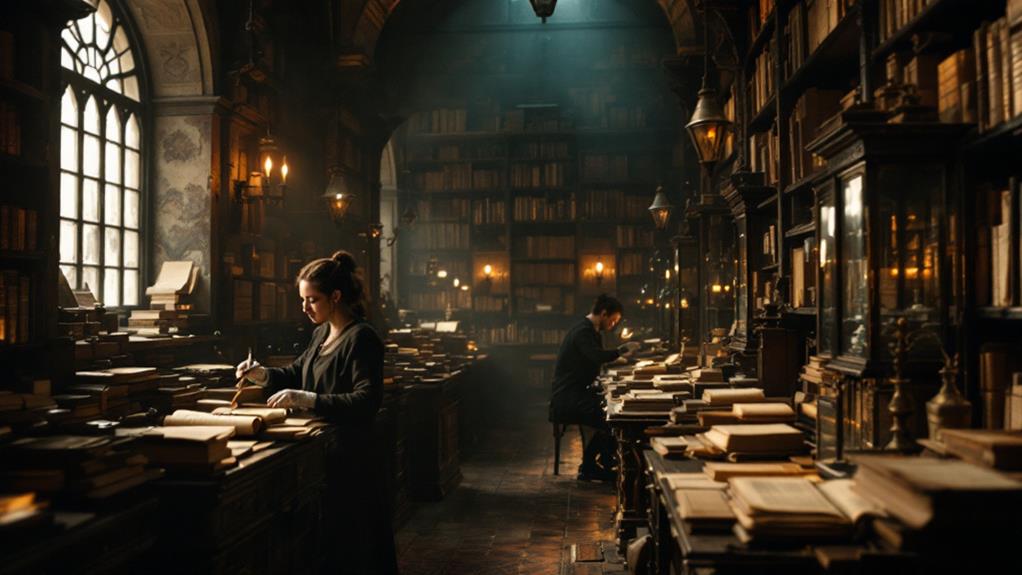
To preserve ancient manuscripts, start by evaluating their condition for issues like tears and stains. Experts control the environment, maintaining humidity between 30% and 50% and a stable temperature around 65°F to protect against mold and damage. Cleaning involves using soft brushes, and repairs use reversible adhesives and Japanese tissue paper for support. Deacidification prevents paper brittleness, while digitization creates safe digital copies. Proper storage and handling with acid-free materials and careful handling techniques guarantee longevity. By applying these methods, you contribute to safeguarding these cultural artifacts. Uncover more about these intricate processes and the experts behind them.
Assessing Manuscript Condition
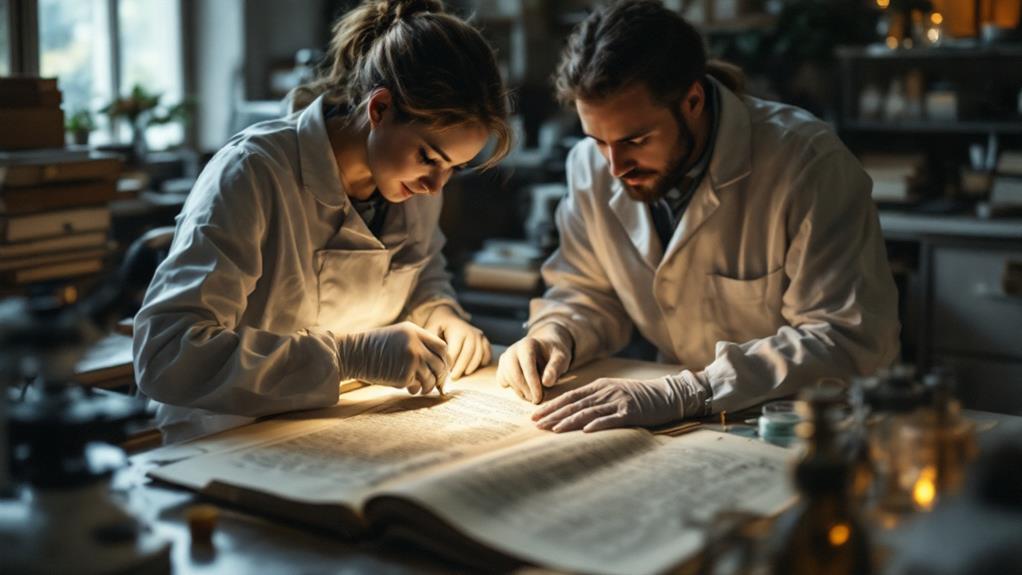
Before any preservation efforts can begin, it's vital to thoroughly assess the condition of ancient manuscripts. You need to conduct a careful manuscript evaluation to determine the extent of any damage or deterioration. Start by examining the physical aspects such as tears, stains, or brittleness. You should handle each manuscript with extreme care, using gloves to prevent oils from your hands transferring to the fragile pages.
During the condition assessment, look for signs of environmental damage like fading or discoloration, which can indicate exposure to light or humidity. Pay close attention to the binding and cover, as these components often bear the brunt of aging. It's important to photograph each manuscript from different angles, documenting every detail for future reference.
As you evaluate, take detailed notes on any findings, noting areas that may require immediate attention. This process isn't just about identifying problems but also prioritizing them based on severity. A thorough manuscript evaluation helps you decide the best preservation techniques to apply later. By understanding the manuscript's current state, you can tailor your preservation approach to guarantee it withstands the test of time effectively.
Cleaning and Mold Removal
Once you've thoroughly evaluated the condition of an ancient manuscript, it's time to address cleaning and mold removal. Begin by performing a detailed fungal identification. This step is vital because different types of mold require specific cleaning methods. You'll need to carefully examine the manuscript for any visible mold or fungal growth, noting the color, texture, and spread of the contamination. Use a magnifying glass or microscope for more precise identification.
Next, select the appropriate cleaning methods based on your findings. For loose surface dirt, a soft brush or a specialized sponge can gently remove particles without damaging the fragile paper. Avoid using water-based solutions unless absolutely necessary, as moisture can further damage the manuscript.
When dealing with mold, it's important to contain the affected area to prevent spores from spreading. You might use a vacuum with a HEPA filter to carefully extract mold particles. For stubborn stains, consider consulting a professional conservator who might use solvents designed for delicate materials. Remember, your goal is to preserve the manuscript's integrity while effectively removing harmful fungi. With patience and precision, you can guarantee the manuscript's longevity for future generations.
Humidity and Temperature Control
Maintaining proper humidity and temperature is vital for preserving ancient manuscripts. You need to create a stable environment to prevent deterioration. Humidity sensors are your best friends in this task, as they help you monitor moisture levels in the storage area. Keep the humidity between 30% and 50%. Too much moisture can lead to mold growth, while too little can make the manuscripts brittle.
Temperature control is similarly important. Try to maintain a consistent temperature, ideally around 65°F (18°C). Avoid temperature fluctuations, as they can cause the materials to expand and contract, leading to potential damage. Installing a reliable climate control system will help you achieve this stability.
It's also significant to take into account the placement of your manuscripts. Store them away from windows and direct sunlight, as light can heat the storage area and alter the temperature. Insulated storage rooms can further protect against external temperature changes.
Repairing Tears and Damages
Inevitably, ancient manuscripts will suffer from tears and damages over time, but addressing these issues promptly can extend their lifespan. You need to approach these fragile artifacts with care, applying careful techniques to repair damage without compromising their integrity. The initial step involves evaluating the manuscript's condition to determine the best course of action, always guided by conservation ethics. This guarantees you respect the artifact's historical value and authenticity.
When repairing tears, adhesive applications are vital. You'll select an appropriate adhesive that's reversible and stable, guaranteeing it doesn't discolor or damage the paper further. Japanese tissue paper, known for its strength and translucence, is often used. You carefully cut it to size and apply it over the tear using a thin layer of adhesive, aligning the fibers of the paper with the manuscript to maintain uniformity.
It's important to keep your interventions minimal and reversible. This means you should document every step, guaranteeing future conservators understand your methods and can reverse them if needed. By adhering to these practices, you help preserve the manuscript's history while allowing it to be appreciated by future generations.
Deacidification Techniques
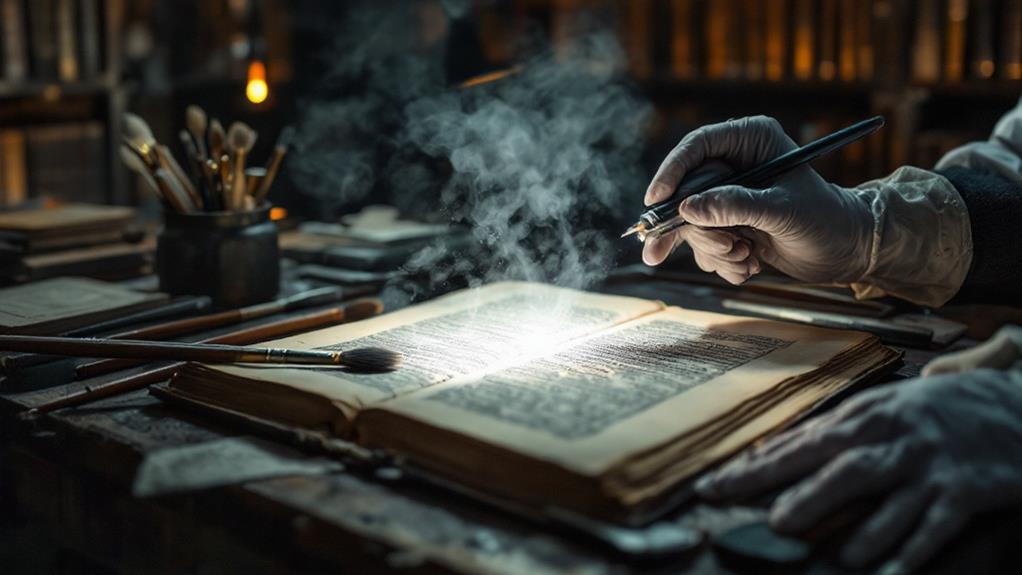
Neutralizing harmful acids in ancient manuscripts is vital to prolong their lifespan and preserve their integrity. As you investigate ways to safeguard these historical artifacts, you'll find that deacidification techniques play an important role. Over time, paper documents naturally become acidic, leading to brittleness and eventual disintegration. To combat this, experts employ chemical treatments to neutralize the acids and prevent future degradation.
When you consider deacidification, there are a few powerful aspects that might evoke emotional responses:
- The fragility of history: Realizing that without intervention, centuries-old knowledge could simply crumble away is a powerful motivator.
- The responsibility of preservation: Understanding your role in maintaining cultural heritage can be both challenging and inspiring.
- The triumph of science over decay: Witnessing how chemical treatments can save what seemed unsalvageable is nothing short of miraculous.
Preventive measures involve applying alkaline substances to the manuscripts, creating a buffer against acid formation. These techniques not only halt the current deterioration but also shield the documents from future harm. By embracing these methods, you're actively participating in the preservation of history, ensuring that future generations can access these invaluable insights into our past.
Digitization and Documentation
In the technological age, preserving ancient manuscripts through digitization and careful documentation offers a powerful way to guarantee their longevity. You can start by scanning or photographing these valuable texts to create high-resolution digital copies. This process, known as digital archiving, guarantees that even if the physical manuscript deteriorates, a digital version remains accessible for future generations. By creating digital archives, you also make these works available to a global audience, increasing opportunities for research and education.
However, digitization isn't just about taking pictures. You need to follow strict metadata standards to guarantee each manuscript is correctly documented. Metadata includes detailed information like the manuscript's origin, date, language, and condition. This data is vital for cataloging and retrieving documents efficiently. You should adopt international metadata standards like Dublin Core or METS, which help maintain consistency and accuracy across digital archives.
Storage and Handling Practices
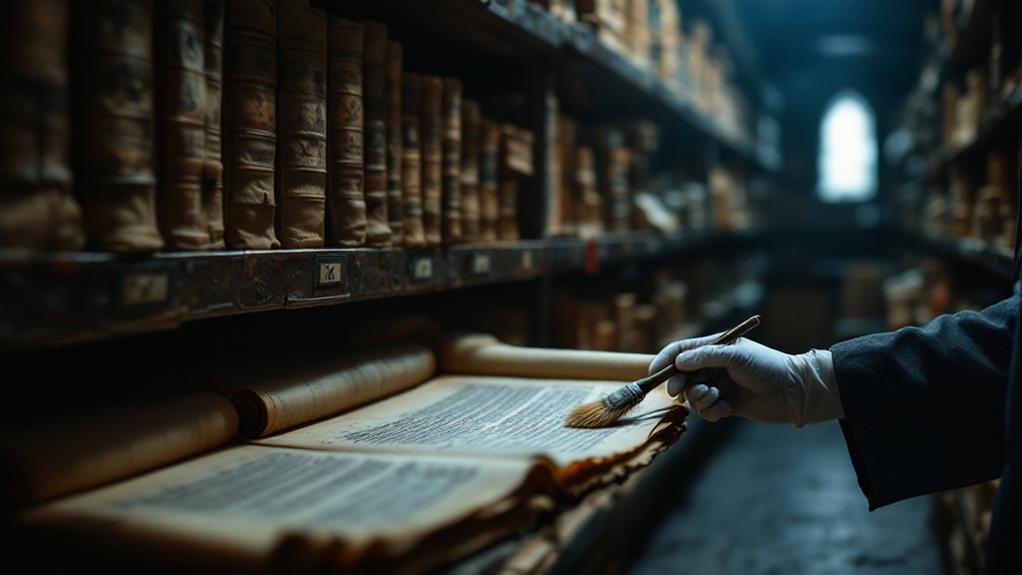
Preserving ancient manuscripts involves more than just digital efforts; it requires careful storage and handling practices. By following preservation ethics, you safeguard these irreplaceable valuables for future generations. Here's how you can make a difference:
- Control Environmental Conditions: Maintain a stable environment with controlled temperature and humidity levels. Manuscripts thrive in cool, dry places, so avoid basements and attics where conditions fluctuate. This attention to detail helps prevent mold growth and paper degradation, protecting centuries of knowledge.
- Use Appropriate Conservation Materials: When handling manuscripts, always use acid-free folders and boxes. These materials provide a safe barrier against environmental contaminants. Avoid using metal fasteners or adhesives that can cause long-term damage. Your choice of conservation materials reflects your commitment to preservation ethics, ensuring manuscripts remain intact.
- Practice Gentle Handling: Handle manuscripts with clean, dry hands or wear gloves if necessary. Support bindings and pages carefully, avoiding stress on fragile areas. By treating each item with respect, you honor the craftsmanship and history they embody.
Each step you take in preserving these manuscripts helps maintain their integrity and accessibility. You become part of a legacy of care, ensuring these cultural artifacts inspire and educate for years to come.
Training Future Conservators
To effectively pass down the crucial skills needed for preserving ancient manuscripts, training future conservators is fundamental. You'll find that conservation education goes beyond traditional classroom settings. It combines theoretical knowledge with practical experience, ensuring you gain a thorough understanding of the field. One of the best ways to learn is through hands-on workshops, where you can directly engage with materials and techniques under the guidance of seasoned experts.
In these workshops, you won't just observe but actively participate in conservation tasks. Regardless of handling fragile parchment or learning to stabilize crumbling bindings, you'll develop the tactile skills necessary for this precise work. Collaborating with experienced conservators, you'll receive immediate feedback, refining your technique and deepening your understanding.
Training programs often include opportunities to work on real projects, offering a taste of the challenges you'll face as a professional conservator. As you progress, you'll build a portfolio showcasing your skills and experiences, preparing you for a career dedicated to preserving history. By immersing yourself in conservation education and engaging in hands-on workshops, you're not just learning a craft but becoming a guardian of cultural heritage.
Related posts