How Ancient Folios Were Crafted: An Inside Look at Production Methods
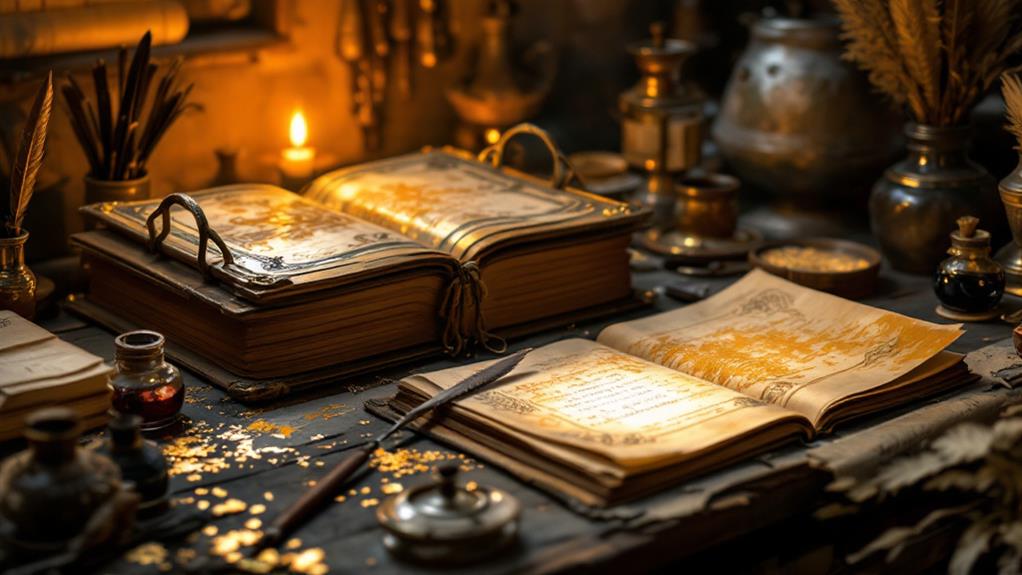
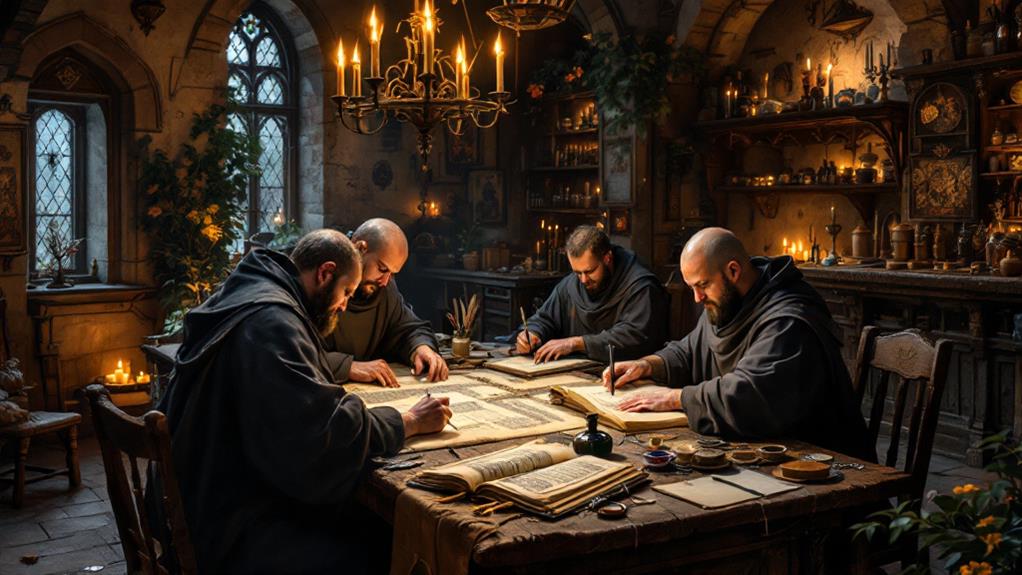
You're about to uncover the intricate craftsmanship of ancient folios, where artisans assiduously transformed raw materials into timeless works. You'd choose parchment wisely, with variations like soft sheep or smooth calf affecting the texture. Natural dyes created the ink, while carefully crafted quills shaped the written word. Thoughtful layout and vivid illuminations brought pages to life, enhancing both aesthetics and narrative. Binding techniques guaranteed durability, blending traditional methods with modern touches. The gilding process added luminous beauty, requiring patience and accuracy. These folios weren't just books; they were cultural gems, each element offering a story of its own.
Selecting the Parchment
Selecting the appropriate parchment is crucial for crafting an ancient folio. You need to take into account numerous parchment sources to guarantee the quality and authenticity of your folio. Historically, parchment was made from animal skins, particularly sheep, goats, or calves. Each type of skin offers distinct texture variations that contribute to the uniqueness of your folio. Sheep parchment might be softer and more flexible, while calf parchment provides a smoother, more durable surface. When selecting your parchment, reflect on how these texture variations align with the purpose and style of your project.
You should start by examining the available parchment sources. Some might offer modern reproductions, but for a truly authentic touch, sourcing from traditional providers is ideal. Check the texture of each piece; run your fingers across the surface to feel the grain and thickness. This tactile experience helps you understand how the parchment will interact with your tools and ink. Remember, the parchment you choose will influence the final look and feel of the folio, so choose wisely. By paying attention to these details, you guarantee your ancient folio not only looks the part but also endures the test of time.
Preparing the Ink
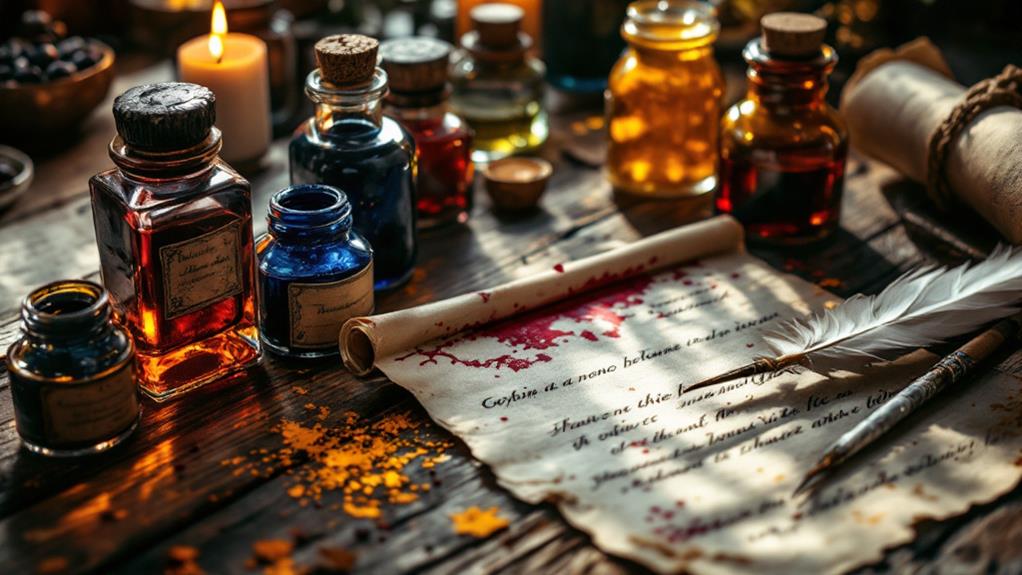
Creating ink for your ancient folio demands attention to detail and a respect for traditional methods. You'll begin by selecting the finest ingredients to guarantee a rich ink composition. Start with natural dyes, which are fundamental for authentic color and longevity. These dyes come from diverse sources, like plants, minerals, and even insects, each providing unique hues and qualities. For example, oak galls offer deep blacks, while saffron yields a lively yellow.
Once you've gathered your materials, it's time to prepare the ink. Crush and grind your dye source until it's fine enough to release its color. This process may require patience, but it's critical for achieving the desired intensity. Next, you'll mix the dye with a binding agent, such as gum arabic, which helps the ink adhere to the parchment. Add a bit of water to achieve the right consistency, guaranteeing your ink flows smoothly without being too runny.
Test your ink composition on a scrap piece of parchment. This step guarantees the color is lively and consistent. Adjust the mixture as needed, and remember, your ink's quality is essential to the beauty and durability of your folio.
Crafting the Quills
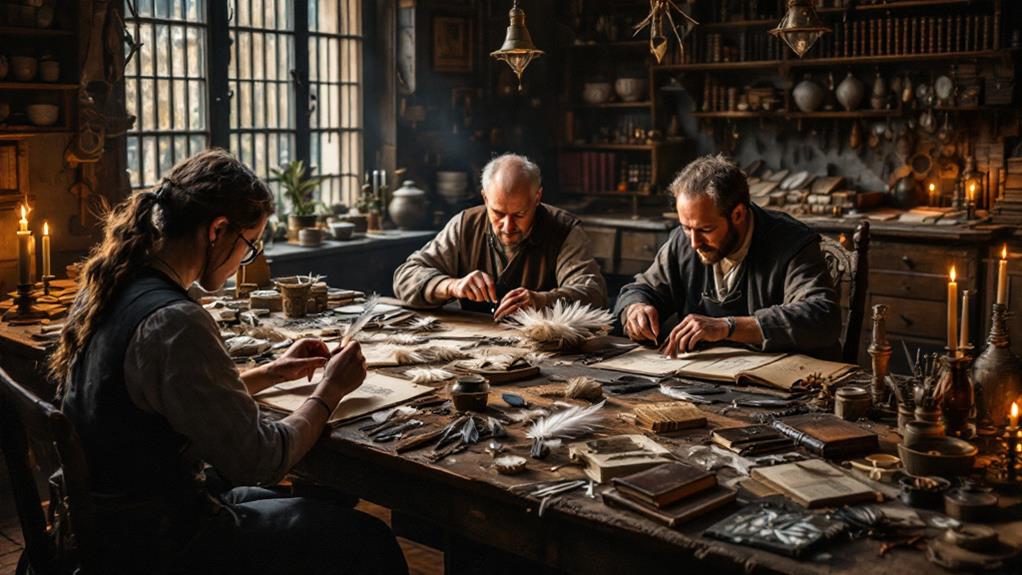
Commence on the voyage of crafting quills by selecting the perfect feathers, usually from geese or swans, known for their ideal size and flexibility. You'll appreciate the significance of choosing the right quill materials, as they directly impact the writing experience. The crafting process is an art, honed over centuries, ensuring each quill serves its purpose flawlessly. Quills have been a crucial tool in historical uses, from writing manuscripts to signing significant documents.
To craft a quill, follow these steps:
- Select the Feather: Choose a feather with a robust shaft and best length. Goose feathers are often favored due to their durability.
- Cure the Quill: Harden the quill by soaking it in hot sand or water, enhancing its strength and longevity.
- Shape the Tip: Use a sharp knife to cut the tip into a precise point, ensuring smooth ink flow and controlled writing.
- Test the Quill: Dip it into ink and make test strokes to fine-tune the tip for the finest writing performance.
Layout and Design
Crafting an ancient folio requires a keen eye for layout and design, where each page is a canvas waiting for your artistic touch. You'll start by considering the page proportions, ensuring they're harmonious and balanced. This isn't just about aesthetics—it's about functionality too. The right proportions make the text easy to read and the illustrations pleasing to the eye. Your design choices guide the reader's path through the folio, so think carefully about how each element interacts.
When it comes to marginalia, recognize its significance. Marginalia isn't mere decoration; it's a dialogue with the text. These annotations can offer insights, commentary, or even corrections, adding layers of meaning to your folio. You'll want to allocate sufficient space for them, ensuring they don't overwhelm the main text but instead complement it. This balance is essential.
The interplay between text and imagery also forms a vital part of your design strategy. Consider how illustrations can enrich the narrative, supporting and enhancing the written content. By thoughtfully combining these elements, you're not just creating a folio; you're crafting a timeless masterpiece that communicates across centuries.
Calligraphy Techniques
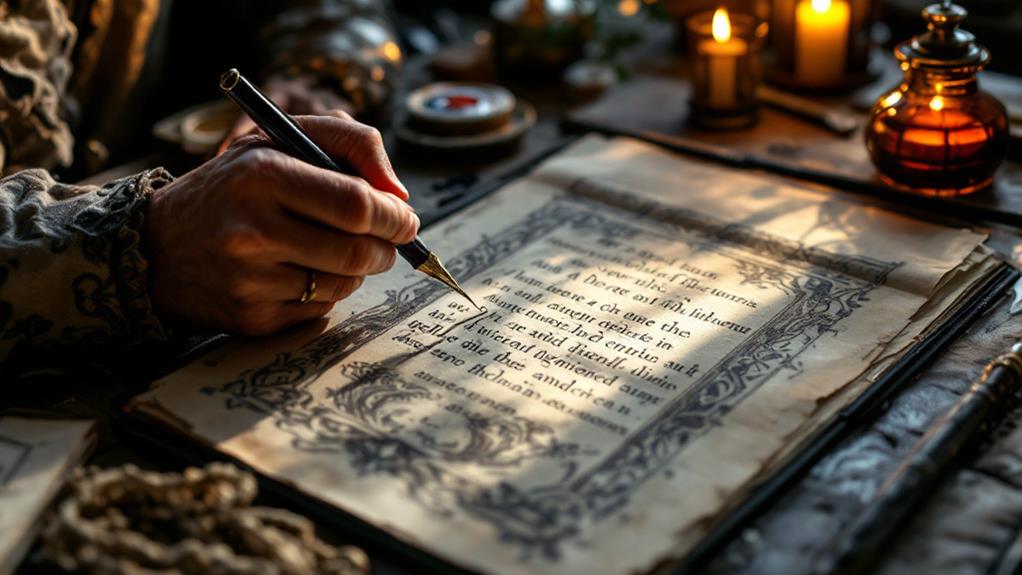
Having established the layout and design, your next focus is on the artistry of calligraphy, where each letter becomes a work of art. Calligraphy in ancient folios isn't just about writing; it's about transforming text into visual masterpieces. You'll investigate a world of historical styles that have evolved over centuries. Each style offers its own unique flair, shaped by cultural influences and the materials available at the time.
When diving into calligraphy techniques, consider these four key aspects:
- Historical Styles: Understand the evolution of scripts like Carolingian, Gothic, and Uncial. Each style reflects a specific period's aesthetic and functional needs.
- Regional Variations: Different regions had their distinct scripts. For instance, the elegant Italic of Renaissance Italy contrasts with the dense Gothic of medieval Germany.
- Tools and Materials: The quill and ink used greatly impact the outcome. Sharpening your quill just right and selecting the perfect ink consistency is essential.
- Stroke Practices: Mastery lies in the details. Control your hand movements to achieve consistent, fluid strokes that improve the text's readability and beauty.
Creating Illuminations
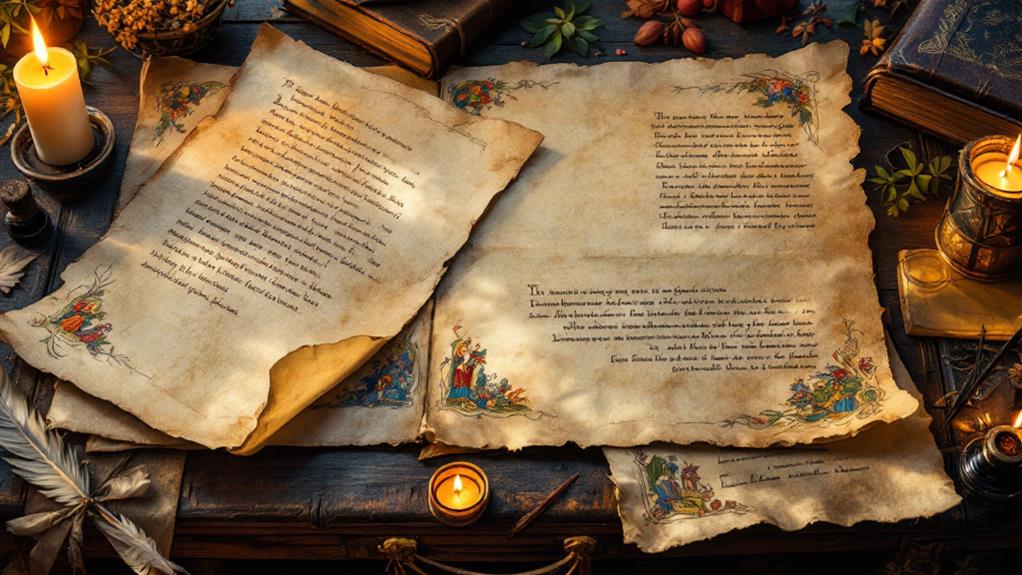
Illuminations in ancient folios add a dynamic dimension to the text, transforming pages into visually stunning artworks. You'll find that medieval artistry flourishes in these illuminated manuscripts, where skilled artisans painstakingly applied vivid colors and gold leaf to create breathtaking details. Illuminations, often found in the margins or as initial letters, are more than just decorative. They convey symbolic imagery that enriches the narrative or religious themes of the text.
When creating these illuminations, you start by preparing the parchment, ensuring it's smooth and ready for illustration. Next, you sketch your design, often drawing on symbolic imagery that holds significance to the text's content or purpose. Once the sketch is complete, you apply a layer of gesso, a mixture that provides a smooth surface for the gold leaf. Carefully lay the gold leaf, burnishing it to a brilliant shine.
Afterward, you apply vivid pigments, derived from minerals, plants, or insects, to bring your illustration to life. Your work demands precision and patience, reflecting the medieval artistry that defines these folios. Each stroke and hue not only embellishes the page but also weaves a deeper visual narrative that complements the written word.
Binding the Folios
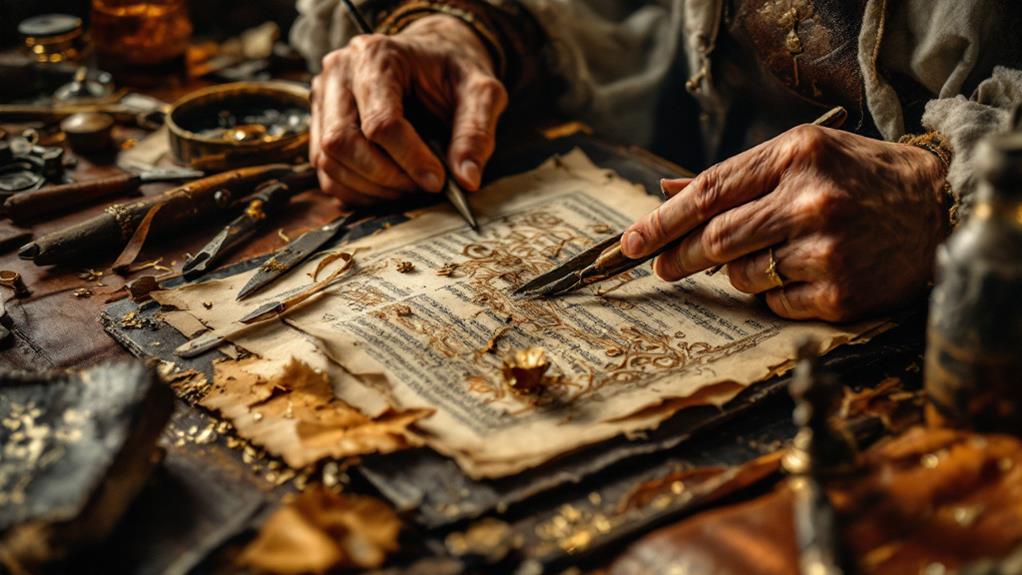
With the illuminations complete, your attention turns to binding the folios, a process that transforms individual pages into a cohesive book. This stage requires precision and skill, blending historical techniques with modern adaptations. You'll start by gathering the folios into quires, small groups of pages folded together. These quires are then stitched using a strong thread, typically linen, to guarantee durability. Each stitch must be tight and secure to withstand the test of time.
Next, you'll move to the spine, the backbone of the book. Here's how you can approach the task:
- Sewing the Spine: Use a centuries-old technique known as Coptic stitching, which allows the book to lie flat when opened.
- Attaching Covers: Bind the folios between sturdy covers, traditionally made from wood or leather, to protect the pages.
- Pressing the Book: Place the book under a heavy press to flatten and solidify the structure.
- Finalizing the Binding: Finish by trimming any excess material for a polished look.
These historical techniques give the book an authentic feel, while modern adaptations, like synthetic adhesives, offer improved longevity. Binding the folios is an art that bridges past and present, safeguarding the folio's legacy continues.
Gilding Process
Initiating the gilding process raises your folios to a new level of artistry, infusing them with a radiant touch that captures the eye. To begin, gather your gilding materials, including gold leaf sheets, adhesive, and a soft brush. Gold leaf, known for its delicate and luminous qualities, is the most traditional choice. However, you can also experiment with silver or copper leaves for unique effects. Your selection of gilding materials will influence the final appearance of your folios, so choose wisely based on your desired aesthetic.
Next, prepare your gilding tools. A gilder's cushion provides a stable surface for cutting the gold leaf. Use a gilder's knife to carefully slice the leaf into manageable pieces. The soft brush, typically a squirrel hair mop, allows you to handle the delicate leaf without tearing it. An adhesive, often called size, acts as the bonding agent between the gold leaf and the folio surface. Apply the size with precision, ensuring it's tacky enough to hold the gold leaf securely.
As you lay the gold leaf onto your folios, watch as each page transforms into a shimmering masterpiece. With practice and patience, your gilding process will yield exquisite results.
Preservation Methods
Preservation plays a crucial role in maintaining the beauty and longevity of your ancient folios. You need to take specific actions to guarantee they remain in pristine condition. Here's a guide to help you protect these valuable pieces:
- Humidity Control: Maintain a stable environment with humidity levels between 30-50%. Too much moisture can cause mold, while too little can make the pages brittle.
- Archival Storage: Use archival-quality materials for storage. Acid-free boxes and folders prevent chemical reactions that could damage the folios.
- Temperature Regulation: Keep the temperature consistent, ideally between 60-70°F. Avoid placing folios near heat sources or in direct sunlight, as fluctuations can cause warping or fading.
- Handling Procedures: Always handle with clean, dry hands or wear cotton gloves to prevent oils and dirt from transferring. Support the folio with both hands to avoid stress on the binding.
Cultural Significance
Ancient folios are not just relics of the past; they're vivid windows into the cultural heritage of civilizations long gone. When you examine these folios, you're not only seeing ink on parchment; you're immersing yourself in the cultural symbolism embedded within each page. They reveal the historical context of their time, offering insights into societal norms, beliefs, and values. Folios served as a canvas for artistic expression, showcasing the creativity and skill of their creators.
The societal impact of these folios was profound. They weren't just books; they were instruments of change and knowledge dissemination. You can see their religious significance in manuscripts that depict sacred texts, reflecting the spiritual beliefs that shaped entire societies. They also capture literary traditions, preserving stories and poems that defined regional identities and entertained generations.
Regional styles in folios highlight the diversity of artistic traditions across different cultures. Each region's unique approach to color, illustration, and script offers a glimpse into its distinct cultural identity. Preservation ethics play an essential role in maintaining these artifacts, ensuring that future generations can continue to investigate and appreciate the rich tapestry of human history these folios represent.
Related posts