How Advances in Preservation Techniques Protect Manuscript History

You're witnessing a revolution in manuscript preservation. Advances in technology like smart HVAC systems, bio-based materials, and nanoparticles keep these delicate artifacts safe from environmental damage and decay. Digital imaging techniques and 3D scanning create accurate replicas, ensuring global access without jeopardizing the original documents. These techniques not only safeguard history but also improve scholarly research by allowing detailed study of previously inaccessible manuscripts. Collaborative efforts and emerging technologies like AI and blockchain further bolster these protective measures. There's a lot more to investigate about how these innovations keep our written heritage secure.
Importance of Manuscript Preservation
In the current electronic age, you might wonder why preserving manuscripts still matters. Manuscripts are gems of cultural heritage, offering a tangible connection to the past and its historical significance. These documents provide insight into the societal norms, beliefs, and events that shaped civilizations, making them invaluable for scholarly research. By preserving these texts, you guarantee that future generations can access authentic sources for educational resources, enriching their understanding of history.
To maintain archival integrity, it's vital to protect these manuscripts from deterioration. Proper manuscript storage guarantees that they remain intact, safeguarding the delicate pages from damage caused by environmental factors and handling. This preservation effort not only maintains the physical condition but also retains the original context and meaning of the documents.
Public access to preserved manuscripts allows a wider audience to engage with our shared history. By supporting libraries and institutions in their preservation efforts, you're contributing to a broader understanding of past cultures and societies. Efficient preservation techniques make it possible for scholars, students, and history enthusiasts to investigate these historical artifacts, fostering a deeper appreciation for our collective heritage. In doing so, you help keep the legacy of the past alive for future generations.
Climate Control Innovations
Preserving manuscripts requires more than just careful handling; it also demands creative climate control solutions. You can't underestimate the importance of maintaining the right environment to protect these delicate valuables. Innovations in climate control focus on two main factors: humidity regulation and temperature optimization. Here's how you can employ these advancements:
- Smart HVAC Systems: These systems are designed to maintain stable temperature and humidity levels. They automatically adjust settings based on real-time data, ensuring that no sudden changes occur, which could damage manuscripts.
- Dehumidifiers with Sensors: Modern dehumidifiers are equipped with sensors that monitor moisture levels. They activate only when necessary, thereby preserving both energy and the integrity of the manuscripts by preventing mold and mildew.
- Temperature Zoning: Instead of controlling the entire room, focus on creating zones with specific temperature settings. This allows you to optimize conditions for different types of materials, offering tailored protection.
- Data Loggers: By using advanced data loggers, you can continuously monitor the climate within storage areas. These devices provide alerts if conditions drift beyond set parameters, enabling quick corrective actions.
Advanced Conservation Materials
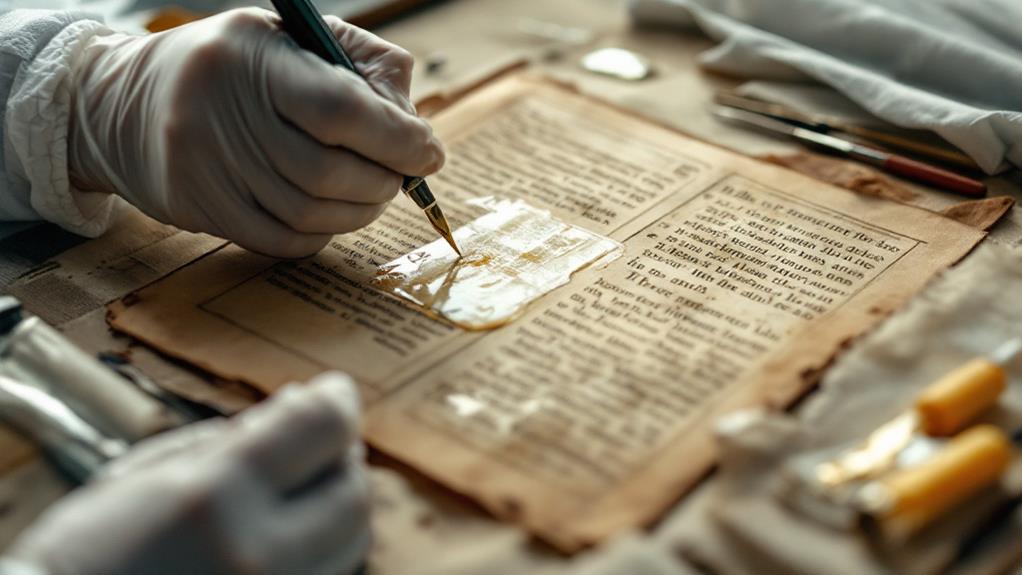
In relation to safeguarding manuscripts, advanced conservation materials play a crucial role in guaranteeing their longevity. When dealing with delicate historical documents, you need to take into account the materials used for preservation. Bio-based materials have become increasingly popular due to their sustainable and non-toxic nature. These materials not only provide a safe environment for manuscripts but also help reduce the ecological footprint of conservation efforts.
Nanotechnology applications have transformed the field by offering precise and effective solutions. You can use nanoparticles to strengthen weakened paper fibers, making fragile manuscripts more durable without altering their appearance. These tiny particles penetrate the paper, reinforcing it from within, which helps preserve the original texture and flexibility.
Additionally, nanotechnology allows for the development of advanced coatings that protect against environmental factors like moisture and UV light. By applying a nanocoating, you guarantee manuscripts remain unaffected by these damaging elements over time.
When you combine bio-based materials with nanotechnology, you get a powerful toolkit for manuscript preservation. These innovations not only extend the life of historical documents but also maintain their integrity, allowing future generations to experience them just as they were meant to be.
Digital Imaging Techniques
Digital imaging techniques revolutionize manuscript preservation by creating detailed, high-resolution replicas of historical documents. Imagine having the ability to view a centuries-old manuscript from the comfort of your home without risking damage to the original. That's the power of digital imaging. By using these techniques, you contribute to the creation of accessible digital archives, ensuring manuscripts are preserved for future generations.
Here's how digital imaging improves manuscript preservation:
- Digital Archiving: You can store high-resolution images in digital archives, safeguarding manuscripts against physical decay and loss.
- Visual Restoration: Advanced software allows you to digitally restore faded or damaged text and illustrations, offering insights into the original appearance of the manuscripts.
- Accessibility: Digital images make manuscripts accessible worldwide, allowing scholars and enthusiasts to study these artifacts without geographical limitations.
- Non-Invasive: Unlike other preservation methods, digital imaging doesn't physically alter the manuscript, maintaining the integrity of the original document.
3D Scanning Applications
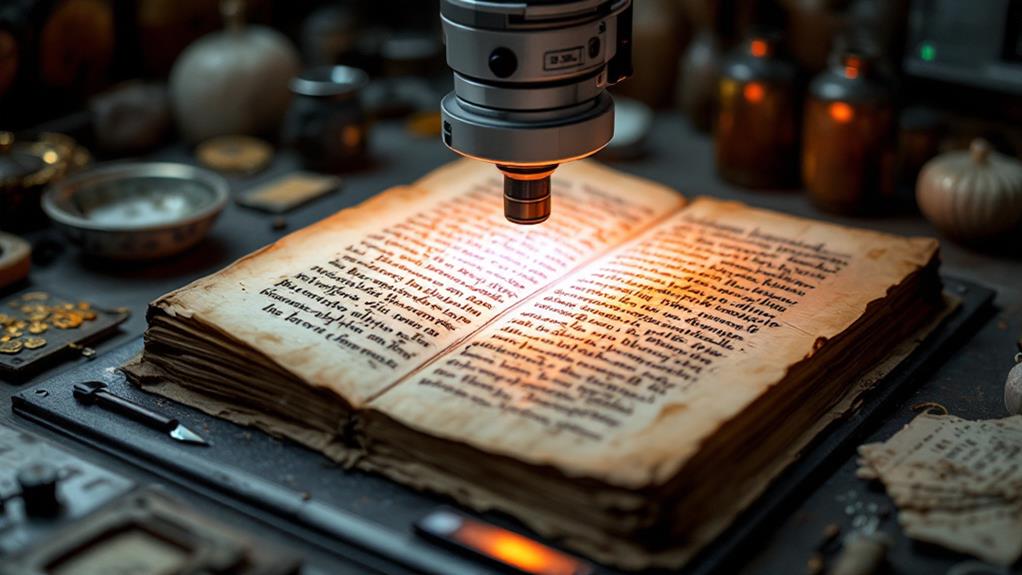
With the advent of D scanning applications, you can transform how manuscripts are preserved and studied. These applications allow you to create precise digital replicas of delicate and ancient texts, providing a new dimension to digital archiving. By capturing every detail, from the texture of the paper to the subtle nuances of ink and color, D scanning guarantees that these manuscripts can be accessed and studied without the risk of physical handling.
You can improve manuscript accessibility by making these digital versions available to a broader audience. Scholars and enthusiasts worldwide can investigate these texts in ways that were previously unimaginable. Instead of limiting access to those who can physically visit a manuscript's location, D scanning applications democratize the field of manuscript study, allowing anyone with an internet connection to view high-resolution, three-dimensional images.
Moreover, D scanning aids in preserving the structural integrity of original manuscripts. By reducing the need for direct contact, you greatly decrease the wear and tear on these invaluable documents. This technology not only helps conserve historical artifacts but also guarantees that their knowledge and beauty remain accessible for future generations.
Collaborative Preservation Efforts
As D scanning revolutionizes manuscript preservation, collaboration among institutions and experts becomes increasingly essential. You can't overestimate the power of community partnerships and funding initiatives in driving these efforts forward. By working together, organizations can pool resources, share expertise, and guarantee the longevity of invaluable historical documents. Here are some ways you can contribute to these collaborative preservation efforts:
- Join Community Partnerships: Engage with local libraries, universities, and cultural institutions to create networks focused on manuscript preservation. These partnerships can foster knowledge exchange and creative preservation approaches.
- Participate in Funding Initiatives: Contribute to or seek out grants and sponsorships aimed at preserving manuscripts. These funding initiatives are significant for acquiring the latest technology and covering conservation costs.
- Organize Workshops and Conferences: Host or attend events that bring together preservation professionals and enthusiasts. These gatherings can stimulate discussions and generate new ideas for tackling preservation challenges.
- Advocate for Policy Support: Work with policymakers to emphasize the importance of manuscript preservation. You can help shape policies that prioritize funding and support for preservation projects.
Future of Manuscript Protection
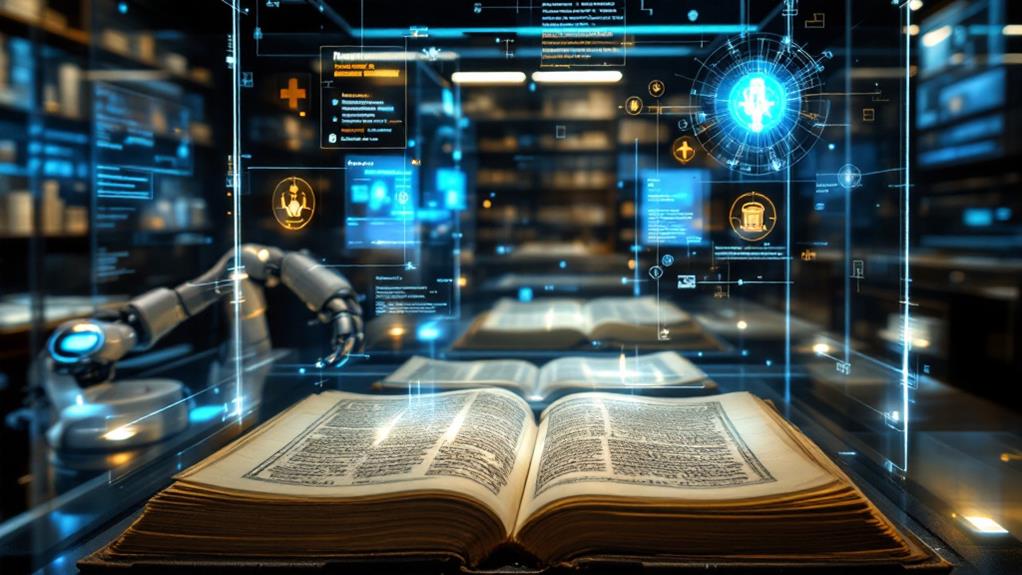
Many groundbreaking technologies promise to shape the future of manuscript protection. As you investigate the possibilities, you'll find that emerging technologies like artificial intelligence, 3D scanning, and blockchain are paving the way for creative preservation methods. AI can analyze and predict deterioration patterns, allowing you to take preventive measures more effectively. With 3D scanning, you can create detailed replicas of manuscripts, guaranteeing their historical significance is preserved even if the originals are damaged.
Blockchain technology offers a secure way to maintain provenance and authenticity records. By using decentralized ledgers, you can protect against forgery and track the history of each manuscript accurately. This transparency guarantees that the historical significance of manuscripts is recognized and preserved.
Furthermore, digital archiving offers a platform to store vast amounts of data related to manuscripts, making it easier for you to access and share information worldwide. This global connectivity fosters collaboration and knowledge exchange, enhancing the protection of manuscripts across borders.
As these technologies continue to evolve, you'll be at the forefront of protecting the world's written heritage. By embracing these advancements, you ensure that the stories of the past remain part of our collective future.
Related posts