Houston’s Museum of Fine Arts: Illuminated Manuscripts & Rare Pages
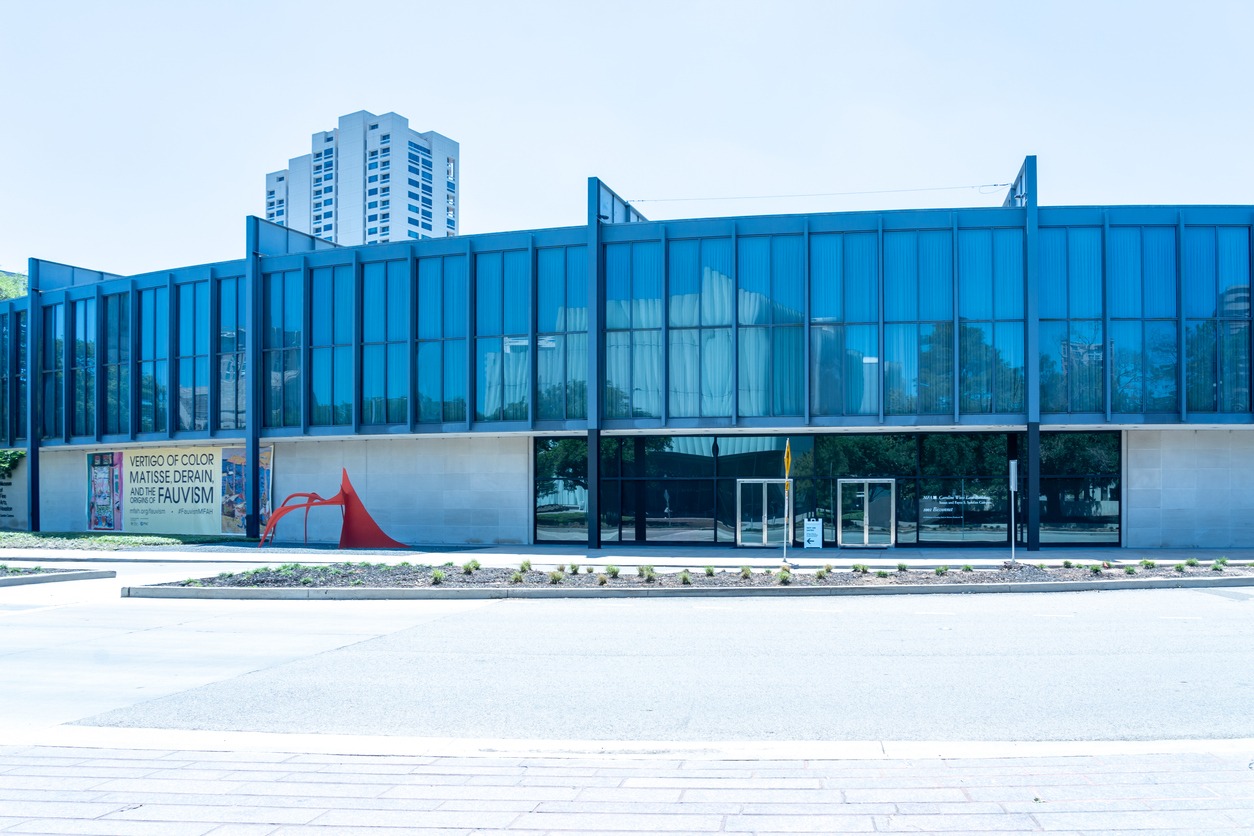
The Museum of Fine Arts, Houston (MFAH) showcases exquisite illuminated manuscripts spanning Islamic and European traditions. You'll discover meticulously crafted works featuring gold leaf, vibrant pigments, and masterful calligraphy from early Hijazi to flowing Nastaʿlīq scripts, alongside later European devotional books.
The collection highlights the remarkable craftsmanship and devotional commitment of scribes who transformed sacred texts into artistic treasures. Conservation efforts preserve these fragile pages for future generations, and the fascinating connections between diverse manuscript traditions await your exploration.
Treasures of the Qurʾan: Early Manuscripts at MFAH
Among the most significant treasures, you'll discover a mid-7th-century folio in Hijazi script—one of the earliest surviving Qurʾan pages, written on parchment and originating from what is now Saudi Arabia. Only scattered pages and fragments of this monumental manuscript survive worldwide, making this single folio an extraordinary witness to Islam’s earliest written tradition.
The exhibition highlights how elite patronage shaped these sacred works, evident in a Qurʾan manuscript from Morocco dated 1318 CE, written in Maghribi script and preserved with a colophon that records its patron and date of production. This early 14th-century manuscript exemplifies how carefully documented commissions linked rulers and scholars to the production of deluxe Qurʾanic volumes.
These rare bifolios from the late 8th–early 9th centuries display meticulous craftsmanship in ink, gold, and opaque watercolor on parchment, with elaborate illumination programs that honor the text's divine origins. Visitors can experience the full breadth of Islamic artistic evolution through works spanning over 1,200 years, from early script styles to later lavishly illuminated copies, in this focused yet wide-ranging collection.
Calligraphy Across Centuries: From Hijazi to Contemporary
View this post on Instagram
Five distinct calligraphic traditions unfold before visitors in the MFAH's extensive display of Islamic calligraphy. You'll witness stylistic progressions from early Hijazi manuscripts through geometric Kufic designs to the flowing Naskh script that revolutionized readability and helped standardize Qurʾanic copying. The exhibition traces material innovations across regions—from reed pens on parchment to elaborate gold-illuminated pages and architectural inscriptions that extended calligraphy into built spaces. For those inspired by the exhibition, the museum offers a special calligraphy workshop titled “A Brush with Zen” that complements the exhibition None Whatsoever: Zen Paintings from the Gitter–Yelen Collection and introduces visitors to shodō, “the way of the brush.” Dazzling gold leaf catches the light as you approach the MFAH's collection of illuminated manuscripts, revealing the extraordinary craftsmanship behind these sacred and secular treasures. You'll notice how artisans applied gold over gesso or similar grounds, creating dimensional effects that still shimmer centuries later. The gold was then carefully burnished with agate tools until its surface reflected like a mirror. Beyond the gilding, you'll see evidence of pigment experimentation throughout these works. Artists layered natural mineral and organic colors with meticulous precision, building depth through multiple applications. Quill-penned text written on carefully prepared vellum or parchment forms the foundation, while borders and illustrations demonstrate the collaborative nature of manuscript production—with scribes, gilders, and painters working sequentially on loose folios before final binding. Preliminary sketches made with hardpoints or metalpoint guided artists before they applied the brilliant colors we see today. As you explore the museum's manuscript collection, Islamic and European traditions stand side by side, revealing centuries of artistic dialogue between these distinct cultural spheres. You'll notice how manuscripts reflect cross-cultural exchanges: Islamic paper innovations and geometric ornament appear alongside European persistence in vellum, miniatures, and figural imagery, illustrating different approaches to manuscript materiality that shaped each tradition's development. The museum highlights how visual ideas moved across borders—from Byzantine and Mediterranean Christian illumination that formed part of the broader late antique environment, to later moments when Islamic decorative motifs, arabesques, and geometric framing devices found echoes in European works. As demand for books grew, European production shifted from monastic scriptoria to urban commercial workshops, while in Islamic lands flourishing book markets and court ateliers multiplied. Behind every manuscript on display, you'll discover a complex world of conservation science designed to preserve these treasures for future generations. Conservators working on illuminated manuscripts, including those at institutions like MFAH, employ controlled humidification chambers to carefully introduce moisture to fragile folios, relaxing parchment fibers without disturbing water-sensitive pigments and inks. You'll find that material selection is vital in consolidation work—professionals may apply protein-based adhesives such as isinglass or fish gelatin to prevent flaking paint and stabilize degrading iron gall ink, while gentle consolidants like funori (a refined seaweed extract) are used to secure powdering media without adding unwanted gloss. These approaches echo protocols such as the Weissman Consolidation guidelines, which emphasize minimal, reversible intervention and respect for original materials. Storage environments are carefully managed to maintain stable temperature and relative humidity and to use pH-neutral housings, which substantially slow ink corrosion and support parchment stability. Custom cradles and window mounts provide essential physical support, allowing you to view these rare pages while protecting them from handling stress, light exposure, and environmental damage. Among the museum's most treasured possessions, the Montefiore Mainz Mahzor stands as a remarkable witness to medieval Jewish heritage. Dating from c. 1310–1320, this rare festival prayer book exemplifies medieval German Judaism through its Ashkenazi script and illuminated parchment pages. The codex consists of 299 leaves meticulously ruled in ink and written in black and red ink, following the rite of Mainz for special Sabbaths and festivals. You'll find it displayed in MFAH's dedicated Judaica gallery, where it became the museum's first major work of Judaica when acquired in 2018. The cultural significance of this mahzor extends beyond its artistic beauty—it's a living connection to centuries of Jewish worship. Every illuminated manuscript at Houston's Museum of Fine Arts tells its story twice—once through text and again through its visual language. As you examine these treasures, you'll notice how vibrant pigments and gold leaf don't merely decorate but illuminate—literally reflecting light and metaphorically enriching the spiritual message. The symbolic meanings of miniatures extend beyond artistic beauty; they served as theological metaphors and visual sermons for those who could not read the text. Small painted scenes and ornate initial letters reveal complex spiritual narratives through carefully chosen colors, gestures, and iconography. The remarkable patience and meticulous attention required for these works demonstrate the scribes' and artists’ devotional commitment to preserving sacred texts for future generations. The sacred power of ornament transforms these books into devotional objects. Intricate borders, calligraphy, and metallic embellishments weren't just aesthetic choices—they embodied an awareness of divine presence, turning each manuscript into a sacred vessel where artistry and spiritual practice merge into a unified expression of faith. The Museum of Fine Arts, Houston extends its sacred manuscript narrative beyond Western traditions into the rich Islamic world, where Saudi Arabian and Iranian treasures offer a window into different expressions of divine text. You'll discover a mid-7th-century Qurʾan folio in Hijazi script—one of the world's earliest surviving Qurʾanic fragments—alongside a meticulously crafted 19th-century Iranian Qurʾan manuscript signed by calligrapher Mir ʿAbd al-Karim Muhammad Sadiq al-Husayni al-Yazdi, each showcasing centuries of artistic innovation and cultural exchange. The museum's collection is further enhanced by a remarkable Qurʾan bifolio from the late 8th–early 9th century, representing one of the institution's significant medieval acquisitions and illustrating the transition from early scripts toward more standardized styles. The angular, unvowelled Hijazi script transports you to Islam's formative years, while delicate floral and geometric designs evoke the refined sensibilities of Persian court artistry. Contemporary works like Pouran Jinchi’s “Tajvid” series bridge ancient traditions with modern expression, and cross-cultural masterpieces like Haji Noor Deen’s scrolls merge Chinese brush techniques with Islamic calligraphic forms. The transformation of sacred words into visual poetry speaks across centuries and borders, inviting viewers in Houston to engage with a truly global legacy of faith and art.The Art of Illumination: Gold, Ink, and Artistic Techniques
Connecting Cultures: Islamic and European Manuscript Traditions
Conservation and Preservation of Fragile Pages
Rare Judaica: The Montefiore Mainz Mahzor
Beyond Text: Visual Language in Religious Manuscripts
Global Influences: From Saudi Arabia to Iran in MFAH Collections
Related posts