
Historical Folios in Education: Bringing the Past to Life for Students

You can invigorate education by incorporating historical folios, giving students a tangible connection to the past. These leather-bound collections aren't just dusty old books; they're gateways to history's stories, filled with illustrations, maps, and handwritten notes. By analyzing these primary sources, students sharpen their critical thinking skills and gain a better understanding of diverse heritages. Digital platforms make accessing these folios easier, even from the classroom, fostering interactive and engaging learning experiences. Teachers can create exciting exhibits or projects that improve public speaking and presentation skills. There's more to discover about how folios transform educational experiences.
Understanding Historical Folios
Historical folios, those grand and often leather-bound collections of documents, provide a window into the past that's both tangible and informative. As you explore these folios, you're not just reading words; you're engaging with historical narratives that take you on a voyage through time. Each document within a folio has a story to tell, a piece of history to share. It's like holding a piece of the past in your hands, offering a direct connection to events, cultures, and individuals that shaped the world.
Visual storytelling plays an essential role in understanding historical folios. The illustrations, maps, and handwritten notes found within these collections serve as visual aids, enhancing the narratives they accompany. They allow you to see how people in the past visualized their world, what they deemed significant, and how they chose to record their experiences. These visual elements invite you to interpret and analyze, fostering a deeper understanding of the narrative beyond mere text.
The Educational Value of Folios
Investigating historical folios in an educational setting offers numerous benefits that enrich learning experiences. By engaging with primary sources, you gain firsthand insights into past societies and events. Folios serve as a tangible connection to history, allowing you to develop critical thinking skills as you analyze and interpret these documents. They challenge you to reflect on multiple perspectives and question the reliability of sources, fostering a deeper understanding of historical context.
Folios also improve visual literacy. You'll learn to decode complex imagery, symbols, and text, which is vital in our increasingly visual world. They encourage interdisciplinary connections, bridging history, art, literature, and social studies. This approach helps you see the interconnectedness of human knowledge, making learning more holistic.
Through narrative analysis, folios reveal the cultural significance of different periods, helping you appreciate diverse heritages and values. By examining the stories they tell, you gain empathy and understanding of the human experience across time.
With digital integration, access to these historical artifacts becomes easier. You can investigate digitized folios, ensuring that learning is not confined to physical archives. This accessibility supports a dynamic, engaging educational experience, making history come alive in the classroom.
Integrating Folios Into Curriculum
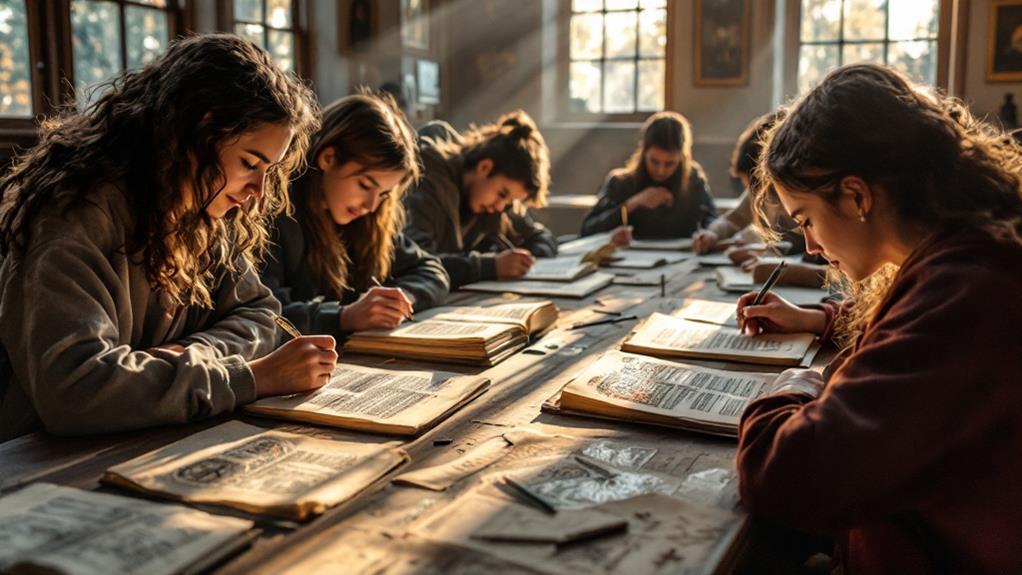
To effectively integrate folios into the curriculum, it is crucial to align them with learning objectives and standards. Start by identifying key historical periods or themes you want your students to investigate. Next, engage in folio curation by selecting specific artifacts that illuminate these topics. This approach guarantees that each folio serves a distinct educational purpose, allowing students to connect with the material in a meaningful way.
Create interactive exhibits to make these historical documents more engaging. You can do this by designing activities that encourage students to analyze and interpret the folios. For instance, set up stations where students can examine different folios and answer questions that require critical thinking. These activities help students develop skills in research and analysis, while also fostering a deeper understanding of history.
Encourage students to curate their own mini-exhibits as a project. They can select their favorite folio and create presentations that highlight its significance. This not only reinforces their learning but also improves public speaking and presentation skills. By actively involving students in folio curation and interactive exhibits, you'll bring history to life and deepen their appreciation for the past.
Accessing Folios in Modern Classrooms
In the present technological age, accessing historical folios in modern classrooms is easier than ever. Thanks to digital access, you can investigate centuries-old texts without leaving your school. Classroom technology has advanced to the point where interactive platforms bring these documents right to your fingertips. You can navigate through folios using tablets, laptops, or smartboards, making the experience both engaging and educational.
Virtual tours offer another exciting way to investigate archival resources. With just a few clicks, you can virtually walk through libraries and museums worldwide, examining folios that would otherwise be inaccessible. This engaging experience allows you to appreciate the context and environment where these documents are preserved.
Multimedia integration improves this experience by combining text, audio, and video elements. Imagine listening to a lecture while viewing related historical images or watching a short film about the folio's history. Such integration not only makes learning more dynamic but also caters to different learning styles. By using these tools, you can transform how students interact with history, making the past a vivid and tangible part of their education. With today's technology, the possibilities are endless.
Student Engagement With Historical Texts

Engaging students with historical texts can be a transformative experience in the classroom. When you introduce them to primary sources, you're not just teaching facts; you're cultivating historical empathy. Students begin to see past figures as real people with emotions, challenges, and stories. This connection to history fosters a deeper understanding and respect for different perspectives.
To effectively engage students, encourage them to critically analyze these texts. Ask them to question the author's intent, the context in which the document was created, and its impact on society at the time. Prompt them to reflect on what might be left unsaid or whose voices are missing. This process develops their analytical skills and helps them construct well-rounded interpretations.
Make the experience interactive by having students work in groups to discuss their findings. Encourage debate and allow them to present their interpretations to the class. This collaborative approach not only improves their critical thinking but also builds communication skills.
Case Studies of Folio Use
Investigating the impact of historical folios in education reveals a range of groundbreaking case studies that highlight their transformative power. One notable example involves a high school history class where the integration of digital folios transformed learning. The folio design incorporated interactive elements that allowed students to engage deeply with the historical context of each document. By accessing archival resources, students could examine primary sources and develop a nuanced understanding of the past.
In another case, a university employed folios to improve its teaching methodologies. Professors used digital folios to present historical texts alongside multimedia content, fostering a dynamic learning environment. Students appreciated the flexibility of digital folios, as they could access them on multiple devices. This approach encouraged students to develop their perspectives on historical events and engage in critical discussions.
Assessment strategies also evolved with the use of folios. Teachers implemented project-based assessments where students created their own digital folios to demonstrate understanding. This method provided insights into student perspectives and analytical skills. Across these case studies, the integration of historical folios showcased their potential to enrich education by merging traditional content with modern technology, ultimately bringing history to life.
Challenges of Using Folios
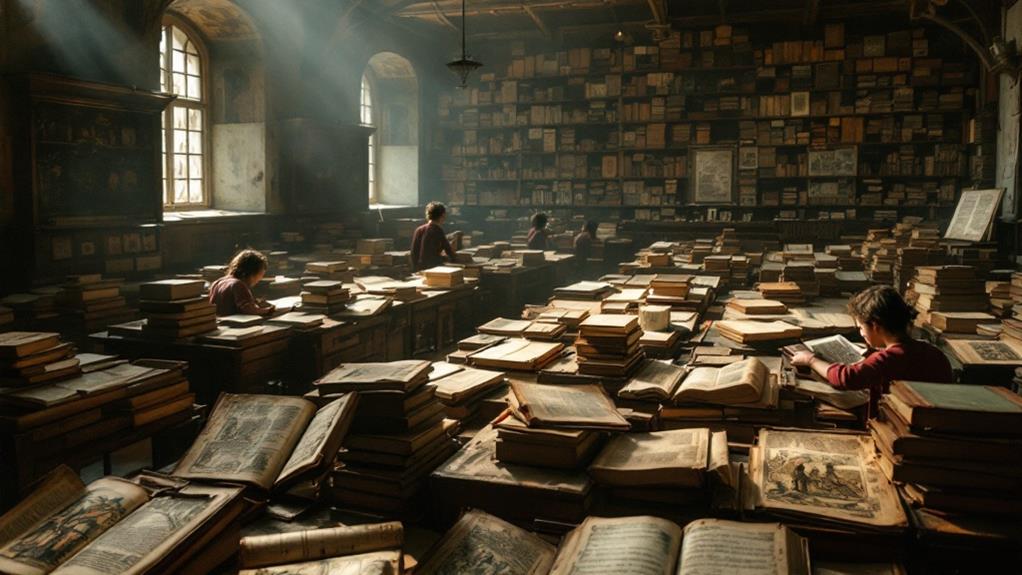
While historical folios offer exciting opportunities to improve education, they also present certain challenges that educators and institutions must navigate. One significant hurdle is digital challenges. Digitizing fragile folios can be costly and time-consuming, and guaranteeing high-quality digital copies requires considerable expertise. Moreover, you might encounter authenticity concerns, as digital reproductions may not capture the nuances of original folios, leading to potential misinterpretations.
Resource limitations also pose a problem. Schools often lack the financial means to acquire or maintain folios, restricting access to these valuable resources. Accessibility issues add another layer of complexity. Students and educators without access to digital devices or reliable internet may find it difficult to utilize online folio collections, widening the digital divide.
Curriculum alignment is yet another challenge. Integrating folios into existing curricula demands careful planning to guarantee that they complement educational goals and standards. Finally, time constraints can hinder effective use. Teachers already face busy schedules, and finding time to incorporate and effectively teach with folios requires a delicate balancing act. Addressing these challenges is vital to fully realizing the educational potential of historical folios.
Preservation and Care of Folios
Preserving the integrity of historical folios demands careful care and attention. You need to employ precise folio restoration techniques to guarantee these invaluable documents remain accessible for students and researchers. Start by evaluating the folio's condition. Identify any tears, stains, or other damage that might require intervention. Use gentle cleaning methods, like a soft brush or eraser, to remove surface dirt. For more extensive damage, consult a professional conservator who can repair tears using Japanese tissue and wheat starch paste, a common technique in folio restoration.
Once restored, proper archival storage methods are crucial. Store folios in a climate-controlled environment to prevent deterioration. Maintain a stable temperature and humidity level to avoid mold growth or paper brittleness. Use acid-free materials, such as folders or boxes, to protect the folios from acidic damage. Place them flat or upright, confirming they're not overcrowded to avoid physical stress.
Regularly monitor the storage conditions and inspect the folios for signs of deterioration. By following these steps, you'll help preserve these historical gems, allowing future generations to investigate and learn from them. Your diligence in preservation guarantees that the past remains a lively part of education.
Future of Folios in Education

As you guarantee the preservation of historical folios, consider how these documents will shape the future of education. Digital transformation is changing the way students engage with historical texts. By digitizing folios, you create opportunities for interactive learning, where students can investigate documents in ways that encourage critical thinking. Imagine students collaborating on projects that require them to analyze different folios, drawing connections that span multiple disciplines. This cross-disciplinary approach not only makes learning more thorough but also fosters deeper understanding.
With multimedia integration, historical folios become more than just texts. You can incorporate videos, audio, and interactive maps to provide context, making history vivid and engaging. Assessment strategies evolve as well—students can be evaluated on their ability to interact with and interpret these folios, moving beyond traditional testing methods. Personalized learning becomes possible as students navigate folio content according to their interests and learning pace, making education more tailored and effective.
As you adopt this digital shift, keep in mind that the integration of historical folios into modern education isn't just about preserving the past—it's about making it relevant and accessible for future generations, enhancing their educational experience.
Related posts