Gothic and Kufic Scripts in Folios: Their Impact on Modern Calligraphy
You'll find Gothic and Kufic scripts have notably shaped modern calligraphy. Gothic script, with its bold, angular lines and intricate patterns, infuses contemporary designs with historical depth and structured elegance. Likewise, Kufic script introduces striking geometric forms and cultural symbolism, offering a fresh breath of tradition mixed with modern aesthetics. Both scripts encourage creativity, allowing calligraphers to experiment and blend styles, crafting unique pieces that resonate culturally and visually. They represent a fusion of ancient artistry with modern design, enriching today's calligraphic expressions. For a deeper understanding of their transformative odyssey, there's much more to investigate.
Historical Overview of Gothic Script
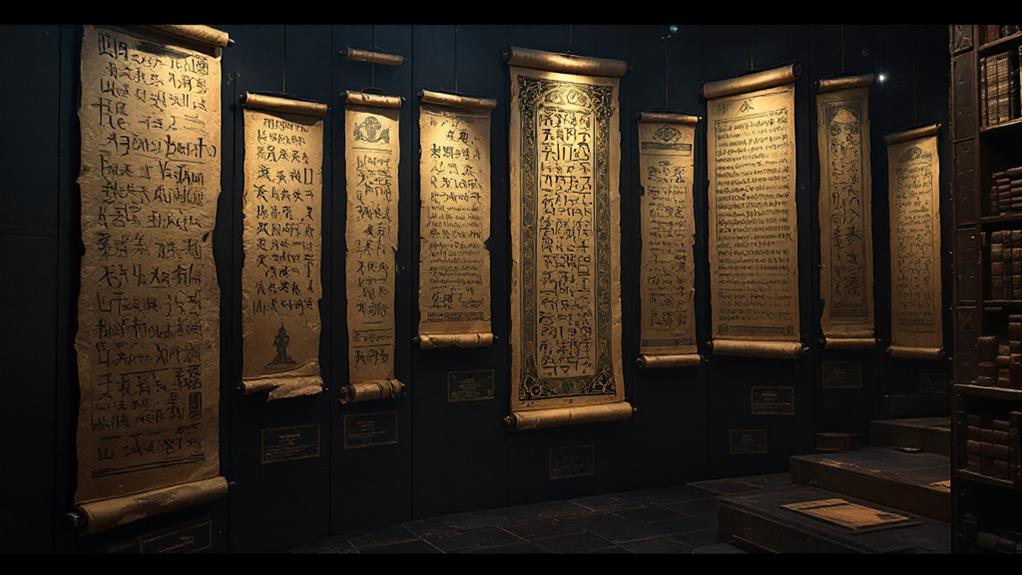
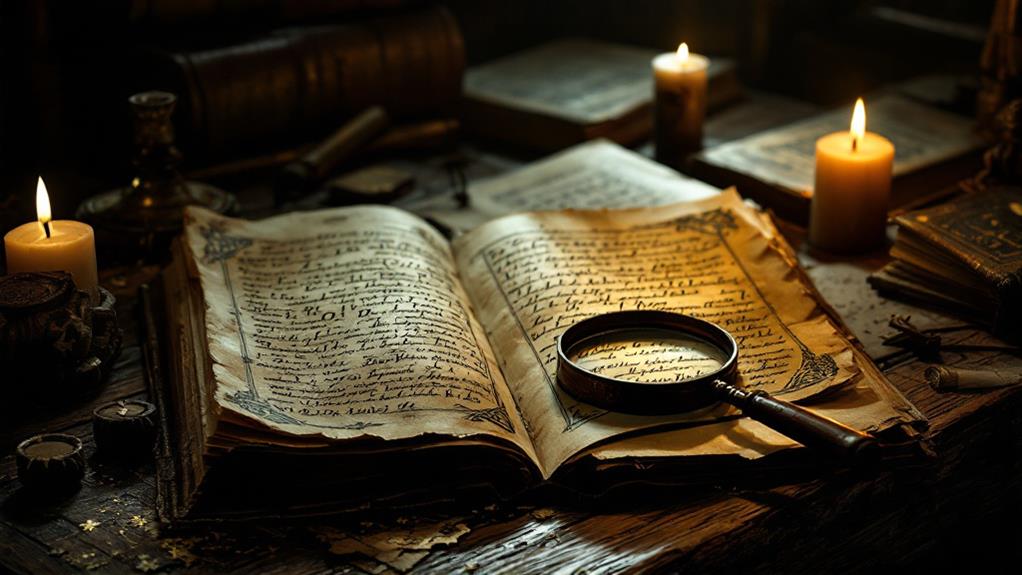
In the Middle Period, Gothic script emerged as a dominant style of writing across Europe. You'd find it heavily featured in medieval manuscripts, where its intricate and ornate design symbolized the scholarly and religious authority of the time. The development of this script was closely tied to the flourishing of monastic communities and the rise of universities, which required a clear and standardized form of writing to preserve and disseminate knowledge.
As you investigate the history of Gothic script, you'll notice that its evolution was influenced by practical needs and aesthetic preferences. Script development during this time was marked by a change from the rounded Carolingian minuscule to the more angular and condensed forms of Gothic script. This shift wasn't just about aesthetics; it allowed scribes to fit more text on a single page, making books more economical to produce.
Understanding the historical context of Gothic script provides you with insights into its influence on later typographic styles. The script's legacy persists, as modern calligraphers and typographers continue to draw inspiration from these medieval manuscripts, adapting the script's principles to suit contemporary artistic and practical demands.
Characteristics of Gothic Letterforms
Having examined the historical context of Gothic script, you'll appreciate its distinct letterforms that set it apart from other writing styles. Gothic letterforms are characterized by their bold, angular shapes and dense, compact appearance. The script is known for its vertical emphasis and a high contrast between thick and thin strokes, which create a dramatic visual impact. This style emphasizes clarity and legibility, even in its most ornate forms.
In Gothic script, letterform variations are key to its unique identity. You'll notice that different letters often share similar structural elements, like pointed arches and diamond-shaped terminals. These repeated motifs give Gothic script its cohesive, harmonious look. The use of stylistic techniques, such as flourishes and embellishments, adds a layer of complexity and elegance to the comprehensive design.
When practicing Gothic calligraphy, you'll focus on creating uniformity in letter height and width, maintaining consistent spacing, and mastering the intricate details that define each character. These elements require precision and a keen eye for balance. By understanding and applying these principles, you'll be able to capture the essence of Gothic letterforms in your own calligraphic work, enriching your artistic repertoire.
Evolution of Kufic Script
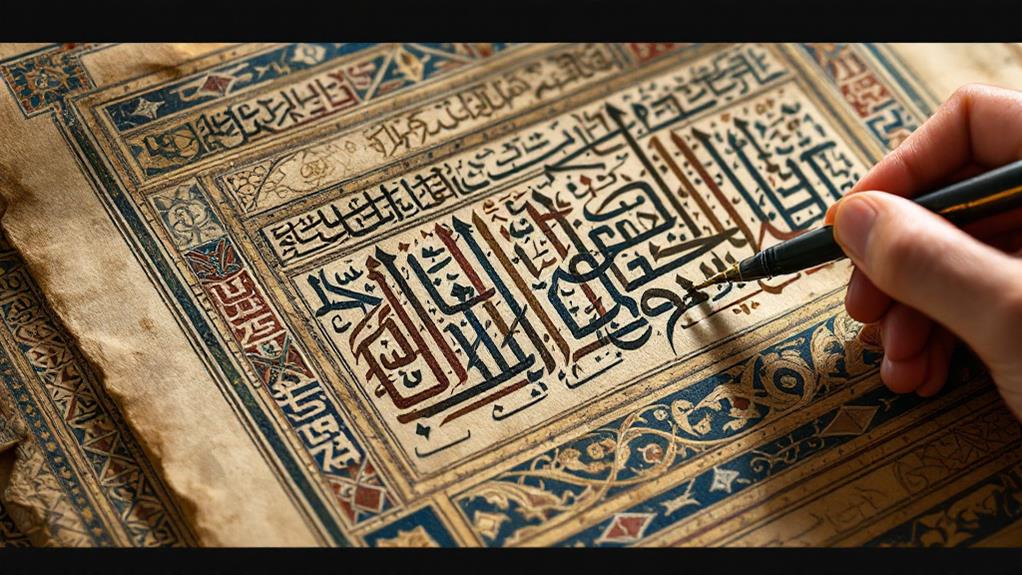
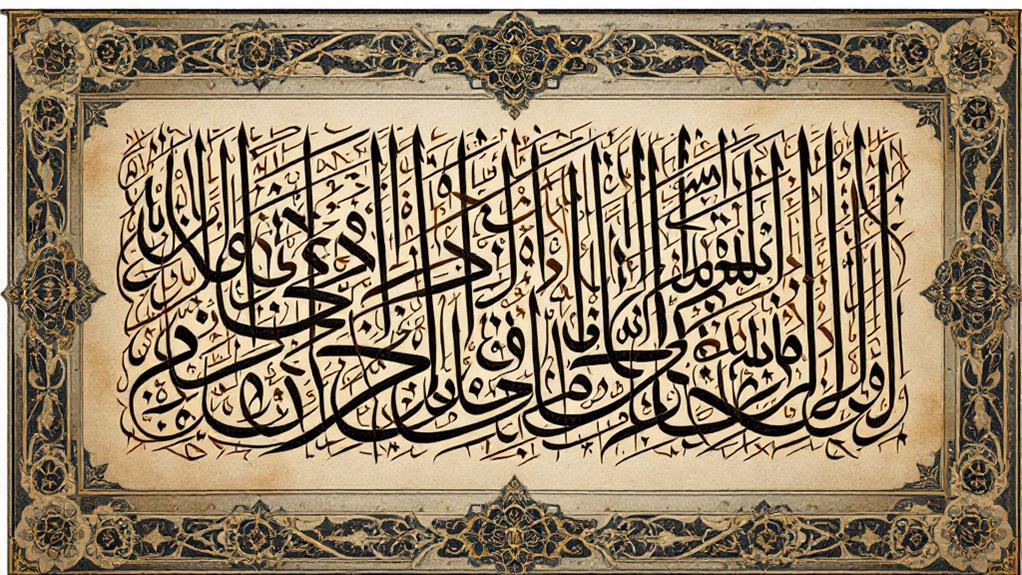
As you investigate the evolution of Kufic script, you'll uncover its transformation from a simple, angular form into a more intricate and decorative style over the centuries. Initially, Kufic script was characterized by its straight, geometric lines and minimal ornamentation, reflecting its origins in the early Islamic period. This script was primarily used for religious texts, including the Quran, due to its clear, readable structure.
Over time, Kufic adaptations emerged as calligraphers began experimenting with the script, introducing more curves, flourishes, and complex designs. These adaptations were often influenced by regional styles and cultural exchanges, which led to a variety of Kufic styles that were both functional and artistic. The script evolved to include decorative elements like interlacing patterns, vegetal motifs, and even animal forms, which were applied to architectural inscriptions, coins, and textiles.
These adaptations not only improved the aesthetic appeal of Kufic script but also allowed it to serve as a bridge between traditional calligraphy and modern design. By understanding this evolution, you can appreciate how Kufic script has influenced contemporary calligraphy, inspiring artists to blend historical elements with creative techniques.
Distinct Features of Kufic Style
Although Kufic script has evolved over time, its distinct features remain unmistakable and have carved a unique niche in the world of calligraphy. When you investigate Kufic script, you'll notice its striking Kufic geometry. The script is characterized by its angular lines and precise, horizontal and vertical strokes. This geometric approach creates a visually compelling structure that stands out in any work of art. Unlike other scripts, Kufic doesn't rely on excessive curves; instead, its strength lies in its bold and structured appearance.
The letterform structure of Kufic script is another hallmark feature. Each letter is crafted carefully, maintaining a balance between form and function. This structure allows for diverse ornamentation techniques, often incorporating intricate patterns and designs that improve the script's elegance without overshadowing its readability. These techniques not only beautify the script but also infuse it with layers of cultural symbolism.
Kufic's cultural symbolism is deeply rooted in its use in early Islamic art and architecture. As you explore its history, you'll find that Kufic script is more than just a writing style; it's a representation of cultural identity and artistic expression, immortalized through its distinct features.
Gothic Influence on Modern Calligraphy
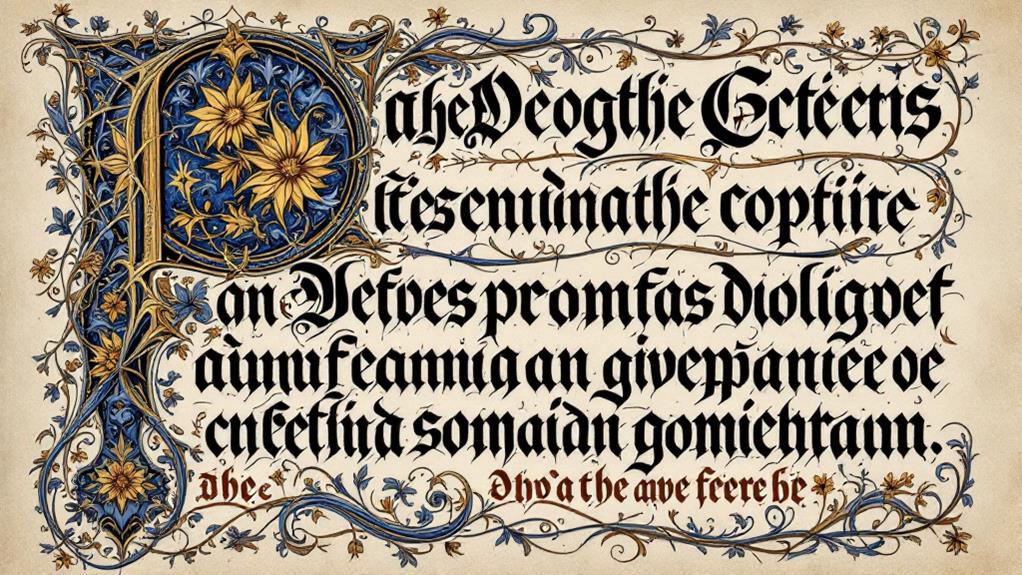
Gothic script, with its dramatic and ornate style, has left a lasting mark on modern calligraphy. When you immerse yourself in the world of calligraphic techniques, you'll notice how the Gothic revival has breathed new life into contemporary designs. This revival isn't just about replicating medieval works; it's about integrating the bold, angular strokes and intricate patterns of Gothic script into today's calligraphy to create something fresh and thrilling. You can see its influence in everything from wedding invitations to branding logos, where thick, bold lines contrast sharply with delicate flourishes.
As you investigate modern calligraphy, you'll find that many artists adopt the disciplined structure of Gothic script, which requires precision and control. This approach offers a striking visual impact that's both nostalgic and inventive. By incorporating Gothic elements, calligraphers can create pieces that are not only visually engaging but also rich in historical depth. The Gothic revival has encouraged artists to experiment with traditional styles, blending them with modern aesthetics to craft unique expressions.
In your own calligraphic expedition, embracing Gothic influences can help you develop a distinct style that stands out, combining tradition with modern creativity.
Kufic's Role in Contemporary Designs
While Gothic script has made a significant impact on modern calligraphy, Kufic script offers its own unique contributions to contemporary designs. When you investigate Kufic patterns, you uncover how they integrate seamlessly into modern typography. These patterns provide a geometric elegance that's both classic and groundbreaking, making them perfect for today's artistic reinterpretation. Kufic's bold lines and angular forms create a striking visual appeal, allowing you to experiment with a range of design possibilities.
In today's world, there's a growing trend towards cultural fusion, and Kufic script plays a crucial role in this movement. By incorporating elements from different traditions, you can create designs that resonate with diverse audiences. This fusion not only honors the historical significance of Kufic script but also breathes new life into it, making it relevant and fresh for contemporary eyes.
Whether you're designing a brand logo, an art piece, or a digital interface, Kufic script provides a wealth of inspiration. Its adaptability guarantees that you can craft something unique, bridging the gap between ancient art and modern design. Embracing Kufic in your work means contributing to a rich tapestry of cultural and artistic expression.
Comparing Aesthetic Elements
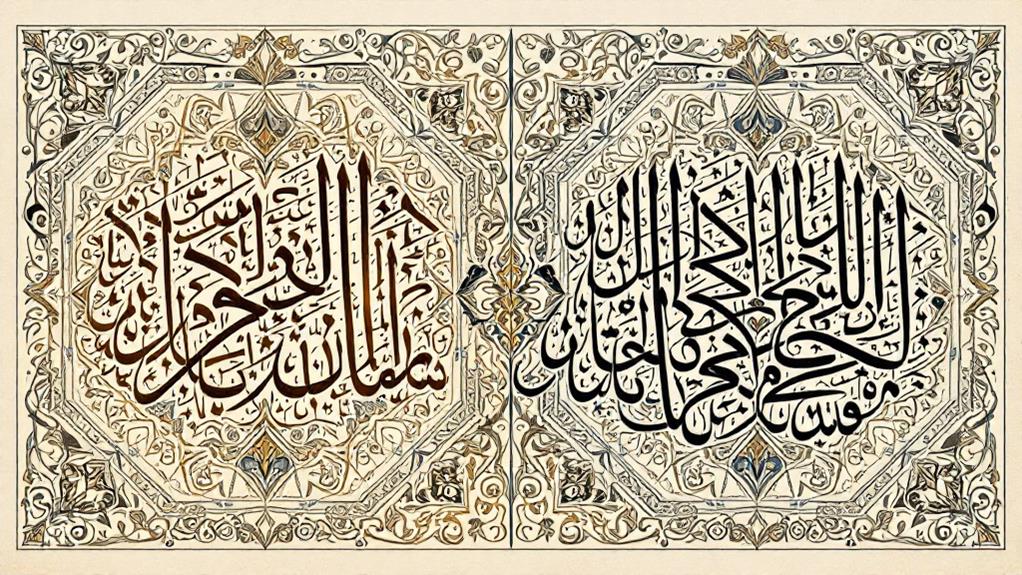
When comparing the aesthetic elements of Gothic and Kufic scripts, you immediately notice their distinct visual identities. Gothic script is characterized by its sharp angles and dense, vertical strokes that create a dramatic and intricate appearance. In contrast, Kufic script is known for its bold, horizontal lines and geometric forms, which offer a sense of stability and balance. These contrasting curves provide each script with a unique flair, highlighting the artistic diversity found in historical calligraphy.
You'll find that both scripts share a fascinating connection through historical intersections. During the medieval period, both Gothic and Kufic scripts flourished in their respective regions, influencing manuscripts and architectural designs. This historical overlap demonstrates how different cultures approached script development creatively, leading to a rich tapestry of visual communication.
When you explore these scripts side by side, the Gothic's elaborate curves and Kufic's structured elegance stand out. Both styles have inspired modern calligraphers, encouraging them to merge these elements into contemporary designs. By appreciating the aesthetic elements of Gothic and Kufic scripts, you gain a deeper understanding of their impact on the evolution of calligraphy and its enduring legacy in visual art.
Cultural Significance in Modern Art
Modern art often draws inspiration from historical scripts, and the cultural significance of Gothic and Kufic calligraphy remains profound today. These scripts serve as powerful symbols of cultural identity, reminding you of the rich histories and traditions they represent. When artists incorporate Gothic and Kufic elements into their work, they're not merely using decorative motifs; they're engaging in a dialogue with the past. This artistic fusion creates a bridge between periods, allowing you to investigate the convergence of different cultural narratives.
In today's diverse art scene, the blending of Gothic and Kufic scripts fosters a deeper understanding of cultural diversity. You can often find these scripts integrated into modern compositions that challenge conventional boundaries, pushing you to question what you perceive as traditional versus contemporary. By engaging with these scripts, artists pay homage to their creators' ingenuity and the cultural contexts that gave them life.
As you look at modern art pieces that feature these scripts, you see a celebration of shared histories that transcend geographical borders. This practice not only preserves cultural identity but also encourages you to appreciate the beauty in diversity and the artistic fusion that these scripts inspire across cultures.
Future Trends in Calligraphy Styles
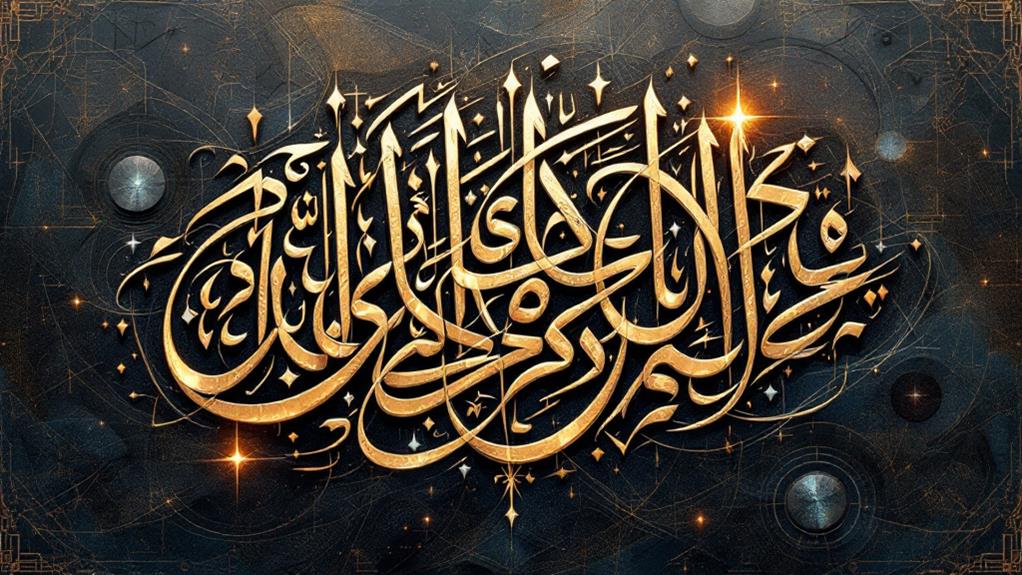
Calligraphy enthusiasts will likely witness exciting transformations in future trends as technology and tradition intertwine. These changes are driven by groundbreaking techniques and a growing appreciation for both historical and contemporary styles. You'll see that digital calligraphy is gaining popularity, allowing artists to investigate intricate designs easily and efficiently. This fusion of art and technology opens up a world of possibilities for creative expression.
Here are four future trends in calligraphy styles to watch:
- Digital Calligraphy Tools: These allow for precise control and customization, making complex designs more accessible and efficient to create.
- Minimalist Typography: As the world adopts simplicity, minimalist typography becomes a dominant trend. It emphasizes clean lines and uncluttered designs, suitable for modern aesthetic tastes.
- Cultural Fusion: Combining elements from Gothic and Kufic scripts with contemporary styles will create unique and diverse calligraphic expressions, appealing to a broad audience.
- Interactive Experiences: With augmented reality and virtual reality, calligraphy will offer interactive experiences. Imagine walking through a gallery where letters float and dance around you, creating an engaging artistic expedition.
Related posts