From Parchment to Vellum: Materials Used in Historical Folios
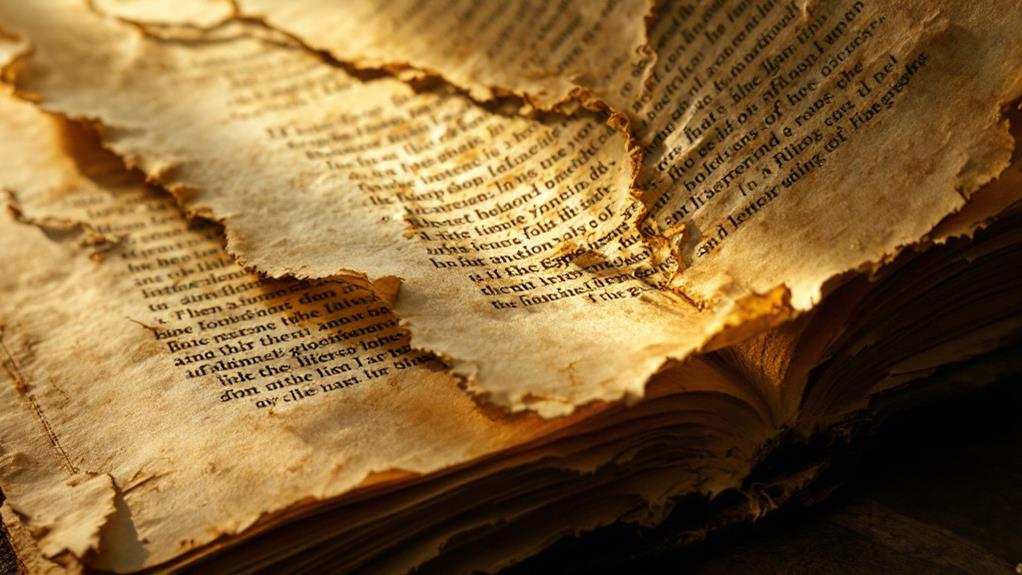
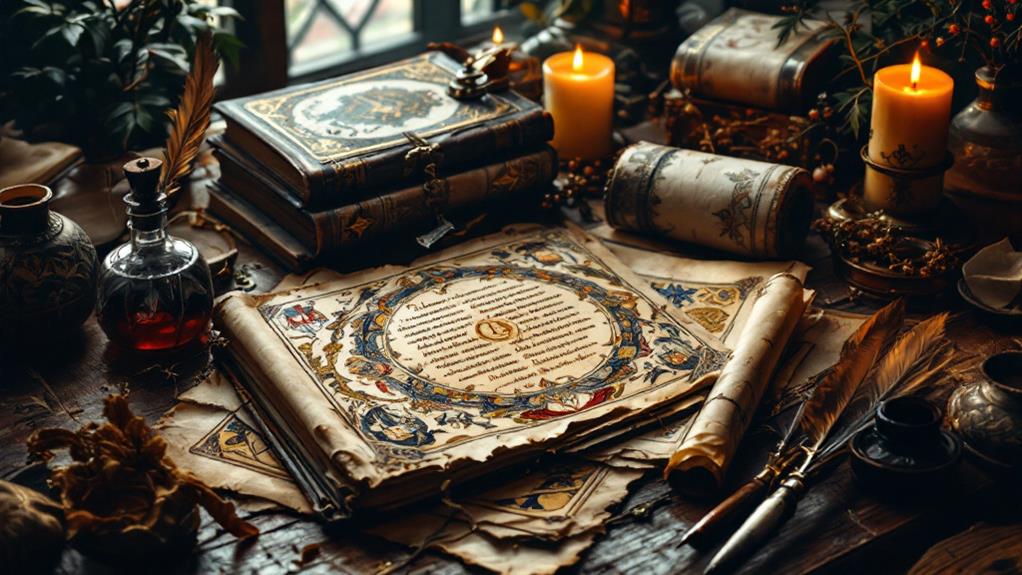
When exploring historical folios, you'll uncover that ancient scribes relied on materials like parchment and vellum. Parchment, made from sheep, goat, or calf skins, was durable and adaptable to different climates. It provided an excellent surface for scribes to write on. Over time, vellum, crafted from calfskin, became the preferred choice due to its finer texture and uniformity. Both materials were crucial for preserving significant texts and illuminated manuscripts. These materials not only had a cultural impact but also required careful attention to withstand the test of time. Revealing how they were made and preserved promises more intriguing insights.
Origins of Parchment
Parchment's origins trace back to ancient times, primarily evolving as a durable medium for writing. You'd find that ancient writing materials differed, but parchment stood out for its resilience and versatility. Crafted from animal skins, particularly those of sheep, goats, and calves, parchment offered a smooth and lasting surface that was well-suited for scribes and scholars. Unlike papyrus, which was more fragile and limited by climate, parchment could withstand multiple environmental conditions, making it a favored choice across different regions.
To create parchment, you'd start by soaking the animal skins in a lime solution. This process helped in removing hair and flesh, leaving behind a clean and flexible hide. Next, you'd stretch the skin on a frame and scrape it with a blade to achieve the desired thickness and smoothness. Once dried and polished, the parchment became a reliable canvas for ancient writing, preserving texts with extraordinary durability.
With its strength and adaptability, parchment enabled the recording of key texts, contributing considerably to the preservation of knowledge. Its use marked a considerable advancement in the materials available for writing, reflecting the ingenuity of ancient cultures.
Transition to Vellum
Embracing new materials was a natural advancement in the evolution of writing surfaces, leading to the development of vellum. As you investigate this shift, you'll find that vellum quickly became favored for its durability and smooth texture. Unlike parchment, vellum is made from calfskin, providing a finer and more consistent writing surface. This consistency is one of the key vellum advantages, as it allowed scribes to create manuscripts with greater precision and clarity.
Vellum's historical significance can't be overstated. During the medieval period, it became the preferred medium for notable documents and illuminated manuscripts. Its resilience against wear and tear preserved texts for future generations, making it invaluable for recording history and knowledge. You might appreciate how vellum's strength guaranteed that even the most intricate and colorful illustrations remained lively over centuries.
Furthermore, vellum's role in preserving historical records made it a cornerstone of cultural heritage. When you consider how vellum was chosen for major works like the Magna Carta, its significance in shaping legal and literary traditions becomes evident. By choosing vellum, societies guaranteed their most prized writings would withstand the test of time.
Crafting Techniques
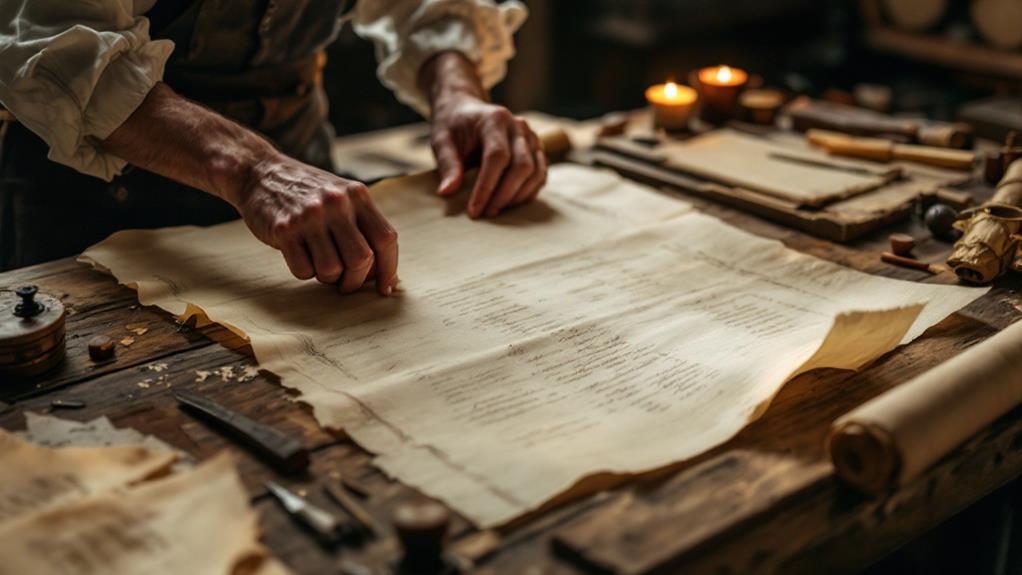
As you investigate the crafting techniques of historical folios, you'll see how the mastery of these methods was as crucial as the materials themselves. Skilled artisans combined creativity with precision, crafting folios that were both durable and beautiful. Understanding these techniques provides insight into the artistry and dedication involved in their creation.
- Binding Methods: The binding of a folio wasn't just functional; it was an art form. Craftsmen would sew pages together using strong linen threads, often reinforced with cords. The covers, made from wood or leather, were painstakingly attached, ensuring the folio's longevity.
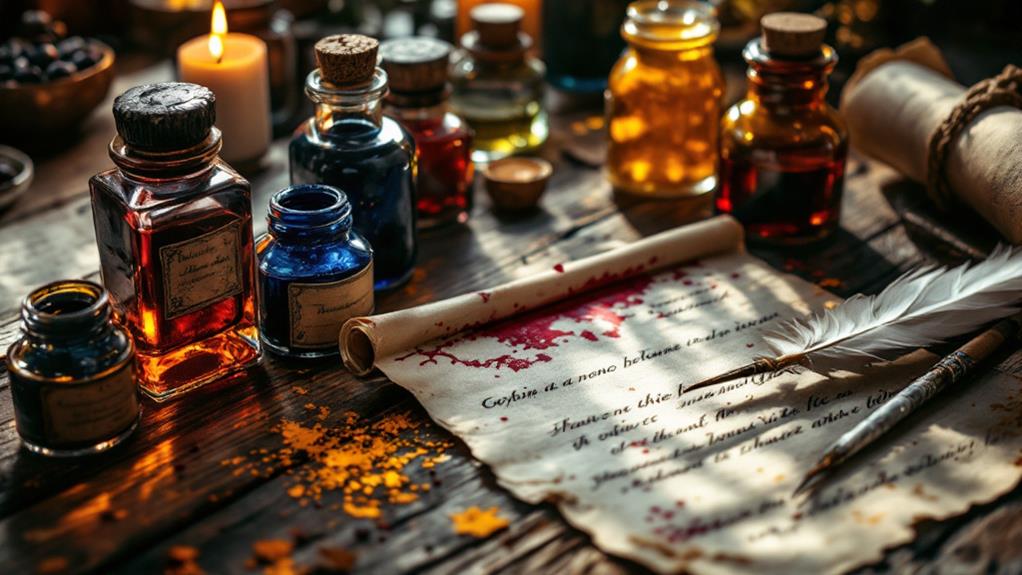
- Ink Applications: Applying ink required a keen eye and steady hand. Scribes used quills or brushes to apply ink, which was made from natural ingredients like soot or gall nuts. Ensuring even application and legibility was vital, as any mistake could mar the entire folio.
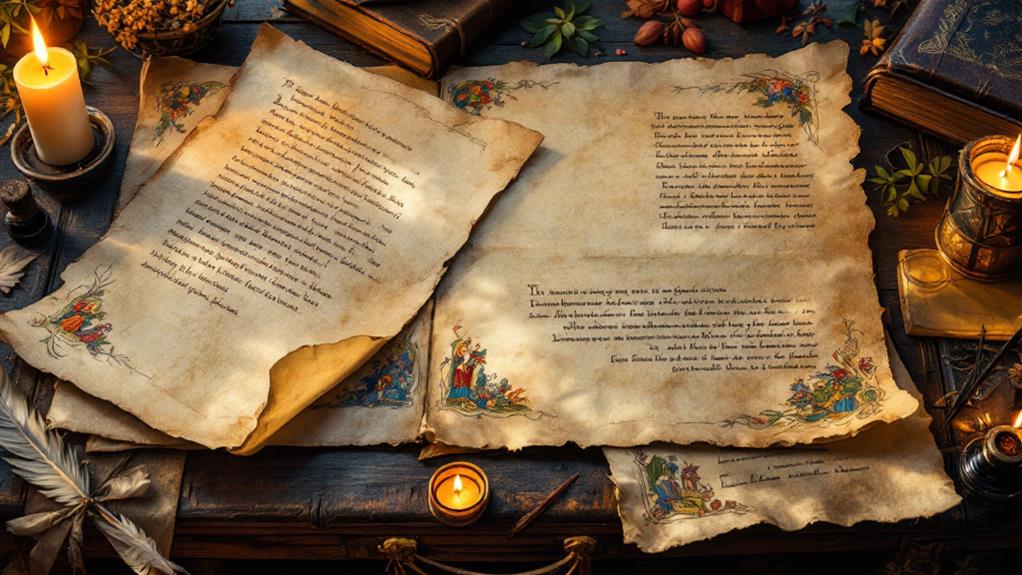
- Illumination and Decoration: Beyond writing, folios often featured intricate designs. Gold leaf and vivid pigments added richness and depth to the pages. These decorations weren't merely decorative; they highlighted significant text and guided the reader's eye.
Cultural Impact
How did historical folios shape cultures over time? Imagine you're flipping through a beautifully illustrated folio, its pages filled with lively colors and intricate designs. These folios were not just books; they were masterpieces that reflected the cultural significance of their period. By capturing the artistic expressions of artists, scribes, and thinkers, these folios served as cultural touchstones that influenced societies well beyond their original creation.
When you examine a historical folio, you're witnessing a window into the artistic expression of a time. These folios often contained religious texts, scientific knowledge, and literary works, all of which contributed to the cultural and intellectual growth of societies. They were instrumental in preserving traditions and disseminating new ideas across regions, fostering a shared cultural heritage.
Folios also played a significant role in education by making knowledge accessible to scholars and the elite. They were symbols of status and sophistication, often commissioned by rulers and wealthy patrons who understood their cultural significance. They not only documented history but also inspired future generations to continue the tradition of artistic expression, shaping the cultural landscapes we recognize today. Through these pages, you connect with the past, understanding its profound impact on culture.
Preservation Challenges
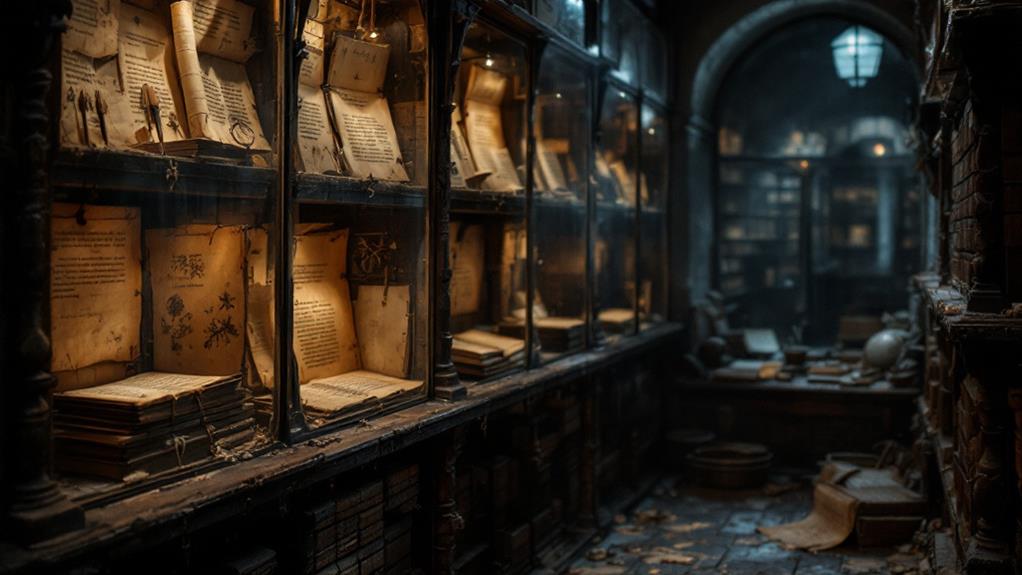
Preserving historical folios presents a myriad of challenges that demand careful attention and expertise. You need to be aware that environmental factors play a vital role in the longevity of these precious documents. Temperature fluctuations, humidity, and exposure to light can all deteriorate the materials, causing irreversible damage. Maintaining ideal storage conditions is fundamental to guarantee these folios remain intact for future generations.
To give you a clearer picture, consider these key preservation challenges:
- Temperature Control: Keeping a consistent temperature between 65-70°F helps prevent brittleness and ink fading. Sudden changes can cause expansion and contraction, leading to tears.
- Humidity Regulation: Aim for a relative humidity of 45-55%. Too much moisture promotes mold growth, while too little can make the folio brittle and fragile.
- Light Exposure: Limit exposure to UV light since it accelerates the degradation of parchment and vellum. Use UV-filtering glass and reduce light levels to protect these delicate materials.
Related posts