From Manuscript to Monitor: The Digitization of Historic Folios
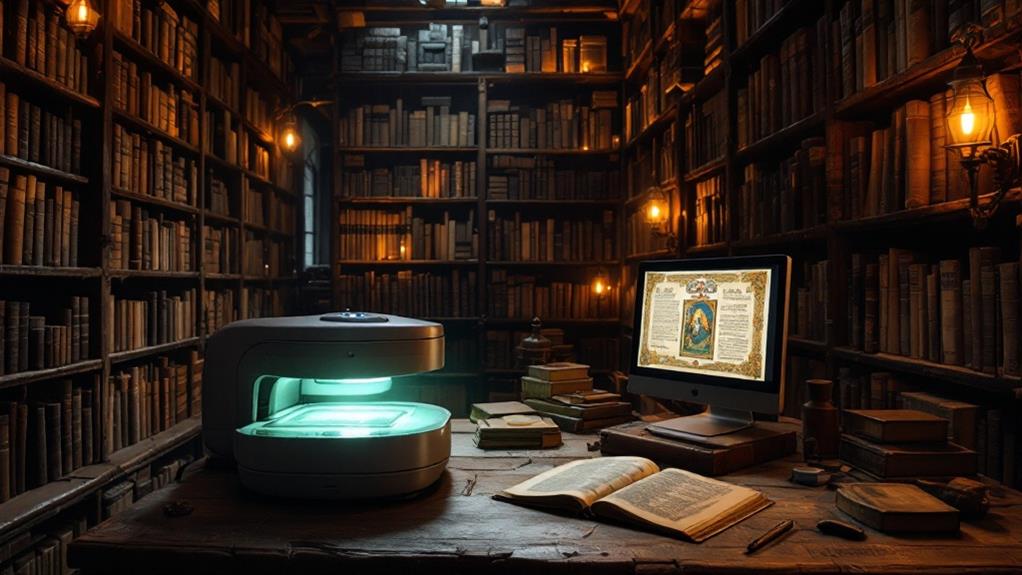
You're witnessing a remarkable shift as manuscripts rich in history and intricate detail evolve into digital formats. Digitization guarantees global accessibility and protects these valuables from physical degradation. It opens doors to educational opportunities and extends cultural understanding to a broader audience. Through advanced technology like OCR and improved imaging, digital folios maintain the original character and personal touches of scribes. Yet, challenges such as preservation ethics and technical demands require careful navigation. Successful projects demonstrate how digital preservation aligns with ethical and sustainable practices. For those keen to investigate further nuances of this transformation, there's much more to uncover.
Understanding Historic Folios
Historic folios, with their intricate details and rich histories, offer a window into the past. As you investigate these remarkable documents, you'll notice that each folio tells its own story through diverse folio characteristics. The texture of the paper, the type of ink used, and the binding style all provide clues about the time period and culture from which they originated. It's fascinating to see how these elements come together to form a cohesive narrative that reflects the societal norms and artistic preferences of the age.
When exploring manuscript styles, you can identify the unique handwriting that distinguishes one scribe from another. These styles often reveal the regional influences and educational backgrounds of their creators. As you examine the embellishments and marginalia, you'll uncover the personal touch of the individuals who crafted these works. The folios may include ornate illustrations and decorations, which were often used to convey religious or philosophical themes.
The Need for Digitization
In the current electronic age, preserving historic documents through digitization is crucial for ensuring their accessibility and longevity. You might wonder why we'd need to digitize these priceless artifacts. Well, it's not just about keeping up with technology—it's about respecting their cultural significance and adhering to preservation ethics. Digitization offers an effective way to protect these invaluable pieces of history from the ravages of time and environmental factors. By making them accessible online, you help share their rich stories with a global audience, ensuring that their lessons aren't lost to future generations.
Consider these benefits of digitizing historic folios:
- Accessibility: Researchers and enthusiasts worldwide can access documents without physical limitations.
- Preservation: Digital copies safeguard the original documents from wear and tear.
- Cultural Significance: Sharing these documents highlights their importance and educates the public.
- Reproducibility: You can create multiple digital copies, reducing the risk of total loss.
- Ethical Responsibility: By digitizing, you demonstrate a commitment to ethical preservation practices.
Technology Behind the Transformation
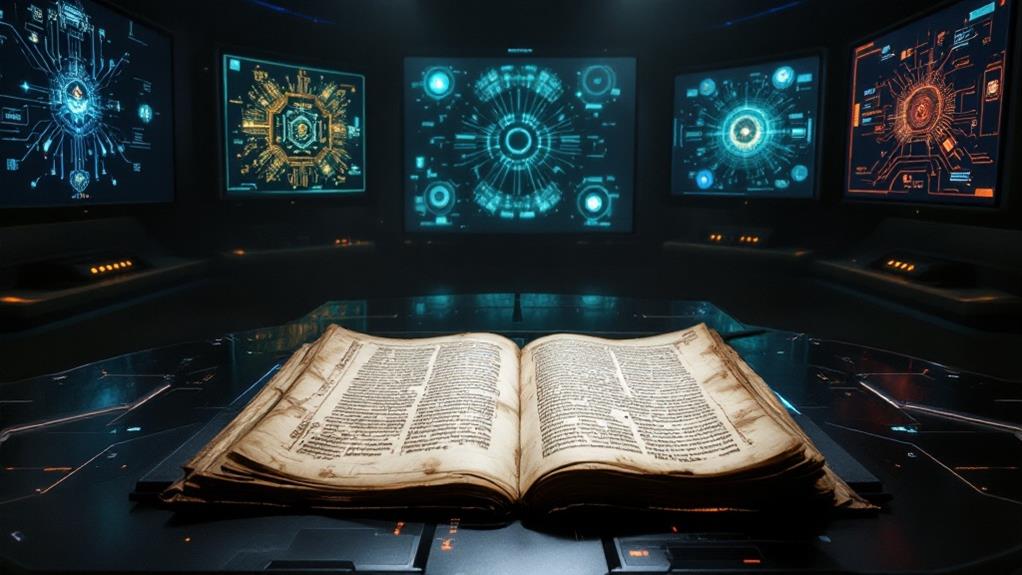
Through the lens of modern technology, the transformation of historic folios into digital archives becomes a fascinating process. You start with optical character recognition (OCR) to convert scanned images of text into machine-readable data. This technology allows you to search and edit historic texts with ease. Image improvement techniques enhance the quality of scanned folios, making sure that faded or damaged text becomes legible without altering the original content.
Next, you utilize software solutions designed for managing and preserving digital archives. These solutions help maintain metadata standards, which organize the digital library and make information retrieval straightforward. By adhering to these standards, you guarantee each digital folio is accurately documented, providing context and history for researchers.
Beyond that, the user interface of your archival software is vital. It needs to be intuitive, allowing users to navigate through collections efficiently. You also choose archival formats that assure the longevity of digital files, protecting them from obsolescence.
Challenges in Digitizing Manuscripts
While technology offers impressive tools for digitizing historic folios, you'll encounter several challenges when dealing with manuscripts. Initially, technical limitations can hinder your efforts. Older documents might have faded ink, delicate pages, or unusual sizes that standard scanners can't handle. You'll need specialized equipment, which can be costly and difficult to obtain.
Preservation ethics also play an essential role. You'll have to decide how to balance the need to preserve the original document with the risk of damage through handling and scanning. It's not just about the technology, but also about making ethical choices that respect the artifact's historical value.
Funding challenges are another notable hurdle. Digitization projects require substantial financial support, and securing this funding isn't always straightforward. You may find that grants are competitive, and resources are limited.
User accessibility is a key consideration as well. Ensuring that the digital versions of manuscripts are accessible to a broad audience involves creating formats that accommodate diverse devices and user needs.
- Technical limitations: Specialized equipment required
- Preservation ethics: Balancing preservation and risk
- Funding challenges: Securing financial support
- User accessibility: Ensuring broad audience access
- Complex project management: Coordinating multiple facets
Each challenge demands careful planning and resourcefulness.
Benefits of Digital Preservation

Digital preservation offers numerous advantages that improve the accessibility and longevity of historic folios. By digitizing these precious documents, you guarantee digital accessibility, allowing people worldwide to investigate cultural heritage without geographical barriers. This approach amplifies user engagement, inviting a broader audience to connect with history in meaningful ways.
Archival sustainability is another significant benefit. Digital formats reduce the physical wear and tear on original manuscripts, preserving their historical integrity. You're safeguarding these valuables for future generations, aligning with preservation ethics that prioritize long-term care. Technological advancements have made it easier to maintain and update digital archives, guaranteeing they remain relevant and accessible as technology evolves.
Community involvement plays an essential role in the success of digital preservation. By collaborating with local communities, you can gather valuable insights and support, fostering a shared responsibility for protecting cultural heritage. This collective effort strengthens the bonds between people and their history, creating a sense of ownership and pride.
Incorporating digital preservation into your archival strategy not only protects historical documents but also enriches the cultural landscape, making history more engaging and accessible for everyone. Adopt these benefits and help guarantee that historic folios continue to inspire and educate for years to come.
Case Studies of Successful Projects
Numerous successful projects demonstrate the transformative power of digitizing historic folios. These endeavors often result from successful collaborations and creative techniques that bring ancient texts to a global audience. One notable example is the partnership between the British Library and Qatar Foundation, where they digitized over half a million pages of Gulf history documents. This project highlights the importance of strong archival partnerships and effective funding sources to achieve large-scale digitization.
Consider these elements that contribute to a project's success:
- Creative techniques: Leveraging cutting-edge technology for high-quality digital reproductions.
- Community engagement: Involving local communities to guarantee cultural sensitivity and relevance.
- Preservation ethics: Balancing digital access with the responsibility to preserve the originals.
- User feedback: Gathering insights from users to improve digital platforms and accessibility.
- Funding sources: Securing diverse funding to sustain and expand digitization efforts.
Another inspiring case is the collaboration between the Library of Congress and several Native American tribes, which prioritized ethical preservation and community input. Such initiatives underscore how user feedback can refine digital platforms, guaranteeing they serve educational and cultural purposes. As these case studies show, when all these elements align, the digitization of historic folios can truly flourish.
Access and Education Opportunities
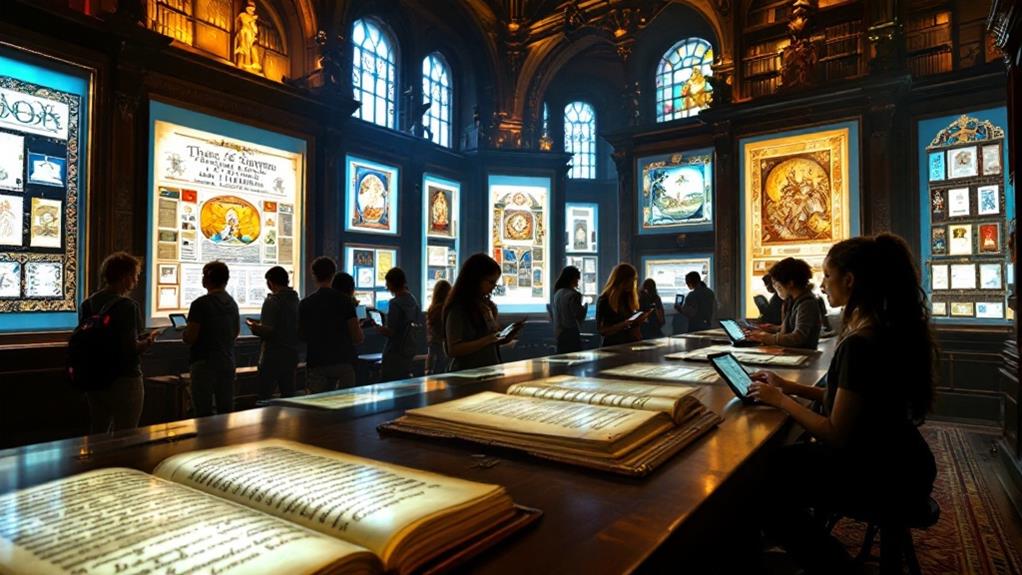
Successful digitization projects not only preserve historic folios but also reveal vast opportunities for access and education. You can investigate rare texts and artifacts without traveling to distant libraries or archives. This accessibility fosters a deeper understanding of history and culture right from your device. With these resources at your fingertips, you can immerse yourself in self-directed learning and improve your digital literacy, making it easier to navigate and utilize online resources effectively.
Moreover, digitization encourages community engagement by connecting diverse groups with shared interests. Regardless of whether you're a student, educator, or history enthusiast, you can participate in online discussions, webinars, and virtual tours. These platforms provide spaces where you can exchange ideas and learn from experts and peers worldwide. By engaging with digital archives, you don't just consume information; you actively contribute to a global dialogue about our shared heritage.
Educational institutions can also integrate these digital collections into their curricula, enriching learning experiences. Teachers can design interactive lessons that go beyond textbooks, using primary sources to spark curiosity and critical thinking. Ultimately, digitization empowers you to become an active participant in preserving and understanding history.
Future of Digital Archives
As we look towards the future of digital archives, it's clear that technology's rapid evolution will continue to transform how we preserve and access our collective history. You'll find that emerging technologies will redefine user engagement by making archives more interactive and accessible. This shift means fostering digital literacy becomes vital, enabling more people to navigate and contribute to these vast resources effectively.
Future innovations in collaborative platforms will empower community involvement, allowing diverse voices to participate in the archival process. Here's what you should expect:
- Emerging technologies: AI and machine learning will automate processes, enhancing searchability and preservation.
- User engagement: Interactive interfaces will make exploring archives a more engaging experience.
- Archival sustainability: Green technologies and practices will guarantee that digitization doesn't harm the environment.
- Digital literacy: Educational initiatives will bridge the gap between technology and users, making archives accessible to all.
- Preservation ethics: Ongoing discussions will shape how we respect and handle sensitive information.
As you engage with these digital archives, remember the importance of balancing technological advancements with preservation ethics. Your involvement in this evolving landscape will guarantee that digital archives remain a sustainable and inclusive resource for future generations.
Related posts