Folios of the Renaissance: Art and Knowledge in the Rebirth of Europe
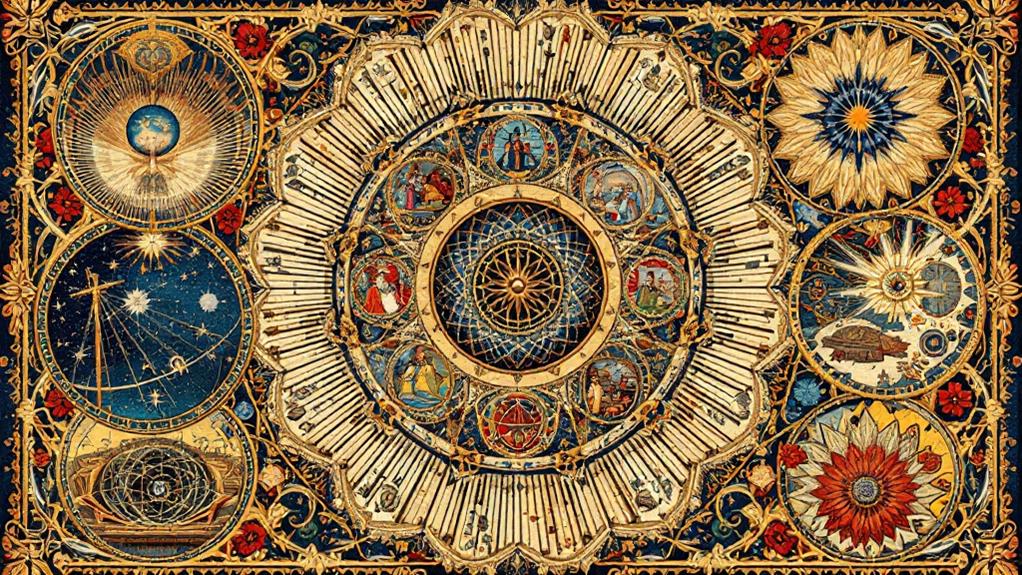
In the Renaissance, folios were more than just books; they were lively vessels of Europe's rebirth, blending art and knowledge. Emerging from a newfound love for classical wisdom, these folios helped disseminate ancient texts, enriched with stunning illuminations on vellum pages. The invention of Gutenberg's printing press transformed access to these works, paving the way for widespread literacy and scientific exploration. Humanist scholars and wealthy patrons, like the Medici, fueled this creative explosion by commissioning works that pushed intellectual and artistic boundaries. The legacy of these folios continues to influence modern art, science, and ideas in countless ways.
Origins of Renaissance Folios
Emerging from the cultural revival of the Renaissance, the origins of folios trace back to a renewed interest in classical knowledge and humanism. You can see how this period sparked a profound transformation in the way information was recorded and shared. As cultural exchanges flourished across Europe, a newfound appreciation for ancient texts and ideas led scholars like yourself to seek out and preserve these gems. Manuscript preservation became a priority, and folios served as the perfect medium to safeguard and disseminate this wealth of knowledge.
Picture yourself in a lively Renaissance city, where the exchange of ideas is as dynamic as the art adorning the streets. Folios played an essential role in this intellectual rejuvenation. They weren't just mere collections of paper; they were symbols of a society enthusiastic to reconnect with its past and propel itself into a brighter future. By preserving manuscripts in folio form, you guaranteed that the wisdom of ancient civilizations wasn't lost to time. You engaged in cultural exchanges that not only enriched your understanding but also laid the groundwork for the scientific and artistic advancements that define the Renaissance period.
The Art of Manuscripts
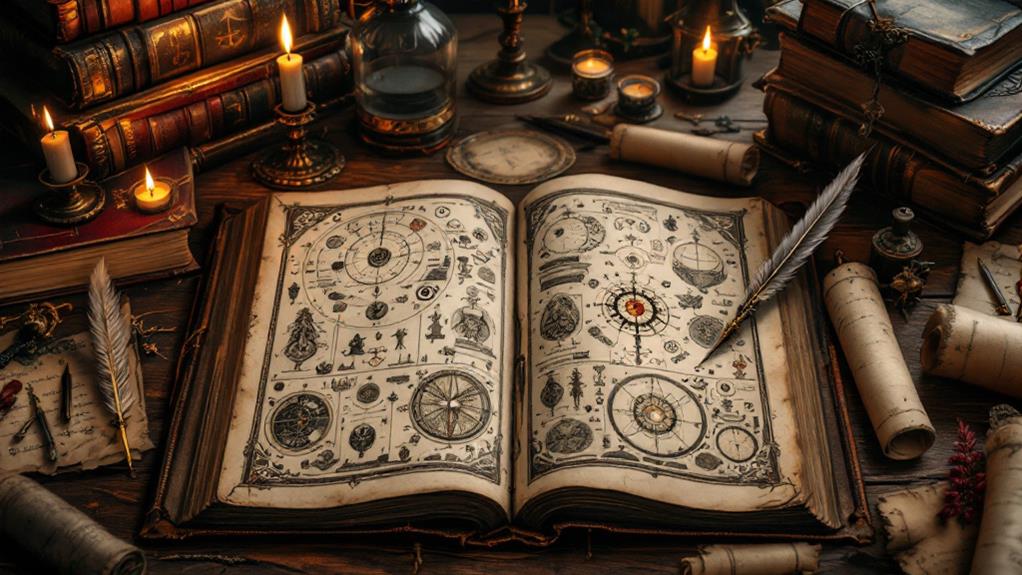
As you engage yourself in the colorful world of Renaissance folios, your attention naturally shifts to the exquisite artistry of manuscripts that defined this time. Manuscripts were more than just books; they were masterpieces showcasing the careful manuscript techniques of skilled artisans. Each page was carefully crafted, often on vellum, using delicate quills and lively inks. The labor-intensive process required a deep understanding of materials and an extraordinary level of precision.
You'd find that manuscripts during the Renaissance were adorned with intricate decorative elements. Illuminations, rich with gold leaf and bright colors, transformed borders and initials into enchanting works of art. These elements didn't just improve visual appeal; they also emphasized the significance of the text within. The margins often came alive with depictions of flora, fauna, and mythical creatures, reflecting the age's fascination with nature and mythology.
Exploring these manuscripts, you'd appreciate the blend of art and knowledge. Every illustration wasn't just for beauty; it was a conduit for storytelling and intellectual exchange. The dedication to craftsmanship in these folios underscores the Renaissance's spirit—a quest for beauty, knowledge, and the perfect marriage of the two.
The Printing Revolution
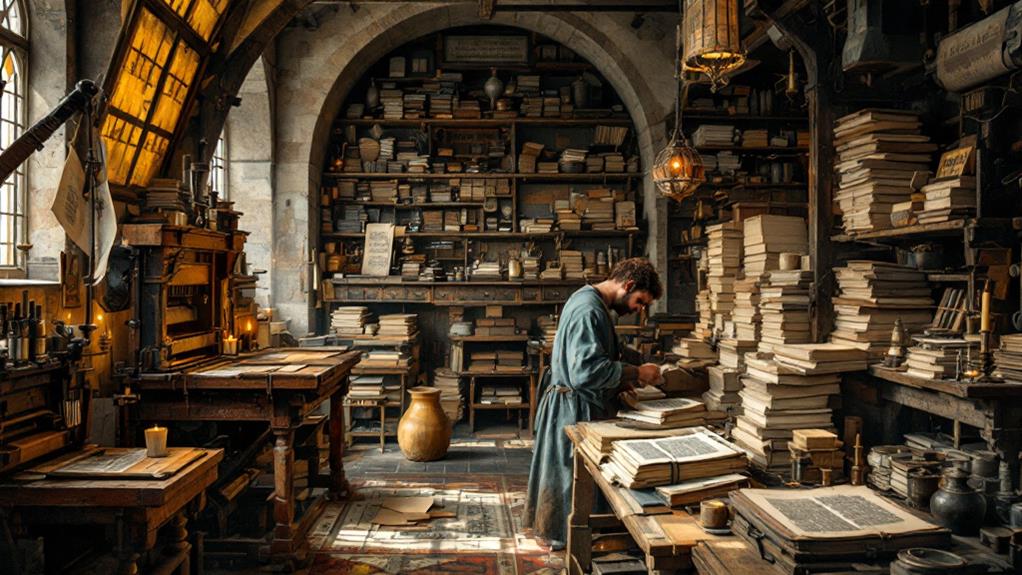
The Printing Revolution transformed the landscape of knowledge dissemination during the Renaissance, ushering in a new phase of accessibility and efficiency. With Johannes Gutenberg's invention of the movable-type printing press around 1440, you suddenly found yourself in a world where books weren't just for the elite anymore. This groundbreaking technology democratized information, allowing ideas to spread faster and further than ever before.
Print culture flourished as more people gained access to books and pamphlets. You could now investigate a vast range of subjects, from scientific revelations to philosophical treaties, all thanks to the rapid production capabilities of the printing press. This new age of print culture meant that literacy rates soared, as the common person could ultimately afford a book or two.
Type innovation played a significant role in this transformation. The development of diverse fonts and typefaces made printed materials more appealing and easier to read. You'd notice how these advancements facilitated the spread of Renaissance humanism, sparking intellectual curiosity across Europe. This shift from handwritten manuscripts to printed texts marked a critical moment in history, forever changing how you engage with knowledge and ideas.
Illuminated Masterpieces
Step into the dynamic world of illuminated masterpieces, where art and knowledge intertwine in breathtaking detail. You'll uncover how illuminated manuscripts captivated minds during the Renaissance with their lively colors and intricate designs. These manuscripts weren't just books; they were works of art showcasing the finest artistic techniques of the time. Artisans used gold leaf, rich pigments, and elaborate calligraphy to bring texts to life, making each page a visual feast.
As you investigate these masterpieces, notice how artists transformed everyday texts into extraordinary visual narratives. They used contrasting colors and detailed borders to guide your eye, enhancing the storytelling within. The careful process of creating these manuscripts involved not just artistic skill but a deep understanding of the text itself. Each illumination was carefully planned to complement and highlight the content, reflecting a harmonious blend of art and intellect.
Imagine holding an illuminated manuscript, feeling the texture of the vellum, and marveling at the brilliance of the illustrations. In this period, where art flourished alongside learning, illuminated manuscripts stood as proofs to human creativity and intellectual pursuit, bridging the gap between the visual and the written word.
Classical Texts Rediscovered
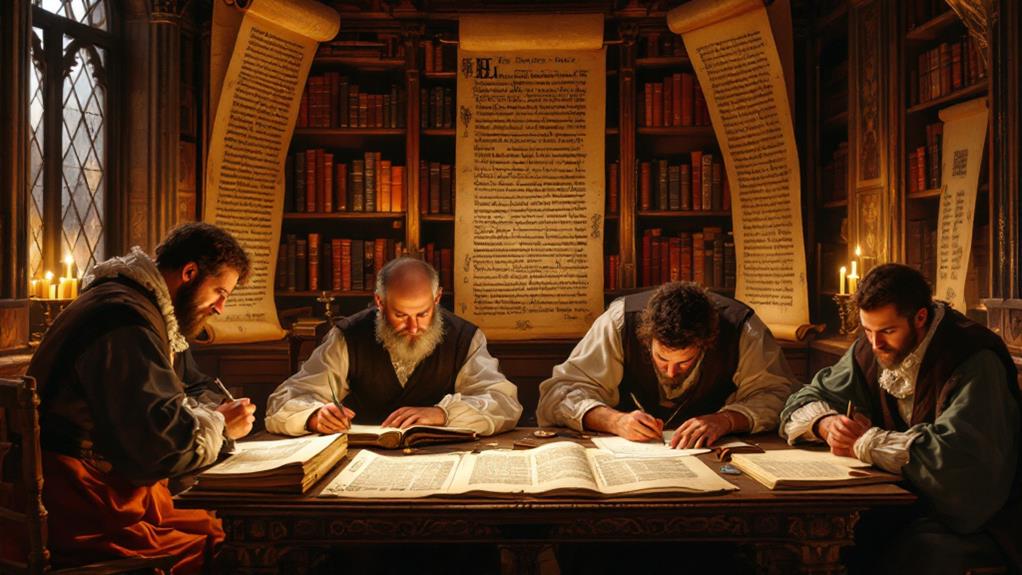
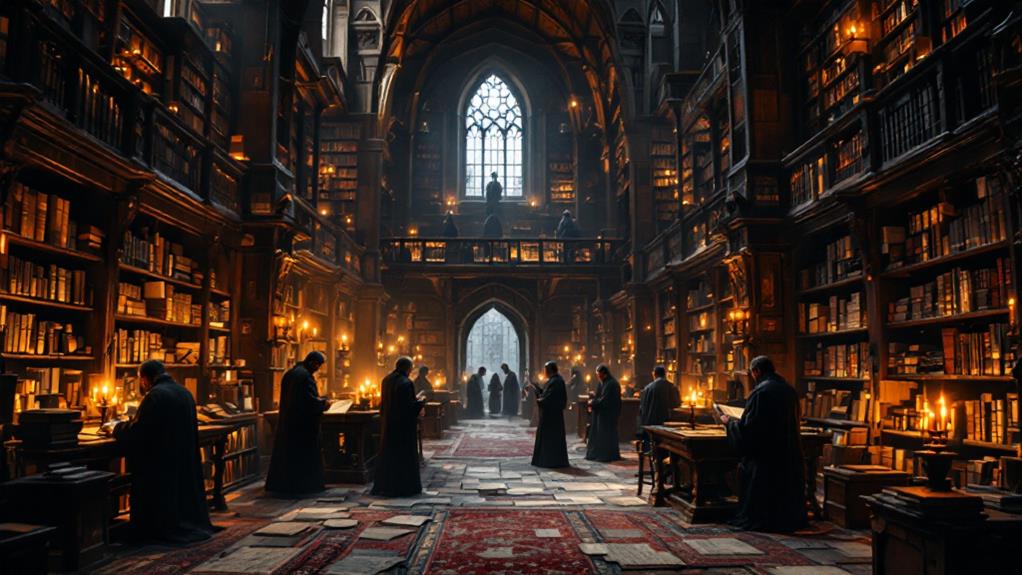
Imagine the excitement of the Renaissance when scholars began uncovering classical texts long forgotten. You'd find yourself amid a whirlwind of rediscovery efforts as lost manuscripts resurfaced from dusty corners of monasteries and libraries. These texts, rich with ancient philosophies, sparked a lively cultural revival across Europe. Renaissance libraries became repositories, housing these precious works, and serving as hubs for scholarly exchanges.
As you explore deeper, you'd notice how textual preservation became paramount. Manuscript illumination transformed these texts into visual masterpieces, ensuring their longevity. The thrill of translating ancient Greek and Roman works spread like wildfire, igniting translation movements that brought these insights to a broader audience. Literary circles buzzed with discussions, dissecting the nuances of newly rediscovered ideas, pushing the boundaries of contemporary thought.
Imagine the dedication required to breathe new life into these texts, bridging the gap between ancient wisdom and modern understanding. This period wasn't just about finding old books; it was about reigniting the human spirit and curiosity. In rediscovering the past, the Renaissance forged a path towards the future, forever altering the course of art, knowledge, and society.
Humanism and Folios
Humanist scholars during the Renaissance took center stage, driven by a belief in the power of human potential and achievement. You'd find them deeply engaged in the age's manuscript culture, which was crucial in spreading humanist ideals. Folios became a vehicle for artistic expression, allowing these scholars to interact with texts and images in new, exciting ways. As you investigate these pages, you'll notice a blend of textual interpretation and visual literacy that invites readers to partake in philosophical discourse.
The folios weren't just static objects; they facilitated dynamic cultural exchange. Imagine opening a folio and navigating through a world where knowledge dissemination was prioritized, and ideas flowed freely across borders. This was a time when art and text intertwined, each informing the other, creating a rich tapestry of understanding. You'd encounter not only the aesthetic beauty of the illustrations but also the profound insights embedded in the text.
Scientific Advancements in Print
During the Renaissance, the advent of the printing press transformed the way scientific knowledge was shared and expanded. You'd see how print technology changed the dissemination of information, making it possible for scholars across Europe to access and contribute to scientific progress like never before. This wasn't just about text; it was a visual transformation too. Scientific illustrations, carefully crafted and reproduced through print, became essential. They allowed complex ideas to be communicated with precision and clarity, reaching a wider audience.
Imagine being able to study detailed diagrams of the human anatomy or celestial maps without having to travel to a distant library or university. Print technology made this possible, democratizing access to knowledge. You could now hold in your hands the works of luminaries like Copernicus or Vesalius, complete with their groundbreaking illustrations. These printed folios represented a significant leap in how knowledge was consumed and built upon.
Patronage and Production
Supported by the wealth of influential patrons, Renaissance art and knowledge flourished like never before. You see, during this lively time, the dynamics between patrons and artists were crucial in shaping the cultural landscape. Wealthy individuals and powerful families, like the Medici in Florence, invested heavily in art and intellectual endeavors, demonstrating their status and influence. As a patron, you didn't just fund an artist; you engaged in a relationship that could dictate the themes and styles of the artwork produced.
Artistic collaborations were a hallmark of the age. By commissioning works, patrons facilitated the exchange of ideas between artists, scholars, and craftsmen. These collaborations often led to groundbreaking innovations, as seen in the partnership between Leonardo da Vinci and Ludovico Sforza, Duke of Milan. You'd be amazed at how these relationships could accelerate the production of masterpieces that combined art and science, such as anatomical studies or architectural marvels.
In essence, the symbiotic relationship between patron and artist fueled a creative explosion. It wasn't just about financial support; it was about nurturing talent and fostering an environment where art and knowledge could thrive together, setting the stage for the Renaissance's enduring legacy.
Folios Across Europe
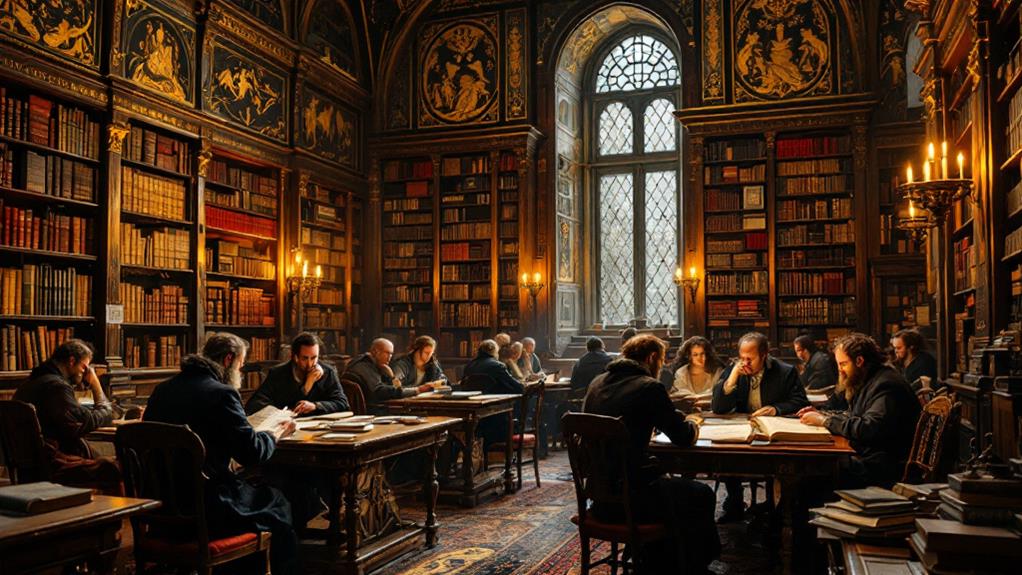
As patrons across Europe fueled the flourishing of Renaissance art, another significant development took root: the proliferation of folios. These bound collections of works became essential in spreading knowledge and artistic influences. You can imagine how folios crossed borders, carrying with them the seeds of cultural exchange and intellectual growth. The folio techniques employed by artists and scholars were as diverse as the regions they hailed from, creating a mosaic of styles and ideas that enriched the European landscape.
Folios were instrumental in disseminating:
- Artistic Techniques - Artists could study and replicate the techniques of masters from distant lands, leading to a fusion of styles and innovations.
- Scientific Knowledge - Scholars compiled and shared their findings, fueling advancements in fields such as astronomy, anatomy, and engineering.
- Literary Works - Folios contained the works of poets and playwrights, spreading new forms of expression and thought.
- Philosophical Ideas - Thinkers engaged with diverse philosophical concepts, igniting debates and encouraging intellectual growth.
In this dynamic exchange, you see how folios were more than just books; they were vessels of cultural transformation, knitting together the fabric of Renaissance Europe with threads of art and knowledge.
Lasting Impact on Modernity
The Renaissance's enduring influence on modernity is evident in countless ways, shaping the current art, science, and philosophy. You're surrounded by its impact, regardless of whether you realize it or not. The cultural exchange that took place during the Renaissance laid the groundwork for the globalized world you live in now. Artists and thinkers of the time didn't work in isolation; they engaged in artistic collaboration, sharing ideas and techniques across borders, which enriched their work and expanded their horizons.
In art, the use of perspective and realism pioneered during the Renaissance continues to inform contemporary practices. You see it in the present architecture, film, and digital media. The scientific advancements of the period, driven by curiosity and rigorous inquiry, set the stage for modern scientific methods. Figures like Leonardo da Vinci exemplified the blend of art and science, inspiring generations of innovators.
Philosophically, the Renaissance sparked a shift towards humanism, emphasizing individual potential and critical thinking. This shift resonates with current education systems and democratic ideals. You experience its legacy every day, from the art that surrounds you to the technology you use, all rooted in a rich history of cultural exchange and artistic collaboration.
Related posts