Folios of the Islamic Golden Age: Contributions to Art and Science

During the Islamic Golden Age, folios were crucial in advancing art and science. These manuscripts preserved and transmitted vast knowledge sourced from Greek, Persian, and Indian traditions. You'd uncover groundbreaking developments in areas like astronomy, where precise star charts and instruments transformed navigation. In mathematics, figures like Al-Khwarizmi laid the groundwork for algebra. The period's exquisite calligraphy and illustration techniques reshaped Arabic scripts into mesmerizing art forms. Medical texts enlarged the understanding of anatomy and promoted disease prevention. With rich cultural exchanges flowing through lively trade routes and libraries, the period's impact is profound and worth exploring further.
The Birth of Islamic Manuscripts
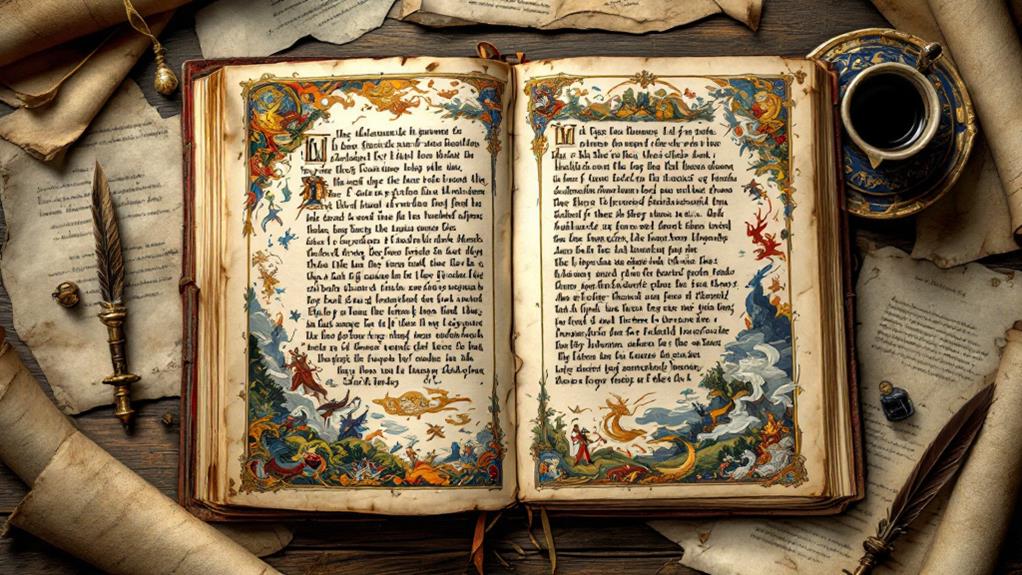
During the Islamic Golden Age, the birth of Islamic manuscripts marked a transformative period in the preservation and dissemination of knowledge. You'd find that these manuscripts were essential in safeguarding the vast array of intellectual heritage from different cultures. Scholars carefully copied and translated works from Greek, Persian, and Indian sources, ensuring important information wasn't lost to time. Manuscript preservation became a significant task, as these texts served as the primary vehicles for education and scholarly communication.
You'll appreciate the artistic techniques that accompanied this scholarly pursuit. Islamic manuscripts weren't just about textual content; they were also renowned for their intricate calligraphy, lively miniatures, and elaborate geometric patterns. Artists used vivid colors and gold leaf to create visually stunning pages, turning each manuscript into a masterpiece. By combining artistry with scholarship, these manuscripts were not only practical tools but also objects of beauty and reverence.
In this age, the establishment of libraries and institutions like the House of Wisdom in Baghdad played a significant role in manuscript preservation. Here, you could investigate vast collections that spurred intellectual growth and cross-cultural exchanges, laying the groundwork for future advancements.
Innovations in Astronomy
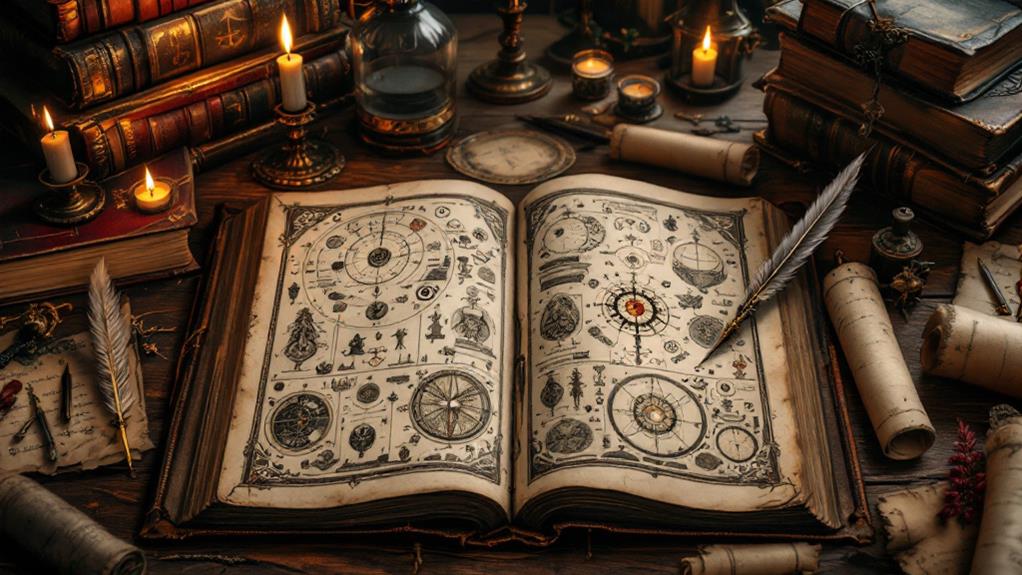
Amidst the remarkable achievements of the Islamic Golden Age, an abundance of innovations in astronomy emerged, transforming the way humanity understood the cosmos. You can investigate their celestial navigation advancements, which changed how people traveled and examined. Astronomers developed detailed star charts vital for sailors and travelers. These charts, combined with precise astronomical instruments, allowed them to plot courses with remarkable accuracy.
Additionally, Islamic scholars constructed intricate planetary models to explain the movements of celestial bodies. These models helped unravel complex cosmic theories that would guide future astronomers. At the heart of their research were lunar observations, providing insight into the moon's phases and influencing the Islamic calendar. Eclipse calculations became invaluable for predicting these celestial events, marking significant religious and cultural moments.
Here's a numeric list to illustrate these achievements:
- Celestial Navigation: Changed travel and examination by using star charts and navigational aids.
- Astronomical Instruments: Enabled precise observation and measurement of celestial bodies.
- Planetary Models: Offered a deeper understanding of cosmic theories and celestial mechanics.
- Lunar Observations: Provided vital data for eclipse calculations and calendar development.
These contributions laid a foundation for future revelations, shaping the world of astronomy as it is recognized today.
Medical Texts and Discoveries
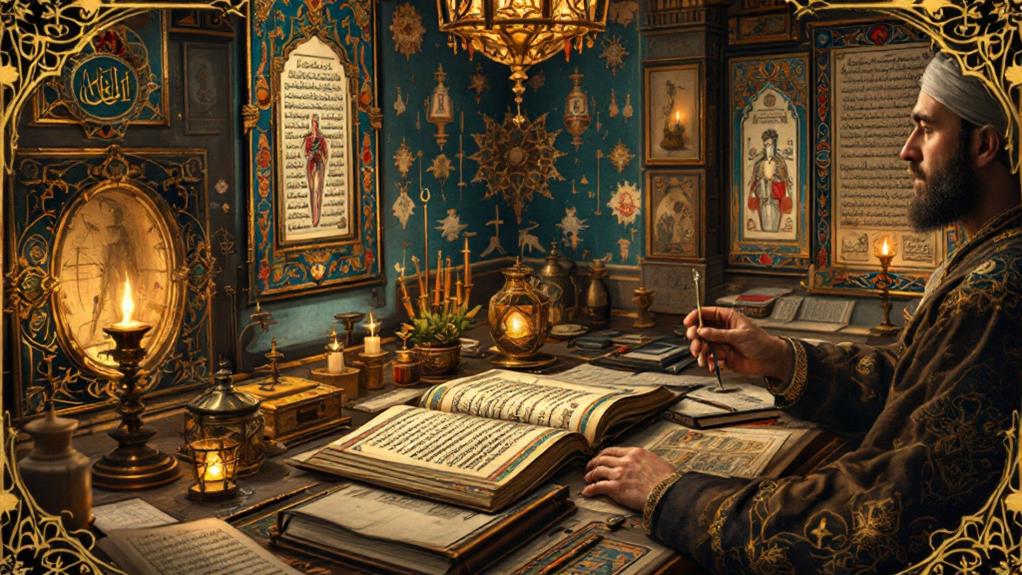
In the domain of medical knowledge, the Islamic Golden Age saw an unparalleled surge in the creation and dissemination of medical texts that profoundly impacted healthcare practices. You'd find that these texts examined numerous aspects of medicine, offering insights that were both groundbreaking and practical. For instance, herbal medicine was a cornerstone, with scholars cataloging an extensive range of medicinal plants used to treat ailments.
Surgical techniques were also transformed during this period. You'd be amazed at the anatomical studies that informed these new approaches, allowing for more precise and effective surgeries. Public health was another critical focus, with significant emphasis on disease prevention and cleanliness, which laid the groundwork for modern public health policies.
Medical education was rigorous, ensuring that physicians were well-versed in both the ethical and practical aspects of their profession. Physician ethics were paramount, and doctors were expected to adhere to a code that emphasized patient care and confidentiality. This age's medical findings not only advanced healthcare in the Islamic world but also influenced Western medicine for centuries. As you investigate these texts, you'll see a legacy of knowledge that continues to resonate today.
Mathematical Manuscripts
Just as the Islamic Golden Age transformed the field of medicine, it also laid the foundation for modern mathematics through its rich collection of mathematical manuscripts. During this period, scholars diligently documented their findings, cementing the age's legacy in the domain of numbers and shapes. These manuscripts not only advanced existing knowledge but also introduced groundbreaking concepts that continue to influence you today.
Consider these remarkable contributions:
- Al-Khwarizmi's Algebra: Often called the "father of algebra," Al-Khwarizmi's work systematically solved linear and quadratic equations, providing a framework that modern algebra builds upon.
- Geometric Patterns: Artists and mathematicians collaborated, creating intricate geometric patterns that weren't just decorative but also demonstrated advanced mathematical understanding, often seen in Islamic architecture.
- Base-10 Numerical System: Islamic scholars adopted and refined the Hindu-Arabic numeral system, including the vital concept of zero, which simplified calculations and paved the way for future developments.
- Spherical Trigonometry: Fundamental for advancing astronomy and navigation, Islamic mathematicians developed spherical trigonometry to calculate celestial movements accurately.
These manuscripts collectively form the backbone of modern mathematical principles, showcasing the age's intellect and its enduring impact on today's numerical systems and geometric patterns.
Philosophical Works and Thoughts
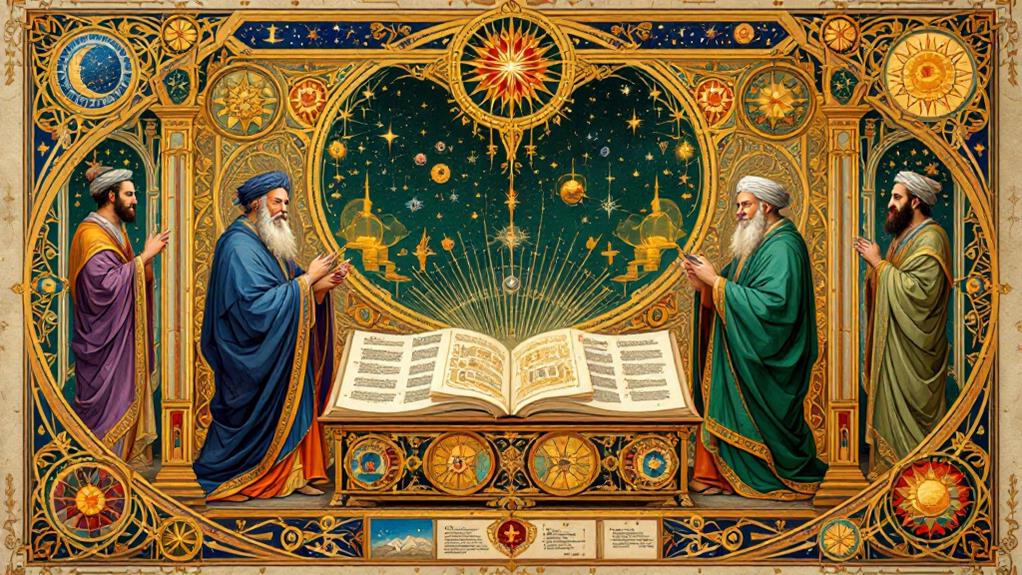
Exploring the philosophical works and thoughts of the Islamic Golden Age reveals a profound legacy that still echoes today. During this age, Islamic philosophy flourished, weaving together diverse strands of thought into a rich tapestry of philosophical dialogues. You'll find that thinkers like Al-Farabi, Avicenna, and Al-Ghazali probed deeply into ethics and morality, questioning the nature of good and evil, and how humans should live virtuously. Their metaphysical inquiries often centered on the existence of God, the soul, and the universe's nature.
In your study of these philosophers, you'll notice their sophisticated epistemological frameworks, which sought to understand how we acquire knowledge and truth. Logic and reasoning were paramount, as scholars integrated knowledge from Greek, Persian, and Indian traditions, crafting a unique and coherent system of thought. This integration of knowledge not only enriched Islamic philosophy but also had a significant influence on Europe. As these ideas traveled westward, they sparked intellectual movements that contributed to the Renaissance and Enlightenment.
Mastery of Calligraphy
Amid the artistic achievements of the Islamic Golden Period, the mastery of calligraphy stands out as a defining cultural expression. You'll find that Arabic scripts were not merely forms of writing but intricate art forms imbued with religious significance. In this historical context, calligraphy became a way to preserve and beautify sacred texts, reflecting a deep respect for the written word.
The diversity of calligraphic styles showcases the period's artistic techniques. Regardless of the flowing elegance of Naskh or the geometric precision of Kufic, each script conveys its own unique charm and utility. Calligraphy workshops flourished, where masters and apprentices dedicated their lives to perfecting their craft, ensuring that these artistic traditions were passed down through generations.
Modern adaptations of these styles continue to influence art and design worldwide. You can see their impact in everything from graphic design to contemporary architecture. To truly appreciate this art form, consider these highlights:
- Arabic Scripts: Elegant and varied, each with its own purpose.
- Calligraphic Styles: From Kufic to Naskh, each tells a story.
- Historical Context: Rooted in religious and cultural significance.
- Artistic Techniques: Mastery passed through calligraphy workshops.
These elements reflect calligraphy's enduring legacy in art and culture.
Techniques in Illustration
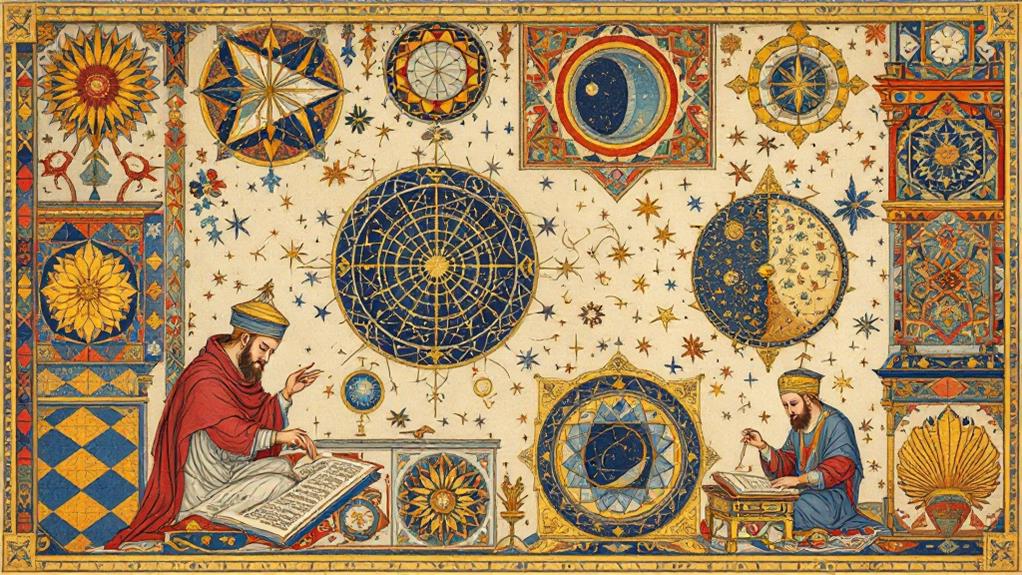
Building on the artistic spirit of calligraphy from the Islamic Golden Period, the period also saw remarkable advancements in illustration techniques. You'll find that these illustrations were not just art for art's sake; they were deeply symbolic, using color symbolism to convey messages and emotions. Artists employed narrative techniques to tell stories through vivid scenes, often depicting historical or religious events. It was a time when artistic styles flourished, blending intricate designs with rich hues.
You'd be amazed at the level of detail in manuscript preservation. This wasn't just about keeping books safe; it involved illumination methods that brought pages to life with gold and lively pigments. Artists were supported by patronage systems, where wealthy sponsors commissioned works, ensuring that the art was both beautiful and meaningful.
Material choices played a significant role, too. Artists selected the finest parchments and inks, enhancing the durability and beauty of their creations. Cross-cultural influences enriched these techniques, as ideas and materials flowed across regions, weaving a tapestry of shared creativity. Through these advancements, illustrations from the Islamic Golden Age remain a reflection of the period's groundbreaking spirit and artistic achievements.
Cultural Exchange and Influence
How did the Islamic Golden Age become a melting pot of cultural exchange and influence? It thrived on the principles of cultural diffusion and artistic synthesis, which were fueled by lively trade routes and a society rich in linguistic diversity. You see, during this time, scholars and artists from distinct regions engaged in cross-cultural dialogues, leading to a unique blend of ideas and styles.
- Knowledge Transfer: Scholars translated works from Greek, Persian, Indian, and other languages into Arabic, enriching the intellectual landscape.
- Intellectual Collaboration: Thinkers from diverse backgrounds worked together, merging their insights to advance fields like mathematics, astronomy, and medicine.
- Trade Routes: These routes were not just for goods but also for ideas, arts, and manuscripts that traveled along the Silk Road and other connections.
- Manuscript Preservation: Libraries and institutions diligently preserved and shared texts, ensuring that valuable knowledge wasn't lost to time.
This age's linguistic diversity allowed for a seamless exchange of ideas, making it a hub of innovation. The cross-cultural dialogue didn't just enrich science and philosophy; it also brought about a remarkable artistic synthesis, where styles and techniques from different cultures beautifully merged.
Lasting Impact on Modern Science

Throughout history, the Islamic Golden Age has left an indelible mark on modern science. You can see its influence in many aspects of today's scientific endeavors. During this period, scholars developed a rigorous scientific methodology, emphasizing observation and experimental approaches. They laid the groundwork for how you approach scientific problems today by promoting critical thinking and systematic investigation.
Educational institutions flourished, becoming hubs of interdisciplinary collaboration. These centers attracted scholars from diverse fields, creating rich intellectual networks. This cross-pollination of ideas was essential for scientific advancements, as it encouraged you to look beyond your specialization and consider broader perspectives.
Translation movements played a significant role, as scholars translated ancient texts into Arabic, preserving and expanding upon knowledge from Greek, Persian, and Indian sources. This commitment to preservation techniques guaranteed that valuable knowledge wasn't lost to time, allowing you to build upon it.
Related posts