Folios in Museums: Preserving Ancient Texts for Future Generations
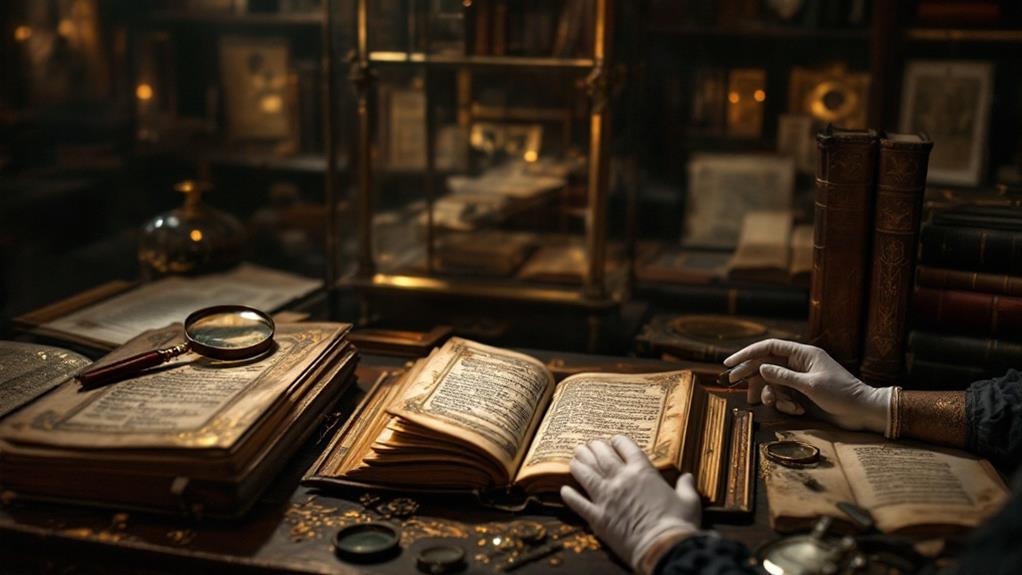
When you visit museums, you'll find they play an essential role in preserving ancient folios for future generations. These folios connect us to ancient civilizations, offering insights into cultural achievements. Their preservation requires careful control of light, humidity, and temperature, demanding advanced technology and skilled personnel. Using digital archiving and augmented reality, museums guarantee these texts are accessible and engaging. Challenges persist, like funding and environmental threats, but with precise conservation techniques, museums transform into dynamic educational spaces. Through these efforts, they safeguard these cultural gems, encouraging global collaboration and inspiration. Interested in uncovering more about these endeavors?
The Importance of Folios
Folios hold significant value in museums, serving as crucial tools for preserving and showcasing historical documents and artworks. They allow you to investigate the rich history and cultural significance behind each piece. When you visit a museum, you're not just seeing paper; you're engaging with a narrative that spans centuries. Folios provide context and meaning, connecting you to ancient civilizations and their stories. They offer a tangible link to the past, enabling you to appreciate the cultural achievements and historical milestones that have shaped our world today.
The educational value of folios in museums can't be overstated. They serve as primary sources for learning, offering insights that go beyond textbooks. When you study a folio, you gain a deeper understanding of historical events, societal norms, and artistic expressions. Museums rely on folios to create engaging educational experiences, making history accessible and captivating for everyone. As you investigate these documents, you develop critical thinking skills and a greater appreciation for the complexities of history. Folios bridge the gap between past and present, transforming museums into interactive classrooms where learning becomes an exciting expedition.
Challenges in Preservation
Preserving folios in museums presents a unique set of challenges that demand careful attention and care. You need to evaluate environmental factors that can deteriorate these ancient texts over time. Humidity, temperature, and light exposure all play significant roles in how well these materials are preserved. A slight change in humidity can cause pages to wrinkle, while excessive light exposure can fade delicate inks and pigments.
You also face funding limitations, which can complicate your preservation efforts. Limited budgets often mean you can't always afford the latest technology or hire enough specialized staff to maintain ideal conditions. As a result, you must get creative with the resources you have.
Imagine entering a museum's folio room and encountering:
- Dim lighting, carefully controlled to prevent ink fading.
- Sophisticated climate control systems, humming quietly to maintain perfect humidity.
- Glass display cases, acting as shields against dust and pollutants.
- Meticulous logs, tracking every environmental change for future adjustments.
These challenges require a constant balancing act. You need to prioritize which folios get the most attention and resources, ensuring that future generations can appreciate these invaluable texts. The struggle is real, but the rewards of preserving history make it worthwhile.
Conservation Techniques
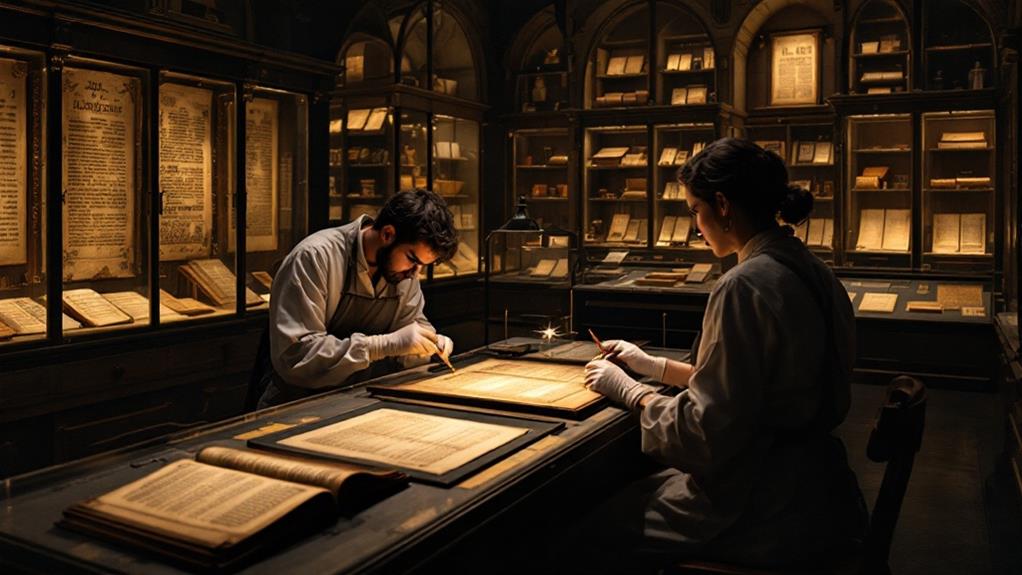
In regards to conservation techniques for folios, adopting a multifaceted approach is essential. You need to take into account the unique needs of each artifact, employing binding methods that complement the original structure. When folios arrive at your museum, assess their condition to determine the best conservation strategy. Traditional binding methods may involve sewing, which can be a gentle option, but in some cases, re-binding might be necessary to prevent further deterioration.
Material choices play a significant role in conservation. Selecting the right materials guarantees that folios remain stable and protected. Use archival-quality materials, such as acid-free paper and adhesives, to prevent chemical reactions that could damage the folios over time. These materials provide a buffer against environmental factors like humidity and temperature fluctuations, which can be particularly damaging to ancient texts.
You should also focus on creating a suitable display environment. Proper lighting, controlled humidity, and temperature are essential to extending the life of these artifacts. By diligently applying these conservation techniques, you're actively safeguarding historical valuables, assuring that future generations can appreciate and learn from these ancient texts. Your careful attention and expertise make all the difference.
Role of Technology
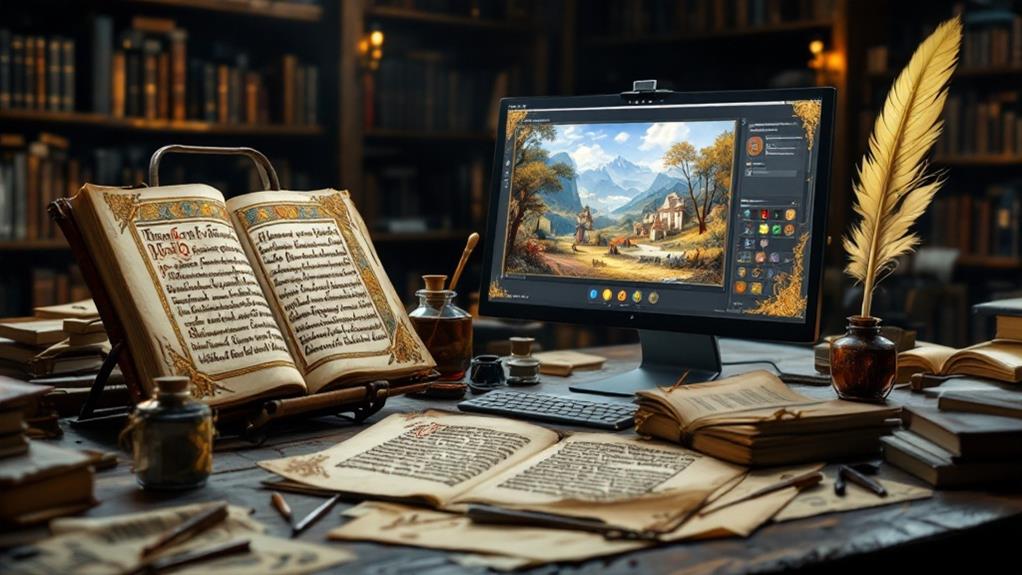
While traditional conservation techniques are crucial, technology plays a transformative role in preserving folios for the future. It allows you to engage with ancient texts in ways previously unimaginable. Digital archiving is at the forefront, guaranteeing that these artifacts are not only preserved but also accessible to a global audience. By scanning and storing high-resolution images of each folio, museums can protect the originals from wear while still allowing scholars and enthusiasts to study them closely.
Imagine stepping into a museum where:
- Interactive exhibits let you turn the pages of a virtual manuscript, giving you the sensation of touching history.
- Augmented reality overlays details and translations onto texts, enhancing your understanding of the content.
- Virtual reality tours transport you to the ancient world, providing context for the folios' creation and use.
- Online databases allow you to investigate collections from your own home, connecting with a rich tapestry of knowledge.
Through these technologies, you're not just a passive observer; you're an active participant in the preservation and appreciation of ancient texts. This digital revolution guarantees that folios remain lively and relevant for generations to come.
Future of Ancient Texts
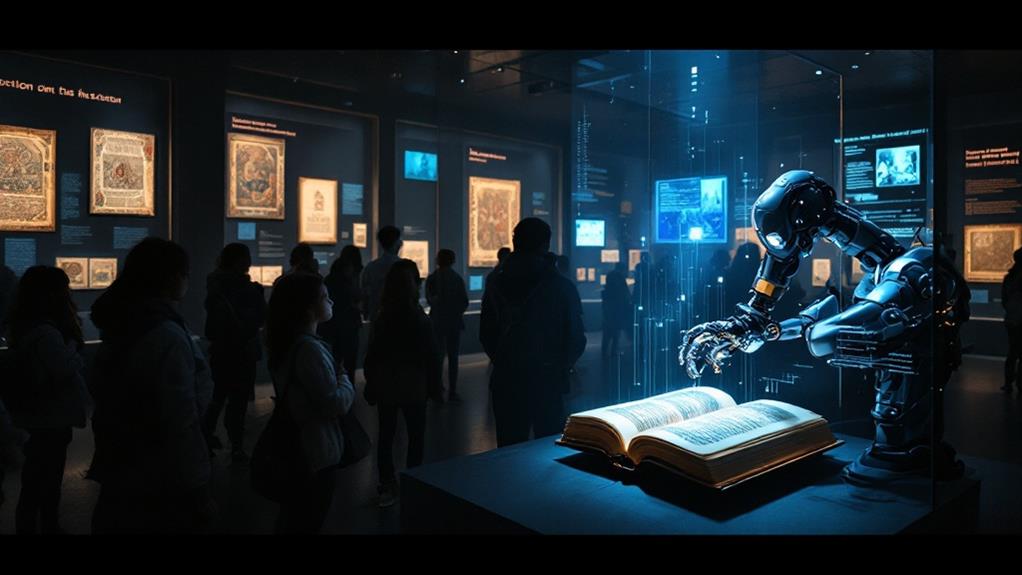
As we look to the future of ancient texts, museums and libraries are redefining how these artifacts are shared and understood. You're witnessing a shift where digital archiving plays an essential role in preserving the cultural significance of these texts. By digitizing manuscripts and folios, institutions guarantee they withstand the test of time and remain accessible to a global audience. This process not only protects the physical objects but also democratizes access, allowing anyone with an internet connection to investigate these gems.
You might wonder how this impacts the cultural significance of ancient texts. Digital archiving improves their value by making them interactive and engaging. Now, you can probe into a manuscript's history, annotations, and translations with just a few clicks. Such accessibility fosters a deeper appreciation and understanding of different cultures and historical contexts. It also encourages collaboration among scholars, artists, and enthusiasts worldwide.
In the future, you'll find that ancient texts are not just relics of the past but dynamic resources for learning and inspiration. With continued advancements in technology, these texts will keep evolving, guaranteeing that their cultural significance is celebrated and preserved for generations to come.
Related posts