Folios as Time Capsules: What Manuscripts Reveal About Ancient Civilizations
Imagine holding a manuscript that acts as a time capsule, revealing secrets of ancient civilizations. These folios narrate cultural myths explaining the universe and human existence, intertwined with spiritual practices and societal morals. You'll find insights into social hierarchies, gender roles, and the delicate balance of daily life and community events. Scientific strides are documented through astronomical charts, medicinal texts, and engineering designs, while artistic expressions reveal worldviews through enchanting symbols. Language preservation captures the essence of past societies, but challenges in preservation remain. Investigate further to uncover how these manuscripts keep ancient stories alive.
Cultural Narratives and Beliefs
Ancient manuscripts serve as windows into the rich tapestry of cultural narratives and beliefs that shaped past societies. As you explore these texts, you're not just reading words but traversing through the mythical stories that ancient peoples crafted to explain their world. These stories often intertwined with the spiritual beliefs held by those societies, revealing how they perceived the divine and the cosmos.
Imagine holding a manuscript that tells a tale of gods battling monsters, each line rich with symbolism. You'd see how these mythical stories weren't merely entertainment; they were crucial frameworks that helped societies understand natural phenomena and human experiences. Through these narratives, people sought to find meaning in life's mysteries and establish moral codes.
Examining these manuscripts, you uncover how spiritual beliefs were interwoven into daily life. Rituals, offerings, and prayers, all carefully documented, highlight the deep connection people felt with their deities. These beliefs were more than religious practices; they provided a shared identity and sense of purpose. By studying these ancient texts, you gain insight into how past civilizations viewed their place in the universe and how those views still resonate today.
Social Structures and Hierarchies
Delving into the social structures and hierarchies of ancient societies reveals the intricate webs of power and influence that dictated daily life. You uncover how power dynamics shaped communities, with class distinctions often deeply entrenched. Manuscripts provide glimpses into leadership structures, where rulers and elites wielded authority over the lower classes. These texts highlight how economic stratification impacted social mobility, often limiting opportunities for those born into lower classes.
Gender roles were typically well-defined, with men and women assigned specific duties and responsibilities, as evidenced by ancient records. Manuscripts often documented these roles, showing the communal responsibilities expected of each gender. Leadership structures, clearly outlined in these documents, showed a preference for lineage and heritage, emphasizing the importance of maintaining power within certain families or groups.
Moreover, ritualistic practices played a significant role in reinforcing social hierarchies. These rituals often served to legitimize power dynamics, ensuring the continuation of established norms. Through these practices, societal roles were reaffirmed, and communal cohesion was maintained. By examining ancient manuscripts, you gain insight into the complex frameworks that governed social interactions and maintained order within ancient civilizations.
Daily Life and Practices
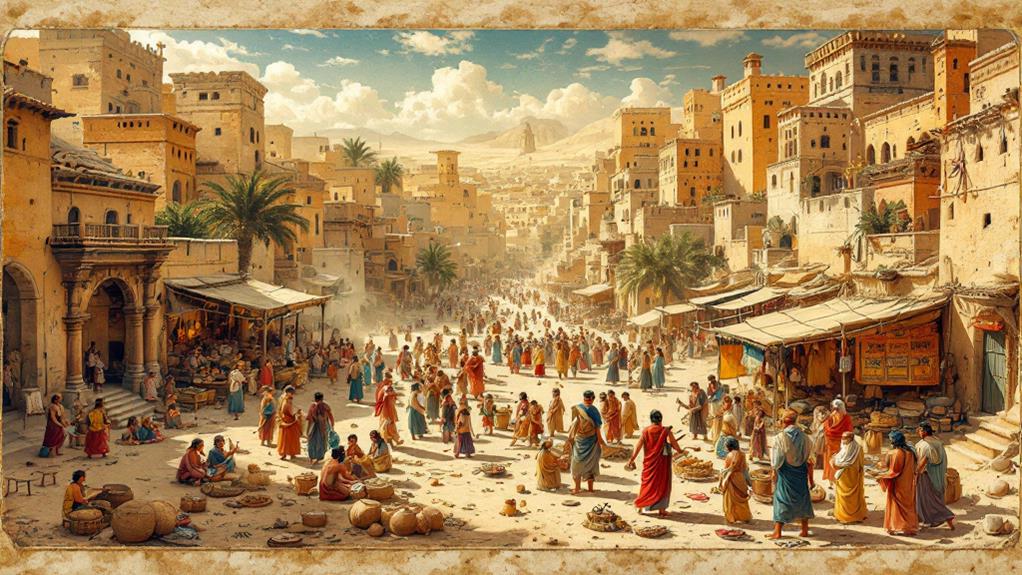
Exploring the intricate social structures and hierarchies of ancient societies naturally leads to a deeper understanding of their daily life and practices. When you immerse yourself in ancient manuscripts, you uncover details about how people organized their days. Ritual practices played a significant role, often marking changes in life from birth to adulthood and beyond. These rituals weren't just about religion; they also reinforced community bonds and social roles.
In the domain of domestic activities, you'll find insights into the mundane yet vital tasks that sustained everyday life. Manuscripts reveal how families managed their households, from cooking and cleaning to crafting and trading. Each activity was woven into the fabric of daily existence, reflecting the available resources and technological know-how of the time.
As you study these documents, you realize that daily life wasn't just about survival; it was filled with meaning and purpose. People engaged in their communities, celebrated festivals, and passed down traditions that defined their cultural identity. By examining these aspects, you gain an all-encompassing understanding of how ancient societies functioned, highlighting the balance between the ordinary and the extraordinary in their lives.
Scientific Knowledge and Innovations
Unraveling the scientific knowledge and innovations of ancient societies offers a fascinating glimpse into their intellectual advancements. As you investigate ancient manuscripts, you'll reveal how these civilizations made significant contributions to science and medicine. These documents are repositories of wisdom, demonstrating how early societies navigated the complexities of their world. Here's what you might find:
- Astronomical Observations: Ancient manuscripts often detail precise records of stars, planets, and celestial events. These observations helped civilizations develop calendars and understand seasonal changes, essential for agriculture and societal planning.
- Medicinal Practices: You'll uncover ancient texts describing herbal remedies and surgical techniques. These manuscripts reveal how civilizations approached health care, emphasizing the use of natural resources for healing.
- Engineering Marvels: Some manuscripts include blueprints and descriptions of engineering projects, such as aqueducts and irrigation systems, showcasing the ingenuity and practical applications of scientific principles.
- Mathematical Concepts: Ancient civilizations documented mathematical ideas, from geometry to algebra, which laid the groundwork for modern mathematical theories.
Artistic Expression and Techniques
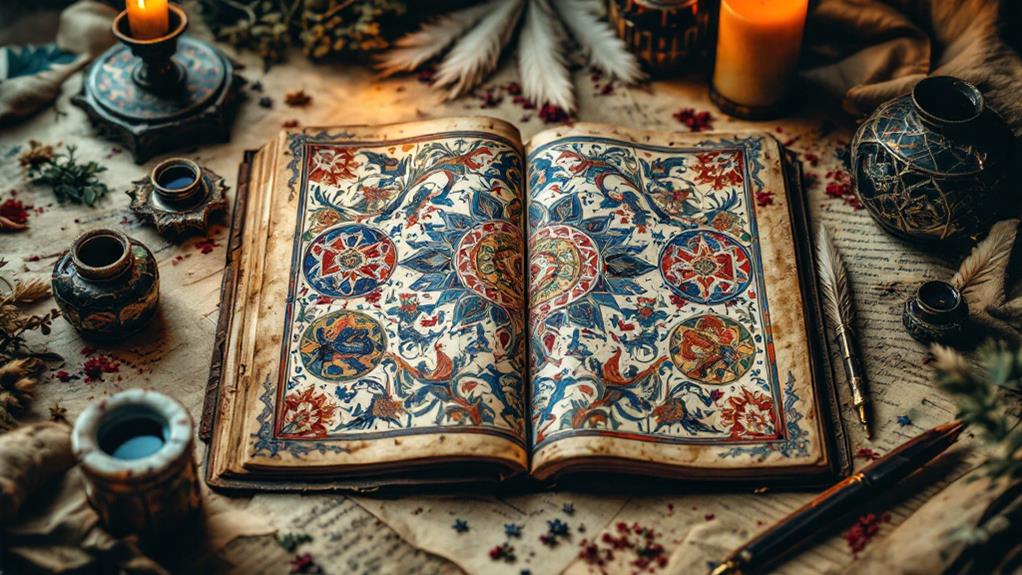
While ancient manuscripts reveal profound scientific advancements, they also serve as windows into the rich artistic expressions of early societies. You can investigate symbolic motifs that offer insights into the beliefs and values of the time. These motifs, often embedded within intricate decorative styles, showcase the cultural influences that shaped artistic evolution. As you examine these manuscripts, notice the variety of artistic mediums employed. From vellum to papyrus, these materials not only dictated the durability of the artwork but also the techniques artists used.
Craftsmanship techniques were essential in creating manuscripts. Skilled artisans applied precise methods to guarantee the clarity and beauty of each piece. Look closely, and you'll find color symbolism playing a significant role in visual storytelling. Colors were carefully chosen to convey emotions and meanings, adding layers of depth to the narratives depicted.
Through these manuscripts, you gain a glimpse of how early artists expressed their worldviews, blending artistry with storytelling. The intersection of craftsmanship and creativity reflects a society's artistic evolution, offering a timeless connection to the past. By studying these folios, you appreciate the legacy of artistic ingenuity left by ancient civilizations.
Language and Communication
How did ancient societies communicate their complex ideas and narratives through manuscripts? You might wonder how these civilizations, without modern technology, managed to record their thoughts and stories. They relied heavily on written communication to preserve their culture and knowledge. As linguistic evolution unfolded, societies adapted their languages to fit the written form, creating a bridge from oral traditions to lasting records. Here's how they did it:
- Standardization of Scripts: Ancient scribes developed standardized scripts, like cuneiform or hieroglyphs, which allowed for consistent written communication across regions.
- Scribes and Scholars: Specially trained individuals, often scribes or scholars, were responsible for transcribing oral stories and legal documents into manuscripts.
- Use of Symbols: Complex ideas were often conveyed through symbols or pictograms, which evolved into more abstract alphabets over time.
- Translation and Transcription: As trade and conquest expanded, translation became essential. Manuscripts were transcribed into different languages, facilitating the spread of knowledge.
Preservation and Interpretation Challenges
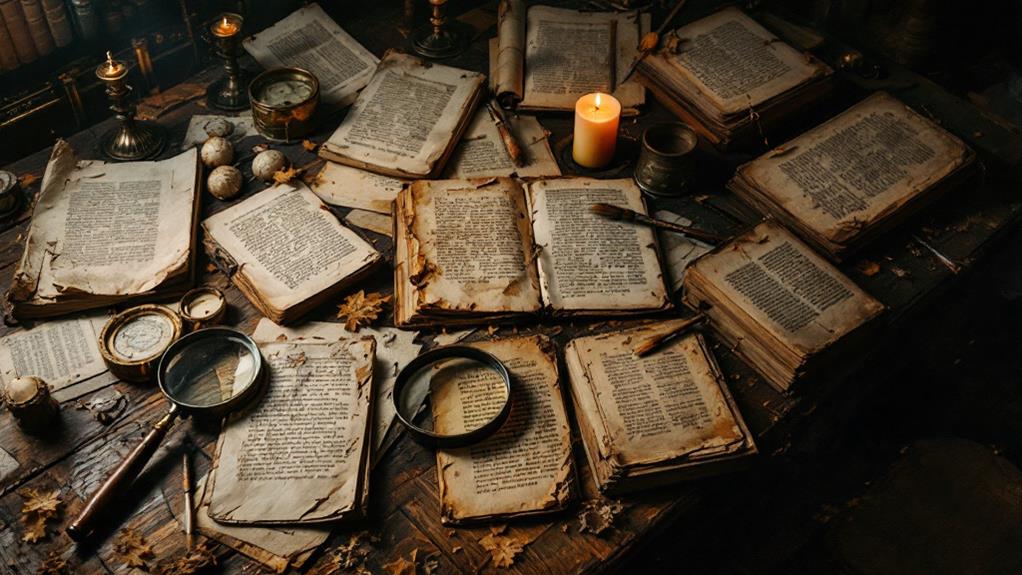
Preserving ancient manuscripts presents unique challenges that go beyond the initial creation and communication of ideas. You must consider both the physical and historical integrity of these documents. Environmental factors, like humidity and light exposure, threaten their survival, making careful storage indispensable. But it's not just about keeping them safe; you also need to guarantee that they're accurately understood. That's where manuscript authentication comes in. Authenticating a manuscript involves verifying its timeframe, origin, and content to confirm its legitimacy and historical value. An error in this process can lead to misinterpretations of the past.
To tackle these challenges, digitization efforts have become significant. By digitizing manuscripts, you create a virtual copy that can be easily shared and studied without risking damage to the original. This process also aids in preserving knowledge if the physical manuscript deteriorates or is lost. However, digitization requires advanced technology and expertise, and there's always the risk of losing context that only a physical examination can provide. Balancing preservation with accessibility and accurate interpretation is a complex task, but it's essential for revealing the secrets these ancient texts hold about past civilizations.
Related posts