
Folios as Educational Resources: Teaching Society About the Past

Using folios as educational resources lets you investigate history through expansive formats that bridge past and present. They preserve cultural heritage, offering a direct connection to historical texts and moments. Handling them provides tangible insights into the craftsmanship and thoughts of historical figures. By engaging with the content and context of folios, you'll sharpen your critical thinking skills and grasp complex historical narratives. In classrooms, folios encourage collaboration and lively discussions, making history accessible and engaging. Plus, digital folios offer interactive learning anytime. By learning how folios improve understanding, you uncover fresh perspectives on historical education.
Understanding Folios in Education
Understanding folios in education reveals a fascinating way to engage with historical texts and documents. When you investigate folio formats, you're diving into large pages that offer a unique glimpse into how content was originally presented. Often used for significant works like Shakespeare's plays, folios allow you to experience texts as they were meant to be viewed, in their full and expansive form. This format can transform your understanding of a text, providing insights that smaller, more modern formats might miss.
Folio benefits extend beyond just the aesthetic. By using folio formats in education, you gain a greater appreciation for the craftsmanship involved in creating these documents. They present an opportunity for you to connect with the past in a tangible way. Handling a folio can give you a sense of the weight and significance that historical authors placed on their work. Moreover, folios often contain marginalia—notes left by previous readers—that can offer you a window into the thoughts and interpretations of people from centuries ago. This interaction not only deepens your understanding of the content but also enriches your educational experience by connecting you directly to the historical context.
Historical Significance of Folios
Through the centuries, folios have played a significant role in preserving and disseminating some of the most fundamental works of literature and thought. They're not just old books; they're vessels of cultural heritage, offering a window into the minds and societies of the past. When you engage with a folio, you're not just reading words on a page. You're experiencing historical narratives that have shaped cultures and influenced generations.
Folios capture crucial moments in history, from Shakespeare's plays to scientific revelations. They encapsulate the zeitgeist of their times, providing insights into how people lived, thought, and expressed themselves. Each folio serves as a link to the past, a tangible connection to the human experience across time and space. By studying them, you gain a deeper understanding of how societies evolved and how cultural heritage was both preserved and transformed.
Moreover, folios have an educational impact that goes beyond mere reading. They encourage you to think critically about the context in which they were created and the historical narratives they convey. This understanding fosters a richer appreciation of history and its ongoing influence on the present and future.
Types of Folios Explored

While folios have certainly shaped our understanding of history, it's fascinating to investigate the different types that exist and their unique contributions to cultural heritage. Manuscript folios, for instance, offer a glimpse into the painstaking craft of past scribes and artists, providing invaluable insights into historical events and societal priorities. Visual folios, on the other hand, bring history to life through illustrations and artwork, making them perfect for engaging the imagination.
Thematic folios group content based on specific subjects, allowing you to examine particular interests in depth, while interactive folios incorporate modern technology to create engaging, hands-on learning experiences. Both approaches improve your understanding by tying together related information or by offering a more engaging examination.
Cultural folios focus on a specific society's traditions and values, serving as a window into different civilizations. Educational folios are often designed with learning in mind, providing structured content that's perfect for teaching. Archival folios preserve significant documents and records, ensuring that future generations have access to primary sources.
Lastly, narrative folios tell stories through a sequence of entries, giving you a compelling look at history from a storytelling perspective. These diverse types of folios enrich your understanding of the past.
Analyzing Primary Sources
Delving into primary sources, you gain direct access to the voices and experiences of the past, offering an initial account of historical events. These documents, letters, photographs, and artifacts provide you with a rich tapestry of information, but they require careful interpretation. When analyzing primary sources, you must engage in source evaluation, scrutinizing the authenticity and reliability of each piece. Consider who created the document, their motives, and the intended audience. This helps you determine the source's credibility and potential biases that could color the narrative.
Contextual analysis is similarly crucial in understanding primary sources. You need to situate the document within its historical backdrop, recognizing the social, political, and economic circumstances of the time. This approach allows you to grasp how these factors might have influenced the creation and content of the source. By examining the context, you can better understand the nuances and subtleties that may not be immediately apparent.
As you analyze primary sources, keep in mind that they are not standalone narratives but part of a broader historical conversation. Your task is to piece together these fragments, constructing a more thorough picture of the past.
Enhancing Critical Thinking

Analyzing primary sources lays the groundwork for developing critical thinking skills, a crucial component of understanding history. When you immerse yourself in historical documents, you're not just memorizing dates and events; you're engaging in critical analysis. You start questioning the motives behind actions, the reliability of sources, and the broader implications of historical decisions. This process sharpens your ability to dissect information and form well-rounded summaries.
Critical analysis isn't just about finding flaws; it's about understanding context and nuances that shaped the past. As you investigate these documents, you develop reflective learning habits. You learn to connect dots between past events and their impacts on the present. This reflective approach helps you see history as a complex web rather than a series of isolated incidents.
Engaging With Diverse Perspectives
Understanding history requires engaging with diverse perspectives. When you investigate different cultural narratives, you gain a richer, more nuanced understanding of the past. It's like piecing together a puzzle where each perspective adds a unique piece. By doing so, you're not just learning about events but also understanding the values, beliefs, and experiences that shaped them.
To effectively engage with these diverse perspectives, consider the following:
- Embrace cultural narratives: Immerse yourself in stories from varied cultures to see how they interpret historical events.
- Seek interdisciplinary connections: Combine insights from history, sociology, anthropology, and more to get a well-rounded view.
- Challenge your assumptions: Be open to perspectives that might differ from your own, even if they're uncomfortable.
- Use primary sources: These firsthand accounts offer invaluable insights into how different communities viewed their world.
- Encourage dialogue: Discuss perspectives with others to broaden your understanding and challenge preconceived notions.
Folios in Classroom Activities
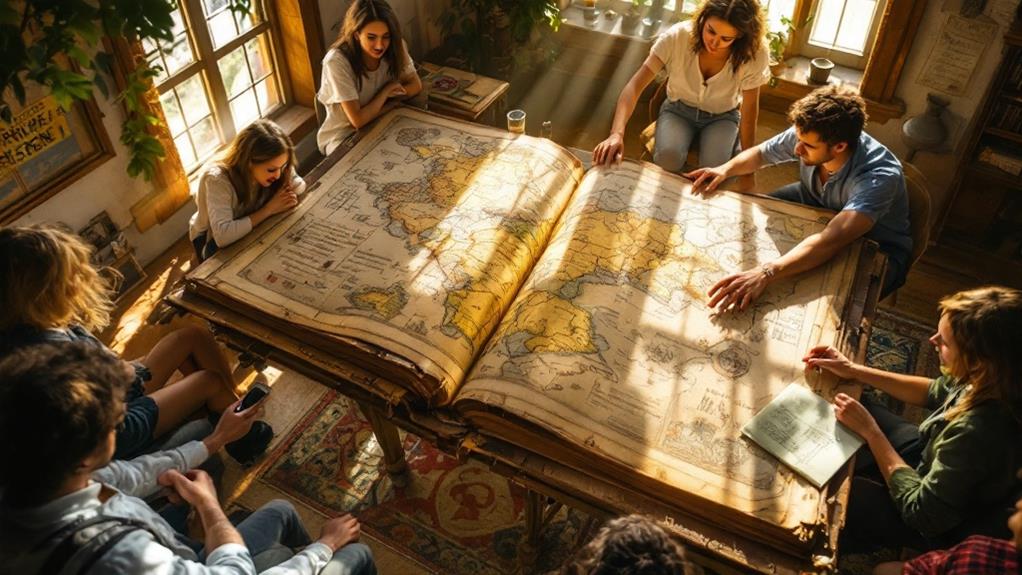
Building on the diverse perspectives you've examined, folios can play a key role in classroom activities by encouraging students to engage with history creatively and critically. Start by focusing on folio design, where students gather historical documents, images, and narratives to create a thorough view of a specific period. This hands-on approach not only makes history tangible but also sparks curiosity and deeper understanding.
Incorporate folio presentation into your lessons, allowing students to showcase their work and explain their chosen artifacts. This not only hones their public speaking skills but also fosters a classroom environment of shared learning. Folio collaboration is vital, as students work in groups to combine their findings and perspectives, leading to richer insights and fostering teamwork.
After the presentations, conduct a folio assessment to evaluate students' understanding and creativity. Feedback should be constructive, encouraging further exploration and learning. Ultimately, folio reflection is an important step, prompting students to think about what they've learned and how their perceptions of history have evolved. By integrating folios into your curriculum, you're not just teaching history; you're cultivating critical thinkers who appreciate the complexities of the past.
Digital Folios and Accessibility
In the current online age, embracing digital folios can greatly boost accessibility in education. You have the power to make learning more inclusive by incorporating digital inclusivity in your teaching methods. Digital folios allow you to present content in interactive formats, making it easier for students with different learning needs to engage. By using digital resources, you can reach students who might not have access to traditional materials, leveling the playing field for everyone.
Here's how digital folios can improve accessibility:
- Universal Access: Students can access materials anytime, anywhere, breaking down geographical barriers.
- Multimodal Learning: Incorporate text, audio, and video to cater to diverse learning styles.
- Customization Options: Adjust font sizes, colors, and layouts to meet individual needs.
- Interactive Engagement: Use quizzes, games, and interactive timelines to make learning dynamic.
- Real-time Updates: Easily update materials, ensuring students have the latest information.
Case Studies Using Folios

Exploring real-world examples of digital folios in action can reveal their transformative potential in education. Imagine using a digital folio to investigate historical documents, such as medieval manuscripts or early modern letters. Through folio analysis, you can uncover insights into societal norms, language evolution, and cultural practices of the past. For instance, students studying Shakespeare might access digital folios of his works, examining annotations and marginalia that reveal how these texts were received and interpreted over time.
In a case study involving a university history department, digital folios served as a critical resource for students to engage directly with primary sources. This approach promoted active learning, encouraging students to form their own interpretations rather than relying solely on secondary sources. Furthermore, folio preservation efforts guaranteed these valuable documents remained accessible for future generations, preserving their educational value.
Another case highlights a high school project where students created digital folios of local history. By conducting interviews and collecting artifacts, they developed a deeper connection to their community's past. This hands-on experience not only enriched their understanding but also fostered a sense of stewardship towards preserving history.
Future of Folios in Learning
As we look towards the future of folios in learning, their role in education is set to expand considerably. You're going to see folios transforming from static resources to dynamic tools that improve interactive learning. They'll become integral in creating a more engaging and enveloping educational experience. Imagine folios that don't just present information but actively involve you in the learning process through multimedia elements and real-time feedback. This shift promises to make learning more effective and enjoyable.
Folios will also become a cornerstone for collaborative projects. You'll find yourself working with peers across the globe, sharing insights and constructing knowledge collectively. The accessibility and adaptability of digital folios mean they can be tailored for diverse educational needs and disciplines.
Consider these future possibilities for folios in learning:
- Integration with virtual reality for enveloping historical experiences.
- Improved multimedia features to cater to different learning styles.
- Real-time collaboration tools that connect classrooms worldwide.
- Personalized learning paths for students based on their interests and needs.
- Data-driven insights to help educators refine teaching methods.
Related posts