Famous Illuminated Manuscripts and Their Artists: A Closer Look
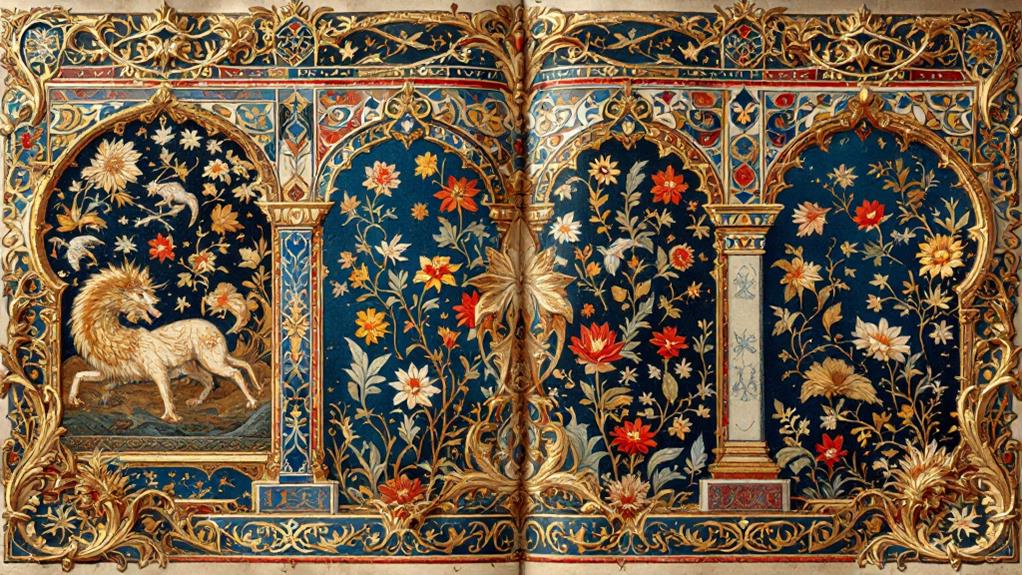
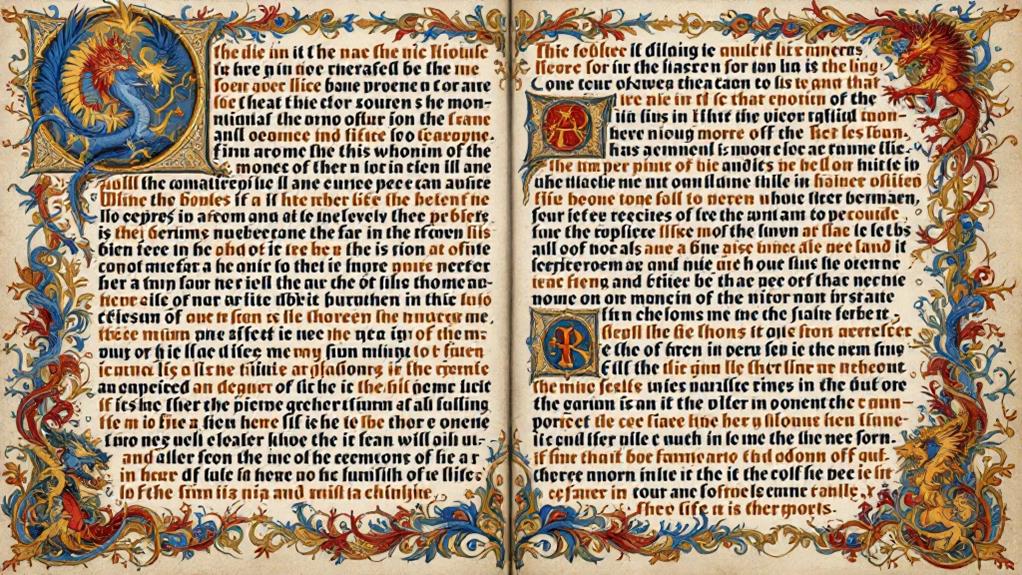
Engage yourself in the world of illuminated manuscripts, where art and history blend so beautifully. The Book of Kells captivates with its Christian iconography and Celtic motifs, while the Lindisfarne Gospels shine with rich colors and intricate Celtic designs. The luxurious Trés Riches Heures by the Limbourg brothers offers glimpses into 15th-century France. The Vienna Genesis stands out as a Byzantine art masterpiece, revealing the opulence of its time. Uncover humor in the Luttrell Psalter's illustrations of medieval life, or admire Jean Pucelle's refined artistry in the Hours of Jeanne D'Evreux. Each manuscript reveals a fascinating story of artistry and devotion.
The Book of Kells
Among the most celebrated examples of illuminated manuscripts, the Book of Kells stands out as a masterpiece of medieval art. You'll find its pages filled with intricate Kells symbolism, reflecting the blend of Christian iconography and Celtic motifs. The artistic techniques used, such as interlace patterns and vibrant illustrations, highlight the manuscript's cultural significance and religious dedication. Created around the 9th century, its historical context adds depth, as it symbolizes a time when monastic communities were lighthouses of learning and artistry.
As you investigate the manuscript, notice the lively color palettes that include rich blues, reds, and golds. These colors were derived from natural sources, showcasing the artistic influences of the time and highlighting the artists' dedication to their craft. Despite its antiquity, the Book of Kells has been remarkably preserved, allowing you to appreciate its beauty centuries later. Manuscript preservation efforts have guaranteed that this cultural gem remains accessible, serving as a reflection of human creativity and devotion. Immerse yourself in the world of the Book of Kells, where every page offers a glimpse into a fascinating blend of artistry and history.
Lindisfarne Gospels
Exploring the Lindisfarne Gospels reveals an enthralling blend of artistry and faith, emblematic of the early medieval period. As you investigate its pages, you witness medieval artistry that intertwines with sacred symbolism, creating a spiritual tapestry. This masterpiece, created on the tidal island of Lindisfarne around 715-720 AD, showcases the dedication and skill of its scribe and artist, Eadfrith.
You'll notice the intricate designs, where Celtic knots and lively colors come alive. The manuscript isn't just a text; it's a visual sermon, intended to captivate and inspire. Each page tells a story beyond words, with detailed illustrations of the four evangelists—Matthew, Mark, Luke, and John—each accompanied by their symbolic animals: man, lion, ox, and eagle. These symbols serve as a reminder of divine presence and the sacred nature of their teachings.
The interplay of colors and patterns invites you to ponder the deep connection between art and spirituality. It's a reflection of how medieval artistry was more than decoration; it was a vehicle for conveying profound theological concepts. The Lindisfarne Gospels stand as a lighthouse of devotion, artistry, and innovation, offering a window into a world where faith and creativity were inseparable.
The Très Riches Heures
While the Lindisfarne Gospels demonstrate the spiritual devotion of early medieval England, the Trés Riches Heures transports you into the opulent world of 15th-century France. This masterpiece of medieval art, created by the Limbourg brothers, captures your attention with its vivid colors and intricate details. The manuscript techniques employed are extraordinary, showcasing the detailed craftsmanship that defines illuminated texts.
As you investigate its pages, you'll notice the artistic influence of Gothic art, blending seamlessly with the burgeoning Renaissance spirit. The historical context of its creation is fascinating, reflecting a time when art was both a display of wealth and a tool for storytelling. The patronage dynamics are evident in the manuscript, commissioned by John, Duke of Berry, whose desire for prestige and cultural significance is palpable.
The visual symbolism throughout the Trés Riches Heures is striking, with each calendar page offering a glimpse into the daily life and seasonal activities of the period. From the opulence of courtly scenes to the labor of peasants, every image is a reflection of the period's complex social hierarchy. This illuminated manuscript is not just a book; it's a window into a world where art and history intertwine.
The Vienna Genesis
In the domain of early Byzantine art, the Vienna Genesis stands as a tribute to the luxurious craftsmanship of illuminated manuscripts. As you investigate this masterpiece, you'll notice how its vivid illustrations and rich purple-dyed vellum exemplify sophisticated manuscript techniques. These techniques, rooted in the historical context of the 6th century, reveal the blend of classical and Christian themes that define Byzantine art. Each page of the Vienna Genesis offers a glimpse into the period's iconographic analysis, illustrating biblical scenes with a unique narrative flow that prioritizes symbolic representation over literal interpretation.
When examining the artistic influences behind the Vienna Genesis, you'll see the impact of Roman art, with its attention to naturalism and detail. However, Byzantine elements, like the use of gold and silver inks, create a distinct aesthetic that emphasizes spirituality and divine light. Patronage dynamics played a significant role in its creation, as wealthy individuals or church officials likely commissioned the manuscript to demonstrate their piety and status. As you investigate further, you'll appreciate how the Vienna Genesis not only represents an artistic achievement but also serves as a window into the cultural and religious landscape of its time.
The Luttrell Psalter
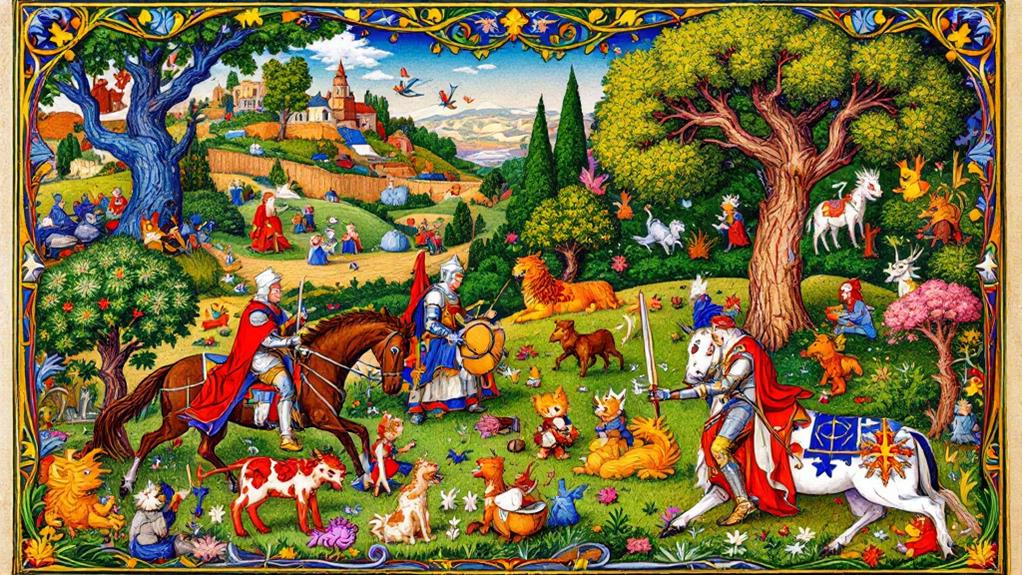
Engage yourself in the world of the Luttrell Psalter, and you'll uncover a masterpiece of medieval art that's as much a reflection of its time as it is an artistic marvel. This 14th-century manuscript, commissioned by Sir Geoffrey Luttrell, offers a fascinating glimpse into the social and religious life of medieval England. The Luttrell Psalter illustrations stand out for their vivid detail and lively colors, depicting scenes from daily life alongside biblical narratives. As you investigate the pages, you'll notice the unique blend of humor and piety, with fanciful creatures and grotesques interwoven among sacred texts.
The Luttrell Psalter symbolism is rich and varied, offering insight into the beliefs and customs of the period. The margins teem with depictions of rural activities, such as farming and feasting, symbolizing the interconnectedness of life and faith. These illustrations serve as both artistic decoration and a visual commentary on the text's spiritual themes. The manuscript's intricate design and complex iconography reveal the skill and creativity of its anonymous artists, who managed to capture the essence of a world where the sacred and the mundane seamlessly intertwined. It's an affirmation to medieval craftsmanship and imagination.
The Hours of Jeanne D'evreux
As you leave behind the lively world of the Luttrell Psalter, the delicate elegance of the Hours of Jeanne D'Evreux opens before you, offering a contrasting glimpse into another facet of medieval artistry. This exquisite manuscript, crafted for the French queen Jeanne D'Evreux, showcases the refined and intimate style of its creator, Jean Pucelle. Each page invites you to investigate a world of illuminated symbolism, where art and devotion intertwine seamlessly.
In the Hours, you'll notice Pucelle's masterful use of grisaille, a monochromatic technique that brings a subtle sophistication to the scenes. This artistic technique allows figures and forms to emerge with a three-dimensional quality, enhancing the narrative depth of biblical stories and daily prayers. The manuscript brims with marginalia, where fanciful creatures and delicate foliage dance alongside the text, inviting your eyes to wander through the pages.
Pucelle's attention to detail extends to the illuminated symbolism embedded in the manuscript. Each illustration, from the Annunciation to the Crucifixion, is laden with iconographic nuances that speak to the spiritual life of the medieval court. As you turn each page, the Hours of Jeanne D'Evreux reveals a world both intimate and divine.
Related posts