Exploring the Scientific and Artistic Manuscripts of the Islamic Golden Age
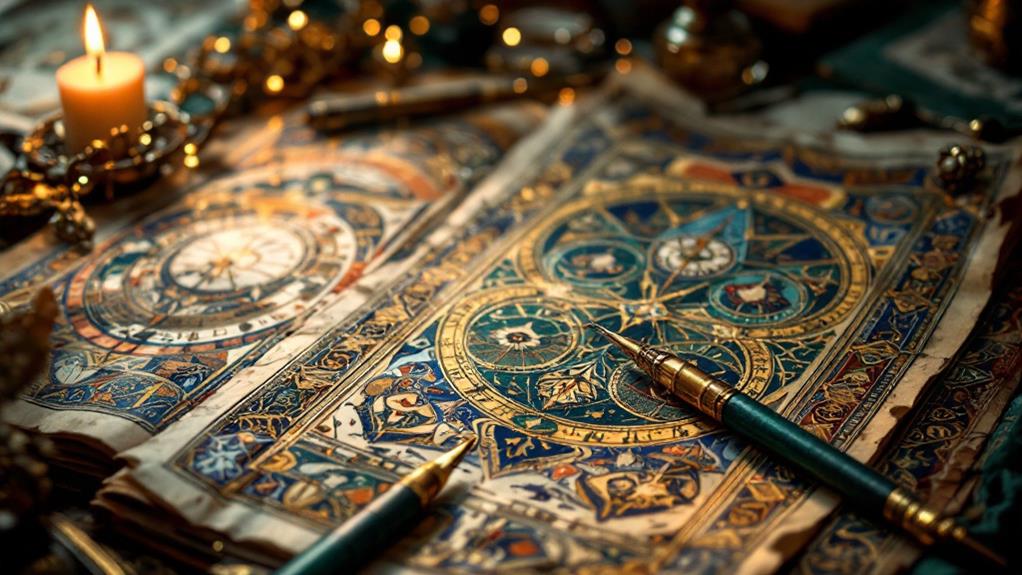
You're about to investigate the lively manuscripts of the Islamic Golden Period, where science and art beautifully intertwined. Picture pioneering scholars at the House of Wisdom in Baghdad, translating and expanding Greek, Persian, and Indian knowledge. You'll find alchemical texts, geographical treatises, and groundbreaking mathematical innovations alongside detailed botanical illustrations. Artistry flourished too, with illuminated manuscripts featuring exquisite calligraphy, geometric patterns, and Persian miniatures. These manuscripts didn't just advance scientific knowledge; they bridged cultures and influenced future generations. As you continue, you'll uncover how these works shaped our understanding of the world.
The Birth of Islamic Scholarship
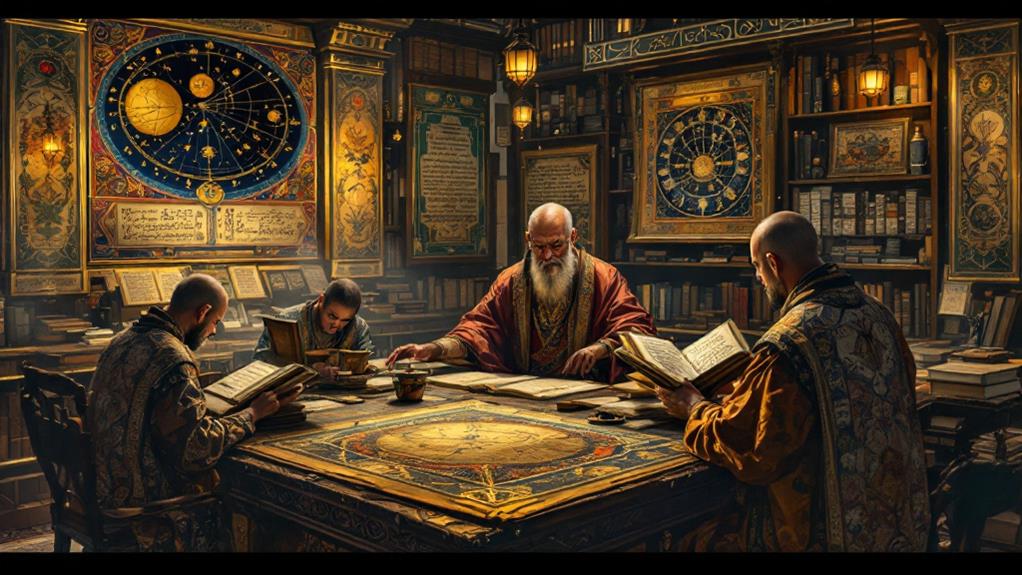
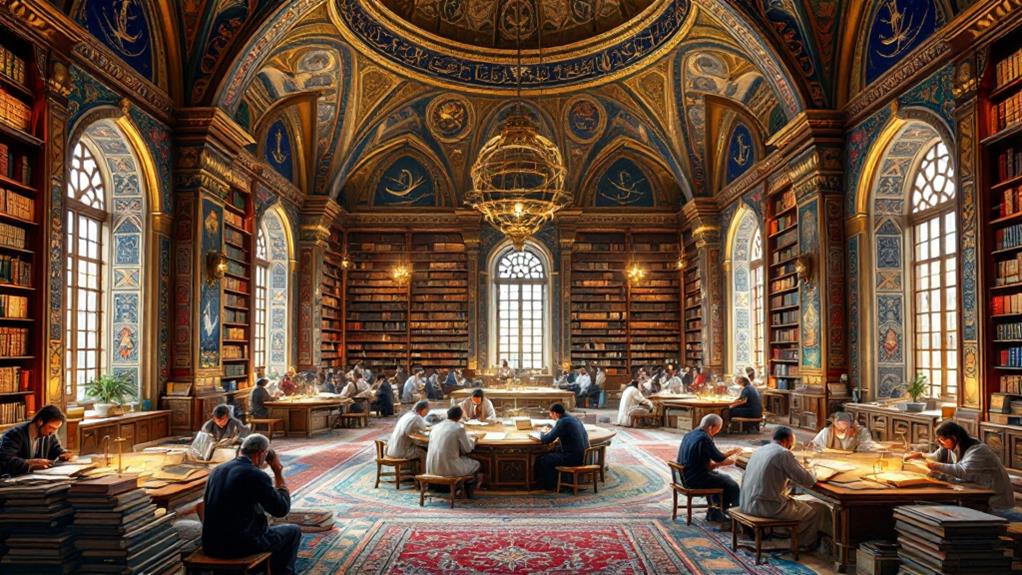
In the midst of the 8th century, the Islamic Golden Period sparkled into existence, marking the beginning of a remarkable time of scholarship. You immerse yourself in a world where cultural exchanges flourish, fueled by a rich historical context that encourages the growth of knowledge. Scholarly institutions, like the House of Wisdom in Baghdad, become the epicenters of learning. These centers play an essential role in manuscript preservation, ensuring that ancient texts endure through the years.
As you investigate further, you notice the dynamic interplay of interdisciplinary studies. Scholars from different fields collaborate, breaking boundaries to create new ideas. Patronage systems support these endeavors, with rulers and wealthy patrons funding scholars' pursuits. Translation movements become significant, as texts from Greek, Persian, and Indian sources are translated into Arabic, broadening intellectual horizons.
You're drawn to the regional variations in scholarship, with each area contributing unique insights and perspectives. Intellectual networks form, connecting scholars across the Islamic world, while educational practices evolve to nurture future generations. Through these efforts, the birth of Islamic scholarship lays a foundation for a lively intellectual culture that influences centuries to come.
Key Scientific Manuscripts
Your investigation leads you to the heart of Islamic scholarship's legacy: the key scientific manuscripts that have shaped our comprehension of the world. You uncover alchemical texts that reveal the early Muslim scientists' quest to transform substances and understand chemical processes. These manuscripts offer insights into experimentation long before modern chemistry emerged.
Geographical treatises captivate you with their detailed maps and descriptions of lands both near and far. These works played an essential role in broadening medieval geographical knowledge and provided a foundation for future explorers. Examine botanical illustrations that not only catalog plants but also describe their medicinal uses, bridging the gap between science and nature.
Historical chronicles in these manuscripts tell you the stories of past civilizations, documenting achievements and lessons learned. They serve as a reflection of the Islamic world's role in preserving and expanding human knowledge. Engineering designs showcase groundbreaking solutions to complex problems, from water management systems to architectural marvels.
Textile patterns, surprisingly, also find their place among these scientific manuscripts. These intricate designs reflect mathematical principles and demonstrate the blend of science and art. These manuscripts, diverse and rich, continue to inspire and inform generations.
Artistic Techniques in Manuscripts
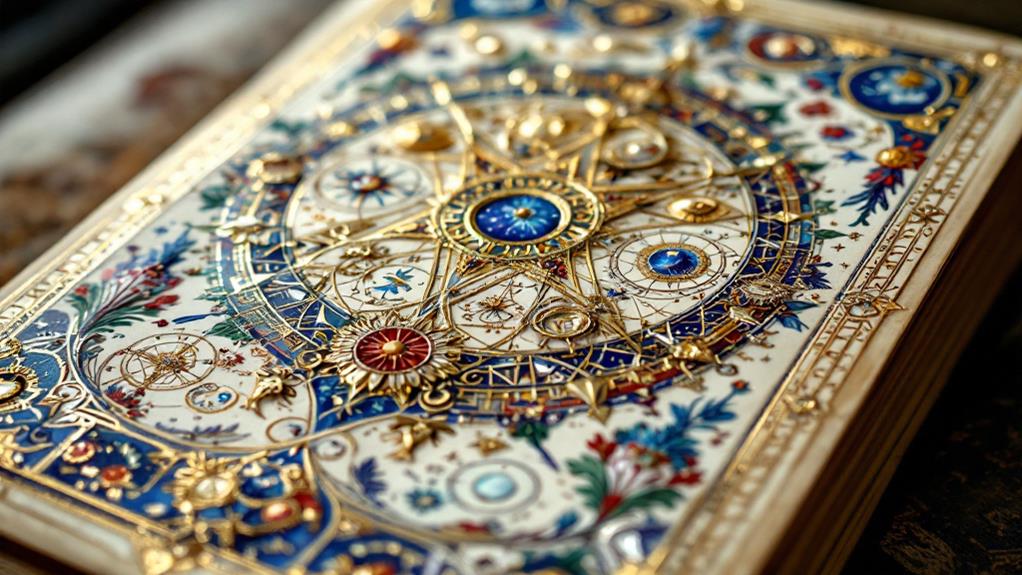
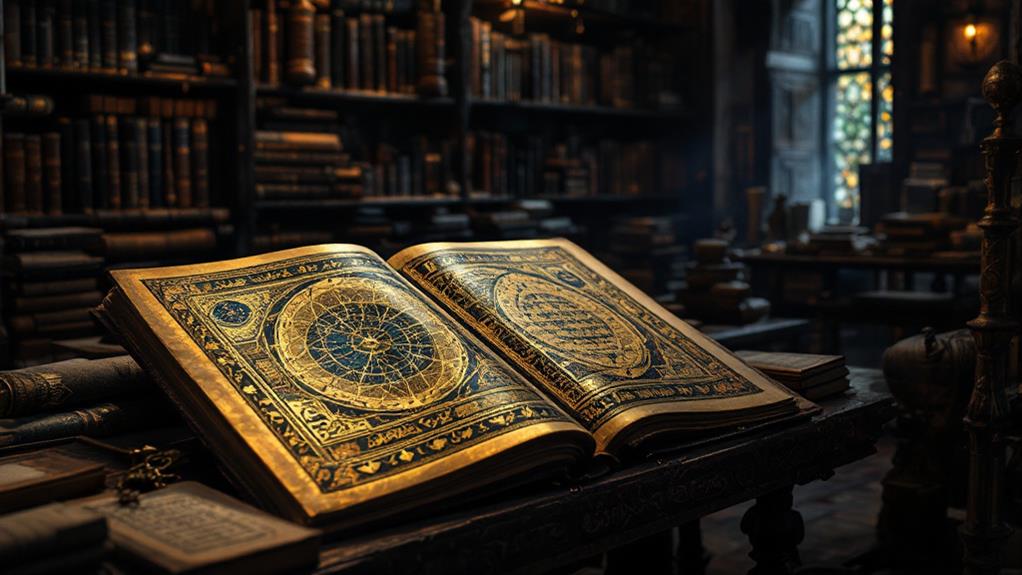
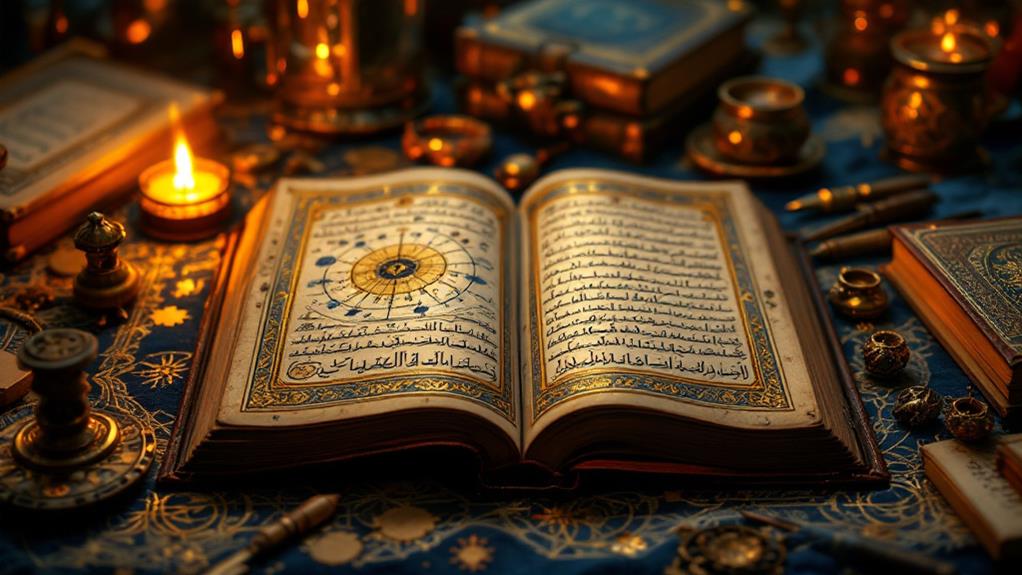
Illuminated manuscripts, with their lively colors and intricate designs, capture your imagination as you investigate the artistic techniques employed by Islamic scholars. These manuscripts aren't just texts; they're visual masterpieces brought to life through skilled illumination techniques. You'll notice the vivid use of gold and rich pigments, which transform simple manuscripts into stunning works of art. The intricate geometric patterns and floral motifs often found in these documents reflect the Islamic aesthetic, emphasizing symmetry and precision.
As you examine deeper, you'll find that the choice of binding materials also played an essential role in the manuscript's artistic allure. Islamic binders used high-quality leather, often stamped or gilded, to protect these precious works. This attention to detail guaranteed that the manuscripts were both durable and visually appealing.
Additionally, the calligraphy itself, an art form unique to Islamic culture, adds another layer of beauty. Master calligraphers painstakingly crafted each letter, confirming that text and design harmonized perfectly. In every stroke and curve, you can see the dedication to preserving knowledge in a way that celebrates both scientific thought and artistic expression. Each manuscript is a reflection of the period's creativity and innovation.
Mathematical Innovations
The Islamic Golden Age was a period marked by remarkable mathematical innovations that continue to influence the world today. You can appreciate the depth of these contributions by investigating diverse areas. Here's a quick look at some of the most impactful innovations:
- Algebraic Concepts and Numerical Systems: You'll find that Islamic mathematicians, like Al-Khwarizmi, laid the groundwork for modern algebra. They introduced sophisticated algebraic concepts and numerical systems, including the use of zero, which are crucial for calculations today.
- Trigonometric Advancements and Geometric Patterns: Islamic scholars made significant strides in trigonometry, developing advanced mathematical notation that helped solve complex geometric problems. These advancements facilitated the creation of intricate geometric patterns, which are not just artistic but also mathematically precise.
- Calculus Origins and Optimization Techniques: While calculus as we understand it wasn't fully developed until later, its origins can be traced back to Islamic scholars who examined optimization techniques. By studying change and motion, they set the stage for future advancements in this area.
These innovations, alongside studies in mathematical astronomy, fractal geometry, and number theory, highlight the age's profound influence on mathematics, shaping the tools and techniques we utilize today.
Astronomy and Astrological Works
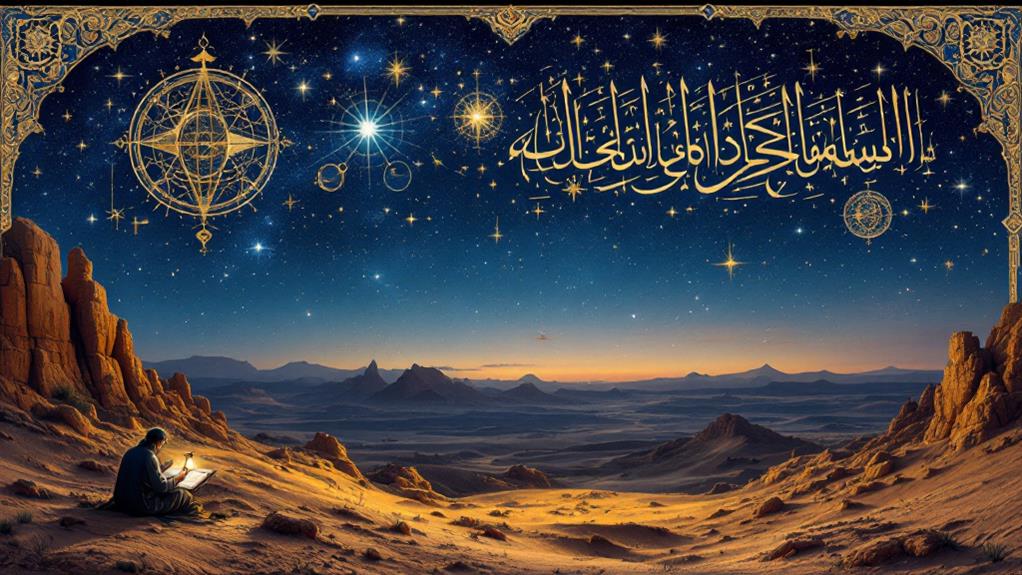
Many might not realize how deeply intertwined astronomy and astrology were during the Islamic Golden Age, yet their combined study propelled significant advancements in both fields. You'd find scholars carefully observing planetary alignments and recording their findings in extensive star catalogues. These efforts weren't just academic; they served practical purposes like celestial navigation, which was vital for trade and discovery.
By visiting the Islamic observatories, you'd witness astronomers using sophisticated astronomical instruments to track lunar cycles and chart zodiac influences. These instruments, such as the astrolabe and armillary sphere, enabled precise measurements and predictions that were invaluable for both timekeeping and religious practices.
Astrological charts from this period reveal how scholars believed planetary movements affected earthly events. They thoroughly mapped the heavens, creating detailed diagrams that linked celestial phenomena with human affairs. These works reflect a belief system where the cosmos was seen as a grand, interconnected web.
The manuscripts from this time show a fascinating blend of science and mysticism, where the quest to understand the universe went hand in hand with interpreting its spiritual significance. Through these texts, you're reminded of a time when the stars guided explorers and enlightened scholars alike.
Medical Texts and Illustrations
Amid the flourishing intellectual landscape of the Islamic Golden Age, medical texts and illustrations emerged as vital contributions to the field of medicine. You'll find that scholars of this period didn't just rely on ancient remedies but expanded upon them with groundbreaking revelations. They crafted detailed anatomical illustrations that provided a clearer understanding of the human body. These visual guides became indispensable tools for physicians and students alike, enhancing the accuracy of surgical techniques and improving disease prevention strategies.
Let's examine some key aspects of these medical advancements:
- Holistic Approaches: Practitioners emphasized a balanced lifestyle with herbal treatments and dietary recommendations to maintain health and prevent illness.
- Medical Ethics: Texts from this age stressed the importance of moral principles in medical practice, ensuring patient care remained a top priority.
- Pharmacological Texts: Scholars documented extensive knowledge about medicinal plants and compounds, guiding effective treatment and prevention methods.
You'll also appreciate how these manuscripts highlighted the significance of integrating science and compassion. By focusing on thorough care, these medical texts not only advanced surgical techniques but also shaped a legacy of medical ethics and holistic approaches that continue to influence modern medicine.
Philosophy and Logic Manuscripts
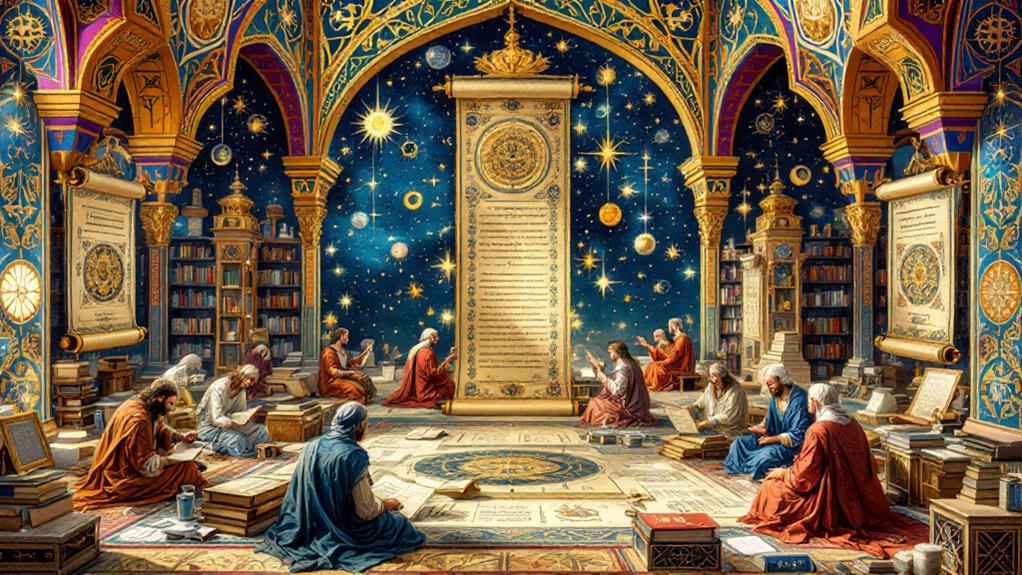
You might be amazed at how the Islamic Golden Age wasn't just a hub for scientific achievements but also a renaissance of thought in philosophy and logic. During this period, Arabic philosophers weren't only translating Greek works; they were expanding on them, engaging in dynamic philosophical debates that challenged existing notions. These scholars probed into logical reasoning, crafting new methods and frameworks that influenced Western thought for centuries.
As you investigate these manuscripts, you'll find a wealth of knowledge addressing ethical frameworks and their application to daily life and governance. The works often juxtaposed religious beliefs with philosophical inquiry, seeking harmony between faith and reason. Metaphysical inquiries were at the forefront, as philosophers like Al-Farabi and Avicenna pondered the nature of existence and the universe's origins.
Epistemological questions, such as the nature and scope of knowledge itself, were hot topics. Manuscripts from this age reveal a rigorous analysis of how we understand what we comprehend. These texts are an indication of a thriving intellectual culture that didn't shy away from questioning and investigating the deepest aspects of human thought and understanding.
The Role of Calligraphy
Calligraphy wasn't just an art form during the Islamic Golden Age; it played a crucial role in the preservation and dissemination of knowledge. As you investigate the manuscripts of this period, you'll find that calligraphic styles were not merely decorative but held deep cultural significance. These manuscripts were often the primary means of recording scientific findings, philosophical debates, and religious texts, ensuring that information was transmitted across generations.
Consider the following aspects to appreciate the role of calligraphy:
- Aesthetic Appeal: Calligraphy added a visual beauty to manuscripts, making them more engaging. The intricate designs and flowing scripts captivated readers, encouraging them to examine the content further.
- Standardization of Texts: Different calligraphic styles helped standardize texts, ensuring that the information remained consistent and accurate as it spread across vast regions.
- Cultural Identity: Calligraphy served as a symbol of cultural pride and identity. It was a way to celebrate the rich heritage and intellectual achievements of the Islamic world.
Influence of Persian Miniatures
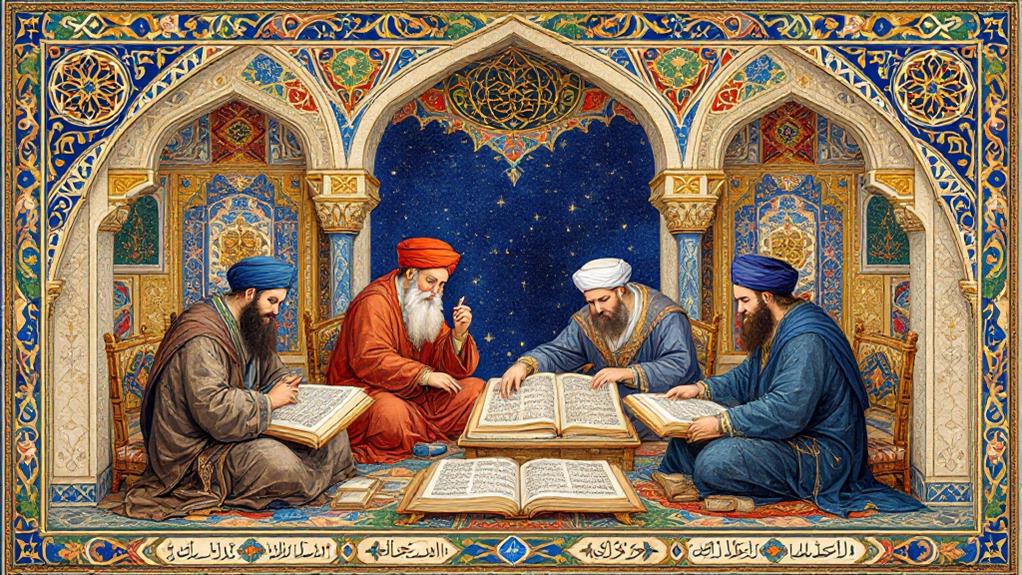
Persian miniatures, with their vivid colors and intricate details, profoundly influenced Islamic Golden Age manuscripts. As you investigate this rich artistic tradition, you'll notice how Persian artists masterfully used color and detail to convey complex narratives. These miniatures weren't just illustrations but fundamental elements of miniature storytelling. They brought text to life, providing visual context and enhancing readers' understanding.
In Persian art, symbolism played a crucial role. You'll find that each hue and figure carried a deeper meaning, adding layers to the narrative. For instance, the use of gold could signify divine presence, while intricate floral patterns might symbolize paradise. This Persian symbolism allowed artists not only to embellish the manuscript but also to communicate profound philosophical and spiritual concepts.
Legacy of the Manuscripts
The lively influence of Persian miniatures set the stage for the enduring legacy of Islamic Golden Age manuscripts. These manuscripts don't just belong to the past; they've shaped our world today. You're likely aware that manuscript preservation has been essential in keeping these gems alive for future generations. But beyond that, these texts have been a bridge for cultural exchange across borders, offering insights into different scientific, philosophical, and artistic traditions.
Here's why the legacy of these manuscripts matters:
- Knowledge Transmission: They played a significant role in transmitting scientific knowledge across cultures, impacting fields like medicine, astronomy, and mathematics.
- Artistic Inspiration: The artistic techniques developed during the Islamic Golden Age influenced later European art movements, enriching the global art narrative.
- Cultural Bridges: Through cultural exchange, these manuscripts fostered dialogue between different civilizations, contributing to a more interconnected world.
When you think about it, these manuscripts aren't just historical artifacts. They're living documents that have transcended time and space, connecting diverse cultures and peoples. By understanding their legacy, you appreciate how the past continues to illuminate the present and shape the future.
Related posts