Ethical Challenges in Manuscript Restoration: Balancing History and Preservation
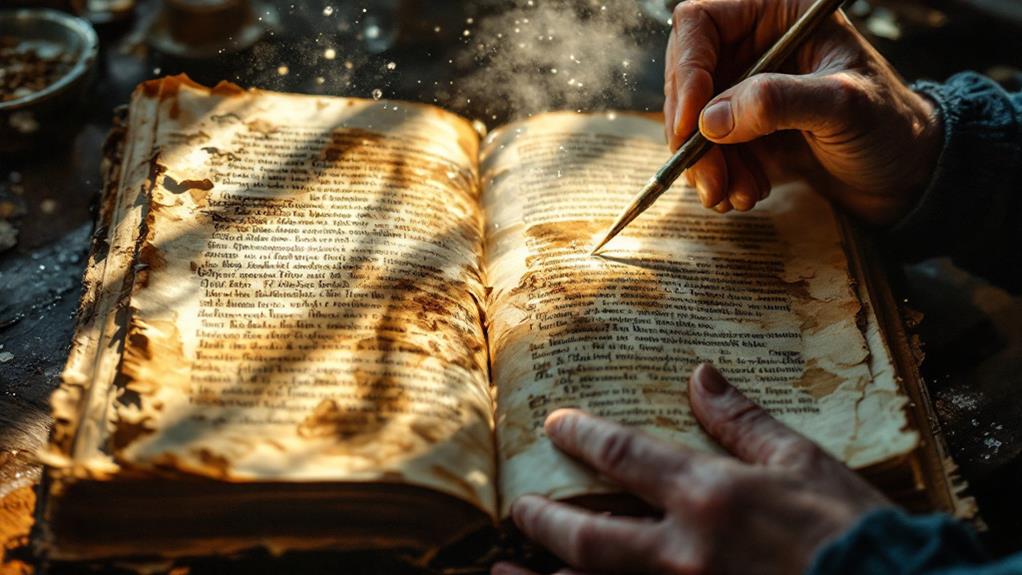
You're stepping into a complex arena with manuscript restoration, facing the challenge of preserving historical integrity. You'll need to understand the cultural context and historical value before starting any restoration. Traditional and modern techniques both have their merits, but balancing authenticity with preservation is essential. While technologies like digital imaging offer new possibilities, they can also raise questions about unintentional alterations. Documenting every restoration step will maintain transparency. Ethical dilemmas often arise, such as if to restore faded text or stabilize fire-damaged manuscripts. By exploring further, you'll gain insights into these intricate balancing acts.
Understanding Historical Significance
Understanding the historical importance of a manuscript is crucial before beginning its restoration. You need to grasp its cultural context and historical value to guarantee that the restoration process respects the manuscript's original significance. Delving into the manuscript's origins and purpose can reveal connections to significant events or figures, enriching its value and guiding your restoration choices. Recognize that you're not just handling old paper but a piece of history that tells a story of its time.
To fully appreciate the historical value, you should research who created the manuscript and why. Consider the time period's social, political, and religious influences that shaped its content and form. This understanding can help you avoid altering or obscuring elements that hold significant meaning. It's about preserving the authenticity and integrity of the original work.
Approaches to Restoration Techniques
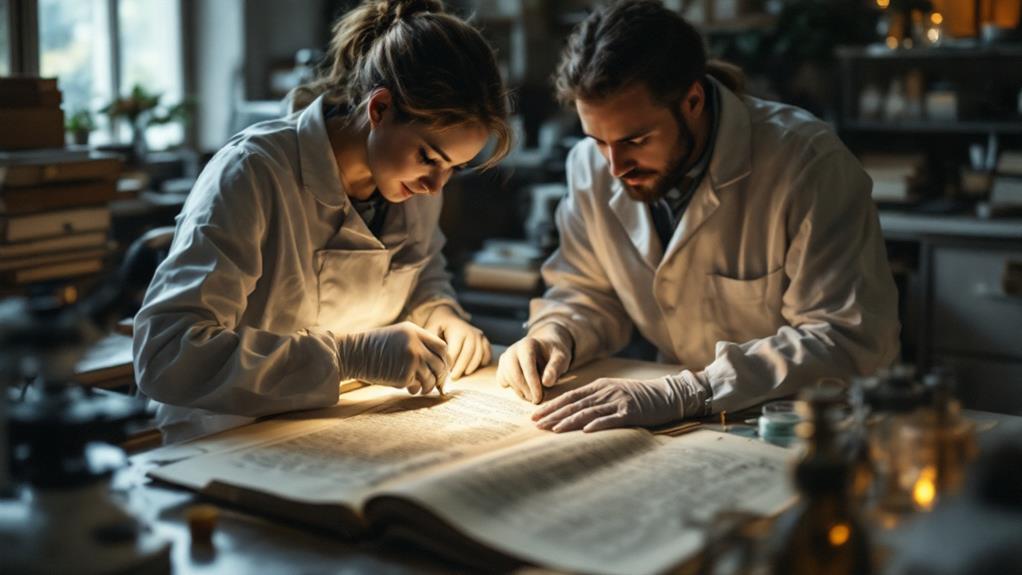
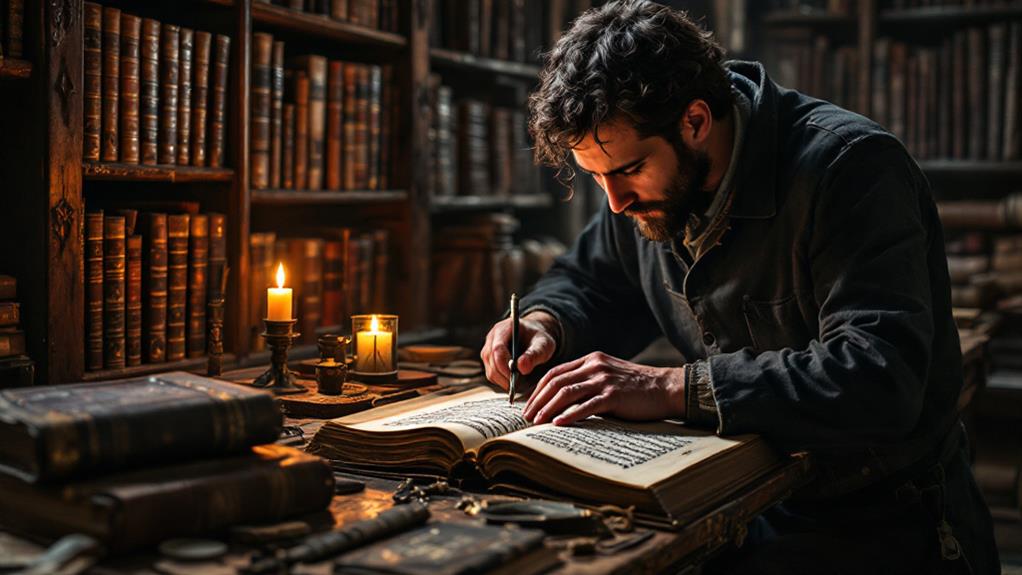
Restoration embodies both an art and a science, demanding a delicate balance between preserving a manuscript's original state and ensuring its longevity. As you navigate restoration techniques, you'll encounter a blend of traditional methods and modern innovations. Traditional methods, like manual cleaning and stitching, require patience and a deep understanding of the materials. These techniques are often revered for their adherence to conservation ethics, honoring the manuscript's historical integrity.
Modern innovations, however, introduce new tools and technologies that can improve precision and efficiency. From digital imaging to laser cleaning, these advancements offer you new ways to address deterioration without compromising the manuscript's essence. But remember, using such innovations requires skill development and a willingness to learn continuously.
Public perception plays a significant role in how restoration efforts are viewed. People often appreciate visible results but also expect the preservation of authenticity. To achieve this, interdisciplinary collaboration is essential. Collaborating with historians, chemists, and artists can provide diverse perspectives and solutions, ensuring the manuscript is preserved for future generations. Balancing these aspects is key to successful restoration, allowing you to contribute to both historical preservation and the advancement of restoration techniques.
Navigating Authenticity vs. Alteration
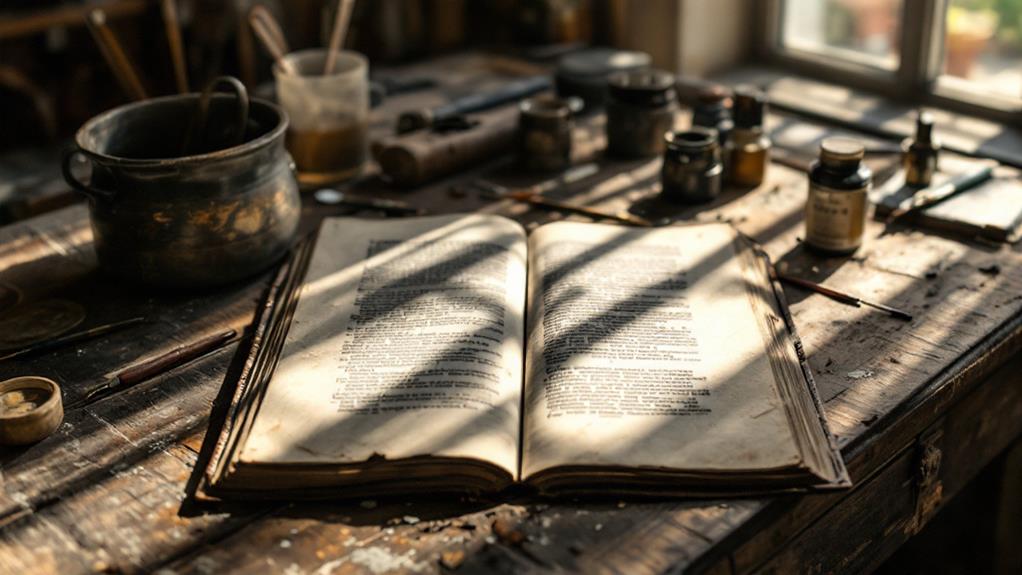
Striking a balance between authenticity and alteration is a fundamental challenge in manuscript restoration. You must conduct a thorough authenticity assessment to determine the original features of the manuscript. This involves understanding the historical context, materials used, and the document's significance. It's imperative to know what makes the manuscript unique before making any changes. Alterations, even if well-intended, can greatly impact the manuscript's historical value.
When considering alterations, you've got to weigh the alteration impact carefully. Adjustments might stabilize the manuscript physically, but they can also obscure or erase significant historical details. Every decision you make affects the manuscript's integrity. Ask yourself if the benefits of an alteration outweigh the potential loss of authenticity.
You'll often face tough decisions. Perhaps a manuscript requires repairs to prevent further decay, but those repairs might change its appearance or feel. It's crucial to document every step you take, ensuring that future restorers understand your decisions and can assess their impact over time. By maintaining transparency in your process, you help preserve not just the manuscript itself, but also the knowledge of its path through restoration.
The Role of Technology in Restoration
While grappling with the tightrope between authenticity and alteration, you'll find technology plays an influential role in manuscript restoration. Digital tools have transformed the process, offering new ways to preserve and study ancient texts without compromising their integrity. By using high-resolution imaging and 3D scanning, you can create detailed replicas that capture every nuance of the original document. This allows you to analyze and share manuscripts without risking damage to the fragile originals.
Conservation technology doesn't just stop at preservation. It also aids in uncovering hidden texts and understanding historical context. Techniques like multispectral imaging can reveal faded writing invisible to the naked eye, shedding light on previously lost information. However, with these advancements come questions about restoration ethics. How much should you rely on technology to restore a manuscript, and at what point does it shift from preservation to alteration?
Balancing these considerations requires a deep understanding of both the limitations and potential of technology. You must weigh the historical context against modern capabilities, ensuring that the essence of the manuscript remains intact. By doing so, you honor the past while embracing the future, creating a harmonious blend of tradition and innovation.
Case Studies of Ethical Decisions
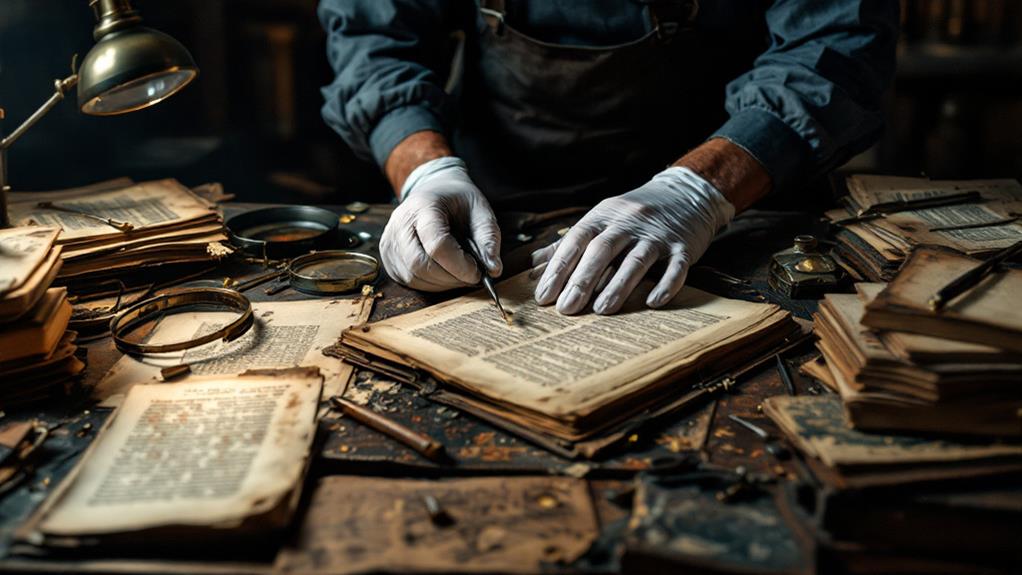
Ethical dilemmas often surface in the world of manuscript restoration, presenting challenges that require careful consideration and informed decision-making. When faced with restoration dilemmas, you must weigh the historical significance of a manuscript against the potential loss of authenticity. One notable case study involved the restoration of a medieval manuscript where the original binding was deteriorating. The ethical framework you adopt will guide you in deciding if preserving the original material outweighs the need for stabilization and usability.
Consider the case of a Renaissance-era manuscript with faded ink. You might be tempted to improve the legibility, but altering the original can lead to ethical concerns about authenticity. Your decision must balance the manuscript's historical integrity with the desire to make it accessible to readers and scholars.
In another instance, a rare manuscript had been damaged by fire. The ethical question here was whether to reconstruct the missing sections based on historical records or to preserve it in its damaged state. Your decision will involve a complex interplay of restoration dilemmas and ethical frameworks, ensuring that the manuscript's historical narrative remains intact while allowing for its continued preservation and study.
Related posts