Essential Techniques in Conserving Historical Folios and Manuscripts
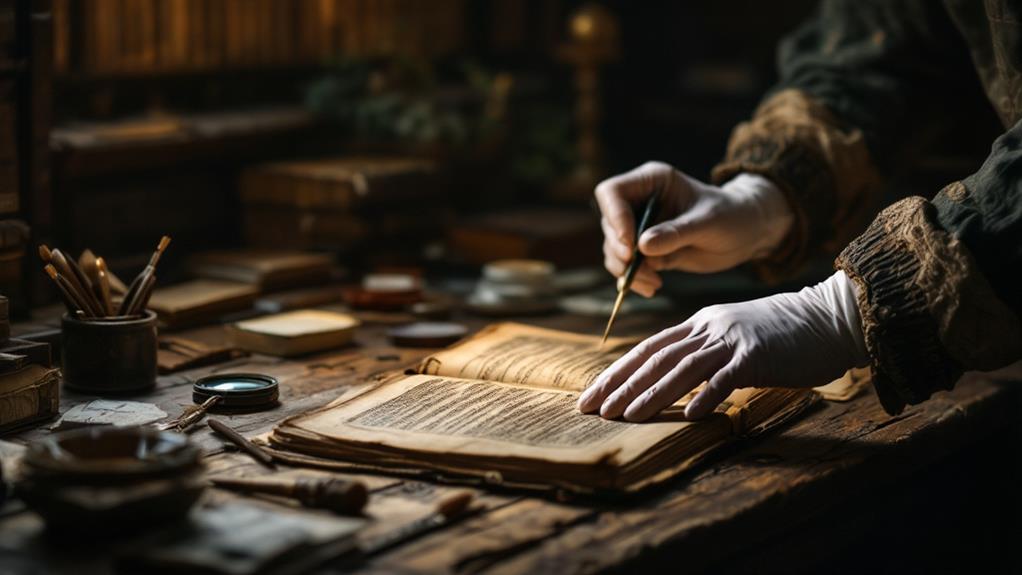
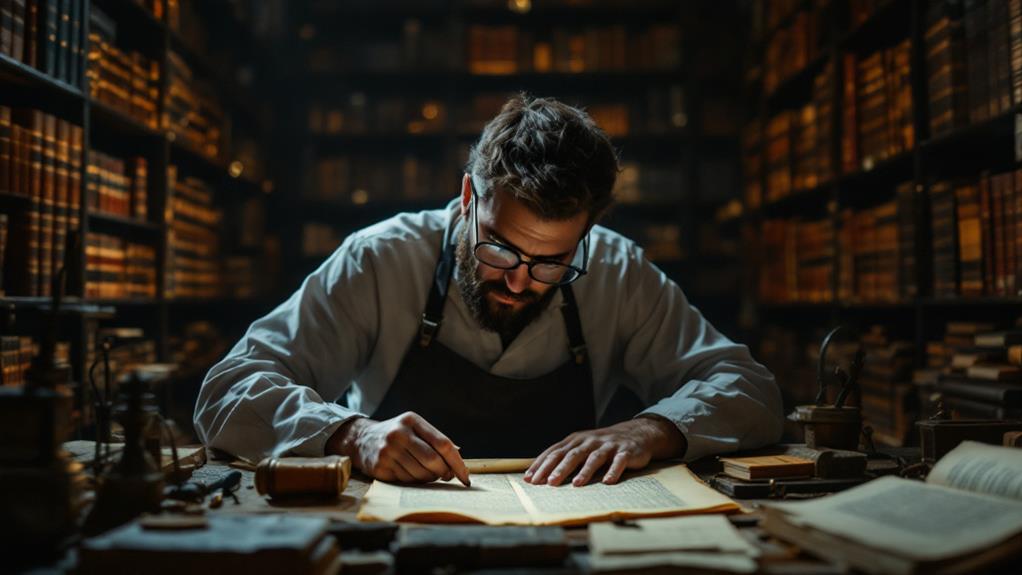
To conserve historical folios and manuscripts effectively, you need to initially understand their material compositions, like inks and paper fibers. Maintain controlled environments, with stable temperatures and humidity, to prevent damage. Handle documents with clean hands and store them in acid-free materials. Use gentle cleaning tools and reversible adhesives for repairs. Consider advanced techniques like deacidification and digitization for added protection. Collaborate with experts and continually educate yourself on the latest conservation methods. These steps will help you preserve the past while preparing for future challenges. Uncover more insights and techniques to guarantee these valuables endure.
Understanding Material Composition
What makes historical folios and manuscripts so delicate? It's all about their material composition. You'll find that the paper types used in these documents are often handmade and of varied quality. Unlike modern paper, which is typically made from wood pulp, older papers might include rag, cotton, or even hemp fibers. These materials can degrade differently over time, making them susceptible to wear and tear.
Next, consider the ink compositions. Historical inks often contained components like iron gall or carbon black, each with its own set of challenges. Iron gall ink, for example, can be corrosive, eventually eating through the paper it's written on. This makes understanding the ink's chemistry essential for preservation efforts. Knowing what kind of ink was used helps you anticipate potential issues, such as fading or bleeding.
Environmental Control Strategies
Preserving historical folios and manuscripts goes beyond understanding their material composition; it requires implementing effective environmental control strategies. You need to focus on temperature regulation and humidity control to guarantee these precious documents remain intact over time. Fluctuating temperatures can cause paper and ink to expand and contract, leading to warping or fading. Ideally, you should maintain a stable temperature around 65 to 70 degrees Fahrenheit.
Humidity control is similarly vital. Too much moisture can encourage mold growth, while too little can make materials brittle. Aim for a relative humidity of 45 to 55 percent. Use hygrometers to monitor levels and dehumidifiers or humidifiers to adjust them as needed. Remember, sudden changes in humidity can be more damaging than consistent levels outside the ideal range.
You should also consider using air filtration systems to reduce particulates and pollutants that can degrade manuscripts over time. Regularly check and replace filters to guarantee their efficiency. By implementing these strategies, you're taking significant steps to protect historical folios and manuscripts, making sure they remain preserved for future generations to study and enjoy.
Handling and Storage Best Practices
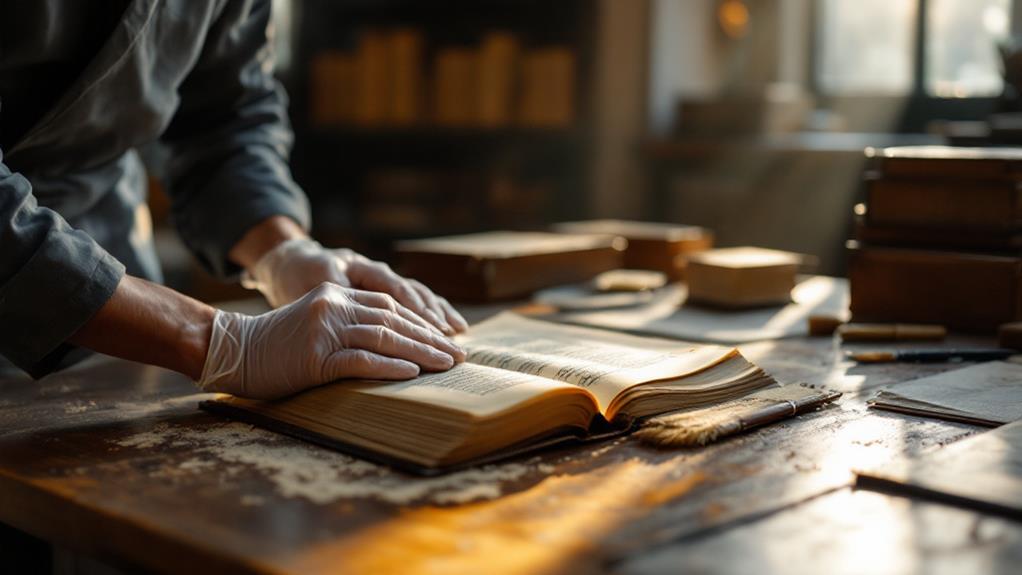
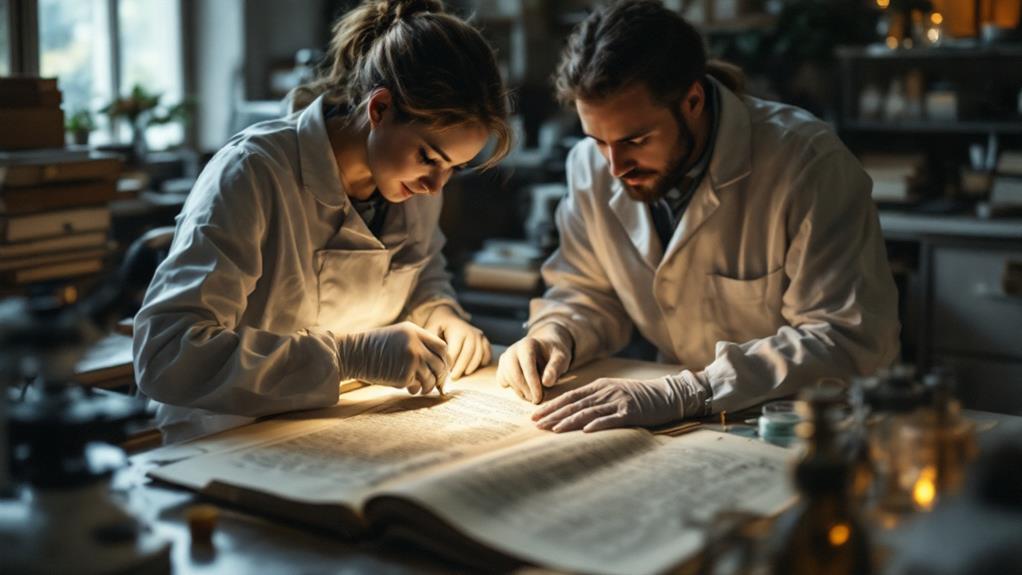
When handling historical folios and manuscripts, it's crucial to use proper techniques to prevent damage. Always wash and dry your hands thoroughly before touching any documents. To further protect these delicate items, you might want to contemplate wearing clean, white cotton gloves. This minimizes the risk of oils or dirt transferring onto their surfaces. When moving manuscripts, verify safe transportation by using folders or boxes made from acid-free materials. These containers provide support and prevent folding or bending, which could cause irreversible harm.
For storage, keep manuscripts in a stable environment, away from direct sunlight and fluctuating temperatures. Store them flat whenever possible, as this lessens the chance of stress on the binding or pages. Use specially designed shelving to accommodate the size and weight of these items, confirming they're easily accessible but well-protected.
When providing public access to these valuables, establish clear guidelines. Limit handling to trained personnel and think about displaying facsimiles to reduce stress on original documents. If the public must handle originals, supervise closely and provide instructions on correct handling techniques. By doing so, you'll preserve these invaluable pieces of history for future generations to appreciate and study.
Cleaning and Surface Care
Proper handling and storage lay the groundwork for the longevity of historical folios and manuscripts, but maintaining their surfaces is comparably significant. Surface cleaning guarantees that these precious items remain in ideal condition. Begin by evaluating the material; know what you're dealing with before diving into the cleaning process. Use gentle tools like soft brushes or microfiber cloths for dust removal. These tools are effective for cleaning without causing damage.
When performing surface cleaning, work in a well-lit space to easily spot areas needing attention. Always handle the manuscripts gently, supporting the entire document to prevent stress on the paper. For stubborn grime, a specialized eraser may be used, but test it on a small area initially to confirm it doesn't affect the ink or paper.
Repairing Tears and Damage
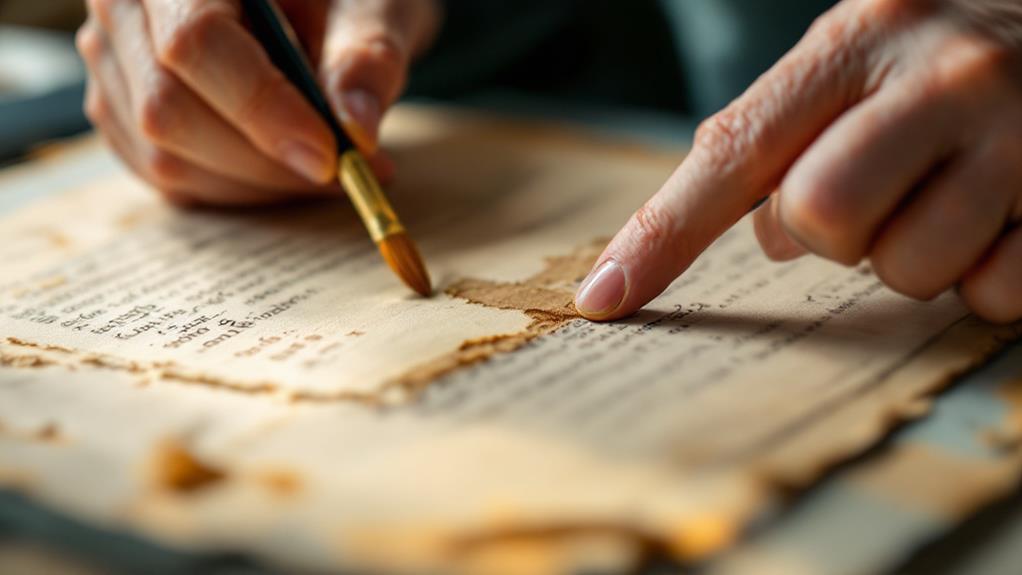
Addressing tears and damage in historical folios and manuscripts requires a careful approach to guarantee their preservation. Initially, you need to conduct a thorough damage assessment. Examine the material closely, noting every tear, crease, and worn spot. This step helps you understand the extent of the damage and prioritize what needs immediate attention.
Next, focus on tear mending. Choose appropriate materials like Japanese tissue paper, known for its strength and compatibility with historical documents. It's vital to select an adhesive that won't harm the paper or alter its appearance over time. Wheat starch paste is a popular choice due to its reversible nature, allowing future conservators to make adjustments if needed.
When performing tear mending, work slowly and systematically. Align the edges of the tear carefully before applying the adhesive. Use a fine brush to apply the paste, making sure it doesn't seep through and cause further damage. Once the adhesive is in place, gently press the tissue paper over the tear, smoothing out air bubbles or wrinkles.
Throughout this process, maintain a controlled environment with stable humidity and temperature levels. This will help prevent further deterioration and make sure your careful repair work remains effective for years to come.
Deacidification Processes
To preserve historical folios and manuscripts, deacidification is an important step in combating the effects of acidic degradation. When you engage in this process, you're working to restore the pH balance of precious documents, which can dramatically slow down decay. By applying chemical treatments, you can neutralize acids that threaten the integrity of these valuable items. However, it's imperative to adhere to conservation ethics, ensuring that the methods you use don't compromise the historical significance of the materials.
To implement deacidification effectively, start by examining case studies that highlight successful interventions. These provide insight into proven techniques and help guide your approach. Monitoring techniques are crucial; they allow you to track changes in pH balance over time, ensuring your efforts meet archival standards. Consider preventive measures as well, like storing documents in acid-free environments, to maintain their condition.
While deacidification is a significant part of conservation, bear in mind that it's not a one-size-fits-all solution. Each manuscript may require a tailored approach based on its unique characteristics. By prioritizing these methods, you'll play a key role in preserving our cultural heritage for future generations.
Advanced Restoration Techniques
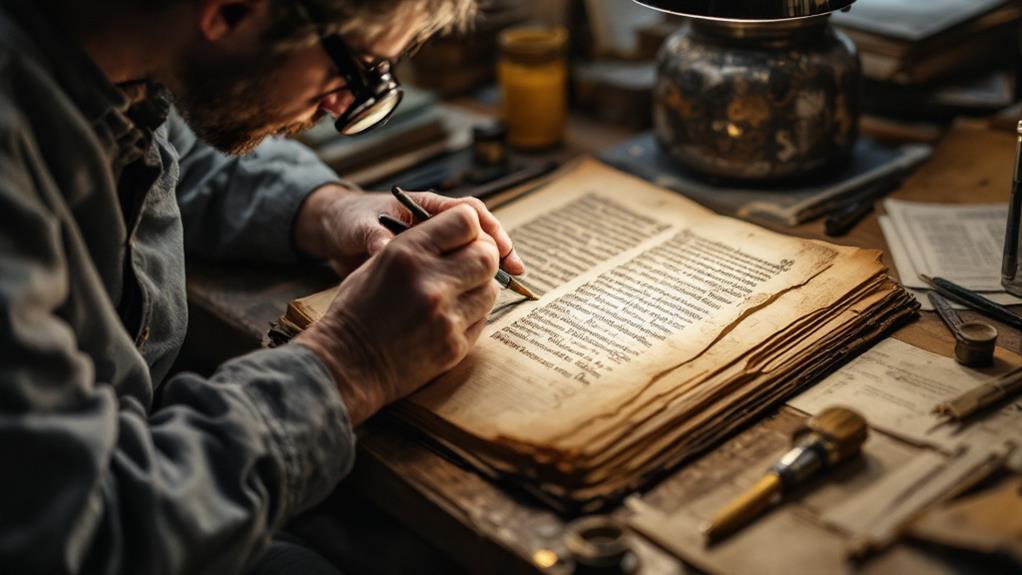
In relation to advanced restoration techniques, one vital aspect is understanding the unique needs of each manuscript or folio. Every piece has its own history and damage that require tailored approaches. Begin by evaluating the condition of the manuscript. You'll need to take into account the materials used, the extent of deterioration, and any previous conservation efforts. This assessment guides your decision on if to use chemical treatments or other methods.
Chemical treatments can stabilize and strengthen paper fibers, but they require precision and expertise. You might use these treatments to remove harmful acidic residues, thereby preventing further decay. It's important to test these chemicals on a small area initially to verify they won't cause additional damage.
Binding techniques are also significant in restoration. If a manuscript's binding is damaged, you'll need to repair or replace it carefully to guarantee the document's longevity. Techniques like resewing or re-backing can offer structural support without compromising the manuscript's historical authenticity.
Advanced restoration is both an art and a science. By combining chemical treatments with skilled binding techniques, you can restore manuscripts to their former glory while preserving their historical integrity.
Digital Preservation Methods
While advanced restoration techniques focus on the physical preservation of manuscripts, digital preservation methods offer a complementary approach that guarantees access and protection against further deterioration. By digitizing these historical documents, you make certain that their contents remain accessible to future generations. Digital archiving involves creating high-resolution scans or photographs of each page, capturing even the smallest details. This process helps you create a faithful digital representation of the original manuscript, which can be shared and studied without risking damage to the physical item.
To guarantee the long-term usability of these digital files, you must adhere to metadata standards. Metadata provides crucial information about the document, such as its origin, author, and date of creation. This information not only aids in searching and sorting digital archives but also assures that the context of the manuscript is preserved alongside its content. By applying consistent metadata standards, you make it easier for researchers to locate and interpret these digital resources.
Ultimately, digital preservation methods complement physical conservation efforts by broadening access and safeguarding historical manuscripts in the digital domain, ensuring that they endure for future analysis and appreciation.
Collaborating With Experts
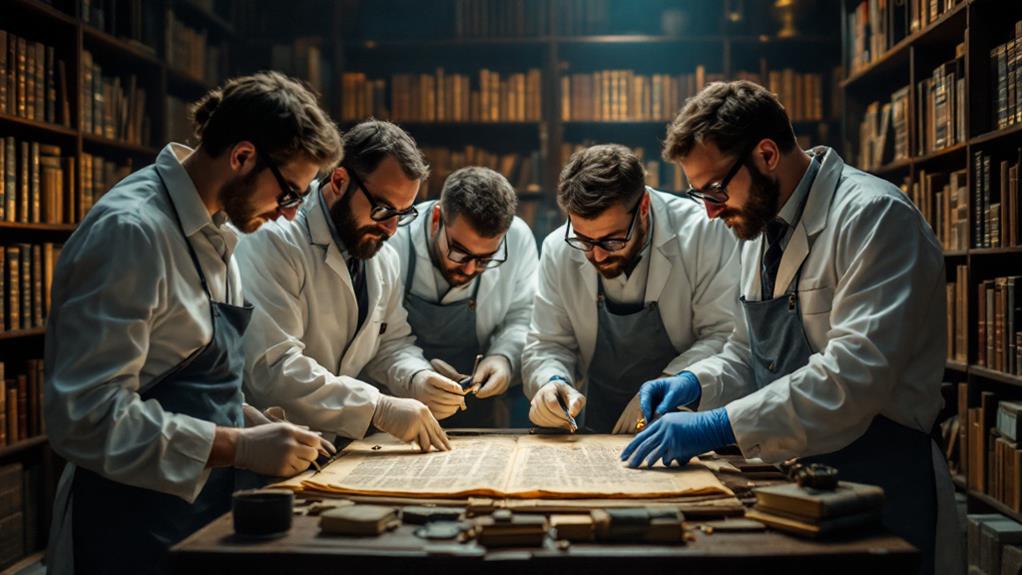
Expertise from seasoned conservators, historians, and archivists plays an essential role in the effective preservation of historical folios and manuscripts. When you collaborate with these experts, you're tapping into a wealth of knowledge that can greatly improve your conservation efforts. Expert partnerships allow you to address complex preservation challenges with creative solutions. By engaging in interdisciplinary collaboration, you bring together different perspectives and skills, guaranteeing a thorough approach to conserving these invaluable documents.
When forming these collaborations, consider the following benefits:
- Diverse Expertise: Each expert contributes unique insights, improving the overall preservation strategy.
- Creative Techniques: Exposure to cutting-edge methods and materials can enhance conservation outcomes.
- Shared Resources: Access to specialized tools and facilities that you might not have individually.
- Networking Opportunities: Building relationships within the conservation community can open doors to future collaborations.
- Problem-Solving: Tackle unexpected challenges more effectively with a team of seasoned professionals.
These expert partnerships are essential for maintaining the integrity and longevity of historical collections. By fostering interdisciplinary collaboration, you guarantee that these cultural assets are preserved for future generations to study and appreciate, keeping their stories alive and accessible.
Continuous Education and Research
Staying abreast of the latest developments through continuous education and research is vital for anyone involved in conserving historical folios and manuscripts. Engaging in workshop programs and online courses can vastly improve your skills and knowledge. These platforms offer up-to-date techniques and insights into the field. Attending historical workshops and conservation seminars not only sharpens practical skills but also provides valuable networking opportunities with other professionals. This networking is fundamental for exchanging ideas and learning about new research findings.
Reading scholarly journals keeps you informed about cutting-edge research and methodologies. Such publications often highlight interdisciplinary studies, which can offer fresh perspectives on conservation challenges. Pursuing research grants allows you to investigate groundbreaking conservation projects and contribute to the field's advancement.
Participating in mentorship programs can connect you with experienced conservators who can guide your professional growth. They can offer personalized advice and share their hands-on experiences, enriching your understanding of the work. Don't underestimate the power of community outreach, either. Engaging with the public through lectures or workshops increases awareness of historical preservation's importance, fostering a community that values and supports your conservation efforts. This holistic approach guarantees you remain an effective and knowledgeable conservator.
Related posts