Decoding the Codex Gigas: The Largest Medieval Manuscript
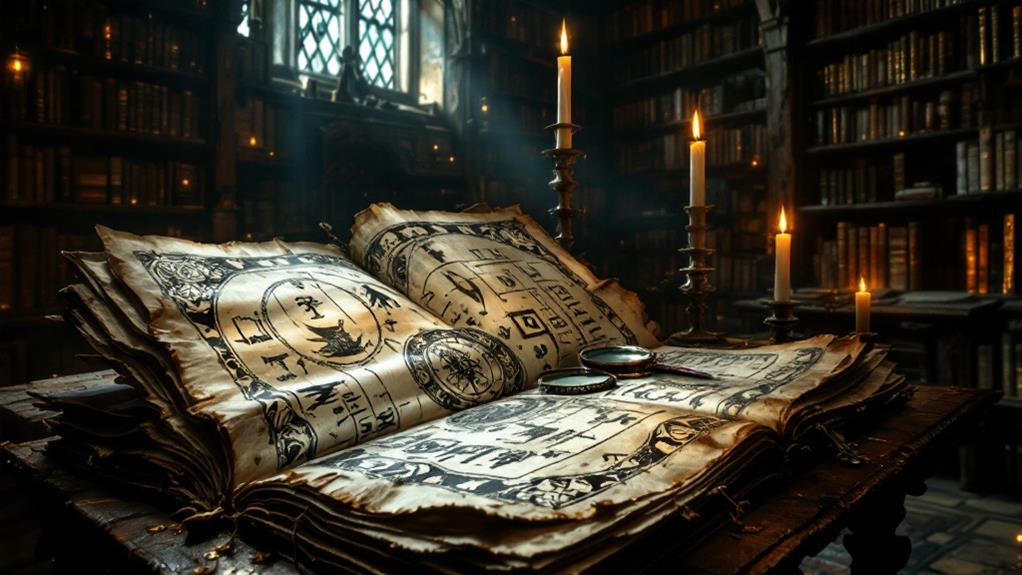
You're standing on the threshold of unraveling the mysteries of the Codex Gigas, the largest medieval manuscript crafted in the early 13th century at a Czech monastery. This monumental work, attributed to monk Herman the Recluse, contains the complete Latin Bible, historical records, and even magical formulas. Its infamous Devil illustration captivates with vivid imagery. Legends whisper of the Codex being written in a single night with the devil's pact. Remarkably durable, this book has survived centuries of turmoil. As you advance further, you'll uncover more secrets tightly bound within its thick wooden covers.
Origins and Creation
Amidst the mystique surrounding the Codex Gigas, its origins and creation remain a captivating enigma. You find yourself drawn into a world where historical context and manuscript techniques intertwine to create a masterpiece. Originating in the early 13th century, this colossal manuscript is believed to have been produced in the Benedictine monastery of Podlažice, located in what is now the Czech Republic. You can imagine the monk, purportedly Herman the Recluse, laboring tirelessly over years, perhaps decades, employing intricate manuscript techniques that were advanced for their time.
In this medieval timeframe, creating such a manuscript required not only artistic skill but also profound knowledge of bookbinding and script writing. You'd be amazed at how monks painstakingly prepared vellum made from animal skins, carefully inscribed text with quills, and illuminated pages with lively pigments. The historical context of the Codex Gigas reflects a period of religious devotion and scholarly pursuits, capturing the intellectual spirit of the Middle Ages. As you explore further, you realize that the methods and dedication involved in the creation of the Codex Gigas make it a truly remarkable achievement, shrouded in mystery and whispers of legend.
Physical Characteristics
As you shift your focus from the origins and creation to the physical characteristics of the Codex Gigas, you're struck by its sheer magnitude. This medieval manuscript, often called the "Devil's Bible," is the largest of its kind, measuring a colossal 36 inches tall, 20 inches wide, and nearly 9 inches thick. The sheer size of this tome demands attention and admiration, with its 620 pages crafted from high-quality vellum—parchment made from calfskin. It's estimated that the manuscript required the skins of approximately 160 animals, showcasing the remarkable parchment quality that has allowed it to endure through the centuries.
The binding techniques used in the Codex Gigas are similarly impressive. Its thick wooden covers are bound in leather, reinforced with metal fittings that safeguard its hefty pages. This robust construction has helped preserve the manuscript through different trials, including fires and wars. As you examine the Codex, you'll notice the careful attention to detail in its craftsmanship. The binding is not only functional but also a reflection of the skill and dedication of medieval artisans. Each element of its construction contributes to the Codex Gigas's enduring legacy as a marvel of medieval bookmaking.
Contents and Composition

The Codex Gigas isn't just remarkable for its size; its contents are also fascinating and extensive. When you explore this massive manuscript, you're investigating a compilation of diverse texts that offer insights into medieval European knowledge and beliefs. It contains the complete Latin Bible, which is central to its manuscript content, and is accompanied by multiple other texts. These include historical documents like "The Chronicle of Bohemia" by Cosmas of Prague, which provides a glimpse into the region's past.
You'll find medical texts too, such as "The Etymologies" by Isidore of Seville, offering a peek into medieval medicine and science. The manuscript also hosts magical and astrological formulas, reflecting the period's belief systems and superstitions. Each section of the Codex Gigas contributes to its historical significance, serving as a cache of medieval thought and culture.
As you sift through its pages, the Codex Gigas not only tells stories of a religious nature but also illustrates how interconnected different fields of knowledge were at the time. This makes it an invaluable resource for understanding the medieval mindset and scholarly pursuits.
The Devil Illustration
Exploring the Codex Gigas, you encounter one of its most fascinating features—an illustration of the Devil. This image stands out not just due to its size but because of its unique devil symbolism and the artistic techniques employed. The Devil is depicted with a green face, claws, and a forked tongue, positioned in a way that feels both menacing and enthralling. The page's stark contrast with its surrounding dark, empty spaces amplifies the sense of isolation and power.
- Green-skinned figure: The Devil's green skin symbolizes decay and corruption, setting an unsettling tone.
- Red, clawed hands: These hands reach out, perhaps a representation of temptation or danger.
- Forked tongue: This detail adds a layer of deceit and cunning, common in devil symbolism.
- Empty page surrounding: The lack of other elements highlights the Devil's dominance on the page.
The artist's technique uses bold lines and strong contrasts, drawing your eye directly to the illustration. The absence of other figures around the Devil creates an eerie atmosphere. This artistic choice guarantees the image remains unforgettable, reflecting the medieval fascination with the battle between good and evil.
Legends and Myths
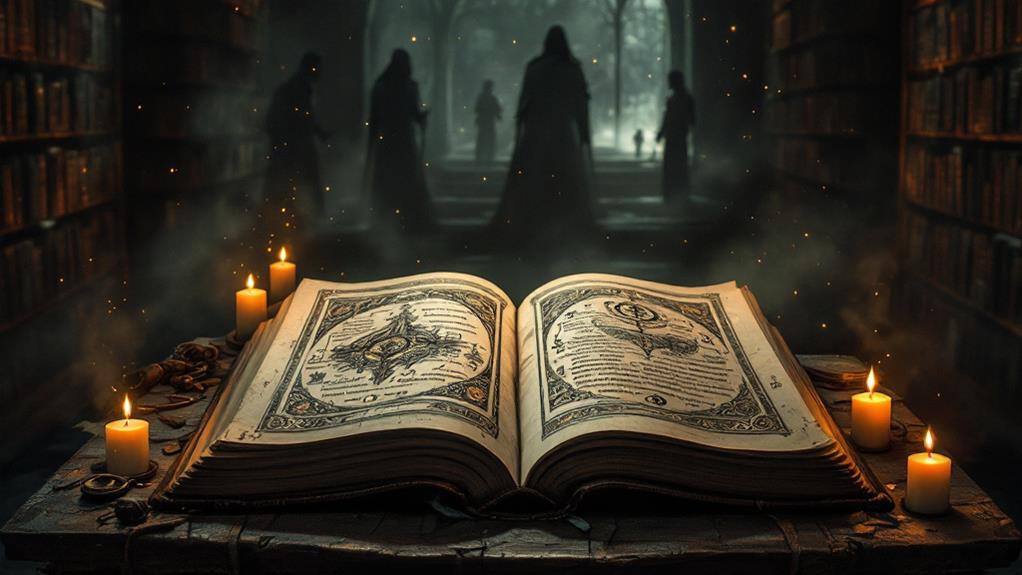
Throughout history, legends surrounding the Codex Gigas have captured imaginations, fueling debates and folklore. This giant book, often referred to as the "Devil's Bible," is shrouded in mystery and intrigue. Tales tell of a mysterious scribe who, in a single night, transcribed this massive tome, striking a deal with the devil himself to complete it. As you investigate these stories, you can't help but wonder if the giant book holds forbidden knowledge and ancient secrets, locked away from the prying eyes of the unworthy.
Some claim the Codex Gigas is a holy relic, a symbol of divine intervention, while others insist it's a cursed manuscript, tainted by its alleged infernal origins. The legends suggest that anyone who dares to possess it risks invoking its dark power, leading to misfortune or disaster. Despite these ominous warnings, the allure of the Codex Gigas remains irresistible to those with a thirst for the unknown.
As you probe these myths, consider the fine line between truth and fiction. Are the whispers of its past merely tales spun to explain the inexplicable, or do they hint at something more profound hidden within its pages?
Modern Analysis and Research
As myths swirl around the Codex Gigas, modern scholars and researchers apply scientific methods to unravel its mysteries. You'll find that digital imaging plays an essential role in this process. By capturing high-resolution images, researchers can examine the manuscript's intricate details without risking damage. This technology not only aids in textual analysis but also improves manuscript preservation for future generations.
Collaboration across disciplines is important. Scholars from diverse fields—history, art, theology—come together, pooling their expertise in interdisciplinary studies. This teamwork allows for a thorough understanding of the manuscript's historical context and content.
Imagine diving into this work:
- Magnified images revealing hidden annotations: Digital imaging uncovers subtle details invisible to the naked eye.
- Vibrant discussions among scholars: Experts share insights, challenging and refining each other's interpretations.
- Preserved parchment pages: Engaging in careful conservation efforts guarantees the Codex Gigas remains intact.
- Cross-referencing texts: Researchers compare the Codex's content with other historical documents to piece together its origins.
Such scholarly collaboration and groundbreaking methods continue to illuminate the Codex Gigas, transforming it from a mystical relic into a source of historical insight.
Related posts