Cultural Exchange and the Spread of Manuscripts Across Continents
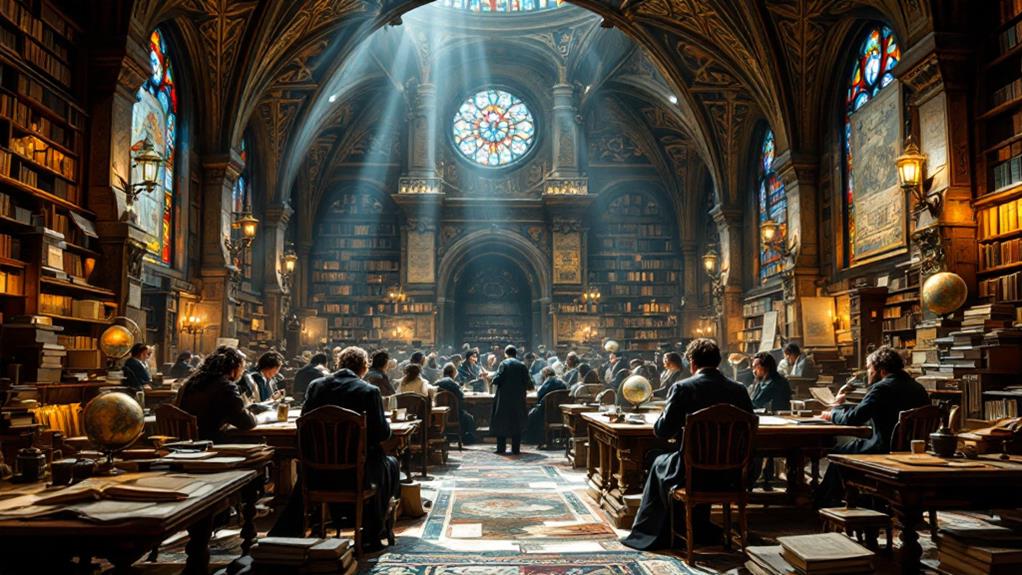
Imagine learning how ancient trade routes, like the Silk Road, weren't just for goods—they also spread manuscripts filled with groundbreaking ideas. As these texts traveled, they connected distant civilizations, carrying knowledge on math, astronomy, and medicine. During the Islamic Golden Era, cities like Baghdad became hubs for translating and sharing intellectual riches. Later, Europe's Renaissance thrived by reintroducing classical texts, sparking innovation. In Asia, cultures adapted manuscripts to local traditions, enriching societies. Today, digitization broadens access to these essential works. You'll uncover more about how these manuscripts acted as bridges in the fabric of human history.
Ancient Trade Routes and Manuscripts
While exploring the fascinating world of ancient trade routes, you'll uncover that they didn't just facilitate the exchange of goods; they were also crucial conduits for the dissemination of knowledge through manuscripts. One of the most notable examples is the Silk Road, a network of routes that connected the East and West. As you investigate the history of the Silk Road manuscripts, you'll realize how these documents were carried alongside silk, spices, and precious metals, weaving a tapestry of cultural exchange that transcended borders.
The Silk Road didn't just circulate luxury items; it had profound trade route influences on the spread of ideas. Manuscripts detailing advancements in medicine, astronomy, and mathematics traveled these paths, shaping societies far from their origins. Imagine the impact as a single manuscript, perhaps on papyrus or parchment, found its way from an ancient Chinese scholar to a European thinker, sparking new insights and innovations.
Your exploration through these ancient trade routes reveals how they served as the backbone for cultural and intellectual connections. The manuscripts they transported were more than just texts; they were vessels of human thought, bridging continents and enriching civilizations.
Manuscript Exchange in the Islamic World
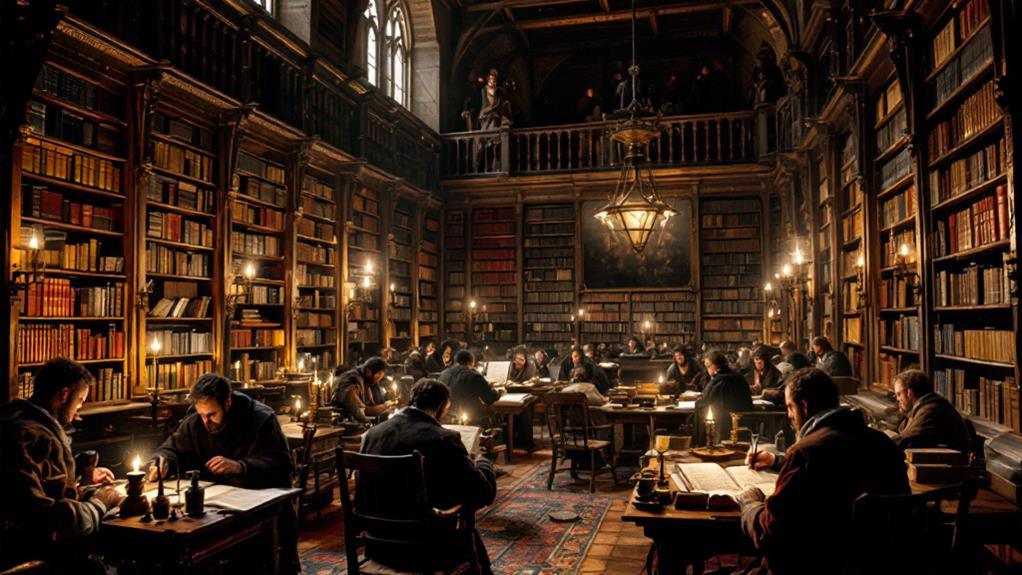
The narrative of manuscript exchange takes an intriguing turn as you explore the Islamic world's profound role in this cultural tapestry. During the Islamic Golden Period, spanning roughly the 8th to 14th centuries, the Islamic world became a vital hub for scriptural transmission and scholarly collaboration. You'd find that cities like Baghdad, Damascus, and Cordoba thrived as centers of learning, where scholars enthusiastically exchanged texts from different cultures. This lively environment fostered the translation of important works from Greek, Persian, and Indian sources into Arabic, preserving and enhancing knowledge for future generations.
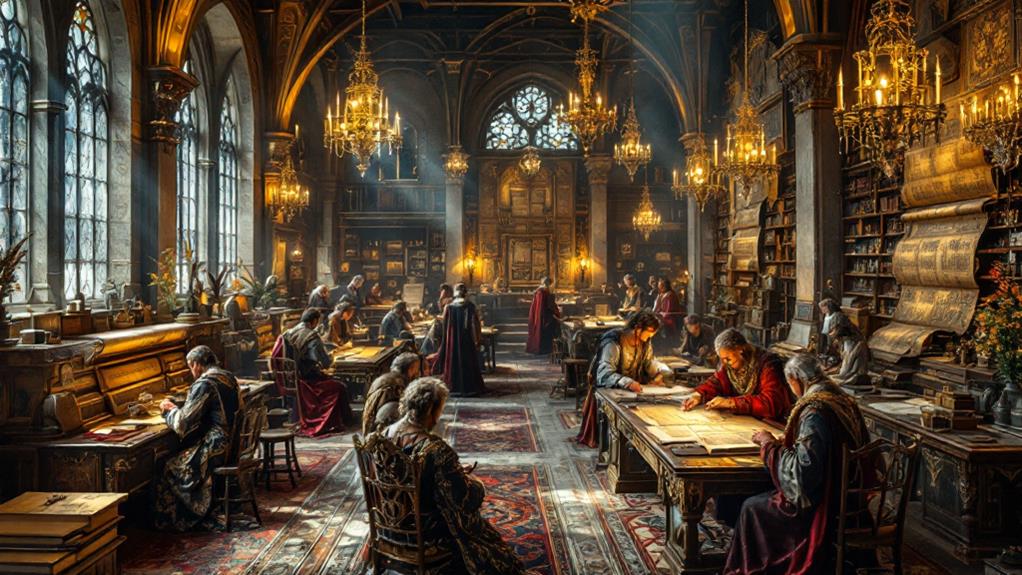
You'd appreciate how the House of Wisdom in Baghdad epitomized this intellectual fervor, serving as a guiding light for scholars who translated and expanded upon influential manuscripts. This period saw the development of advanced libraries that facilitated the movement and copying of manuscripts across vast territories, often through the hands of dedicated scribes. By engaging in this exchange, the Islamic world didn't just preserve ancient knowledge but also stimulated innovation in fields like mathematics, medicine, and astronomy. As you investigate deeper, you'll notice how this thriving manuscript culture laid the groundwork for future intellectual pursuits, transcending borders and inspiring diverse cultures globally.
European Renaissance and Textual Influences
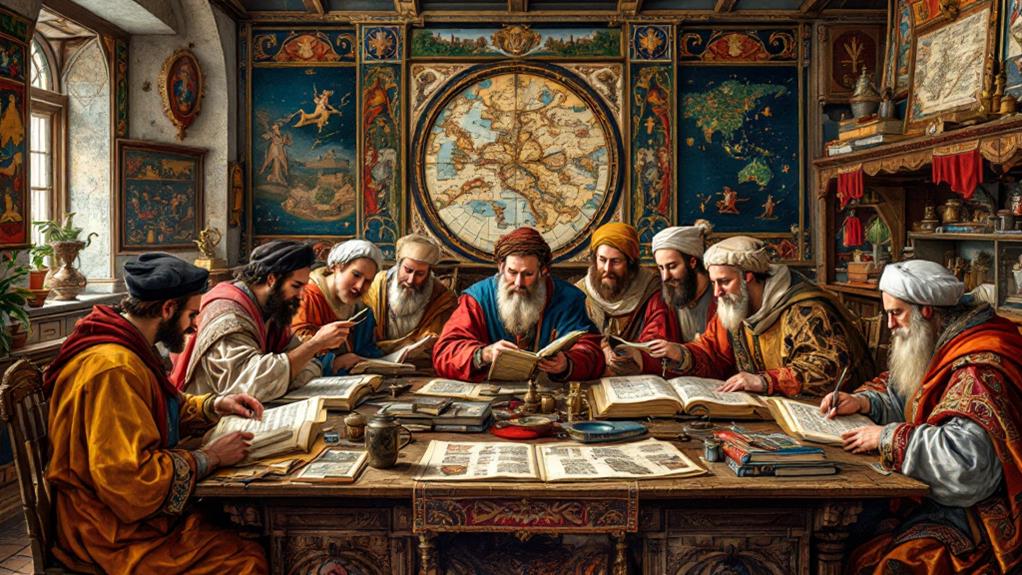
As the curtain rose on the European Renaissance, a wave of textual influences from the Islamic world began to sweep across the continent. You'd find that scholars keenly accepted these new ideas, which played a crucial role in shaping Renaissance humanism. This period marked a revival of classical learning, and texts that had been carefully preserved by Islamic scholars now found their way into European libraries and study halls.
You'd be amazed at how works by Greek and Roman thinkers, previously lost in Europe, were rediscovered through Arabic translations. These texts, once safeguarded in the Islamic world, were translated into Latin, sparking intellectual curiosity and encouraging critical thinking. This exchange didn't just revive ancient knowledge; it also fostered innovation, as scholars in Europe built upon these ideas.
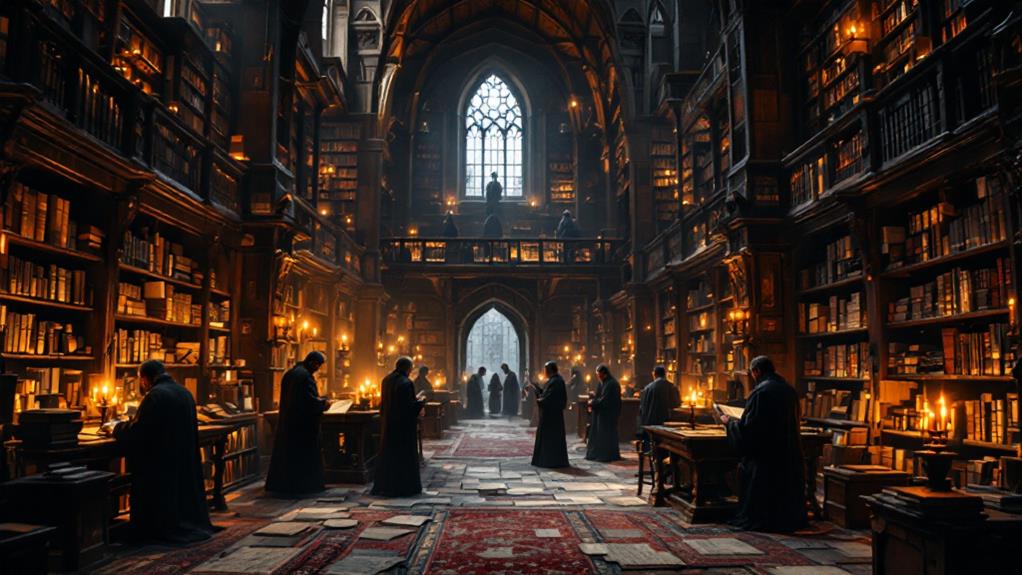
In this lively environment, textual preservation was essential. You'd notice scholars and patrons investing in the copying and dissemination of manuscripts. This guaranteed that the newfound knowledge spread across Europe, fueling further advancements in art, science, and philosophy. As a result, the Renaissance wasn't just a rebirth of old ideas but a dynamic evolution, blending diverse cultural influences into something profoundly transformative.
Manuscripts in Asia and Cultural Transmission
Just as Europe experienced a renaissance through textual exchanges, Asia played an essential role in the cultural transmission of manuscripts. When you investigate the rich tapestry of Asian manuscripts, you'll uncover a world where scriptural traditions were carefully preserved and shared. These manuscripts weren't just static texts; they were dynamic carriers of culture, religion, and knowledge, influencing regions far and wide.
In Asia, scriptural traditions like Buddhism, Hinduism, and Confucianism spread through intricate networks of trade and communication. You'd notice how these traditions adapted to regional variations, molding themselves to local cultures while maintaining their core teachings. For example, Buddhist texts traveled along the Silk Road, reaching China, Korea, and Japan, where they were translated and adapted to suit local beliefs.
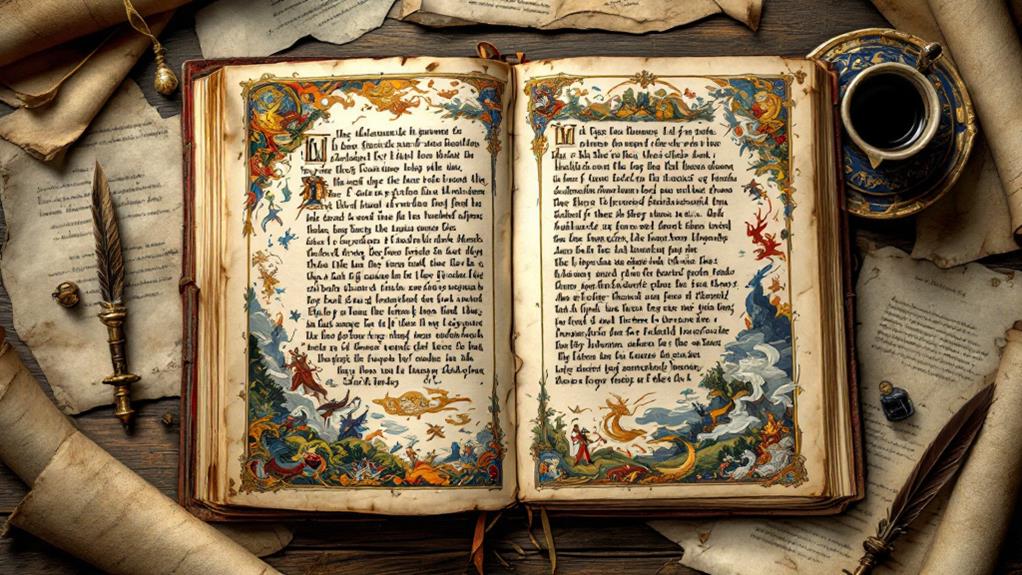
Moreover, each region developed its unique style of manuscript production. In India, palm-leaf manuscripts were prevalent, while in China, paper and woodblock printing became popular. As you examine these differences, you see how regional variations in materials and techniques led to distinctive manuscript cultures.
Modern Implications of Historical Manuscript Exchange

Many historical manuscript exchanges continue to shape our modern world in profound ways. You'll notice how digital preservation breathes new life into ancient texts, guaranteeing they're accessible for generations. Manuscript libraries aren't just vaults of old books; they're active hubs of cultural diplomacy, fostering global collaboration. When you investigate these libraries, you're stepping into a world of shared knowledge and mutual respect, where countries come together to preserve and celebrate their literary heritage.
Through educational outreach, you can engage with manuscripts that tell stories of diverse cultures and histories. Such programs invite you to plunge into the past, offering insights into ancient civilizations and their contributions to our current society. Global collaboration extends beyond borders, as scholars and institutions work together to digitize and preserve these invaluable texts. This effort guarantees that the manuscripts, once confined to dusty shelves, are now part of a global conversation.
Manuscript exhibitions are another way you interact with these gems. They travel the world, showcasing the beauty and significance of these historical documents. You're not just observing history; you're participating in a dialogue that spans continents and centuries.
Related posts