Balancing Integrity and Restoration: Ethics in Manuscript Preservation
Balancing integrity and restoration in manuscript preservation requires a keen understanding of both ethical frameworks and preservation techniques. You're tasked with maintaining authenticity while using restoration to safeguard historical and cultural significance for future generations. Consider both the cultural context and the creator's intent to guarantee choices align with historical accuracy. Utilize modern technologies and sustainable techniques to extend a manuscript's life without compromising its original essence. Document each step to guarantee transparency and engage communities in the preservation process. As you navigate ethical dilemmas, you'll uncover deeper insights into the interplay of integrity and restoration.
Understanding Manuscript Integrity
When preserving manuscripts, understanding their integrity is vital to maintaining their original context and value. You need to appreciate how manuscript authenticity plays a significant role in this process. It's not just about keeping the physical document intact; it's about ensuring the content, form, and cultural significance remain true to their origins. By focusing on manuscript authenticity, you can better appreciate the document's historical narrative and its creator's intent.
A sound preservation philosophy guides you in making informed decisions about how to handle these delicate items. You must consider the materials used, the historical context, and the intended use of the manuscript. This philosophy helps you prioritize what aspects of the manuscript need the most protection and how best to achieve that without compromising its authenticity.
As you navigate the complexities of manuscript preservation, balance is key. You have to weigh the importance of maintaining the manuscript's original state against the necessity of ensuring its longevity. By doing so, you preserve not only the physical artifact but also its inherent historical and cultural value. Every decision you make should reflect a commitment to safeguarding the manuscript's integrity for future generations.
The Role of Restoration
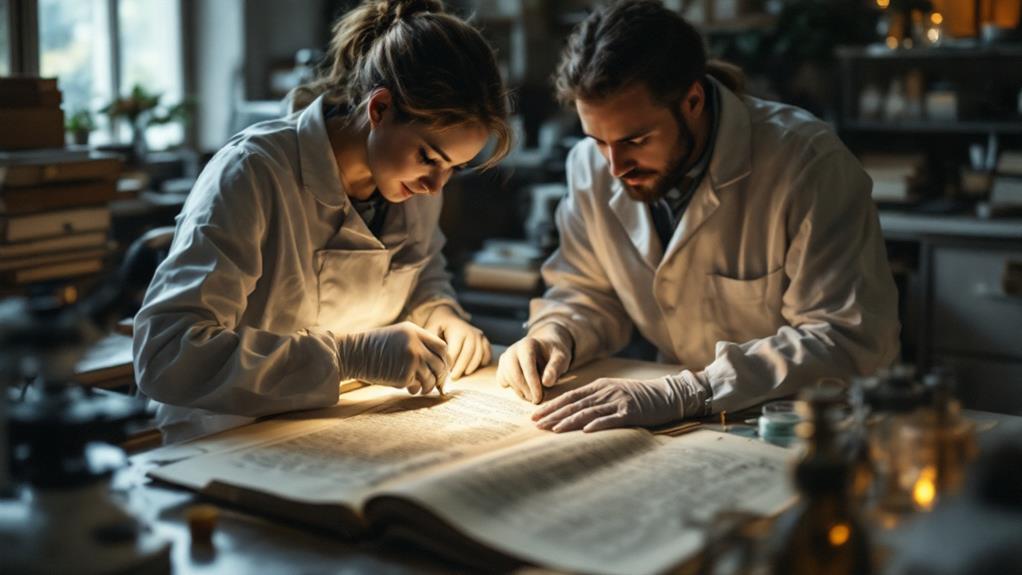
Restoration plays a vital role in manuscript preservation, bridging the gap between protection and revival. When you commence a restoration project, restoration ethics become your guiding principles. They help you balance aesthetic considerations with the need to maintain material authenticity. You're tasked with enhancing the visual appeal of a manuscript while preserving its original materials as much as possible. This requires careful adherence to intervention guidelines, making sure that every action aligns with established conservation philosophy.
In your role, you're not just fixing what's broken; you're preserving history. Historical accuracy must be at the forefront of your decisions, allowing you to protect the manuscript's story without rewriting it. Artistic integrity is similarly important, as you endeavor to honor the original creator's intent while repairing and reviving the piece.
Transparency in treatment is vital, too. You should document every step, offering a clear record of what changes were made and why. This transparency not only respects the manuscript's history but also provides future conservators with valuable insights. By respecting these elements, you guarantee that restoration isn't just about repair, but about preserving the manuscript's essence for generations.
Historical Context and Ethics

Understanding the historical context of a manuscript is frequently vital to ethical preservation. When you approach a manuscript, immerse yourself in its past to uncover the layers of meaning embedded within. This historical perspective guides you in making informed decisions, guaranteeing that each step in preservation respects the document's path. By recognizing the cultural, social, and political factors that shaped its creation and use, you align your efforts with ethical frameworks that honor its significance.
Incorporating historical perspectives isn't just about gathering data; it's about crafting a narrative that respects the manuscript's origins. You should consider who created it, why, and for whom. These details inform the ethical frameworks you adopt, making certain that preservation efforts don't erase significant aspects of its history. Balancing integrity and restoration means respecting the manuscript's original intent while acknowledging the changes it underwent over time.
Your task, then, is to preserve not just the physical document but the rich tapestry of history it represents. By doing so, you guarantee that future generations understand and appreciate its value, safeguarding its legacy within a broader historical narrative.
Techniques in Preservation
Preserving a manuscript's historical integrity goes hand in hand with employing effective preservation techniques. You need to adopt methods that guarantee these precious documents remain accessible for future generations. Start by considering digitization methods, which create digital copies to prevent handling the physical manuscript too often. Scanning and photographing each page allows you to preserve the text without risking damage. Digital backups also provide a safeguard against loss due to unforeseen events like fires or floods.
Environmental controls are vital in maintaining a manuscript's condition. You should regulate temperature and humidity in storage areas, as fluctuations can cause paper to deteriorate. Aim for a stable environment, ideally keeping temperatures between 65-70°F and humidity around 30-50%. Consider using climate-controlled rooms or cabinets to achieve this.
Additionally, protect manuscripts from light exposure, especially ultraviolet rays, which can fade ink and weaken paper. Use UV-filtering glass in display cases or keep manuscripts in dark storage when not viewed. Finally, verify that manuscripts are stored in acid-free folders and boxes, protecting them from acidic damage over time. By applying these preservation techniques, you safeguard both the physical and historical value of manuscripts.
Challenges in Decision-Making
Steering through the challenges in decision-making for manuscript preservation requires a careful balance between maintaining historical integrity and ensuring long-term accessibility. You face complex ethical dilemmas as you weigh preservation priorities against available resources. Decision frameworks help navigate these issues, but incorporating stakeholder perspectives is essential. Each stakeholder, from historians to librarians, may have different views on the manuscript's value and how it should be preserved. Engaging these stakeholders can lead to effective conflict resolution and consensus-building.
In addressing these challenges, you must consider conservation ethics, focusing on preserving the original material while considering the benefits of modern techniques. Resource allocation becomes a pressing concern as you often have limited funds and must decide which manuscripts receive immediate attention. Value assessment helps prioritize manuscripts based on their historical and cultural significance, guiding your decisions on where to allocate these resources.
Risk management is another vital aspect, as you aim to prevent potential damage or loss during the preservation process. Balancing these factors requires careful planning and open communication with all involved parties. Ultimately, your decisions should reflect a commitment to preserving the past while considering future generations' accessibility and educational needs.
Balancing Originality and Longevity
Balancing originality and longevity in manuscript preservation presents a nuanced challenge, as you endeavor to uphold the integrity of the original work while guaranteeing it endures through time. You face the task of making careful decisions about what aspects of a manuscript to preserve and how best to do so. Originality preservation requires you to maintain the essence and character of the manuscript, but you must also assess its condition and potential for future decay.
In conducting an authenticity assessment, you determine which interventions will protect the manuscript without compromising its original elements. It's a balancing act between necessary preservation techniques and the risk of altering the manuscript's authenticity. You might consider using reversible methods, allowing future conservators to revisit and revise preservation efforts as needed.
You must weigh the benefits of modern preservation technologies against the potential loss of original materials. The goal is to extend the manuscript's life while respecting its original form. By carefully planning and documenting each step, you guarantee that the manuscript remains as true to its original state as possible, all while safeguarding it for future generations.
Cultural Significance Considerations
When you're preserving manuscripts, considering their cultural significance is crucial. These documents often serve as pillars of cultural heritage, holding keys to understanding historical narratives and cultural identity. Ethical stewardship requires that you respect and maintain the integrity of these artifacts, recognizing their artistic value and societal impact. By engaging with the communities that hold these manuscripts dear, you guarantee that preservation efforts align with the cultural values and traditions they represent.
Consider these fundamental points:
- Cultural Identity: Manuscripts can embody the essence of a community's cultural identity, reflecting its unique traditions and beliefs.
- Societal Impact: Preserved manuscripts can influence society by educating and inspiring future generations.
- Artistic Value: Many manuscripts are cherished for their artistic value, showcasing the creativity and craftsmanship of their time.
Your preservation philosophy should champion community engagement, guaranteeing local voices guide how manuscripts are handled and displayed. This collaborative approach not only safeguards the physical document but also honors the intangible cultural heritage it represents. By adopting these practices, you contribute to a preservation process that respects and enhances the rich tapestry of history and culture embedded within each manuscript.
Technological Advances in Conservation
In the domain of manuscript preservation, technological advances have transformed conservation methods. You can now utilize digital tools to create detailed replicas of delicate manuscripts, ensuring their longevity without risking damage. These tools also facilitate remote access, allowing scholars worldwide to study invaluable texts from afar. By employing sustainable materials in restoration, you help protect the environment while preserving history.
Engage in collaborative projects that bring together experts from diverse fields, enhancing archival methods with groundbreaking techniques. Through interactive displays, you can make manuscripts more accessible to the public, sparking interest and appreciation. Community involvement becomes essential as you encourage local participation in educational programs and conservation workshops. These initiatives educate the public about preservation efforts and foster a sense of ownership and responsibility towards cultural heritage.
Adopting these technological advancements means you're not just preserving the past but also paving the way for future generations to engage with it meaningfully. As you integrate these tools and techniques, ethical considerations remain at the forefront, ensuring that the integrity of original manuscripts is balanced with the need for restoration and access. This approach strengthens the bond between technology and tradition in manuscript preservation.
Case Studies in Ethical Dilemmas
Numerous case studies in manuscript preservation highlight ethical dilemmas that can arise when balancing access with conservation. You're faced with restoration conflicts that test your decision making processes. Consider a manuscript with historical ownership tied to multiple communities. Whose values take precedence? Balancing cultural sensitivities with conservation ethics isn't easy. You need to weigh the authenticity challenges against the need for restoration, guaranteeing that any intervention respects the manuscript's original form.
Public trust hinges on how well you navigate these ethical frameworks. When stakeholder perspectives differ, an interdisciplinary approach can help bridge gaps. Engaging historians, conservators, and community representatives offers a thorough view. Here are some critical considerations:
- Ethical frameworks: Establish guidelines that respect both historical and contemporary values.
- Stakeholder perspectives: Include input from all parties to guarantee thorough decision making.
- Authenticity challenges: Maintain the original essence while addressing necessary repairs.
In preserving manuscripts, you endeavor to honor past and present. Historical ownership and cultural sensitivities require you to act as a steward, balancing competing interests. By employing interdisciplinary approaches, you foster public trust and safeguard these invaluable cultural artifacts for future generations.
Future Trends in Preservation
Innovation drives the future of manuscript preservation, shaping how we protect these cultural gems. You'll find sustainable practices at the forefront, emphasizing eco-friendly materials and methods that minimize environmental impact. To tackle complex preservation issues, collaborative efforts between historians, scientists, and technologists are vital. Through interdisciplinary approaches, you can investigate new techniques and solutions that were previously unimaginable.
Educational initiatives play an important role, empowering you and your community to understand the significance of preservation. Community involvement guarantees that local voices are heard, fostering a sense of shared responsibility. Funding challenges, however, remain a significant hurdle. Maneuvering these requires strategic planning and seeking diverse funding sources to support ongoing projects.
Digital archiving continues to gain momentum, offering a way to preserve manuscripts virtually and make them accessible globally. As you engage with digital tools, you'll need to reflect on global perspectives and the implications of widespread access. Policy development becomes fundamental in setting guidelines for ethical preservation practices and preventive measures. By addressing these areas, you help create a sustainable and inclusive future for manuscript preservation that honors both integrity and restoration.
Related posts