Ancient Preservation Techniques That Kept Historical Folios Intact

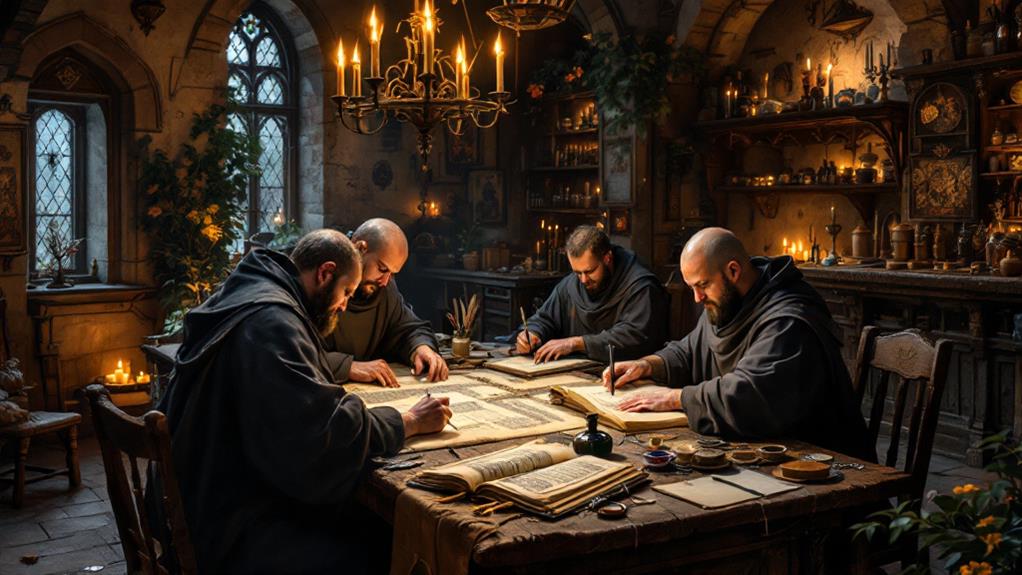
You'd be intrigued by how ancient societies preserved their historical folios. Egyptians used papyrus reinforced with natural resins, making them resistant to moisture and pests. Mesopotamians made clay tablets etched with cuneiform, baked for durability. For more luxurious texts, scribes favored parchment and vellum, crafted from animal skins, which provided smooth and enduring surfaces. They developed sophisticated inks with oak gall fermentations and iron salts for longevity. Leather bindings further shielded manuscripts, while humidity control prevented damaging conditions. Each technique reveals a layer of the past, shedding light on the methods that guaranteed their survival through the centuries.
Papyrus and Natural Resins
In exploring ancient preservation techniques, one might find the combination of papyrus and natural resins particularly fascinating. You see, the Egyptians were masters at crafting durable writing materials from fibrous materials like the papyrus plant. They harvested these fibrous stalks, sliced them into thin strips, and then layered them in a crisscross pattern. Through pressure and moisture, these strips bonded together, creating a smooth and flexible surface perfect for documenting history.
But papyrus alone wasn't enough. To guarantee that these documents stood the test of time, ancient civilizations turned to natural resins as adhesives. You'd be amazed by how effectively these ancient adhesives, derived from tree sap, sealed and protected the papyrus. By coating the surface with resin, they improved the material's durability and resistance to moisture and pests. This resin coating acted like a shield, preserving the written records for future generations to uncover.
Clay Tablets and Cuneiform
While papyrus and resins played a significant role in Egyptian record-keeping, other ancient civilizations had their own unique methods for preserving information. In Mesopotamia, you'll find that clay tablets were the go-to medium for recording data. Imagine yourself in ancient Sumer, where Sumerian writing, known as cuneiform, was etched onto wet clay using a reed stylus. Once inscribed, the tablets were left to dry or baked to guarantee their durability. This process allowed the tablets to withstand the test of time, and many have been uncovered through archaeological findings.
As you investigate these findings, you'll notice that the cuneiform script, with its wedge-shaped marks, was used to record everything from trade transactions to epic tales. The clay tablets were surprisingly resilient, often surviving fires that destroyed other materials. This longevity provides a rich tapestry of historical records, offering insights into the daily lives, economies, and governance of ancient Mesopotamian societies.
Parchment and Vellum

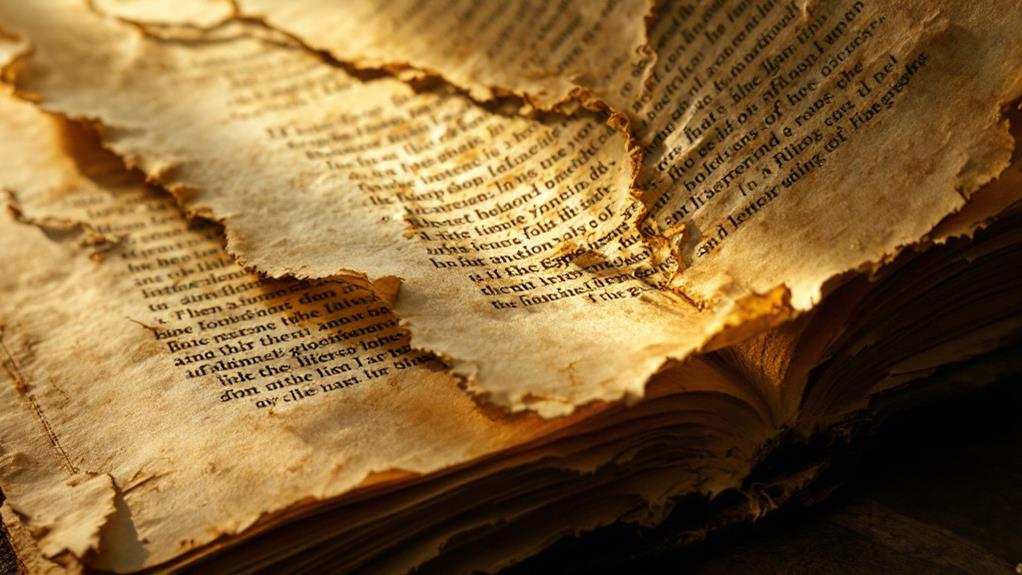
Imagine the feel of a smooth, durable surface that transformed ancient writing practices—parchment and vellum did just that. As you investigate the world of historical documents, you'll find that parchment and vellum were crucial to preserving texts. Parchment production involved a careful process where animal skins, typically from sheep, goats, or calves, were cleaned, stretched, and scraped to produce a writing surface. This technique allowed for a durable medium that could withstand the test of time.
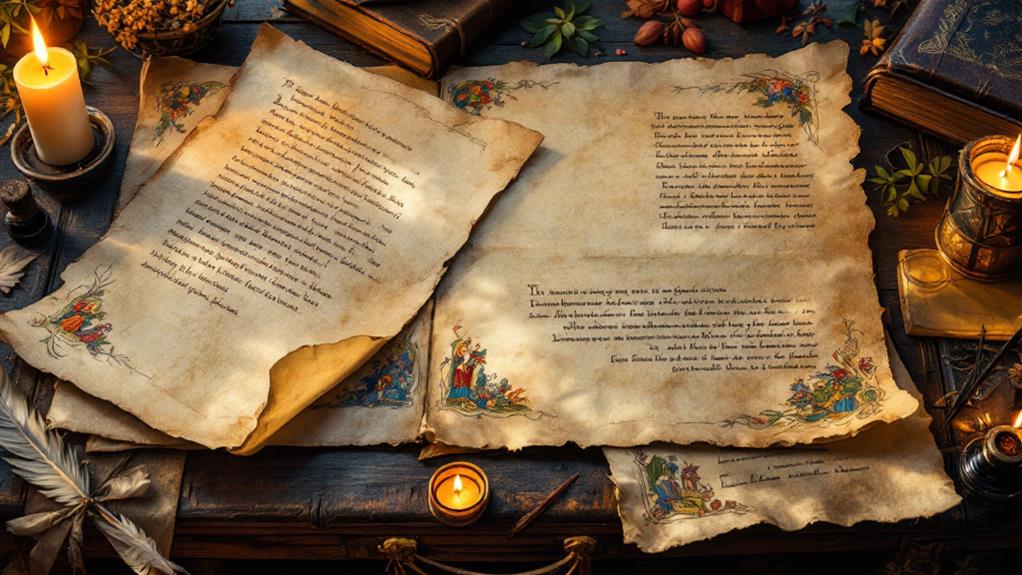
Vellum, a finer form of parchment, was often made from calfskin and recognized for its superior quality. Its characteristics included a smoother, whiter surface, making it a preferred choice for significant manuscripts. You'd notice that vellum was used extensively in medieval Europe for illuminated manuscripts, showcasing its ability to hold intricate details and lively colors.
Ink Recipes and Innovations
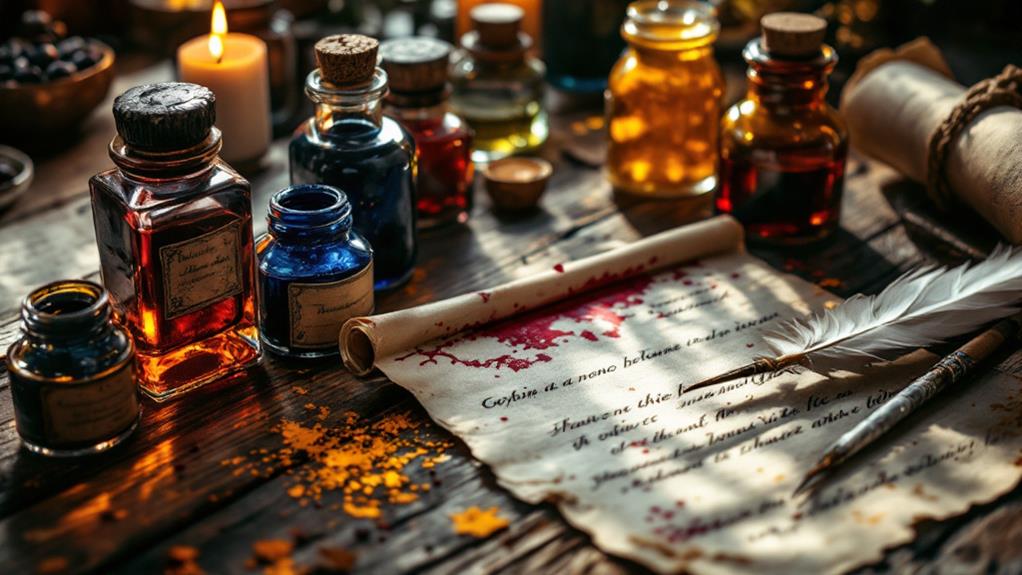
Parchment and vellum provided the perfect canvas, but without ink, the stories of the past would remain untold. You might wonder how ancient scribes created inks that stood the test of time. Their secret lay in ingenious ink recipes and innovations that capitalized on natural resources and careful preparation. One popular method involved fermentation, where oak galls were soaked and left to ferment, releasing tannic acid. This process, combined with iron salts, produced a durable ink capable of resisting fading for centuries. Fermentation methods not only guaranteed the ink's longevity but also offered a deep, rich color.
In addition to fermentation, charcoal additives played a significant role. By incorporating finely ground charcoal, scribes could improve the ink's opacity and resilience. This technique was particularly useful for creating dark, bold strokes that remained legible over time. Charcoal's natural properties helped prevent smudging and provided an extra layer of protection against environmental factors.
When you consider these historical ink recipes, you realize just how advanced ancient scribes were in preserving knowledge. Their innovations allowed us to read and understand the thoughts, stories, and records of those who came before us.
Leather Bindings and Covers

In the domain of ancient manuscripts, leather bindings and covers were essential for safeguarding precious texts. You'd find that these materials weren't just about aesthetics; they played a significant role in guaranteeing the longevity and protection of documents. Leather, with its natural toughness and flexibility, offered a binding durability that few other materials could match. This durability was fundamental in preserving manuscripts through centuries of handling and environmental challenges.
The historical significance of leather-bound texts can't be overstated. They often contained the wisdom and knowledge of entire civilizations, passed down through generations. By choosing leather, ancient scribes and bookbinders guaranteed that these texts could withstand the trial of time. You'd be amazed at how these leather covers acted as a shield against external elements, protecting the delicate pages within from wear and tear.
When you examine these ancient folios today, you're looking at a demonstration of the effectiveness of leather as a preservation tool. The artistry involved in crafting these bindings also speaks volumes about the value placed on written knowledge. So, when you hold a leather-bound manuscript, you're not just holding a book; you're holding a piece of history preserved through skill and foresight.
Humidity Control Practices
Leather bindings provided formidable protection, but maintaining the integrity of ancient manuscripts also hinged on managing environmental factors, particularly humidity. You need to understand that ancient scholars recognized the significance of humidity control to prevent deterioration. Humidity measurement was essential; too much moisture could lead to mold growth, while too little could cause brittleness and cracking.
To manage this, they often stored manuscripts in rooms designed for ideal air circulation. You might've seen windows or vents strategically placed to encourage airflow, preventing the buildup of excessive moisture. These ancient preservationists used materials like clay to absorb moisture. Moisture absorption was vital; clay pots filled with substances like charcoal or lime were common tools for maintaining a stable environment.
Even the storage furniture mattered. You'd find manuscripts in cabinets crafted from specific woods known for their ability to regulate humidity naturally. The choice of wood wasn't arbitrary but a calculated decision based on its moisture absorption properties.
Related posts