Ancient Folios as Language Bridges: Script Evolution and Influence
You'll find that ancient folios serve as crucial links in the evolution of language, connecting diverse cultures through script development and influence. These early texts started with pictographs and shifted into advanced systems like cuneiform and hieroglyphics, later giving rise to alphabetic scripts that better captured sounds. Cultural diffusion and trade spread these scripts, which were adapted for different linguistic needs and religious uses, creating a rich tapestry of interconnected writing systems. Today, digitization and modern interpretations guarantee these ancient scripts continue to inspire and shape contemporary communication, offering further insights into the evolution of language and culture.
Origins of Ancient Scripts
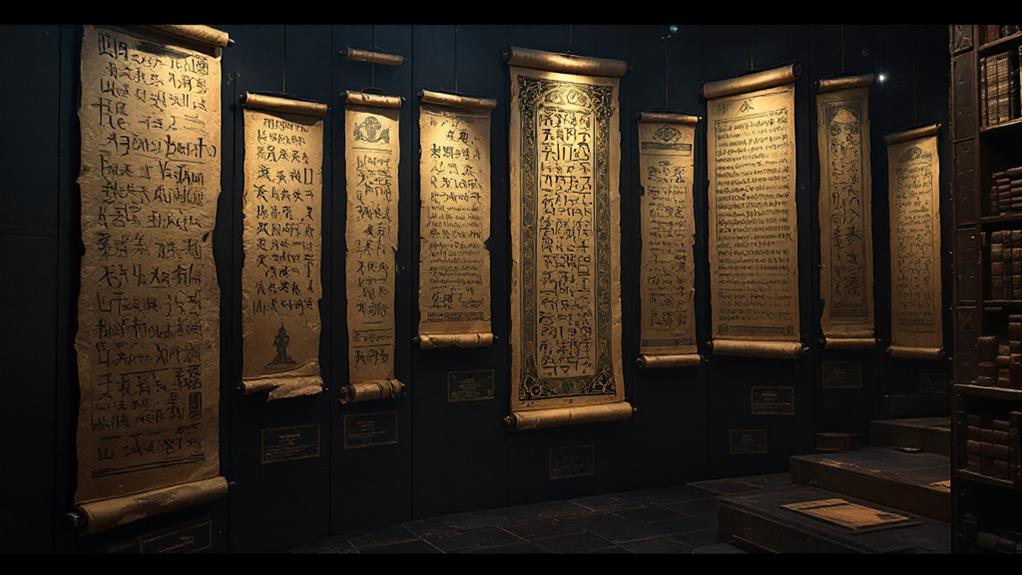
When exploring the origins of ancient scripts, you're stepping into a world that's both captivating and intricate. It begins with pictographic beginnings, where symbols represented objects or concepts. These early forms of writing laid the groundwork for more complex systems. In Mesopotamia, the cuneiform evolution marked a significant advancement. Initially comprising pictographs, it gradually morphed into wedge-shaped marks that adapted to different languages and functions. Script functionality expanded as societies grew, necessitating efficient record-keeping and administration.
Meanwhile, in Egypt, hieroglyphic development paralleled this progress. These intricate symbols, carved or painted on stone and papyrus, represented sounds and ideas, showcasing an early phonetic system. As scripts evolved, alphabetic shifts emerged, simplifying communication by representing individual sounds rather than whole words or concepts. This change made writing more accessible and adaptable across distinct regions.
Regional adaptations played a vital role in script evolution, as varied cultures modified scripts to suit their languages and needs. The choice of writing materials, such as clay tablets, papyrus, or parchment, also influenced how scripts were developed and preserved. Understanding these elements offers insight into the profound impact of ancient scripts on human civilization.
Cross-Cultural Script Exchange
In countless instances throughout history, civilizations have exchanged scripts, leading to remarkable linguistic and cultural transformations. You can see evidence of cultural diffusion in how scripts like the Phoenician alphabet influenced Greek and Latin scripts, showing the power of script interaction. As societies came into contact via trade, war, or migration, they often borrowed and adapted scripts to suit their languages, resulting in significant linguistic adaptation.
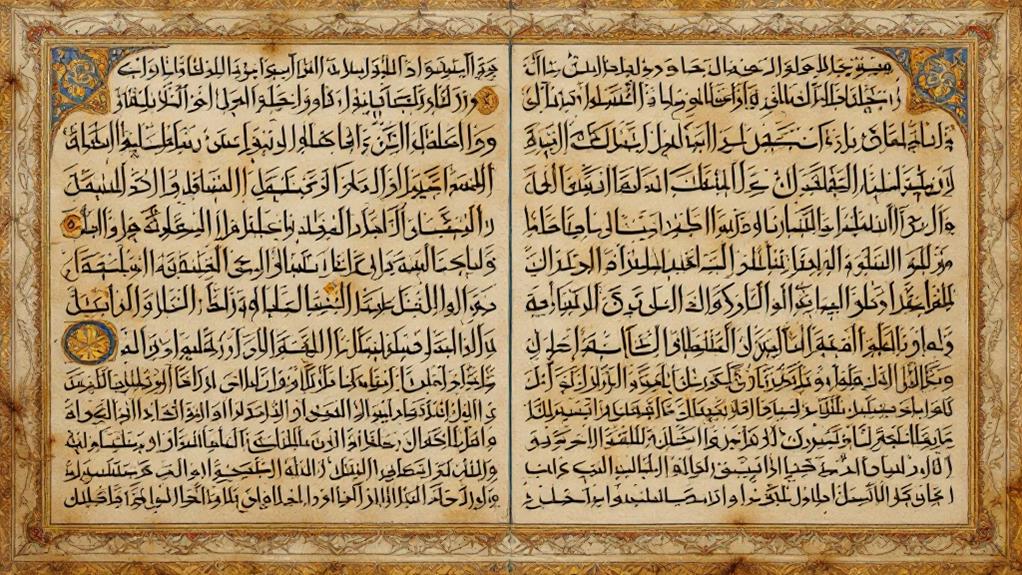
Consider the historical context of the spread of the Aramaic script, which became the foundation for several Middle Eastern writing systems. This spread highlights how communication networks facilitated script exchange, allowing different regions to adopt and modify scripts to meet their specific needs. The resulting regional variations are evident in scripts like Hebrew, Arabic, and an array of South Asian scripts, each evolving distinctly while retaining traces of their common ancestry.
When you investigate these exchanges, you'll find that scripts not only served as tools for recording language but also as bridges connecting diverse cultures. They enabled shared knowledge, beliefs, and customs across vast distances, demonstrating the potent role of cross-cultural script exchange in shaping human civilization.
Impact of Trade on Language

Trade has always been a powerful driver of linguistic change, much like script exchanges shaped cultural interactions. As merchants and travelers moved along trade routes, they not only exchanged goods but also words and ideas. This linguistic diffusion led to the blending of languages, creating rich tapestries of communication that connected distant cultures. You can imagine the lively marketplaces where languages collided, giving birth to new dialects and enriching existing ones.
Consider the emotional impact of these exchanges:
- Connection: People from different lands suddenly understood each other a bit more, bridging cultural gaps.
- Innovation: New words and ideas sparked creativity, leading to advancements in multiple fields.
- Preservation: Languages absorbed foreign terms, preserving them for future generations.
Trade routes such as the Silk Road acted as highways for linguistic diffusion. They facilitated the exchange of not only silk and spices but also alphabets and grammar. As travelers interacted, they adapted words to fit their tongues, evolving languages in the process. You can see how trade didn't just move commodities; it transformed the very way people communicated, influencing the languages we speak today. This dynamic process enriched cultures, leaving a lasting legacy in the form of shared linguistic heritage.
Scripts of Religious Texts
Religious texts have wielded a profound influence on the development of scripts throughout history. When you explore these texts, you'll notice how sacred symbolism shapes the way scripts are adapted to convey divine messages. Think of how religious transcription required script adaptation to fit the linguistic diversity of different regions. This adaptation wasn't just linguistic but also cultural, as cultural intermingling often led to new script forms.
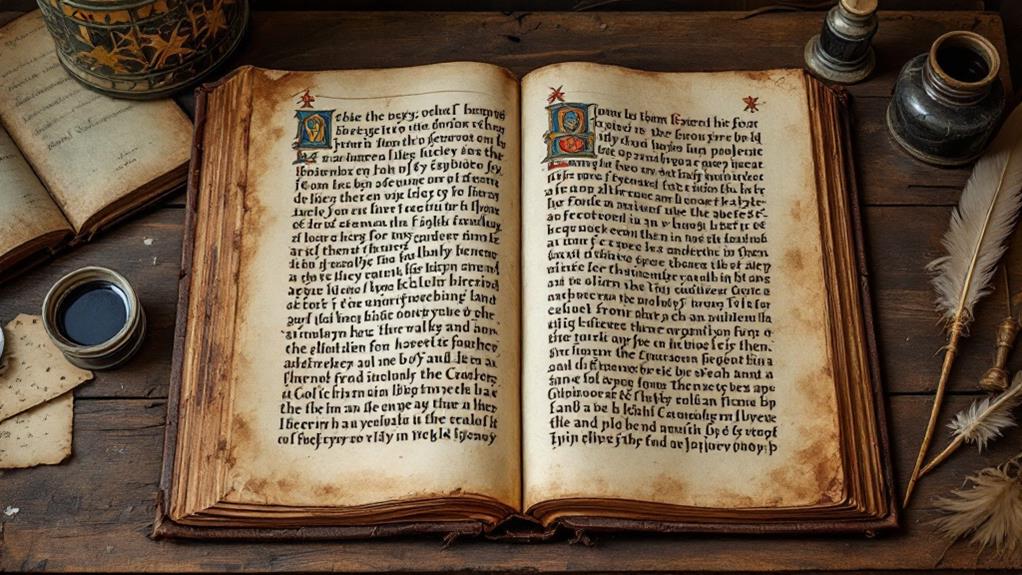
Manuscript preservation plays a vital role in maintaining these scripts. Imagine ancient scribes carefully copying texts to guarantee you can still read them today. Through these efforts, they preserved not only words but the historical context in which these texts were created. This historical context is fundamental for understanding script evolution and the nuances of scriptural interpretation.
Consider how script adaptation allowed religious messages to transcend linguistic barriers. As a reader, you experience the rich tapestry of cultural intermingling that scripts carry. The evolution of scripts in religious contexts is a reflection of the resilience and adaptability of human communication. When you engage with these ancient texts, you're not just reading words; you're connecting to a vast history of language and spirituality.
Deciphering Lost Languages

Often, the quest to decipher lost languages feels like piecing together a linguistic puzzle from scattered fragments of history. You stand on the shoulders of past scholars, diving into the world of historical linguistics, hoping to reveal secrets hidden within ancient scribbles. Script classifications guide you as you classify symbols and patterns, connecting them to known language families. Each archaeological finding offers a new piece of the puzzle, a chance to glimpse into a world that once was.
Imagine the emotions that flood your mind as you explore this expedition:
- Curiosity: Each symbol holds a story, waiting to be told.
- Frustration: Progress stalls when a piece refuses to fit.
- Triumph: The eureka moment when everything ultimately clicks.
Decipherment techniques, both traditional and modern, become your tools. You compare these symbols to known scripts, seeking similarities and patterns. Unraveling these ancient languages isn't just scholarly—it's a race against time to preserve human history. With every breakthrough, you bridge the gap between civilizations, making connections that transcend time. Through this intricate dance of revelation, you honor the voices of the past, ensuring they continue to resonate in our world today.
Modern Reflections of Ancient Scripts
As you investigate modern reflections of ancient scripts, you'll find that these timeless symbols have permeated our contemporary world in fascinating ways. Ancient scripts don't just belong in dusty tomes; their influence is visible in our everyday lives. For instance, modern adaptations of ancient calligraphy can be seen in graphic design, where the elegance of old script styles adds a touch of historical depth to branding and art. Designers often draw inspiration from these ancient forms, creating logos and typefaces that echo the past while appealing to modern sensibilities.
Moreover, digital preservation efforts play a vital role in keeping these ancient scripts alive. By digitizing ancient manuscripts, we're not only safeguarding them from physical decay but also making them accessible to a global audience. This digital renaissance allows you to view, study, and even interact with scripts that were once confined to the archives of history. Through apps and online platforms, ancient scripts become interactive experiences, allowing you to investigate their intricacies with just a few clicks. These efforts guarantee that ancient scripts continue to inspire and educate, bridging the gap between past and present in our technological era.
Related posts