A Guide to the Techniques Behind Historical Folio Production
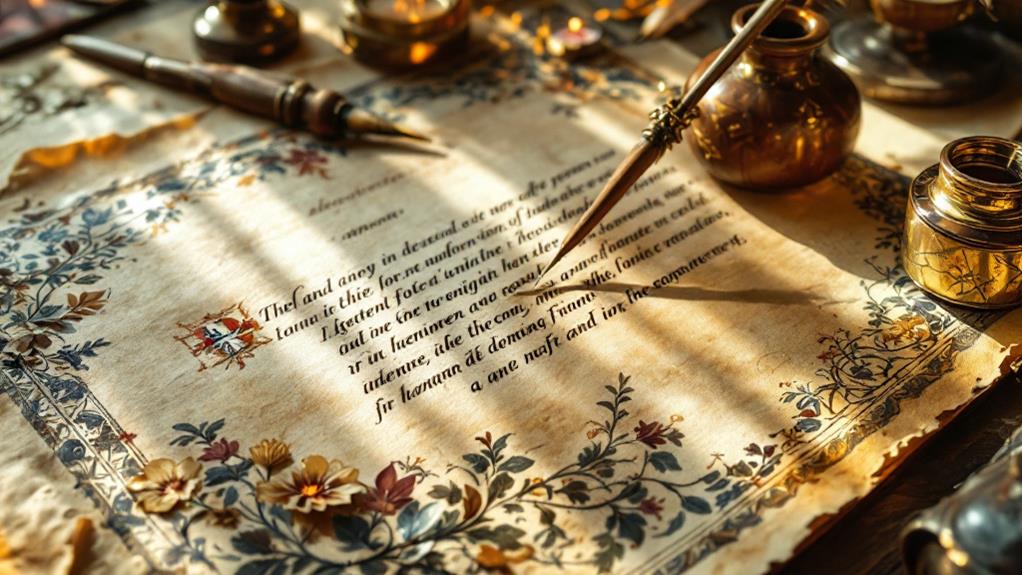
Engage yourself in historical folio production and uncover the craft's fascinating process. Start with selecting the right fibers like linen or cotton for a perfect foundation, then move on to creating a sturdy paper through traditional drying methods. Ink and pigment preparation bring life to pages with natural dyes, rich in color and history. Master elegant calligraphy using quills and brushes, while vivid illustrations adorned with gold leaf catch the eye. Bind these creations with techniques like coptic stitching for durability and aesthetics. Each step intertwines skill and history, revealing a deeper appreciation for these timeless gems.
Material Selection
In the context of selecting materials for historical folio production, you'll find that every choice is fundamental to the final outcome. The materials you select can greatly influence the authenticity and durability of the folio. Start by considering fiber sources, as they play a vital role in defining the texture and longevity of your folio. Historically, fibers such as linen, cotton, and hemp were favored for their strength and accessibility. Each fiber source has its own historical importance, reflecting the period and region of the folio's origin.
Linen, for instance, was widely used in European folios due to its availability and robust nature. Cotton, on the other hand, gained popularity because of its smoother finish and flexibility. Hemp, with its coarse texture, is typically found in folios that required extra durability. When selecting materials, consider the historical context of your project. Understanding the cultural and economic factors that influenced fiber choice in the past will guide you in making an informed decision.
Also, don't overlook the importance of authenticity. Choosing the right materials not only replicates the historical importance but also guarantees your folio stands the test of time, embodying the spirit of its period.
Papermaking Process
Delving into the papermaking process, you'll uncover a careful art that has evolved over centuries. It all starts with the selection of fiber sources, a critical step in determining the paper's quality and texture. Historically, papermakers used a variety of fibers, including linen, cotton, and even old rags. These fibers were pulped and refined, forming the basis of the paper. Each source brought unique characteristics to the final product, influencing its durability and finish.
Once the fibers are prepared, they're suspended in water, creating a slurry. You'll then see how papermakers skillfully transfer this mixture onto a screen, forming thin sheets of wet paper. The technique requires precision to guarantee even distribution. After forming the sheets, the drying methods come into play. Traditional techniques often involved pressing the sheets between felt and then allowing them to air dry. This method helped to remove excess water while maintaining the paper's integrity.
As you investigate further, you'll appreciate how each stage, from choosing the right fiber sources to employing effective drying methods, contributes to the creation of high-quality paper that stands the test of time.
Ink and Pigment Preparation
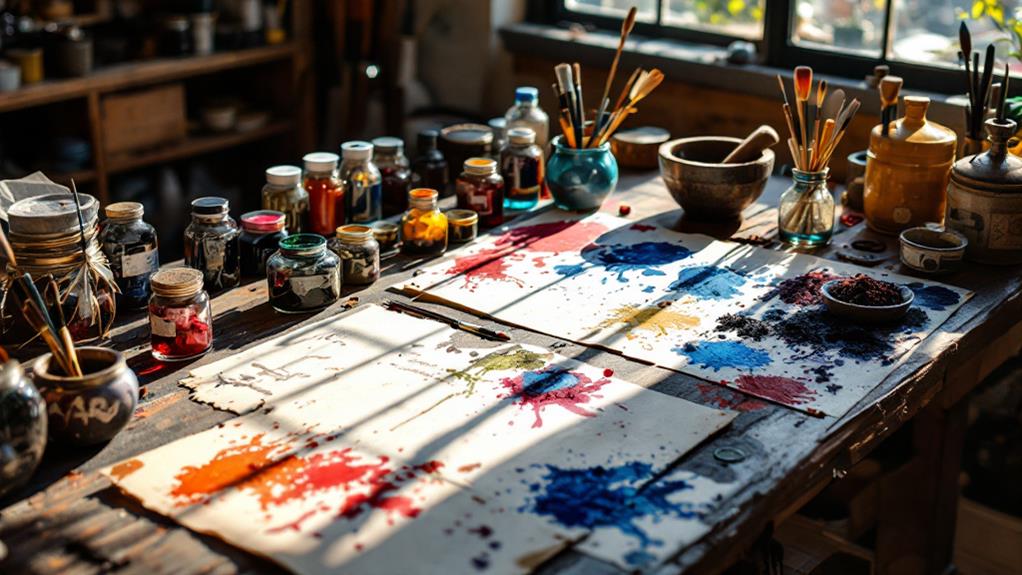
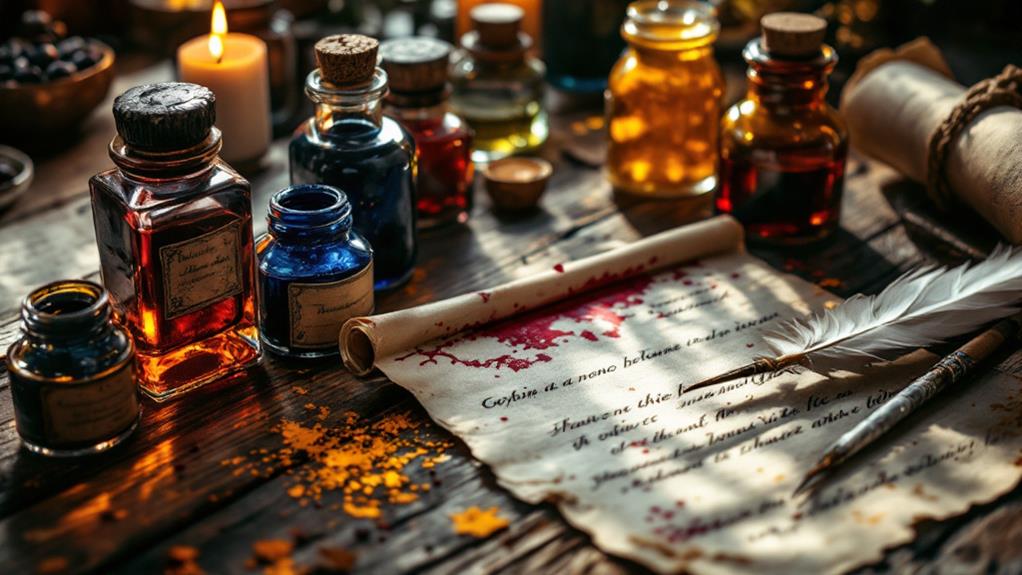
The artistry of ink and pigment preparation is a fascinating journey into the world of color and expression. You investigate time-honored techniques, uncovering how artisans harnessed natural dyes to create lively and lasting hues. From the rich indigo extracted from plants to the deep crimson derived from insects like cochineal, each color tells a story of its own. The use of such natural dyes not only guaranteed durability but also provided a sustainable way to bring manuscripts to life.
As you examine historical recipes, you'll find that ink preparation required precision and patience. Common ingredients included oak galls, iron salts, and gum arabic, each playing a vital role in the ink's quality. Mixing these components demanded skill to achieve the right consistency and intensity. Pigments, on the other hand, often came from minerals like lapis lazuli for blues or cinnabar for reds, ground down to a fine powder and combined with binders.
Understanding these processes offers insight into the careful efforts of historical artisans, who transformed simple materials into an enduring legacy of written art. The intricate craft of ink and pigment preparation remains a reflection of their dedication and ingenuity.
Calligraphy and Typography
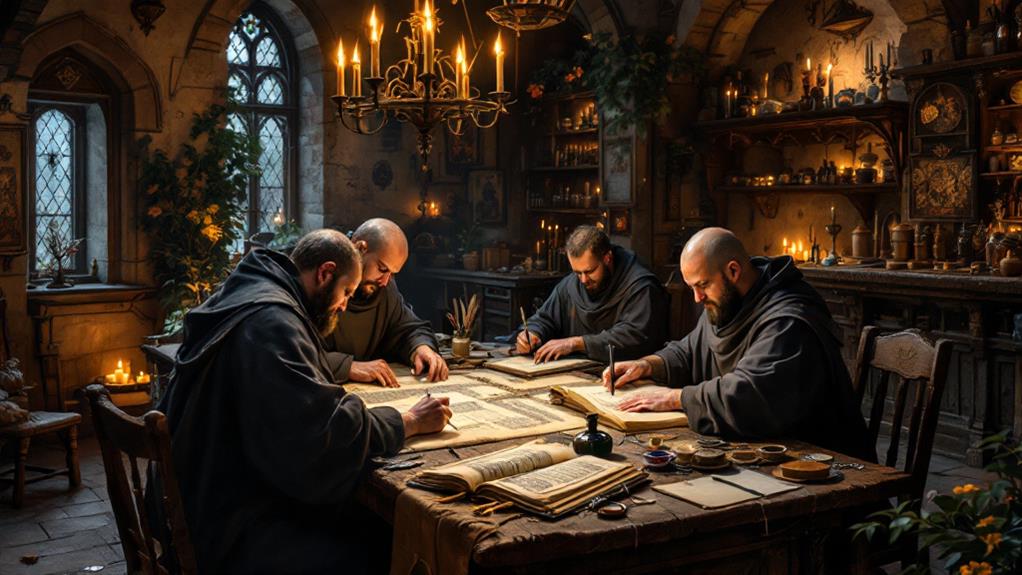
Calligraphy brushes glide gracefully across the page, capturing the elegance and precision of historical writing traditions. When you engage in the art of calligraphy, you're not just writing; you're connecting with a rich tapestry of historical styles that have evolved over centuries. Each stroke you make is a nod to the intricate letter forms that scribes painstakingly crafted long before the advent of digital typography. The beauty of calligraphy lies in its ability to convey emotion and intent through the fluidity of its lines.
To master calligraphy and typography in historical folio production, consider these crucial elements:
- Letter Forms: Focus on understanding the unique characteristics of each letter form. Historical styles like Carolingian, Gothic, and Italic each have distinct features that define them.
- Tools and Materials: Choose the right tools, such as quills, brushes, or reed pens, and materials like vellum or parchment, to achieve authentic results.
- Practice and Precision: Consistent practice is key. Develop a steady hand and a keen eye for detail to replicate historical styles accurately.
Illustration and Decoration
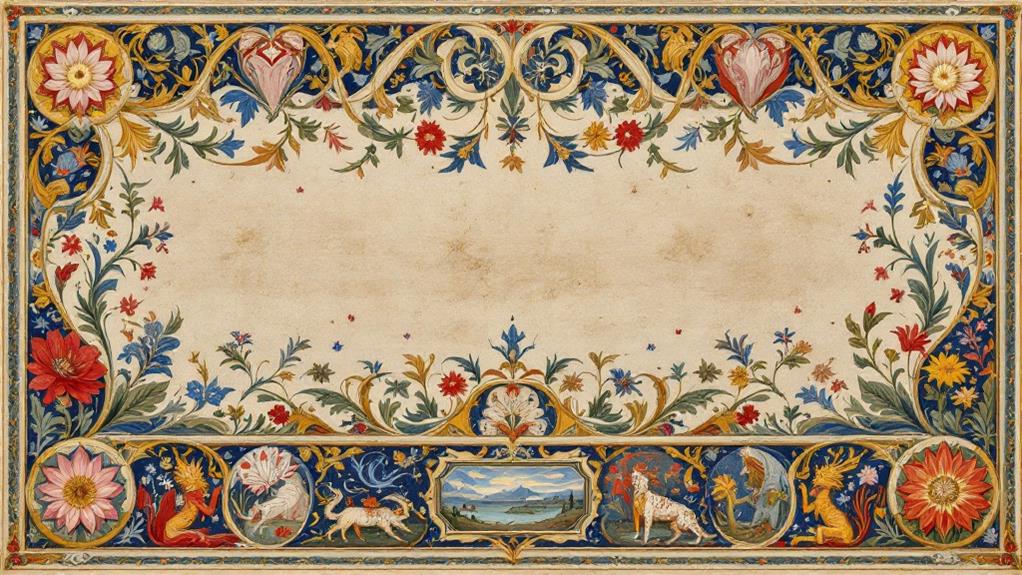
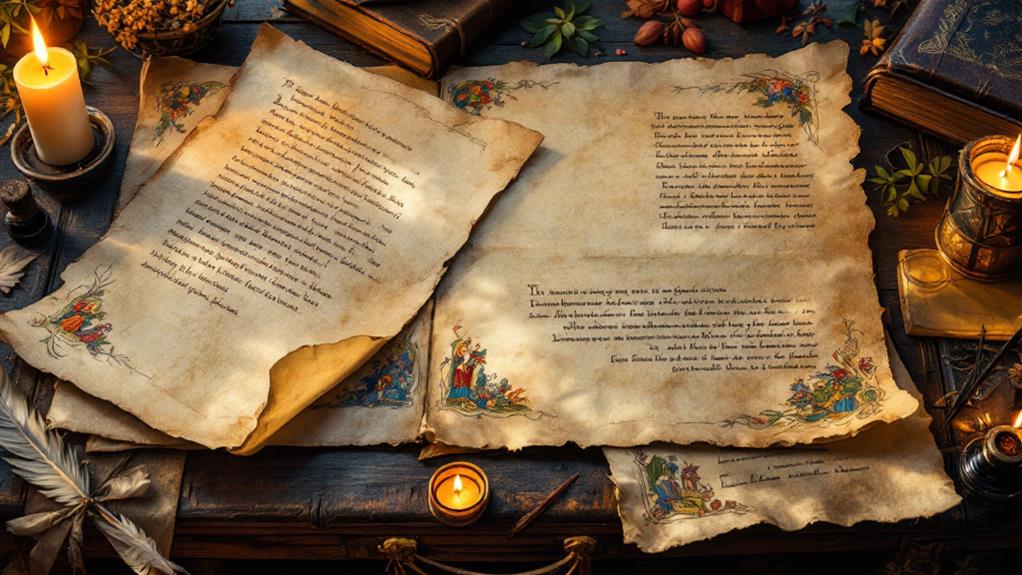
In historical folio production, lively illustrations and intricate decorations play a crucial role, transforming texts into visual masterpieces. When you investigate illuminated manuscripts, you'll find that they are so much more than just written words. Artisans used vivid colors and gold leaf to create stunning visuals that catch your eye and improve the comprehensive reading experience. These illustrations were often infused with artistic symbolism, conveying deeper meanings and cultural stories. You might notice how a single image can encapsulate entire narratives, inviting you to examine the folio's hidden layers.
As you look closer, you'll see that each decorative element serves a purpose. Borders, initials, and miniature scenes are carefully crafted to guide your attention and highlight key passages. The importance of these decorations can't be overstated—they not only beautify the page but also act as interpretive tools. Artists skillfully used symbolism to represent themes like faith, power, and nature, often drawing from religious or mythological sources. By understanding these symbols, you gain insight into the historical context and the values of the time. Ultimately, illustration and decoration breathe life into historical folios, making them timeless artifacts of human creativity.
Binding Techniques
Binding techniques are the backbone of historical folio production, ensuring that these precious manuscripts withstand the test of time. When you're diving into the world of folio creation, understanding these techniques is crucial. Let's investigate three key components that make binding both an art and a science:
- Sewing Methods: You can't overlook the importance of sewing methods in binding. Historically, folios were often sewn using a technique called "coptic stitching." This method involves sewing sections of paper alongside a single thread, which allows the folio to lie flat when opened. It's both practical and durable.
- Cover Designs: The cover of a folio is more than just protection; it's a statement. In historical times, covers were crafted from materials like leather or vellum and often embellished with intricate designs. These designs not only add beauty but also reflect the manuscript's significance and the period's artistry.
- Endbands: Endbands are the decorative pieces at the top and bottom of the spine. They provide supplementary support and stability to the folio. Historically, they were often hand-sewn with colored threads, adding a touch of elegance to the binding.
Related posts